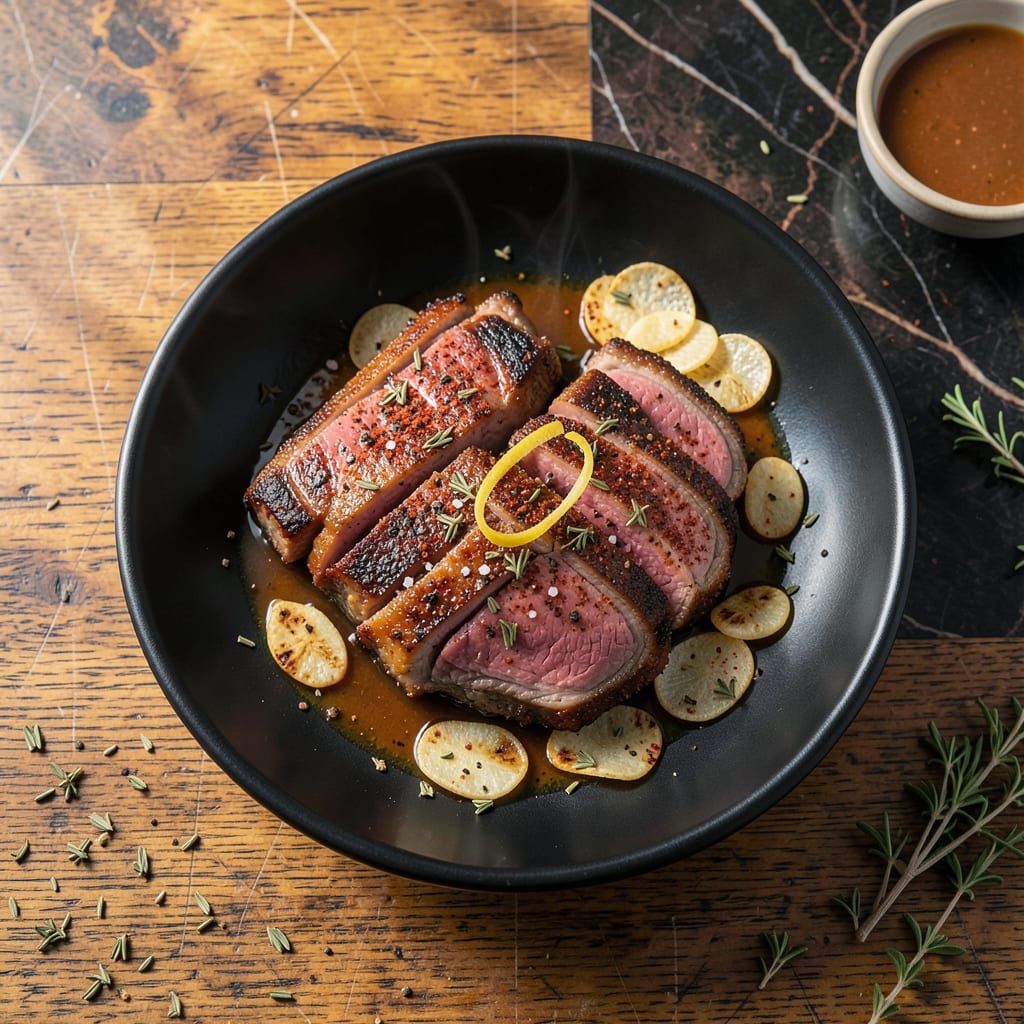
Pork neck steaks deserve more attention in the home kitchen. This cut delivers rich flavor and tender texture when cooked properly, with beautiful grill marks that make it look as impressive as it tastes.
I learned the importance of proper seasoning and heat control from my grandmother, whose vague handwritten notes taught me to trust my instincts. The key is a hot grill and a simple rub that enhances without overpowering.
These steaks develop a smoky crust while staying juicy inside. The contrast between the charred exterior and the tender meat makes every bite satisfying.
Perfect for a weeknight dinner that feels special. Serve with your favorite sides for a meal that proves great flavor doesn’t require complicated techniques.
Ingredients for Recipe for Pork Neck Steaks
Simple rub, bold flavor, and juicy pork neck steaks ready for the grill.
| Ingredient | Amount | Notes |
|---|---|---|
| Pork Neck Steaks 🥩 | 1 ½ lb | Bone-in, about 1-inch thick |
| Kosher Salt 🧂 | 1 ½ tsp | Diamond Crystal preferred |
| Black Pepper 🌶️ | 1 tsp | Freshly ground coarse |
| Smoked Paprika 🌶️ | 1 tsp | Sweet or hot variety |
| Garlic Powder 🧄 | 1 tsp | Not garlic salt |
| Onion Powder 🧅 | 1 tsp | Fresh ground preferred |
| Brown Sugar 🍚 | 1 tbsp | Light or dark works |
| Olive Oil 🫒 | 2 tbsp | For rubbing steaks |
| Apple Cider Vinegar 🍏 | 1 tbsp | For tenderness and tang |
| Mustard Powder 🟡 | ½ tsp | Dry yellow mustard |
| Dried Thyme 🌿 | ½ tsp | Crushed between fingers |
| Vegetable Oil 🫒 | 1 tbsp | High smoke point for grilling |
[recipe_ingredient_scaler]
The pork neck steaks are the star—look for bone-in cuts about 1-inch thick at your butcher counter or Whole Foods. Good marbling means more flavor and tenderness. I always ask the butcher to cut them fresh (they’ll often do it for free). If you see them pre-packaged at Costco, grab those too. Just avoid anything labeled ‘pork steak’ without specifying neck—those can be tougher cuts.
No smoked paprika? Regular paprika plus a pinch of chipotle powder gets you close. Out of brown sugar? Coconut sugar or maple syrup works in a pinch (just reduce the liquid elsewhere). The apple cider vinegar adds tang that balances the richness—white vinegar or lemon juice can sub in. For extra depth, a dash of Worcestershire sauce in the rub does wonders (just check it’s not the anchovy kind if you’re avoiding fish).
Rub the steaks up to 12 hours ahead—the flavors penetrate deeper. Store raw marinated steaks in the fridge for 1-2 days max. Leftovers? Slice thin against the grain and reheat gently in a skillet with a splash of water. Keeps 3-4 days refrigerated.
Why You’ll Love This Recipe
- 5-Minute Seasoning: I just rub those steaks with salt, pepper, smoked paprika, and garlic powder—no marinade, no waiting.
- Smoky Depth: Honestly, that smoked paprika gives it a rich, almost barbecue-like flavor without firing up the grill.
- Weeknight MVP: Between us, it’s my go-to for quick dinners, but also impressive enough for Sunday supper.
- Budget-Friendly Cut: Pork neck steaks cost half what ribeyes do, and I get the same hearty satisfaction.
Step-by-Step Instructions for Smoky Grill-Marked Pork Neck Steaks
Here’s how I get perfectly charred, juicy pork neck steaks with a smoky-sweet crust every time.
Step 1: Create the Flavor-Packed Rub
In a small bowl, mix together the 1.5 tsp Kosher Salt, 1 tsp Black Pepper, 1 tsp Smoked Paprika, 1 tsp Garlic Powder, and 1 tsp Onion Powder. I crush the 0.5 tsp Dried Thyme between my fingers as I add it to release its aroma.
Stir in the 1 tbsp Brown Sugar and 0.5 tsp Mustard Powder. This combination gives you that perfect balance of smoky, sweet, and tangy flavors that’ll make these pork neck steaks unforgettable. The rub should look like a coarse, fragrant mixture with visible herb specks.
Real talk: don’t be tempted to add liquid here. The rub needs to stay dry to properly adhere to the meat and form that beautiful crust we’re after.
Step 2: Coat and Marinate the Steaks
Pat the 1.5 lb Pork Neck Steaks completely dry with paper towels. This step is crucial for achieving a good sear later. I always use bone-in steaks that are about 1-inch thick as they hold up best to grilling.
Drizzle the 2 tbsp Olive Oil and 1 tbsp Apple Cider Vinegar over the steaks, then rub the mixture all over both sides. The vinegar tenderizes the meat while adding subtle tang. Next, generously apply the rub to all surfaces, pressing it in firmly so it sticks.
Let the seasoned steaks sit at room temperature for 30 minutes while you preheat your grill. This resting period allows the salt to begin penetrating the meat and the flavors to meld.
Step 3: Preheat and Oil the Grill
Preheat your grill to medium-high heat (about 400-450°F). You want it hot enough to create beautiful grill marks but not so hot that it burns the outside before the inside cooks. I use a grill thermometer to ensure accuracy.
Once the grill is hot, use tongs and a folded paper towel dipped in vegetable oil to oil the grates thoroughly. This prevents sticking and helps create those perfect char marks. Be careful not to use too much oil—a light coating is all you need.
Here’s the thing—this step is what separates good grilled steaks from great ones. Properly oiled grates mean your steaks won’t tear when you flip them, preserving all those beautiful juices.
Step 4: Grill to Smoky Perfection
Place the pork neck steaks on the grill and cook undisturbed for 4-5 minutes per side. Don’t move them around—this allows proper caramelization and those coveted grill marks. You’ll know they’re ready to flip when they release easily from the grates.
For the second side, cook for another 4-5 minutes. The steaks are done when they reach an internal temperature of 145°F and have developed a rich, deep brown crust. I always use a meat thermometer to check—guessing with pork isn’t worth the risk.
If you notice hot spots on your grill, rotate the steaks 90 degrees halfway through cooking each side to create those perfect crosshatch grill marks that look as good as they taste.
Step 5: Rest and Serve
Transfer the grilled pork neck steaks to a clean plate and tent loosely with foil. Let them rest for 5-10 minutes before serving. This step allows the juices to redistribute throughout the meat, ensuring every bite is moist and flavorful.
I know it’s hard to wait when they smell this good, but resting is non-negotiable for the best texture. The internal temperature will rise a few degrees during this time (carryover cooking), so pull them off the grill at 145°F for perfect doneness.
Serve the steaks whole or sliced against the grain, with any accumulated juices spooned over the top. Each bite should deliver that smoky, sweet, and slightly tangy flavor with a perfect char on the outside and tender juiciness inside.
Pro Tips For Making Recipe For Pork Neck Steaks
- Dry the Steaks: Pat the pork neck steaks thoroughly dry with paper towels before seasoning—I learned this the hard way after wondering why my crust never formed properly.
- High Heat First: Sear the steaks over medium-high to high heat for 2-3 minutes per side to lock in juices, then reduce to medium to finish cooking through.
- Skip the Overcrowding: Cook the steaks in batches if needed—steer clear of cramming them into the pan or they’ll steam instead of sear.
- Rest Before Serving: Give the steaks a solid 5-10 minutes to rest under foil after cooking, or all those delicious juices will end up on the cutting board.
Troubleshooting This Recipe
Uneven Cooking
If you notice some steaks cooking faster than others, it’s likely due to varying thickness. I always use a meat thermometer to check each piece individually. For thinner cuts, pull them off 1-2 minutes earlier than thicker ones to prevent overcooking.
Dry or Tough Texture
This usually happens when the steaks are overcooked. Remember, pork is safe at 145°F internal temperature. If yours feel dry, try reducing the cooking time by 1 minute per side next time. Also, ensure you’re letting them rest properly before slicing. 💡
Rub Not Sticking
Pat the steaks completely dry before applying the rub—moisture is the enemy of adhesion. I also press the rub firmly into the meat. If it’s still not sticking, add a touch more olive oil to the surface before applying the seasoning.
Grill Marks Missing
For those perfect crosshatch marks, don’t move the steaks for the first 4 minutes of cooking. Then rotate 90 degrees and cook another 4 minutes before flipping. Clean, well-oiled grates are essential too.
Burnt Exterior
If the outside is burning before the inside cooks, your grill is too hot. Lower the temperature to medium heat (350-375°F) and extend cooking time slightly. I find that indirect heat works well for thicker cuts. 🔥
Flavor Too Mild
For more pronounced flavor, let the rub sit on the steaks for up to 12 hours in the fridge. You can also increase the smoked paprika to 1.5 tsp or add ½ tsp cayenne for heat. I learned this trick from my grandmother’s vague notes about “letting flavors marry.”
Nutrition Facts
Frequently Asked Questions
What’s the best way to cook these if I don’t have a grill?
Use a cast-iron skillet on medium-high heat for 4-5 minutes per side. Sear until a deep crust forms, then finish in a 400°F oven if needed. The key is high heat for that smoky char.
Can I use a different cut of pork?
Pork shoulder steaks work well, but avoid lean cuts like tenderloin. Bone-in cuts stay juicier. For similar flavor, look for 1-inch thick pieces with good marbling.
How do I know when they’re done without a thermometer?
Press the meat—it should feel firm but still springy, like the base of your thumb. For safety, aim for slight pink in the center. Always rest for 5-10 minutes before serving.
Why rest the steaks before serving?
Resting lets juices redistribute, so every bite stays moist. Skipping this step means dry meat. Tent with foil to keep warm while resting.

Trained in classic French technique but raised on slow-cooked ribs and spicy rubs, she blends culinary skill with smoke and soul.
- Roasted Brisket Recipe: Low-and-Slow Smoky Tenderness Without Dryness - October 15, 2026
- Best Passover Beef Brisket Recipe: Molasses-Spiced Slow-Cooked Masterpiece - October 15, 2026
- Jamie Oliver’s Fast and Simple Brisket Recipe: Smoky-Sweet One-Pan Magic - October 15, 2026