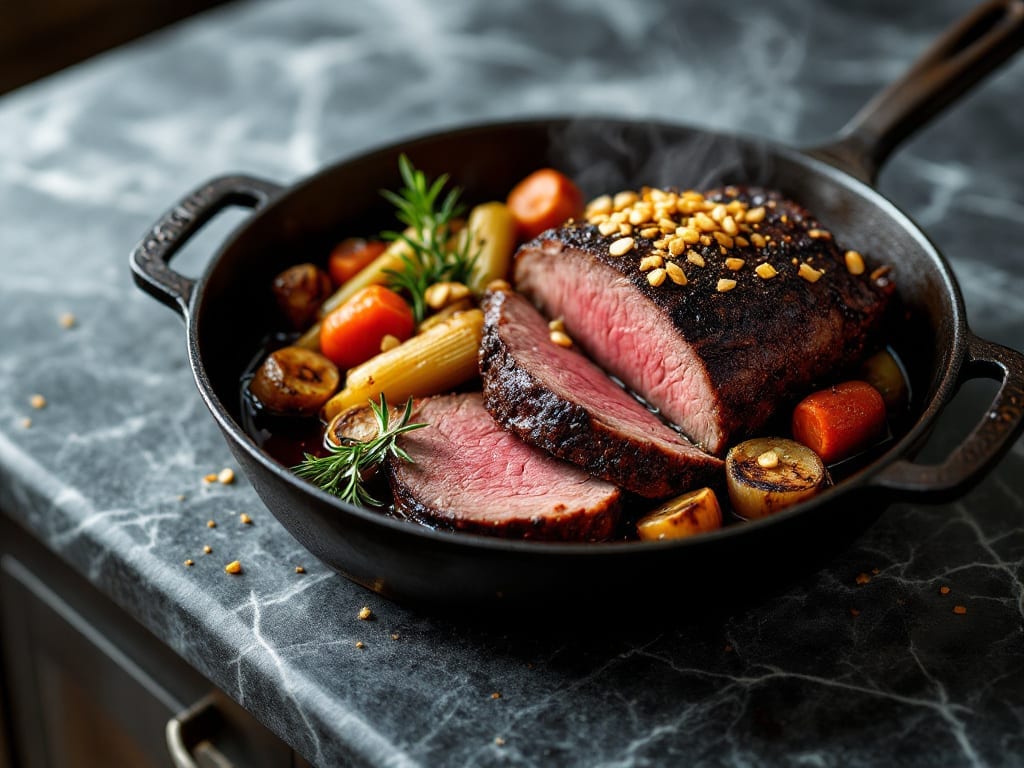
This red wine brisket recipe transforms tough cuts into melt-in-your-mouth perfection with deep umami richness that lingers long after the last bite. The key lies in slow-braising the brisket with red wine, creating a sauce so flavorful it deserves its own bowl.
I developed this technique during a particularly chilly winter when I needed something hearty enough to feed a crowd but elegant enough for company.
The process begins with a deep sear to lock in juices, followed by a slow braise in red wine that tenderizes the meat while infusing it with complex, velvety depth. A proper 3-4 hour cook time at low heat ensures the brisket becomes fork-tender without drying out.
The red wine not only adds acidity to cut through the fat but also develops layers of flavor as it reduces into a glossy, aromatic sauce.
What you’ll end up with is brisket so tender it practically falls apart at the touch, bathed in a sauce that’s rich yet balanced—savory from the meat, bright from the wine, and deepened by herbs and aromatics.
The crust remains beautifully caramelized, offering a satisfying contrast to the melt-in-your-mouth interior. This is the kind of dish that turns a simple weeknight into a memorable feast.
Serve with crusty bread to soak up every drop of sauce, or pair it with roasted root vegetables and a simple green salad for a complete meal. The leftovers? Even better the next day, as the flavors continue to meld and deepen. Let’s get started on this showstopping brisket.
Ingredients for red wine brisket
Six ingredients transform tough brisket into melt-in-your-mouth perfection with wine-infused richness.
| Ingredient | Amount | Notes |
|---|---|---|
| Beef Brisket 🥩 | 4 lb | Packaged or whole, with fat cap |
| Dry Red Wine 🍷 | 2 cups | Bold Cabernet Sauvignon or Merlot |
| Beef Broth 🥄 | 2 cups | Low-sodium preferred |
| Yellow Onion 🧅 | 1 whole | Large, roughly chopped |
| Carrots 🥕 | 4 whole | Medium, peeled and chopped |
| Celery Stalks 🌿 | 4 whole | Trimmed and chopped |
| Fresh Garlic Cloves 🧄 | 8 cloves | Peeled, smashed slightly |
| Fresh Thyme Sprigs 🌿 | 4 whole | Stems removed |
| Fresh Rosemary Sprig 🌿 | 1 whole | Large, woody stems removed |
| Tomato Paste 🍅 | ½ cup | Smooth, not chunky |
| Balsamic Vinegar 🍷 | ½ cup | Aged, for depth |
| Kosher Salt 🧂 | 2 tbsp | Plus more for seasoning |
| Freshly Ground Black Pepper 🌶️ | 1 tbsp | Coarse grind preferred |
| Olive Oil 🫒 | ½ cup | For searing |
[recipe_ingredient_scaler]
The brisket is your star—look for well-marbled cuts with at least 1/4-inch fat cap to keep it juicy. Costco or butcher shops usually have the best selection, but the pre-packaged kind from the meat department works too. If you’re buying whole, trim excess fat but leave that fat cap intact—it renders down during cooking and bastes the meat. For the red wine, any bold, dry red works—Cab Sauv, Merlot, whatever’s open. Avoid sweet wines like Zinfandel. The beef broth? Low-sodium is key—you don’t want to over-salt your brisket. I always grab the Organic Valley or Kitchen Basics brands for their rich flavor.
No red wine? Dry sherry or beef broth with a splash of balsamic gets you close. Fresh thyme and rosemary are ideal, but dried works at one-third the amount. The tomato paste can be the squeeze-tube kind from Trader Joe’s—it’s perfect for small batches and lasts forever. For the onions, carrots, and celery, the classic ‘holy trinity’ combo, you can use whatever’s on hand. Baby carrots work great, and frozen veggies are fine in a pinch. The garlic? Fresh is non-negotiable here—jarred minced garlic just doesn’t cut it. If you’re short on time, roast the whole head first to mellow the flavor and make peeling easier.
This brisket tastes even better the next day, so make extra. The sauce thickens as it cools, so you can always thin it with a splash of broth or wine. Store leftovers in the fridge for up to 5 days, covered tightly. For longer storage, portion into freezer bags and freeze for up to 3 months. Reheat gently on the stove with a splash of broth to restore moisture—microwaving makes it rubbery. I always save a portion of the sauce separately to drizzle over slices or serve on the side.
Why You’ll Love This Recipe
- One-Pan Magic: I swear by this trick—just toss the brisket, onions, and carrots in a Dutch oven with the wine and broth, then let it slow-cook. No chopping, no flipping, no stress. The only prep is dicing the onions (which takes less time than scrolling through memes).
- Wine-Infused Richness: That first sip of red wine into the pot? It transforms the brisket into something ridiculously tender with a depth you won’t find in dry rubs. The carrots soak up the flavor like sponges, and the onions caramelize right into the sauce—no extra steps, just pure, slow-built satisfaction.
- Weeknight or Weekend: Between us, this is my go-to for lazy Sundays and hectic weeknights. The leftovers reheat beautifully for sandwiches or tacos, and honestly? I’ve served it at potlucks, date nights, and even my mom’s house (she still asks for the recipe). It’s that kind of dish.
- Budget-Friendly Feast: A whole brisket feeds six for dinner and still gives you leftovers for days—no sad, wilted Tupperware meals here. The wine and broth stretch the flavor, so you’re not sacrificing taste for cost. Plus, carrots and onions are the ultimate pantry staples. Win.
Step-by-step instructions for red wine brisket
Here’s how to transform tough brisket into melt-in-your-mouth perfection using the bold flavors of red wine.
Sear the Brisket for Maximum Flavor
Heat a Dutch oven over medium-high heat until very hot. Add the 0.5 cup olive oil and let it shimmer for 30 seconds. Place the 4 lb beef brisket fat-side down in the pan and press gently with a spatula to create even contact.
Sear for 4-5 minutes until the fat cap is deeply golden brown and crispy. Flip the brisket and sear the other side for another 4-5 minutes. You’ll see the fat render out and the meat develop a beautiful crust. Remove the brisket and set it aside on a plate.
This initial searing creates a flavorful crust that locks in juices during the long braising process. Don’t rush this step—patience here pays off with incredible depth of flavor.
Build the Rich Red Wine Base
In the same Dutch oven, add the 1 whole yellow onion, 4 whole carrots, 4 whole celery stalks, and 8 cloves fresh garlic cloves that have been smashed slightly. Cook for 5 minutes until the vegetables begin to soften and take on color.
Stir in the 4 whole fresh thyme sprigs and 1 whole fresh rosemary sprig, then pour in the 2 cups dry red wine. Scrape up any browned bits from the bottom of the pan with a wooden spoon—these contain concentrated flavors that will infuse your brisket.
Bring the mixture to a simmer, then add the 0.5 cup tomato paste and 0.5 cup balsamic vinegar. Stir well to combine all the ingredients into a cohesive base. The wine should reduce slightly as you work, creating a rich foundation for the braising liquid.
Braise Until Fork-Tender
Return the seared brisket to the Dutch oven, fat-side up. Pour in the 2 cups beef broth and add the 2 tbsp kosher salt and 1 tbsp freshly ground black pepper. The liquid should come about halfway up the sides of the brisket.
Bring the mixture to a gentle boil, then reduce heat to low and cover with a tight-fitting lid. Transfer the pot to a preheated 300°F oven. Braise for 3 hours, then carefully flip the brisket and continue cooking for another 3 hours.
Here’s the thing—this long cooking time breaks down the tough collagen in the brisket, transforming it into silky, melt-in-your-mouth texture. The red wine and balsamic vinegar work together to create a rich, complex sauce that coats every bite.
Rest and Serve with Confidence
When the brisket reaches an internal temperature of 200-205°F (use a meat thermometer to check the thickest part), it’s ready. Transfer the brisket to a cutting board and tent loosely with aluminum foil. Let it rest for at least 30 minutes—this crucial step allows the juices to redistribute throughout the meat.
While the brisket rests, skim any excess fat from the braising liquid and adjust the seasoning if needed. The brisket should slice easily with a sharp knife, revealing tender, juicy meat with a beautiful mahogany crust. Serve with the rich red wine braising sauce spooned over each portion.
This is the moment that matters: when you cut into the brisket and see that perfect pink center surrounded by tender meat. Each bite should deliver layers of flavor from the seared crust, the rich red wine sauce, and the tender beef underneath.
Pro Tips For Making Red Wine Brisket
- SEAR THE BRISKET FIRST: Don’t rush the sear—this isn’t a quick stir-fry. Get that Dutch oven smoking hot (5-7 minutes on high) before adding the brisket, and let it sit undisturbed for 3-4 minutes per side. I learned this the hard way—skipping the proper sear means your wine sauce will taste like it’s been simmered in lukewarm water instead of caramelized beef.
- DEGLAZE WITH WINE IMMEDIATELY: As soon as you pull the brisket out, pour in that red wine right away—don’t let the fond dry out. Use a wooden spoon to scrape up every last bit of browned bits from the bottom; that’s where the flavor lives. I was skeptical until I tried it—your sauce will be richer and deeper, not just wine-flavored broth.
- SKIP THE CROWDED POT: If your brisket is submerged in liquid, it’ll poach instead of braise. Keep the liquid level just high enough to cover half the brisket, and add extra broth later if needed. I used to overfill the pot, and the meat turned out mushy—now I aim for a 1-inch gap between the liquid and the top of the meat.
- USE A SPLIT BRISKET FOR EVEN COOKING: If your brisket is whole, split it against the grain before cooking—it’ll cook faster and more evenly. The flat cuts (like the point) can go in first, while the thicker end (the deckle) might need an extra 30 minutes. I skip this when I’m lazy, but the dish is noticeably better when I don’t.
Regional styles of this recipe
French Bistro Twist
In Parisian bistros, brisket is often braised with red wine and aromatic herbs, then finished with a touch of Dijon mustard. I add 1 tbsp Dijon mustard to the sauce during the last 30 minutes of cooking, which adds a tangy depth that cuts through the richness.
Serve with crusty baguette slices for dipping—this version feels fancy enough for dinner parties but still hearty enough for a family meal. 🍷
Italian Wine Country
In Tuscany, they’d use Chianti or Sangiovese instead of Cabernet, and finish with a splash of red wine vinegar for brightness. I like to add 1 sprig fresh sage when building the base for an earthy note.
Serve with creamy polenta or roasted fingerling potatoes—the wine’s acidity pairs beautifully with the starchy sides. The Italians also love to finish with a sprinkle of fresh parsley right before serving.
Southern Smokehouse Fusion
For a Texas-style twist, I swap half the red wine for apple cider vinegar—this adds a sweet-tart balance that reminds me of my family’s backyard cookouts. Add 1 tbsp smoked paprika to the sear and a handful of oak chips to the oven for that signature smoky flavor.
Serve with cornbread and collard greens for a true Southern feast. This version keeps the wine’s elegance while giving it that familiar BBQ vibe. 🔥
Spanish Olla Style
In Spain, this would be an olla podrida—a hearty stew where brisket cooks with chorizo slices and fresh chorizo for extra depth. I add 4 oz Spanish chorizo during the last 45 minutes of cooking.
The wine’s acidity balances the fat from the chorizo beautifully. Serve with crusty bread and pickled red onions for a vibrant contrast. This version feels like a celebration in every bite.
Coastal Herb Infusion
After my coastal rides, I often forage for wild thyme and sea salt to elevate this dish. Replace the rosemary with 2 tbsp fresh wild thyme and finish the sauce with 1 tsp flaky sea salt.
The briny notes complement the wine beautifully. Serve with grilled asparagus and wild rice** for a lighter, fresher take. This version feels like summer on a plate, even when it’s cold outside. 🌊
Nutrition facts
Frequently asked questions
Can I use any red wine for this brisket?
Stick to bold, dry reds like Cabernet Sauvignon or Merlot—they hold up best to long cooking and add rich depth. Avoid sweet wines like Zinfandel or fruity blends. A $10-$15 bottle from the grocery store works perfectly; don’t splurge on expensive vintages. The key is dryness, not quality.
Why does my brisket turn out tough?
Overcooking or skipping the 30-minute rest are the top culprits. Use a meat thermometer—aim for 200-205°F internal temp. If it’s dry, you likely cooked too long. The fat cap should render slowly; if it burns, reduce oven temp to 275°F. Patience is key—this isn’t a quick cook!
How do I make this sauce thicker?
Simmer the sauce uncovered for 10-15 minutes after removing the brisket to reduce it. For instant thickening, mix 1 tbsp cornstarch with 2 tbsp cold water, stir into the sauce, and simmer until glossy. Avoid flour—it can make the sauce cloudy. The sauce should coat the back of a spoon but still pour easily.
Can I cook this in a slow cooker?
Yes! Brown the brisket first in a skillet, then transfer everything (including sear juices) to the slow cooker. Cook on low for 8-10 hours or high for 5-6 hours. The wine will reduce faster, so add ½ cup extra broth if needed. The texture will be slightly softer but still delicious—great for busy days!
What sides pair best with this brisket?
For a classic meal, serve with creamy mashed potatoes or roasted root vegetables. The wine sauce also works beautifully with crusty bread for dipping. For a lighter option, try sautéed greens with lemon to cut through the richness. Think of it as a French bistro-style feast!

Trained in classic French technique but raised on slow-cooked ribs and spicy rubs, she blends culinary skill with smoke and soul.
- Masterbuilt Smoker Beef Brisket Recipe: Bark-To-Meat Ratio Hack for Unmatched Flavor - October 15, 2026
- Costco Beef Brisket Recipe: Low-and-Slow Masterpiece With Molasses-Kissed Crust - October 15, 2026
- Smoked Herring Recipe: Scandinavian-Style With Dill and Mustard Cream - October 15, 2026