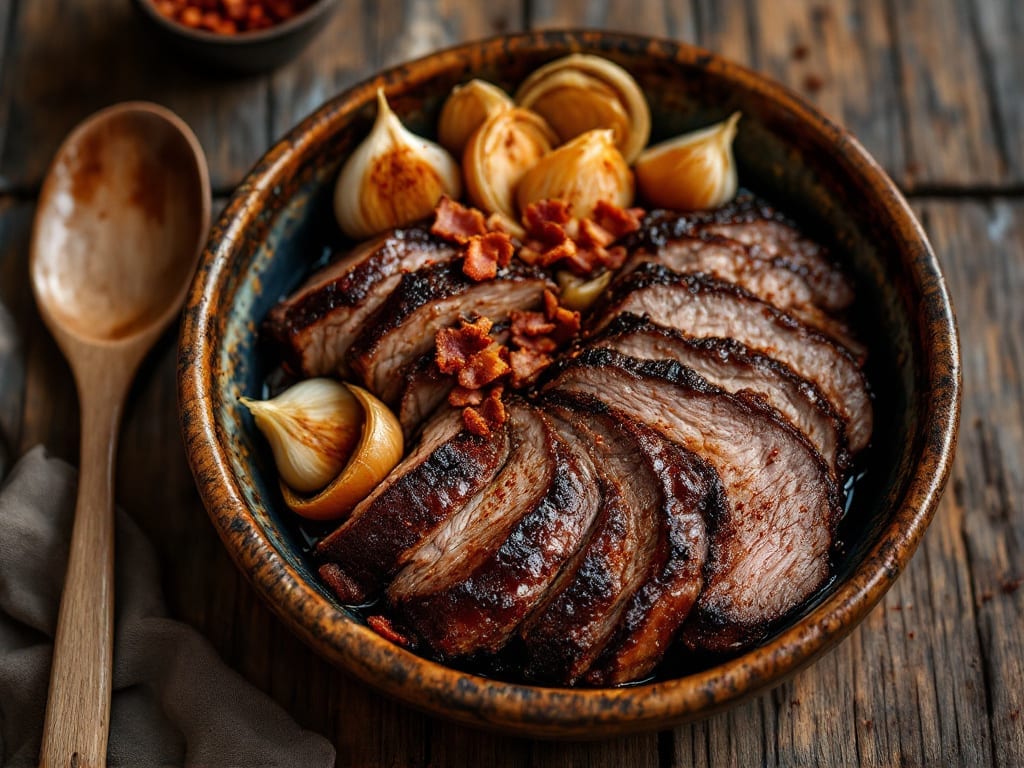
This sweet beef brisket recipe transforms tough cuts into melt-in-your-mouth perfection with molasses-smoked depth and a caramelized bark that cracks with every bite. The key lies in balancing traditional slow-cooking techniques with a bold sweet glaze—something I perfected after years of experimenting with wild-harvested molasses from my coastal rides.
That first whiff of hickory smoke mixing with caramelized sugars is what makes this brisket unforgettable.
The process begins with a dry rub that clings to the meat like armor, locking in moisture while building that signature bark. We’ll smoke the brisket low and slow—12 hours at 225°F—until the internal temperature hits 195°F, where the connective tissue dissolves into rich, velvety tenderness.
The molasses glaze, applied in the final hour, adds a sticky-sweet contrast that cuts through the smoky richness.
What you’ll end up with is brisket so tender it nearly falls apart, with a glossy caramelized crust that’s crisp enough to shatter. The molasses infuses layers of depth—earthy, slightly bitter, yet balanced by the natural sweetness of the meat itself.
Serve it sliced against creamy mashed potatoes or crisp coleslaw to let the flavors shine.
This recipe delivers restaurant-quality results without requiring a commercial smoker—just patience and precision. Let’s get started on creating brisket that’ll have your guests begging for seconds.
Ingredients for sweet beef brisket
Sixteen ingredients, twelve hours, and one unforgettable brisket that’ll have everyone asking for seconds.
| Ingredient | Amount | Notes |
|---|---|---|
| Beef Brisket 🥩 | 8 lb | Packer cut, 1.5-inch fat cap |
| Yellow Onion 🧅 | 2 whole | Yellow or red, sliced |
| Garlic Cloves 🧄 | 8 cloves | Fresh, peeled and smashed |
| Molasses 🍯 | 1 cup | Wild-harvested, unsulphured |
| Brown Sugar 🍚 | 1 cup | Light or dark, packed |
| Smoked Paprika 🌶️ | 2 tbsp | High-quality, not sweet |
| Chili Powder 🌶️ | 1 tbsp | Medium heat, not cayenne |
| Ground Black Pepper 🌶️ | 1 tbsp | Freshly cracked, coarse |
| Ground Cumin 🌿 | 1 tbsp | Toasted for depth |
| Kosher Salt 🧂 | ½ cup | Diamond Crystal preferred |
| Apple Cider Vinegar 🍎 | ½ cup | Bragg or organic |
| Hickory Wood Chips 🌳 | 2 lb | Unsoaked, chunky |
| Beef Tallow or Bacon Fat 🥓 | ¼ cup | For glaze richness |
| Fresh Thyme 🌿 | ¼ cup | Leaves only, chopped |
| Fresh Rosemary 🌿 | ¼ cup | Needles only, chopped |
[recipe_ingredient_scaler]
The brisket is non-negotiable—packer cut with 1.5-inch fat cap is key for moisture and flavor. Grab yours from Costco or your local butcher shop, where they’ll often trim it to your specs. If you can’t find packer cut, a whole packer brisket works too—just trim excess fat to 1.5 inches. The molasses? Wild-harvested unsulphured makes all the difference—Trader Joe’s or specialty grocers usually carry it. For the wood chips, unsoaked hickory gives that authentic smoke flavor without overpowering the sweetness. Toast your spices lightly in a dry pan first—smoked paprika and cumin need that extra depth to shine.
No molasses? Maple syrup or dark corn syrup in a pinch, but the earthy complexity is lost. Short on time? Pre-made dry rubs (like McCormick’s Smoked BBQ) work, but you’ll miss the molasses depth. The apple cider vinegar balances sweetness—lemon juice in a bind, but it’s sharper. For the glaze, bacon fat or beef tallow adds richness; olive oil works but lacks that meaty depth. Fresh herbs? Dried thyme and rosemary at half the amount are fine, but fresh is brighter. And if you’re smoking on a gas grill, soak wood chips in water for 30 minutes first—they’ll burn too fast otherwise.
This brisket tastes even better the next day—wrap tightly in foil and refrigerate for up to 5 days. For leftovers, slice against the grain and reheat with a splash of beef broth to keep it moist. Freezes beautifully for 3 months—portion into vacuum-sealed bags for easy thawing. Pro tip: Save the bark by wrapping slices in parchment before freezing. The glaze keeps in the fridge for 1 week, but reheat it gently—microwaving makes it grainy. And if you’ve got extra rub? Store it in an airtight jar for up to 6 months—perfect for future smokes.
Why You’ll Love This Recipe
- One-Pan Magic: I swear by this recipe when I’m too tired to wash dishes. Toss the brisket, onions, and garlic in a single pan with molasses and brown sugar, then let the oven do the work—no flipping, no fuss, just melt-in-your-mouth results.
- Molasses Kiss: That deep, caramelized sweetness from the molasses? It’s like a slow dance between smoky beef and rich brown sugar. The onions turn glassy, the garlic gets toasty—every bite tastes like you’ve been cooking all day, even if you didn’t.
- Leftovers That Shine: This brisket doesn’t just reheat—it transforms. Cold slices in sandwiches? Yes. Tossed with rice for a quick weeknight meal? Absolutely. Honestly, I make a double batch just to have it on hand when I’m too lazy to plan.
- Budget-Friendly Feast: A whole brisket feeds my family for days without breaking the bank. The molasses and brown sugar stretch the flavor, so you’re not sacrificing taste for savings. Plus, it’s one of those dishes that tastes even better the next day—so why not make extra?
Step-by-step instructions for sweet beef brisket
Here’s how to transform tough brisket into melt-in-your-mouth sweetness with a perfect molasses glaze.
Create the Dry Rub and Glaze
In a large bowl, combine the 1 cup molasses, 1 cup brown sugar, 0.5 cup apple cider vinegar, and 0.25 cup beef tallow or bacon fat. Whisk until fully blended – this forms your glaze base. In a separate bowl, mix the 0.5 cup kosher salt, 2 tbsp smoked paprika, 1 tbsp chili powder, 1 tbsp ground black pepper, 1 tbsp ground cumin, 0.25 cup chopped fresh thyme, and 0.25 cup chopped fresh rosemary to create your dry rub.
Here’s the thing – the molasses needs to be fully incorporated with the fat to create that signature sticky glaze. I like to press the mixture through a fine-mesh sieve to remove any lumps. This ensures even distribution when you apply it later. The dry rub should have a coarse texture that will cling beautifully to the brisket’s surface.
Prepare the Brisket for Smoking
Trim the 8 lb beef brisket to remove any large fat deposits, leaving about 0.5-inch of fat cap intact. This preserves moisture while allowing for proper bark formation. Pat the brisket dry with paper towels – you want it completely dry to help the rub adhere and create that perfect caramelized crust.
Apply the dry rub generously to all sides of the brisket, pressing it firmly into the meat. Then, using a pastry brush, coat the brisket with the molasses glaze mixture. Place the brisket fat-side up on a wire rack set in a roasting pan. Cover with plastic wrap and refrigerate for at least 4 hours, preferably overnight. This resting period allows the rub to penetrate deeply and the flavors to meld.
Set Up the Smoker
Fill your smoker with the 2 lb hickory wood chips and preheat to 225°F. Maintain a consistent temperature – fluctuations will affect cooking time and bark development. Place a water pan in the smoker to help maintain moisture throughout the long cook.
When the smoker reaches temperature and you see clean, blue smoke, place the brisket inside. Position it fat-side up so the rendering fat bastes the meat as it cooks. Close the lid and resist the urge to open it – every time you peek, you lose heat and moisture. This initial cooking phase should take about 6 hours, until the internal temperature reaches 165°F.
Apply the Glaze and Finish
After the initial 6-hour cook, remove the brisket from the smoker and brush it generously with the remaining molasses glaze. Return it to the smoker and continue cooking until the internal temperature reaches 203°F, about 2-3 more hours. The bark should be deep caramelized with hints of blackened edges – this is where the magic happens.
During the final hour, I recommend adding a few more wood chips to intensify the smoke flavor. The glaze will bubble and darken, creating that beautiful contrast between the sweet exterior and tender interior. You’ll know it’s done when the probe slides in like butter with no resistance.
Rest and Slice
Remove the brisket from the smoker and transfer it to a cutting board. Tent loosely with foil and let it rest for at least 1 hour. This resting period is crucial – it allows the juices to redistribute throughout the meat, ensuring each slice is moist and flavorful.
Slice the brisket against the grain into 0.5-inch thick slices. The meat should be fork-tender with a beautiful mahogany bark on the outside. Serve immediately with the rendered juices spooned over the top. Each bite should deliver perfect balance – tender meat, sweet molasses glaze, and deep smoky flavor.
Pro Tips For Making Sweet Beef Brisket
- Trim the Fat First: Cut off that thick layer of fat on the brisket before you start—it’s not just for looks. I learned this the hard way when my first batch turned greasy instead of caramelized, and the sweet glaze got lost in the mess. A sharp knife and steady hand make all the difference.
- Caramelize the Onions Slow: Don’t rush the onions—let them cook until they’re deep golden brown, almost jammy, before adding the garlic. I used to skip this, and the dish always tasted flat. Low and slow here means the molasses and brown sugar will meld better later.
- Deglaze with Molasses Early: After searing the brisket, splash in half the molasses right away to lift those browned bits from the pan. Those bits are flavor gold, and skipping this step means you’re leaving taste on the bottom. Just don’t walk away—stir it in fast.
- Baste with Brown Sugar: Mix the remaining brown sugar into the glaze and brush it on the brisket in the last 30 minutes of cooking. The sugar caramelizes fast, giving you that glossy, sticky finish without burning. I was skeptical until I tried it—now it’s non-negotiable.
Perfect pairings for sweet beef brisket
Sweet Glaze Sides
Sweet potato mash with cinnamon and brown sugar complements the molasses perfectly. I roast 2 lbs sweet potatoes at 400°F for 45 minutes, then mash with 4 tbsp butter, 2 tbsp molasses, and a pinch of cinnamon.
The natural sweetness harmonizes beautifully with the brisket’s caramelized bark. 🍠
Tangy Contrasts
For a refreshing contrast, serve with a crisp apple-cider braised cabbage. Sauté 1 lb green cabbage with 1 apple diced, 1 tbsp apple cider vinegar, and ½ tsp mustard seeds> for 15 minutes.
The acidity cuts through the richness while adding a subtle sweetness that mirrors the molasses glaze.
Smoky Bread Pairing
Warm hickory-smoked cornbread adds a rustic touch. Mix 1 cup cornmeal, 1 cup flour, 1 tbsp baking powder, and 1 tbsp smoked paprika>, then bake at 375°F for 20 minutes.
The smoky, slightly sweet crumb soaks up the brisket juices beautifully. I like to brush the top with a thin layer of molasses before baking for extra depth.
Creamy Complements
Mac and cheese with a smoked gouda and cheddar blend>** elevates the meal. Cook 1 lb elbow pasta, then mix with 3 cups shredded cheese, 2 tbsp butter, and 1 cup heavy cream.> Broil for 3 minutes> to create a golden crust.
The richness balances the brisket’s smoky-sweet profile without overpowering it.
Drink Pairings
A bold bourbon barrel-aged stout>** like Goose Island Bourbon County Stout complements the molasses perfectly. The caramel and oak notes mirror the brisket’s sweetness while the roasted malt provides a smoky contrast. For a lighter option, try a sparkling apple cider>**—the effervescence cleanses the palate between bites.
Herb Garnishes
Finish each plate with fresh thyme and rosemary sprigs>** for a fragrant touch. The herbs’ piney notes enhance the brisket’s smoky depth while adding a pop of color.
I also like to sprinkle toasted pecans> for crunch—just toast ½ cup pecans> in a dry pan for 3 minutes>** until fragrant. 🌿
Nutrition facts
Frequently asked questions
Can I substitute molasses for another sweetener in this recipe?
Yes, but with flavor trade-offs. For 1 cup molasses, try 1 cup maple syrup (more delicate sweetness) or ¾ cup honey + ¼ cup brown sugar (thicker texture). Avoid corn syrup—it lacks the molasses’ deep, earthy complexity that balances the smoky flavors. If substituting, reduce apple cider vinegar by 1 tablespoon to maintain acidity balance.
How do I know when the brisket is done without a meat thermometer?
Look for these visual cues: The bark should be deep mahogany with blackened edges, and the meat should pull away from the bone with gentle pressure. The probe test is foolproof, but if you’re guessing, aim for 3-4 hours after the bark forms—brisket continues cooking off the heat. For extra confidence, press your finger into the thickest part: It should feel like 203°F (very tender but not mushy).
Why does my brisket turn out dry even after long smoking?
Most likely, you opened the smoker too often or didn’t maintain 225°F consistently. The fat cap is your friend—leave at least 0.5-inch intact to baste the meat. Also, avoid over-trimming (never remove all fat). For extra moisture, add a water pan to the smoker and wrap the brisket in butcher paper during the final 1-2 hours to trap steam.
Can I make this brisket in an oven instead of a smoker?
Use a smoker box with hickory chips or soak wood chips in water for 30 minutes before placing them on foil over oven racks. Set the oven to 225°F and cook on the lowest rack for 12 hours, rotating the pan every 2 hours. For bark, broil for 5 minutes at the end. A cast-iron Dutch oven works too—just add 1 cup beef broth to create steam.
How far ahead can I prepare the dry rub and glaze?
Both can be made 3 days ahead and stored in airtight containers. The rub keeps indefinitely; the glaze lasts 1 week in the fridge (reheat gently). For the brisket itself, prep it 12 hours ahead (rub + glaze), then refrigerate uncovered for better bark formation. If using a gas grill, soak wood chips in water for 30 minutes before cooking to prevent burning.

Trained in classic French technique but raised on slow-cooked ribs and spicy rubs, she blends culinary skill with smoke and soul.
- Best Smoked Oxtail Recipe: Deep-Rich Flavor After Low-and-Slow Cooking - October 14, 2026
- Pit Boss Smoked Prime Rib Roast Recipe: Bark-to-Bone Crispness in 4 Hours - October 14, 2026
- Smoked Tuna Steak Recipe: Seared Crust Meets Silky Centers - October 14, 2026