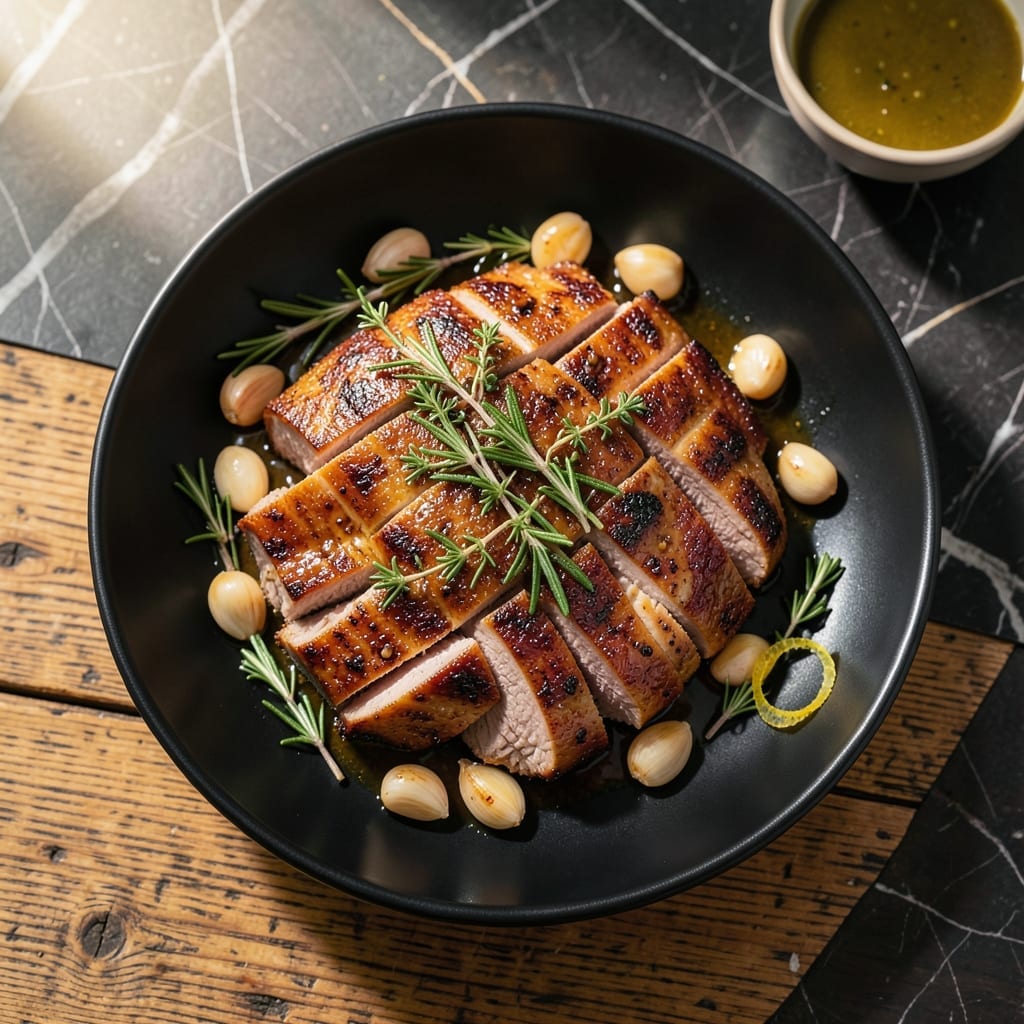
There’s something magical about the aroma of slow-roasted pork filling the air, signaling dinner is nearly ready. This method transforms a simple tenderloin into a centerpiece worthy of any table.
The secret lies in the herb crust and consistent rotisserie heat, which locks in moisture while creating a tender, flavorful exterior. I’ve perfected this technique to ensure every bite delivers juicy, succulent meat with a fragrant, crispy coating.
Serve it with roasted vegetables or a fresh salad for a complete meal that’s impressive yet approachable. The results speak for themselves—moist, aromatic, and perfectly seasoned every time.
This dish proves that patience and precision yield the best flavor. Let’s get started.
Ingredients for Rotisserie Pork Tenderloin
A few fresh herbs and a quality cut transform this into an impressive centerpiece.
| Ingredient | Amount | Notes |
|---|---|---|
| Pork Tenderloin 🥩 | 1 ½ lb | Trimmed of excess fat |
| Fresh Rosemary 🌿 | 2 tbsp | Finely chopped |
| Fresh Thyme 🍃 | 2 tbsp | Leaves stripped from stems |
| Garlic Cloves 🧄 | 4 cloves | Minced finely |
| Olive Oil 🫒 | ¼ cup | Extra-virgin preferred |
| Dijon Mustard 🟡 | 2 tbsp | Smooth, not whole grain |
| Kosher Salt 🧂 | 1 ½ tsp | Diamond Crystal preferred |
| Black Pepper 🌶️ | 1 tsp | Freshly ground |
| Paprika 🌶️ | 1 tsp | Sweet or smoked variety |
| Dried Oregano 🍃 | 1 tsp | Rubbed between fingers |
| Brown Sugar 🟤 | 1 tbsp | Light or dark |
| Red Wine Vinegar 🍷 | 1 tbsp | For acidity balance |
| Fresh Parsley 🌿 | ¼ cup | Chopped, for garnish |
[recipe_ingredient_scaler]
The pork tenderloin should be uniformly thick for even cooking—Whole Foods or Costco often carry well-trimmed options. For the herbs, organic bunches from farmers markets have superior aroma compared to pre-packaged grocery store varieties. The olive oil should be high-quality extra-virgin; its flavor comes through in the crust. Always check the tenderloin’s color—look for a light pink hue without graying.
No fresh rosemary or thyme? Dried herbs at one-third the amount work, but rehydrate them in a bit of warm water first. Out of Dijon? Whole-grain mustard adds texture but lacks smoothness. For a sweeter crust, swap brown sugar for maple syrup. If you’re missing red wine vinegar, apple cider vinegar offers a milder tang. The garlic can be substituted with 1 tsp garlic powder if absolutely necessary.
The tenderloin benefits from a 30-minute rest at room temperature before cooking. Store fresh herbs wrapped in damp paper towels for up to 5 days. Leftover pork keeps well in the fridge for 3-4 days or freezes beautifully for 2 months.
Why You’ll Love This Recipe
- I’ll be real: the sandwiches I make with the leftovers the next day might be even better than the original meal.
- Set It & Forget It: I just rub the pork with olive oil, garlic, rosemary, and thyme, pop it in the oven, and let the rotisserie do the magic.
- Herb-Crusted Heaven: That crispy exterior with the juicy meat? The fresh rosemary and thyme make every bite ridiculously good.
- Weeknight Hero: Between us, this is my go-to for busy evenings—it’s unfussy but feels special enough for guests.
Step-by-Step Instructions for Rotisserie-Style Pork Tenderloin
This method delivers restaurant-quality results with a perfectly seasoned crust and fall-apart tenderness.
Step 1: Prepare the Herb Marinade
In a medium bowl, whisk together the 0.25 cup olive oil, 2 tbsp Dijon mustard, 1 tbsp red wine vinegar, and 1 tbsp brown sugar until fully emulsified. The mustard acts as both a flavor base and a binder for the herb mixture.
Add the 2 tbsp fresh rosemary, 2 tbsp fresh thyme, 4 cloves minced garlic, 1.5 tsp kosher salt, 1 tsp black pepper, 1 tsp paprika, and 1 tsp dried oregano. Stir thoroughly to create a thick, aromatic paste. This ensures every bite of the pork tenderloin carries the full herb profile.
Step 2: Coat and Marinate the Pork
Pat the 1.5 lb pork tenderloin dry with paper towels to remove excess moisture. This step is crucial for achieving a proper sear and allowing the marinade to adhere effectively.
Rub the herb mixture all over the pork, pressing firmly to create an even coating. Place the tenderloin in a shallow dish, cover, and refrigerate for at least 2 hours or up to 12 hours. The longer marinating time allows the flavors to penetrate deeply, resulting in more tender meat.
Step 3: Slow-Roast to Perfection
Preheat your oven to 325°F. This lower temperature ensures even cooking without drying out the lean pork tenderloin. Place the marinated pork on a wire rack set over a baking sheet to allow air circulation on all sides.
Roast for 45-60 minutes or until the internal temperature reaches 145°F on an instant-read thermometer. You’ll notice the exterior developing a beautiful golden-brown crust while the inside remains juicy. Baste the pork with pan juices halfway through cooking for added moisture.
Step 4: Rest and Serve
Remove the pork from the oven and transfer it to a cutting board. Tent loosely with aluminum foil and let it rest for 10-15 minutes. This resting period allows the juices to redistribute throughout the meat, ensuring each slice stays moist.
Slice the pork tenderloin against the grain into ½-inch thick medallions. Garnish with the 0.25 cup fresh parsley for a pop of color and fresh herbal note. The meat should be tender enough to cut with a fork, with a well-seasoned crust on every piece.
Pro Tips For Making Rotisserie Pork Tenderloin
- Truss the Tenderloin: I learned this the hard way—pork tenderloin cooks unevenly if left loose, so tie it with kitchen twine every 2 inches to guarantee even cooking and a uniform crust. —
- Smash the Garlic: Skip mincing and just smash the garlic cloves with the flat of your knife—it releases more flavor into the olive oil and rosemary without the risk of burning. —
- Rest Before Slicing: After pulling it from the oven, give it a solid 10 minutes under foil. Sounds weird, but it works: the juices redistribute, and your pork stays tender instead of dry. —
- Herbs Under Skin: Make small slits in the tenderloin and tuck sprigs of fresh rosemary and thyme inside before roasting—it infuses the meat with way more flavor than just rubbing them on the outside.
Essential Equipment for This Recipe
Rotisserie Setup
For true rotisserie results at home, I rely on my Weber Genesis EX-335 gas grill with a rotisserie attachment. It provides consistent indirect heat that mimics a commercial rotisserie. The key is maintaining 325°F throughout the cook.
Essential Skewer
Invest in a heavy-duty stainless steel rotisserie skewer—I use the Cave Tools model. Secure the pork with rotisserie forks on both ends, tightening firmly. Balance is crucial to prevent uneven cooking or motor strain.
Heat Source
Use lump charcoal in a Weber kettle or propane for gas grills. For charcoal, bank coals on one side for indirect heat. With gas, turn off the center burner and use outer burners on medium-low. 🔥
Temperature Control
A dual-probe thermometer is non-negotiable. I swear by my ThermoWorks Smoke—one probe for grill temp, the other for internal meat temperature. Aim for 145°F in the thickest part.
Drip Pan Setup
Place a disposable aluminum pan directly under the pork to catch drippings. Add 1 cup water or apple juice to the pan to maintain moisture in the cooking chamber. This also prevents flare-ups.
Resting Tools
Have a large cutting board and aluminum foil ready for resting. I also keep a meat mallet handy to pound thicker sections for even cooking. The right tools make all the difference.
Nutrition Facts
Frequently Asked Questions
What temperature should I maintain for even cooking?
Keep your grill or oven steady at 325°F for consistent rotisserie-style results. This ensures the pork cooks evenly without drying out. Use a reliable thermometer to monitor both ambient and internal temps.
How long should the pork rest after cooking?
Let it rest for 10-15 minutes under foil to redistribute juices. Skipping this step can leave the meat dry. The internal temperature will also rise 5-10°F during resting.
Can I use dried herbs instead of fresh?
Yes, but use 1/3 the amount and rehydrate in warm water first. Fresh herbs provide superior flavor, but dried work in a pinch. Adjust salt levels if using dried, as they can be more concentrated.
Why is my crust not crispy enough?
Pat the pork completely dry before applying the marinade. For extra crispiness, finish with 2-3 minutes over direct heat after reaching 145°F. Ensure your rotisserie or oven is properly preheated.

Trained in classic French technique but raised on slow-cooked ribs and spicy rubs, she blends culinary skill with smoke and soul.
- Recipe for Boneless Pork Chops in Cast Iron Skillet: Sear and Baste to Juicy Perfection - October 3, 2026
- Recipe for Boneless Cross Rib Roast: Slow-Roasted Beef with Herb Crust - October 3, 2026
- Hamburgers in Sauce Recipe Crock Pot: Slow-Cooked Savory Delight - October 3, 2026