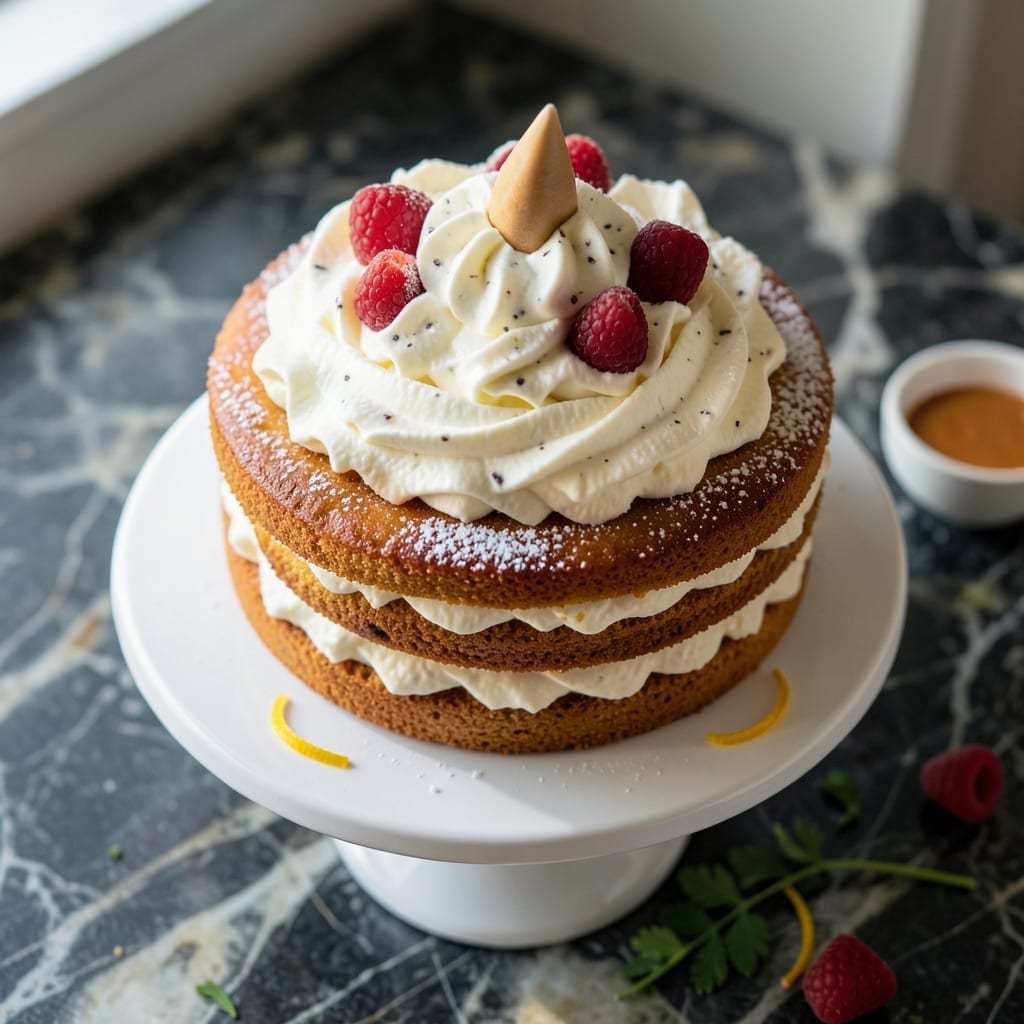
This Southern classic combines delicate cake layers with a light, creamy frosting that defines elegance. The secret lies in the balance of textures—tender cake meets airy, sweet topping.
I’ve perfected this version to ensure every bite delivers that signature Chantilly charm. The layers are moist yet sturdy enough to hold the fluffy frosting without collapsing.
The result is a dessert that’s as beautiful as it is delicious, with a refined sweetness that never overpowers. It’s a crowd-pleaser for any occasion.
Serve it at your next gathering and watch it disappear.
Ingredients for Rouses Chantilly Cake
Delicate layers and airy frosting come together for this showstopping Southern dessert.
| Ingredient | Amount | Notes |
|---|---|---|
| All-Purpose Flour 🌾 | 3 cups | Sifted for airy texture |
| Granulated Sugar 🍚 | 2 ½ cups | Divided for cake and frosting |
| Unsalted Butter 🧈 | 1 ½ cups | Softened to room temperature |
| Large Eggs 🥚 | 6 whole | Room temperature, separated |
| Baking Powder 🧂 | 1 tbsp | Fresh for maximum rise |
| Vanilla Extract 🌿 | 2 tsp | Pure extract preferred |
| Whole Milk 🥛 | 1 ¼ cups | Room temperature for best results |
| Heavy Whipping Cream 🥛 | 2 cups | Very cold, for frosting |
| Powdered Sugar 🍚 | 2 cups | Sifted for smooth frosting |
| Salt 🧂 | ½ tsp | Fine sea salt preferred |
| Cream of Tartar 🧂 | ½ tsp | Stabilizes egg whites |
[recipe_ingredient_scaler]
The flour and leavening are the foundation here. King Arthur Flour is my go-to for consistent results, and Clabber Girl baking powder never fails me. Use the freshest eggs you can find (I grab mine from local farmers markets when possible)—room temperature is key for maximum volume in the cake. The butter should be truly softened, not melted, for the right texture in both cake and frosting.
No cake flour? All-purpose works fine—just sift it well. Out of cream of tartar? Lemon juice at the same amount can substitute in a pinch. Heavy cream is non-negotiable for the frosting though (the light stuff won’t whip properly). For extra flavor, swap 1 tsp vanilla for vanilla bean paste. The milk can be any percentage, but whole gives the richest result.
Cake layers stay fresh wrapped tightly at room temp for 2 days, or refrigerate for 5 days. The frosting holds its shape for 3 days refrigerated, but it’s best used fresh. Leftovers? Freeze unfrosted cake layers for up to 3 months—thaw before assembling.
Why You’ll Love This Recipe
- One-Bowl Wonder: I love that I can mix everything in a single bowl—flour, sugar, butter, eggs, and baking powder—no fancy equipment needed.
- Buttery Heaven: Honestly, the unsalted butter makes this cake ridiculously rich, with a melt-in-your-mouth crumb.
- Dress It Up: Between us, this cake is a chameleon—dust it with powdered sugar for brunch or layer with jam for dessert.
- Feeds a Crowd: One batch makes a tall, impressive cake that stretches to 12 slices, and leftovers taste even better the next day.
Step-by-Step Instructions for Chantilly Cake
This elegant layer cake comes together with careful attention to detail and perfect timing.
Step 1: Prepare the Cake Batter
First, I sift together the 3 cups All-Purpose Flour, 1 tbsp Baking Powder, and 0.5 tsp Salt in a large bowl. This ensures a light, airy texture in the finished cake layers.
In a separate bowl, I cream the 1.5 cups Unsalted Butter with 2 cups Granulated Sugar until light and fluffy. Then I beat in the 6 whole Large Eggs one at a time, followed by the 2 tsp Vanilla Extract. Alternately add the dry ingredients and 1.25 cups Whole Milk, beginning and ending with the flour mixture.
Step 2: Bake the Cake Layers
Divide the batter evenly between three prepared 9-inch round pans. Bake at 350°F for 25-30 minutes or until a toothpick inserted in the center comes out clean. I always rotate the pans halfway through baking to ensure even browning.
Let the layers cool in the pans for 10 minutes, then turn them out onto wire racks to cool completely. This cooling step is crucial—if the layers are still warm when you add the frosting, it will melt and slide right off.
Step 3: Make the Chantilly Frosting
In a chilled bowl, I combine the 2 cups Heavy Whipping Cream with the 2 cups Powdered Sugar and beat until soft peaks form. Then I add the remaining 0.5 cup Granulated Sugar and continue beating until stiff peaks form.
For extra stability, I add the 0.5 tsp Cream of Tartar while beating. This helps the frosting hold its shape, especially important for layer cakes that need to stand up to serving. Be careful not to overbeat or the frosting will become grainy.
Step 4: Assemble the Cake
Place the first cake layer on a serving plate and spread a generous layer of frosting on top. Repeat with the second layer, then add the final layer. I like to apply a thin crumb coat of frosting first, then chill the cake for 15 minutes before adding the final layer of frosting.
This technique traps any loose crumbs and creates a smooth, professional-looking finish. Use the remaining frosting to cover the top and sides of the cake, creating beautiful swirls and peaks with a spatula.
Step 5: Chill and Serve
For the best texture, I chill the assembled cake for at least 1 hour before serving. This allows the frosting to set and makes slicing cleaner. Let it sit at room temperature for 15-20 minutes before serving to soften slightly.
The cake should have tender, moist layers with a light, fluffy frosting that holds its shape. Each slice reveals the beautiful contrast between the golden cake and the white frosting, a hallmark of this Southern classic.
Pro Tips For Making Rouses Chantilly Cake
- Room Temp Eggs: Pull your eggs out 30 minutes before mixing—I learned this the hard way after my first cake turned dense because cold eggs wouldn’t cream properly with the butter.
- Cream Butter Longer: Beat the butter and sugar for a full 3-4 minutes until it’s pale and fluffy. After burning three batches, I finally figured out this is what gives the cake its light texture.
- Sift the Flour: Sounds tedious, but sifting the flour and baking powder together prevents lumps and guarantees even rising. My grandmother swore by this, and she was right.
- Check at 25 Minutes: Start testing for doneness 5 minutes early—this cake goes from perfect to overbaked fast. I skip this when I’m lazy, but the texture suffers every time.
Common Mistakes When Making This Recipe
Overmixing the Batter
Mix just until the flour disappears—overworking develops gluten, making your cake dense instead of tender. I stop the mixer as soon as I see no more dry spots, usually after 30-45 seconds on low speed. 💡
Skipping Room Temperature
Cold eggs and butter won’t emulsify properly, leading to a lumpy batter. I set my 6 large eggs and 1.5 cups butter out 1-2 hours before starting. This ensures a smooth, airy texture in the final cake.
Underbaking the Layers
A toothpick should come out clean with just a few moist crumbs. I check at 25 minutes and add 2-3 minute increments if needed. Pulling them too soon causes sinking in the middle.
Warm Cake Assembly
Patience is key—cool layers completely before frosting. I let mine rest on wire racks for at least 1 hour. Warm cake melts the frosting, causing slides and smears.
Overbeating the Frosting
Watch for stiff peaks, then stop. I beat the 2 cups heavy cream on medium-high for 3-4 minutes. Overbeating turns it grainy, ruining that silky Chantilly texture.
Skipping the Crumb Coat
This thin layer catches stray crumbs for a clean finish. I spread a light coat, chill for 15 minutes, then add the final frosting. It’s the secret to a polished look.
Nutrition Facts
Frequently Asked Questions
Can I make this cake ahead of time?
Yes! Bake and cool the layers 1 day ahead, then wrap tightly at room temperature. Prepare the frosting 4 hours ahead and refrigerate. Assemble the cake the day of serving for best texture.
Why did my frosting turn grainy?
Overbeating is the most common cause. Stop mixing as soon as stiff peaks form, usually after 3-4 minutes. Also ensure your cream and bowl are very cold before starting.
Can I use cake flour instead of all-purpose?
Use the same amount, but reduce the baking powder to 2 tsp. Cake flour’s lower protein creates an even tenderness.
How do I store leftovers?
Refrigerate in an airtight container for up to 5 days. For best results, bring slices to room temperature for 20 minutes before serving.

Trained in classic French technique but raised on slow-cooked ribs and spicy rubs, she blends culinary skill with smoke and soul.
- Recipe for Boneless Pork Chops in Cast Iron Skillet: Sear and Baste to Juicy Perfection - October 3, 2026
- Recipe for Boneless Cross Rib Roast: Slow-Roasted Beef with Herb Crust - October 3, 2026
- Hamburgers in Sauce Recipe Crock Pot: Slow-Cooked Savory Delight - October 3, 2026