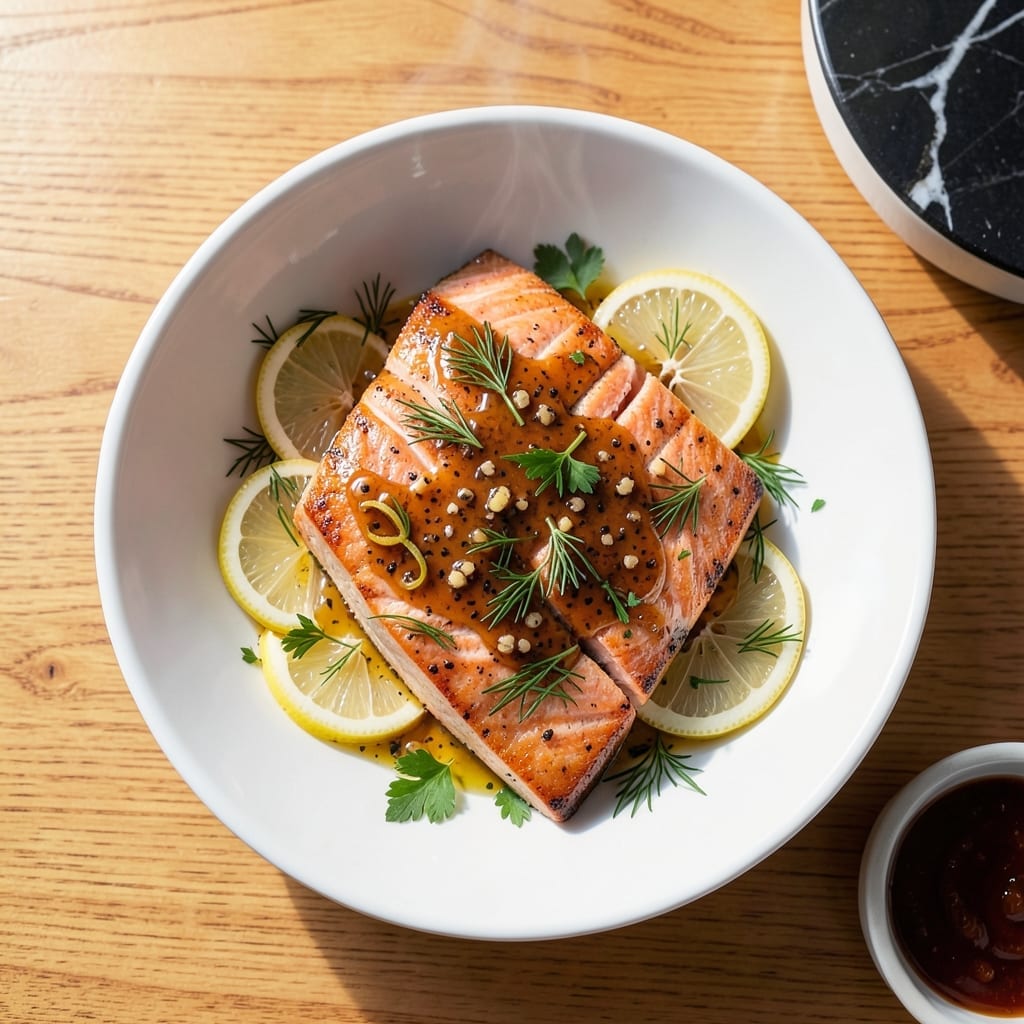
This salmon recipe offers a heart-healthy solution that doesn’t sacrifice flavor. I developed this method after years of testing to ensure it supports cardiovascular wellness while tasting delicious.
The dish highlights omega-3 rich salmon, prepared with low-sodium ingredients to keep blood pressure in check. A simple lemon-herb seasoning enhances the fish without adding excess salt.
Cooking at 375°F for just 12-15 minutes preserves the salmon’s natural moisture and nutrients. The result is tender, flaky fish with a bright, fresh finish.
Perfect for a nutritious weeknight dinner that prioritizes health without compromise.
Ingredients for Salmon Recipe for High Blood Pressure
Heart-smart ingredients come together for a flavorful, omega-3 packed meal that supports cardiovascular health beautifully.
| Ingredient | Amount | Notes |
|---|---|---|
| Salmon Fillets 🐟 | 1 ½ lb | Skin-on, wild-caught preferred for omega-3s |
| Extra-Virgin Olive Oil 🫒 | 2 tbsp | Cold-pressed, heart-healthy fat |
| Fresh Lemon 🍋 | 1 whole | Zested and juiced for brightness |
| Garlic Cloves 🧄 | 3 cloves | Minced for aromatic depth |
| Fresh Dill 🌿 | ¼ cup | Chopped, for fresh herb finish |
| Fresh Parsley 🌿 | ¼ cup | Chopped, for color and freshness |
| Dijon Mustard 🟡 | 1 tbsp | Low-sodium variety for tang |
| Honey 🍯 | 1 tsp | Raw, for natural sweetness |
| Ground Black Pepper 🌶️ | ½ tsp | Freshly ground for best flavor |
| Sea Salt 🧂 | ¼ tsp | Fine grain, low-sodium option |
| Lemon Zest 🍋 | 1 tsp | From the fresh lemon above |
| Asparagus Spears 🥬 | 1 lb | Trimmed, for a low-sodium side |
| Quinoa 🌾 | 1 cup | Uncooked, for a heart-healthy grain |
[recipe_ingredient_scaler]
The salmon quality is paramount here. Wild-caught sockeye or king salmon offers the highest omega-3 content, essential for cardiovascular support. Whole Foods or Trader Joe’s consistently stock excellent frozen options that are just as nutritious as fresh. The extra-virgin olive oil should be cold-pressed—look for bottles with a harvest date within the last year for peak antioxidant benefits.
Need to swap the salmon? Rainbow trout works beautifully with similar omega-3 benefits. No fresh herbs? Dried dill or parsley at one-third the amount maintains the flavor profile. Low-sodium Dijon mustard can be replaced with regular Dijon—just reduce added salt elsewhere. The honey can be substituted with maple syrup for a vegan-friendly option without impacting flavor.
Cooked salmon keeps well in the fridge for 3-4 days—store it in a sealed container with a paper towel to absorb moisture. The quinoa and asparagus reheat best with a splash of water or lemon juice. For optimal freshness, prepare the herb mixture just before cooking. Leftovers freeze beautifully for up to 2 months.
Why You’ll Love This Recipe
- One Pan Wonder: I toss the fillets with olive oil, lemon, and garlic—just one sheet pan, then straight to the oven.
- Bright and Zesty: That squeeze of fresh lemon with the dill and garlic makes every bite pop without heavy seasoning.
- Meal Prep Hero: I make a big batch on Sunday and it stays fresh for days—great for lunches or quick dinners.
- Heart-Smart Choice: Packed with omega-3s and good fats, this dish does double duty: delicious and blood-pressure-friendly.
Step-by-Step Instructions for Salmon with Heart-Healthy Sides
This method ensures maximum flavor and nutritional benefit while keeping sodium in check.
Step 1: Prepare the Salmon Marinade
In a small bowl, whisk together the 2 tbsp extra-virgin olive oil, 1 tbsp Dijon mustard, 1 tsp honey, 1 tsp lemon zest, minced 3 cloves garlic cloves, 0.25 tsp sea salt, and 0.5 tsp ground black pepper until fully emulsified. This creates a balanced base that enhances the salmon’s natural richness.
Place the 1.5 lb salmon fillets in a shallow dish and pour the marinade over them, ensuring all surfaces are coated. Let them sit at room temperature for 15 minutes to absorb the flavors. The acidity from the lemon and mustard will begin to tenderize the fish without overpowering its delicate texture.
Step 2: Roast the Salmon to Perfection
Preheat your oven to 400°F. Transfer the marinated salmon fillets to a parchment-lined baking sheet, skin-side down. The parchment prevents sticking while allowing the skin to crisp slightly.
Roast for 12-15 minutes until the salmon flakes easily with a fork and reaches an internal temperature of 145°F. The edges should appear slightly opaque, while the center remains moist. Avoid overcooking, as salmon continues to cook slightly after removal from the oven.
Step 3: Prepare the Quinoa Base
Rinse the 1 cup quinoa under cold water to remove any bitterness. Combine with 2 cups water in a saucepan and bring to a boil. Once boiling, reduce heat to low, cover, and simmer for 15 minutes until the liquid is absorbed and the quinoa is fluffy.
Remove from heat and let it sit covered for 5 minutes. Fluff with a fork and stir in half of the chopped 0.25 cup fresh dill and 0.25 cup fresh parsley for a vibrant, herbaceous finish. This heart-healthy grain serves as a nutritious foundation for the dish.
Step 4: Sauté the Asparagus
While the salmon roasts, heat a large skillet over medium-high heat. Add the trimmed 1 lb asparagus spears and a drizzle of the extra-virgin olive oil. Sauté for 5-7 minutes, stirring occasionally, until the asparagus is tender-crisp and slightly charred in spots.
Squeeze the juice from half of the 1 whole fresh lemon over the asparagus and sprinkle with the remaining fresh herbs. This brightens the flavor and complements the richness of the salmon without adding excess sodium.
Step 5: Plate and Garnish
Divide the quinoa evenly among four plates, creating a bed for the salmon. Place a portion of the roasted salmon fillets on top of each serving. Arrange the sautéed asparagus alongside and garnish with additional lemon wedges from the remaining half of the fresh lemon.
The result is a balanced, heart-healthy meal that highlights the natural flavors of each component while delivering essential omega-3 fatty acids and minimal sodium. Serve immediately for the best texture and temperature.
Pro Tips For Making Salmon Recipe For High Blood Pressure
- Skin Down First: Always start cooking the salmon with the skin side down on medium-high heat—it gets crispy while the inside stays tender. I learned this the hard way after flipping too soon and ruining the texture.
- Pat It Dry: Blot the salmon fillets with a paper towel before seasoning—excess moisture steams the fish instead of searing it. Sounds tedious, but it actually changes the outcome.
- Skip Overcooking: Pull the salmon off the heat when it’s still slightly translucent in the center—it’ll finish cooking while resting. After burning three batches, I finally figured out how to nail the timing.
- Zest the Lemon: Use both the zest and juice from the lemon for brighter flavor without adding salt. My grandmother swore by this, and she was right: it makes a real difference in balancing the dish.
Perfect Pairings for This salmon recipe for high blood pressure
Side Dish Pairings
A simple cucumber-tomato salad with 1 tbsp red wine vinegar and 1 tsp olive oil adds freshness without extra sodium. I also love roasted broccoli florets tossed with ½ tsp garlic powder for a heart-healthy crunch. Both complement the salmon beautifully. 🥗
Beverage Pairings
Try a crisp Pinot Grigio from Northern Italy—its bright acidity cuts through the richness. For non-alcoholic, sparkling water with a squeeze of fresh lemon keeps it light. Green tea with a dash of honey also pairs wonderfully.
Light Bread Options
A slice of whole-grain bread or sourdough from your local bakery adds texture without overpowering the dish. Toast it lightly and rub with a garlic clove for extra flavor. I prefer low-sodium sourdough to keep the meal balanced.
Sauce Enhancements
A dollop of low-fat Greek yogurt mixed with 1 tsp lemon zest makes a creamy, tangy sauce. Drizzle 1 tbsp olive oil with fresh dill for a Mediterranean touch. These add richness without compromising heart health. ✨
Nutrition Facts
Frequently Asked Questions
Why is this recipe good for heart health?
Salmon is rich in omega-3 fatty acids, which help lower blood pressure and reduce inflammation. The low-sodium seasonings and heart-healthy fats like olive oil further support cardiovascular wellness.
Can I use frozen salmon for this?
Yes! Thaw frozen salmon overnight in the fridge before marinating. Pat it dry to ensure even cooking. Wild-caught frozen fillets work just as well as fresh for this recipe.
How can I reduce sodium even more?
Skip added salt entirely and use herbs, lemon, and garlic for flavor. Opt for low-sodium Dijon or make your own mustard with vinegar and spices.
What’s the best way to check doneness?
Use a meat thermometer to confirm the internal temperature reaches 145°F. The flesh should flake easily with a fork but still look slightly translucent in the center.

Trained in classic French technique but raised on slow-cooked ribs and spicy rubs, she blends culinary skill with smoke and soul.
- Best Smoked Oxtail Recipe: Deep-Rich Flavor After Low-and-Slow Cooking - October 14, 2026
- Pit Boss Smoked Prime Rib Roast Recipe: Bark-to-Bone Crispness in 4 Hours - October 14, 2026
- Smoked Tuna Steak Recipe: Seared Crust Meets Silky Centers - October 14, 2026