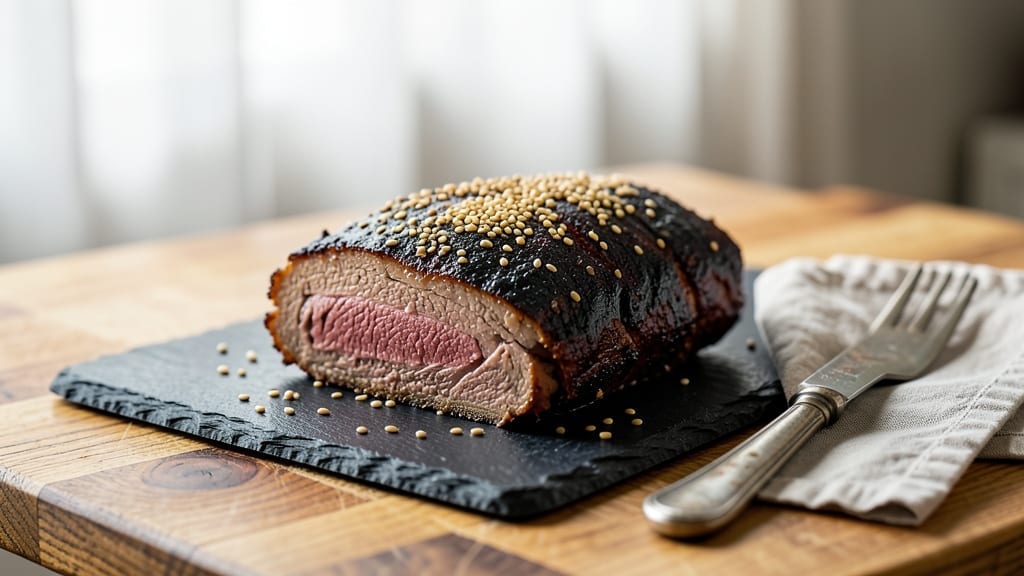
Slow-cooked brisket delivers that fall-apart tenderness and deep smoky flavor that turns weeknights into celebrations. I’ve perfected this method after years of testing—starting with a simple dry rub and letting the slow cooker work its magic.
The key lies in patience and a few precise techniques that transform tough meat into something unforgettable.
This recipe uses just six pantry staples and a 6-hour cook time, making it ideal for busy weeknights or weekend gatherings. The dry rub (coarse salt, black pepper, garlic powder, paprika, and a touch of brown sugar) creates a flavorful bark while keeping the meat moist.
Unlike traditional smoking methods, this version delivers the same rich results without needing a smoker.
By the end, you’ll have brisket that shreds easily with a fork, infused with smoky, savory notes that make every bite worth waiting for. Serve it sliced over mashed potatoes, in tacos, or on a classic sandwich with pickles and coleslaw. The leftovers? Even better the next day.
Ready to master this foolproof technique? Let’s get started with the step-by-step instructions that guarantee restaurant-quality brisket at home.
Ingredients for slow cooked brisket
Six pantry staples transform tough brisket into melt-in-your-mouth perfection with smoky depth and restaurant-quality tenderness.
| Ingredient | Amount | Notes |
|---|---|---|
| Beef Brisket 🥩 | 4 lb | Packaged or whole, trimmed of excess fat |
| Coarse Kosher Salt 🧂 | ¼ cup | Diamond Crystal preferred for texture |
| Freshly Ground Black Pepper 🌶️ | 2 tbsp | Cracked peppercorns for optimal flavor |
| Garlic Powder 🧄 | 1 tbsp | Freshly toasted for deeper aroma |
| Smoked Paprika 🌶️ | 1 tbsp | For authentic smoky depth |
| Light Brown Sugar 🍚 | 1 tbsp | Turbinado for better texture |
| Apple Cider Vinegar 🍎 | ¼ cup | Enhances bark development |
| Beef Broth 💧 | 1 ½ cups | Low-sodium for flavor control |
| Yellow Onion 🧅 | 1 whole | Peeled and halved for slow cooking |
| Fresh Rosemary 🌿 | ¼ cup | Chopped sprigs for aromatic depth |
| Fresh Thyme 🌿 | ¼ cup | Leaves stripped from stems |
| Butter 🧈 | ¼ cup | Cold cubes for basting |
[recipe_ingredient_scaler]
The brisket cut is critical—look for a well-marbled packer cut with visible fat cap for moisture retention. Butcher shops often carry better quality than grocery stores, and asking for a whole packer lets you trim excess fat yourself. If using pre-packaged, check for USDA Prime or Choice grading. The apple cider vinegar is non-negotiable for bark development; Bragg or Mott’s are reliable brands. Fresh herbs elevate this beyond basic dry rubs—Whole Foods or local farmers markets carry superior quality, but grocery store bundles work in a pinch.
No smoked paprika? Substitute 1 tbsp regular paprika plus 1 tsp liquid smoke—though purists argue this alters the profile. Fresh rosemary and thyme can be swapped for 1 tbsp each dried herbs, but reduce to half the amount for potency. The beef broth should be low-sodium; Swanson or Kraft are solid options, but homemade is ideal. For a smokier profile without a smoker, add 1 tbsp chipotle powder to the rub. The butter cubes should be cold and unsalted—European-style butter like Plugrá works beautifully.
This brisket develops best when cooked low and slow—6-8 hours on low in a slow cooker. For leftovers, store in an airtight container with any rendered juices for up to 5 days. Freeze portions for up to 3 months by wrapping tightly in foil. The rendered fat can be strained and saved for future recipes—great for roasting vegetables or enriching sauces. Reheat gently in the oven or slow cooker to preserve moisture, never microwaving directly.
Why You’ll Love This Recipe
- No-Fuss Weeknight Win: Honestly, this isn’t one of those recipes that demands a perfect Sunday afternoon. Just trim the fat (leave that ¼-inch cap—it’s your flavor shield), slather on the salt, pepper, garlic powder, and smoked paprika, and let it breathe for an hour while I make coffee. The sear takes 15 minutes max, then it’s in the oven doing its thing while I zone out to a show.
- Crispy-Outside, Creamy-Inside Magic: That apple cider vinegar? It’s not just for salads—it caramelizes into this chef’s kiss bark while the inside turns into buttery, pull-apart perfection. The rosemary and thyme infuse the broth like a secret weapon, and the butter basting at the end? Pure indulgence. I’ll be real: the first bite always makes me pause mid-chew.
- Leftovers That Outshine Takeout: Five days in the fridge, no drama. I pack half for lunch the next day, freeze half for a lazy Sunday, and the rest? I slice it thin for tacos or sandwiches. The juices cling to every bite even after days, and honestly, it tastes even better cold—like a fancy steakhouse meal you didn’t have to drive to.
- Budget’s Best Kept Secret: A 4-pound brisket feeds everyone—my husband, two kids, and the dog (okay, fine, he just licks the plate). The spices? A few dollars’ worth, and the beef broth stretches into gravy for seconds. Between us, this is the only time I splurge on meat, and it always pays off. No sad, dry leftovers here.
Step-by-step instructions for slow cooked brisket
This method delivers melt-in-your-mouth tenderness while preserving that essential smoky depth.
Prepare the Brisket with Dry Rub
Trim the 4 lb beef brisket of any excess fat, leaving about ¼-inch thickness on the fat cap. This creates a barrier against drying while allowing smoke penetration. Pat the meat dry with paper towels—moisture is the enemy of proper bark formation.
In a small bowl, combine the ¼ cup coarse kosher salt, 2 tbsp freshly ground black pepper, 1 tbsp garlic powder, 1 tbsp smoked paprika, and 1 tbsp light brown sugar. The coarse salt enhances texture while the sugar promotes early bark development. Rub this mixture evenly over all surfaces of the brisket, pressing firmly so the spices adhere. Let it sit uncovered at room temperature for 1 hour while you prepare the cooking vessel.
Sear and Braise for Deep Flavor
Heat a Dutch oven over medium-high heat and add the ¼ cup butter. Once melted, sear the brisket fat-side down for 8-10 minutes until deeply browned. Flip and sear the other side for another 6-8 minutes. This step develops the Maillard reaction, creating complex flavors that will carry through the slow cook.
Remove the brisket and set aside. In the same pot, add the 1 yellow onion (halved), ¼ cup fresh rosemary, and ¼ cup fresh thyme. Sauté for 3 minutes until fragrant. Deglaze with the ¼ cup apple cider vinegar, scraping up any browned bits from the bottom. Return the brisket to the pot, fat-side up, then pour in the 1½ cups beef broth. Bring to a simmer, cover tightly, and transfer to a 325°F oven.
Slow Cook Until Probe-Tender
Cook for 4-5 hours until the internal temperature reaches 195°F and the meat is fork-tender. The reason we aim for this higher temperature is to break down collagen fully, transforming tough connective tissue into silky gelatin that makes each bite tender. Check occasionally and add ½ cup beef broth if the liquid evaporates below the meat level.
Here’s the thing—don’t rush this process. The slow cook transforms the brisket from tough to luxurious. When a meat thermometer inserted into the thickest part reads 195°F and the probe slides in like butter, it’s ready. The meat will continue carrying over to 203°F during resting, which is perfect for that fall-apart texture.
Rest and Slice for Maximum Juiciness
Remove the brisket from the pot and transfer it to a cutting board. Tent loosely with foil and let it rest for 30-60 minutes. This resting period allows the juices to redistribute throughout the meat, ensuring every slice is moist and flavorful. Real talk: Skipping this step means dry, stringy meat.
Slice the brisket against the grain into ¼-inch thick pieces. The grain direction will be visible as lines running through the meat. Serve immediately with the reduced cooking juices spooned over the top. Each bite should deliver rich, smoky depth with that melt-in-your-mouth tenderness we promised.
Pro Tips For Making Slow Cooked Brisket
- Don’t Skimp on the Sear: That first 8-10 minutes fat-side down isn’t just for looks—it’s where the brisket’s flavor foundation gets built. I used to rush it, and the meat always tasted flat. The butter should sizzle like crazy, and the fat cap should turn a deep golden-brown. If your pan isn’t smoking a little, crank the heat higher. This isn’t the time to be gentle.
- Salt the Night Before: I learned this the hard way—salting the brisket an hour before cooking just doesn’t cut it. The coarse kosher salt needs time to work its magic, drawing out moisture and letting the spices penetrate deep. Do it the night before, cover it, and refrigerate. By cooking time, the rub will stick like glue, and the bark will form faster in the oven.
- Check That Thermometer: The recipe says 195°F, but I’ve seen people pull brisket at 180°F and call it “done.” Don’t be that person. The collagen won’t fully break down until it hits that higher temp, and that’s what turns tough meat into melt-in-your-mouth perfection. A cheap probe thermometer is worth every penny—no guessing, no excuses.
- Deglaze Like Your Life Depends on It: That apple cider vinegar isn’t just for acidity—it’s your secret weapon for scraping up every last browned bit stuck to the Dutch oven. I used to pour it in and stir once, then move on. Now I scrape with a wooden spoon like I’m digging for buried treasure. Those bits are pure flavor, and they’ll make your braising liquid taste like it’s been simmering all day.
Pro cooking tips for this recipe
Master the Maillard Reaction
That deep, caramelized bark on your brisket? It’s all about the Maillard reaction, and it starts during searing. I use a Dutch oven because it retains heat so well—no flimsy skillets here.
After searing the fat-side down for 8-10 minutes, flip and do the same for the other side. The browned bits you scrape up with the apple cider vinegar? That’s liquid gold—packed with flavor you don’t want to waste. Trust me, this step elevates the whole dish. 🔥
Low and Slow is Non-Negotiable
The 325°F oven isn’t just a random number—it’s the sweet spot for breaking down collagen without drying out the meat. I’ve tried higher temps, and they just burn the outside before the inside cooks. The 4-5 hours cook time might seem long, but that’s how you get that melt-in-your-mouth texture.
Check the internal temp with a probe—it should hit 195°F and feel like butter when you poke it. Patience here pays off big time.
Basting with Butter Tricks
Once the brisket hits 190°F, I like to baste it with cold butter cubes every 30 minutes. This keeps the bark crispy while adding richness. I’ve even tried adding a splash of beef broth to the butter for extra moisture, but plain butter works just fine.
The key is to do it gently—you’re not flipping a burger, so no aggressive sloshing!
Resting: The Forgotten Step
I can’t stress enough how important the 30-60 minute rest is. After all that work, slicing too soon means dry, stringy meat. I’ve learned this the hard way—once, I rushed and ended up with a sad, tough brisket.
Let it rest on a cutting board, tented loosely with foil, and let those juices redistribute. It’s like letting a good wine breathe before serving. 💫
Slice Against the Grain
This isn’t just a cooking tip—it’s a game-changer. The grain in brisket runs in different directions, so you’ll need to rotate the board mid-slice. I use a sharp chef’s knife (nothing dull) and aim for ¼-inch slices.
The goal is to shorten the muscle fibers, making each bite tender. Pro tip: Save the juices for serving—every drop counts!
Nutrition facts
Frequently asked questions
Why does my brisket need to rest after cooking?
The 30-60 minute rest lets juices redistribute evenly throughout the meat. Skipping this step means dry, stringy slices—trust me, I’ve learned this the hard way! Resting ensures every bite is moist and flavorful, just like the recipe promises.
What’s the best way to slice brisket for maximum tenderness?
Slice ¼-inch thick pieces against the grain—this shortens muscle fibers for melt-in-your-mouth texture. Rotate the board mid-slice since brisket’s grain runs in different directions. A sharp knife is a must!
Can I use a slow cooker instead of an oven for this recipe?
Yes! Transfer the pot to a slow cooker on low heat after searing. Cook for 8-10 hours until the internal temp reaches 195°F. Just check occasionally and add ½ cup beef broth if liquid evaporates.
How do I know when the brisket is fully cooked?
Use a meat thermometer—it’s ready at 195°F when the probe slides in like butter. The meat will carry over to 203°F during resting, guaranteeing that perfect fall-apart texture.

Trained in classic French technique but raised on slow-cooked ribs and spicy rubs, she blends culinary skill with smoke and soul.
- Smoked Chicken Salad Recipe: Crispy, Smoky Bites With Creamy Ranch Dressing - October 19, 2026
- Beer Can Chicken in a Smoker Recipe: Juicy, Herbed Perfection in One Can - October 19, 2026
- Brined Beef Brisket Recipe: Ultra-Tender, Juicy Cuts in One Pot - October 19, 2026