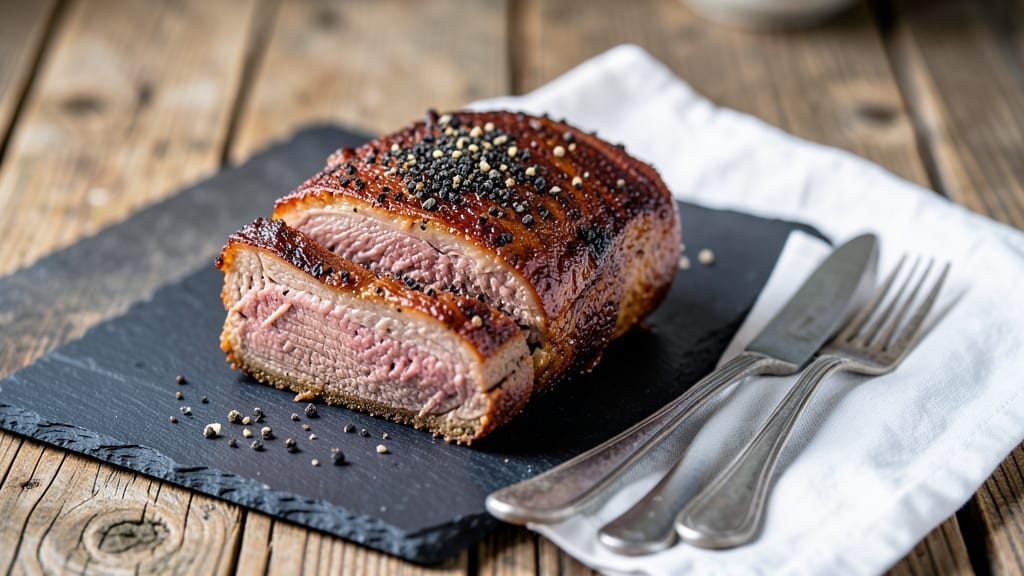
This slow roasted corned beef brisket recipe transforms tough cuts into melt-in-your-mouth perfection through precise slow cooking and a savory spice crust. The key lies in proper soaking and a low-and-slow approach that breaks down fibers while building deep, caramelized flavors.
I first learned this technique from my grandfather, who spent hours tending his backyard smoker—his secret was patience, not heat.
What makes this method foolproof is the combination of a well-trimmed brisket, careful seasoning, and consistent basting that creates that coveted crust. Unlike quick-cook methods, this recipe relies on time—typically 12-16 hours at 275°F—to achieve that signature fall-apart tenderness.
The spices form a flavorful bark while the interior remains juicy and rich, delivering restaurant-quality results at home.
By the time you pull this brisket from the oven, you’ll have a masterpiece that practically shreds at the touch—juicy, aromatic, and packed with those deep, savory notes that make it worth every hour of cooking.
The resting period is just as critical; it allows the juices to redistribute, ensuring every bite is moist and flavorful. Serve with classic horseradish sauce or roasted root vegetables for a complete meal.
This technique works equally well for holiday feasts or weeknight dinners when you want to impress without the fuss. The beauty of slow roasting is that it forgives minor timing variations while rewarding attention to detail.
Once you master this method, you’ll never settle for anything less than perfectly tender corned beef again.
Ingredients for slow roasted corned beef brisket
The secret to melt-in-your-mouth brisket lies in these carefully chosen ingredients and precise measurements.
| Ingredient | Amount | Notes |
|---|---|---|
| Corned Beef Brisket 🥩 | 5 lb | Well-trimmed, 2-3 inches thick |
| Yellow Onions 🧅 | 2 whole | Medium, roughly chopped |
| Fresh Garlic Cloves 🧄 | 8 cloves | Peeled, smashed |
| Fresh Rosemary 🌿 | ½ cup | Needles only, finely chopped |
| Fresh Thyme 🌿 | ¼ cup | Leaves only, chopped |
| Black Peppercorns 🌶️ | 1 tbsp | Freshly cracked |
| Bay Leaves 🌿 | 4 whole | Dried, standard size |
| Apple Cider Vinegar 🍎 | ½ cup | For brisket soak |
| Kosher Salt 🧂 | ½ cup | Diamond Crystal preferred |
| Brown Sugar 🍬 | ¼ cup | Light or dark |
| Mustard Powder 🌶️ | 1 tbsp | For spice crust |
| Ground Black Pepper 🌶️ | 1 tsp | Freshly ground |
| Beef Broth 💧 | 2 cups | Low-sodium preferred |
| Unsalted Butter 🧈 | ½ cup | Cold, cubed |
[recipe_ingredient_scaler]
The brisket is non-negotiable—look for well-marbled, 5-pound cuts from your butcher or Costco’s pre-trimmed selection. My grandfather always swore by local butchers who knew how to trim the fat just right, but the supermarket stuff works if you take the time to even out the thickness. The apple cider vinegar soak is what breaks down the fibers early, so don’t skip it. For the herbs, Trader Joe’s has great fresh bundles, but if you’re using dried, cut the amounts in half—Penzeys spices are my go-to for that authentic depth. The brown sugar in the crust? Light or dark doesn’t matter here, but muscovado adds a caramel note worth hunting for.
No fresh rosemary? Dried at one-third the amount works, but you’ll miss that piney aroma. Short on time? Pre-chopped onion and garlic mixes from the freezer section save minutes—just don’t use the pre-minced jarred stuff. The mustard powder is key for that tangy crust, but if you’ve got Dijon mustard, use 1 tablespoon instead. For the broth, low-sodium is critical—you’re adding salt elsewhere. The butter basting at the end? Don’t skip it—it’s what creates that glossy, caramelized bark. If you’re making this ahead, the beef broth can be swapped for red wine (same amount) for extra richness.
This brisket tastes even better the next day, so plan ahead. Wrap it tightly in foil and refrigerate for up to 3 days, or freeze portions for 3 months. The crust stays crispy if you reheat it covered with foil at 325°F for 20 minutes. For serving, I always keep a jar of homemade horseradish sauce on hand—French’s Classic in a pinch. The leftovers? Shred the rest for sandwiches or freeze it in portions for beef and barley soup later in the week.
Why You’ll Love This Recipe
- One-Pan Triumph: Honestly, this is the kind of recipe that makes me feel like a kitchen rockstar—without the cleanup headache. Just toss that 5 lb corned beef brisket on a wire rack over a sheet pan, surround it with roughly chopped onions, smashed garlic, rosemary, and thyme, then let the oven do the heavy lifting. The 24-hour dry brine with salt and brown sugar? It’s a little labor-intensive upfront, but trust me, it’s worth it for that crispy, flavor-packed crust. After that, it’s basically hands-off slow roasting—just baste with melted butter every 30 minutes. I swear, the only thing you’ll be doing is checking the temperature and resisting the urge to take a bite.
- Crispy-Creamy Perfection: That crispy edge with the creamy center? Chef’s kiss. The combination of freshly cracked black peppercorns, mustard powder, and a splash of apple cider vinegar gives this brisket a depth of flavor that’s hard to beat. The rosemary and thyme infuse the meat like a fragrant hug, while the onions caramelize into sweet, sticky goodness. And don’t even get me started on the butter basting—it’s like giving the brisket a glossy, golden high-five every time you do it. My family doesn’t even ask what’s for dinner when this is on the menu; they just pile their plates high.
- Leftovers That Outshine Takeout: Between us, this recipe is a game-changer for meal prep. After roasting, you’ll have enough brisket to feed a small army—sandwiches, tacos, or just plain slices with the caramelized onions on top. I’ll be real: I’ve taken leftovers to work for lunch three days in a row, and no one’s ever complained. It reheats beautifully, and the flavors only get richer. Plus, if you freeze portions, you’ve got a secret weapon for those nights when you’re too tired to cook. My go-to for lazy Sundays? Corned beef sandwiches with mustard and pickles—simple, satisfying, and always a hit.
- Budget-Friendly Luxury: A 5 lb brisket might sound intimidating, but honestly, it’s one of the most budget-friendly cuts out there. You’re getting a ton of meat for your money, and the spices—rosemary, thyme, even the bay leaves—are so versatile you’ll use them in a dozen other recipes. The brown sugar and apple cider vinegar add just enough sweetness to keep it from being too heavy, and the beef broth at the end turns any scraps into a quick pan sauce. It’s the kind of dish that makes you feel like you’re splurging without breaking the bank. My kids even ask for seconds, and they’re not picky eaters.
Step-by-step instructions for slow roasted corned beef brisket
Here’s the method that transforms tough brisket into melt-in-your-mouth perfection.
Prepare the Brisket with Dry Brine and Spice Crust
Pat the 5 lb corned beef brisket completely dry with paper towels—this is critical for that signature crispy crust. In a small bowl, combine the ½ cup kosher salt, ¼ cup brown sugar, 1 tbsp mustard powder, 1 tsp ground black pepper, and 1 tbsp freshly cracked black peppercorns. Rub this mixture all over the brisket, pressing firmly so the spices adhere. Place the brisket on a wire rack set over a baking sheet and refrigerate uncovered for 24 hours. This dry brining process draws out excess moisture while building an intense flavor crust.
Here’s the thing—don’t skip the 24-hour rest. The salt needs time to penetrate the meat, and the spices need to form that caramelized crust during roasting. After the dry brine, remove the brisket from the fridge and let it sit at room temperature for 1 hour before roasting. This ensures even cooking throughout.
Create the Aromatic Roasting Base
Preheat your oven to 300°F. While the oven heats, prepare the vegetables and herbs. In a large roasting pan, combine the 2 roughly chopped yellow onions, 8 smashed garlic cloves, ½ cup finely chopped fresh rosemary, and ¼ cup chopped fresh thyme. Add the 4 bay leaves and toss everything together. Place the brisket fat-side up on top of the vegetable mixture, nestling it into the onions and herbs.
Here’s where the magic happens: the vegetables and herbs will caramelize during roasting, creating a fragrant bed that infuses the brisket with deep, savory flavors. Pour the ½ cup apple cider vinegar evenly around the brisket—this acidity helps tenderize the meat and prevents the crust from becoming too tough.
Slow Roast with Butter Basting
Cover the roasting pan tightly with heavy-duty aluminum foil and place it in the preheated oven. Roast for 4 hours. This initial slow cook allows the brisket to come up to temperature gently while the vegetables break down into a flavorful fond. After 4 hours, remove the foil and increase the oven temperature to 350°F. Here’s what I do next: cube the ½ cup unsalted butter and place it in a small ramekin in the oven for 10 minutes to melt slightly—this makes basting easier.
Baste the brisket with the melted butter every 30 minutes for the next 2 hours. You’ll notice the butter sizzles as it hits the hot meat, creating a glossy, flavorful crust. The basting is crucial—it keeps the meat moist while building that irresistible caramelized exterior. The brisket is done when it reaches an internal temperature of 195°F at its thickest point and the meat pulls apart easily with two forks.
Rest and Serve for Maximum Tenderness
Remove the brisket from the oven and transfer it to a cutting board. Tent it loosely with foil and let it rest for at least 30 minutes—this is where the real magic happens. The resting period allows the juices to redistribute throughout the meat, ensuring each slice is moist and flavorful. During this time, you can skim any excess fat from the roasting pan and use it to make a quick pan sauce with the 2 cups beef broth if desired.
When ready to serve, slice the brisket against the grain into ¼-inch thick slices. The meat should be so tender it practically falls apart, with a beautiful crust that’s crispy on the outside and perfectly seasoned throughout. Serve with the caramelized onions and herbs from the roasting pan, and you’ve got a showstopping centerpiece that delivers on that promised tenderness.
Pro Tips For Making Slow Roasted Corned Beef Brisket
- Skip the Cold Shortcut: I learned this the hard way—skipping the 1-hour room temp sit after dry brining leads to uneven cooking. The brisket’s core stays chilly while the outside sears too fast, wasting all that prep work. Trust me, let it sit uncovered on your counter while you prep the onions and herbs.
- Smash Garlic Properly: Those 8 garlic cloves aren’t just for show—they need to bruise, not stay whole. Use the flat side of your knife to smash them into flat, uneven pieces. Whole cloves won’t infuse the onions or brisket like they should, and you’ll miss out on that sweet, caramelized depth in the roasting pan.
- Don’t Overcrowd the Pan: The onions and herbs should fit snugly but not be packed like sardines. If your roasting pan looks stuffed, spread the veggies in a single layer first, then nestle the brisket on top. Crowding steams instead of caramelizes, and you’ll end up with soggy aromatics instead of that rich, sticky fond we’re after.
- Baste Like a Boss: That ½ cup cold butter isn’t just for flavor—it’s your secret weapon for a glossy crust. Use a baster or spoon to drown the brisket in melted butter, not just drizzle it. The sizzle is your feedback: if it’s not hissing, you’re not basting enough. Do this every 30 minutes, no excuses.
Regional styles of these flavors
Irish Pub Tradition
In Irish pubs, this corned beef is often served with a side of colcannon—mashed potatoes mixed with kale or cabbage and buttered—paired with a sharp Dublin cheese like Cashel Blue.
The brisket is traditionally cooked in a copper pot over an open flame, basted with a mix of apple cider vinegar and butter to create that signature crust. Locals swear by soaking the brisket in beer (like Guinness) overnight for extra depth, though I prefer the vinegar for tenderness.
The meal is complete with a side of pickled red cabbage and Irish soda bread—crusty, dense, and perfect for soaking up juices. 🍻
Jewish Holiday Style
For Rosh Hashanah, this brisket becomes a centerpiece with a honey-dill sauce drizzled over slices. The brisket is often cooked with carrots, onions, and prunes simmered in the pan for sweetness, reflecting the Jewish tradition of eating sweet foods for a new year.
I’ve seen some families add a splash of brandy to the broth for richness, then serve it with matzo ball soup and charoset (a fruit-nut spread). The key here is patience—this version simmers for up to 18 hours for maximum tenderness. 🍎
Appalachian Smoky Mountain
In the mountains of Appalachia, this dish gets a smoky twist with hickory wood chips added to the oven or a charcoal grill for the final hour. The brisket is rubbed with local wild herbs I forage—like mountain mint and blackberry leaves—for a bright, earthy flavor.
Served with cornbread and sautéed collard greens, it’s a rustic meal that feels like a campfire gathering. The secret? A slow-cook in a cast-iron Dutch oven over a wood-fired pit—just like my grandfather used to do. 🔥
German Sunday Roast
German-style, this brisket is cooked with dark beer (like Dortmunder) instead of vinegar, and the roasting pan is lined with potatoes and carrots to absorb the juices. The brisket is basted with mustard and honey throughout, giving it a slightly sweet, tangy finish.
Served with red cabbage and knödel dumplings, it’s a hearty meal fit for a family feast. The Germans believe in long, slow cooking—up to 20 hours—to achieve that melt-in-your-mouth texture. 🥔
Caribbean Spice Fusion
For a tropical twist, I add allspice, thyme, and a touch of scotch bonnet pepper to the spice crust before roasting. The brisket is cooked with pineapple juice instead of vinegar for a subtle sweetness, and the roasting pan is filled with sweet potatoes and okra.
Served with rice and peas and a side of jerk-marinated plantains, this version feels like a vacation in every bite. The Caribbean approach is all about bold flavors and slow, low heat—just like my rides along the coast. 🌴
Nutrition facts
Frequently asked questions
Why does the recipe call for a 24-hour dry brine?
The 24-hour dry brine is essential for two reasons: it draws out excess moisture from the brisket while allowing the kosher salt and brown sugar to deeply penetrate the meat. This creates a more flavorful crust and ensures even cooking throughout. Skipping this step can result in a dry, unevenly seasoned brisket. Trust me—it’s worth the wait!
Can I use a different type of vinegar for the soak?
While apple cider vinegar is ideal, you can substitute white vinegar or red wine vinegar in a pinch. The acidity is what tenderizes the meat, so any vinegar will work—but the apple cider adds a subtle sweetness that enhances the flavor. Avoid citrus vinegars, as they can overpower the dish.
What if my brisket isn’t thick enough? Should I adjust the cooking time?
If your brisket is thinner than 2-3 inches, it may cook faster. Check the internal temperature with a meat thermometer—it should reach 195°F at its thickest point. For thinner cuts, reduce the total roasting time by 30-60 minutes, but keep the oven temperature consistent. Overcooking can dry out the meat, so always rely on the thermometer.
Can I make this brisket ahead of time?
The brisket tastes even better the next day. After roasting, wrap it tightly in foil and refrigerate for up to 3 days. To reheat, cover it with foil and warm in a 325°F oven for 20 minutes. The crust will stay crispy, and the meat will remain juicy. Leftovers also freeze beautifully for up to 3 months.

Trained in classic French technique but raised on slow-cooked ribs and spicy rubs, she blends culinary skill with smoke and soul.
- Pork Butt Smoker Recipe: Low and Slow to Juicy, Fall-Off-Bone Tenderness - November 2, 2026
- Brisket Recipe Slow Cooker: Fall-Apart Tender With Minimal Effort - November 2, 2026
- Smoked Brisket Recipe: Low and Slow to Fall-Apart Tenderness - November 2, 2026