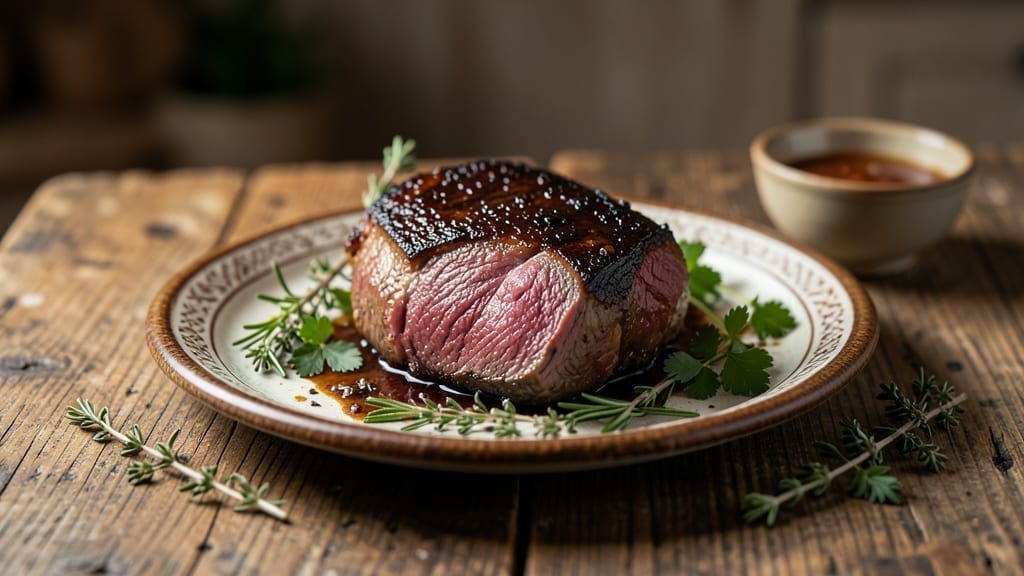
Mastering a smoked beef blade roast transforms tough cuts into melt-in-your-mouth perfection—where low-and-slow smoking meets French technique precision. The day I realized French searing could elevate my smoky rubs changed everything, and this recipe is the proof.
With the right wood, temperature control, and a well-balanced rub, you’ll achieve a roast that’s both tender and deeply flavorful, with a crust that’s crisp enough to stand up to a knife.
This recipe demands patience but rewards with restaurant-quality results that impress even skeptical guests. Start by applying a dry rub of coarse salt, black pepper, garlic powder, and smoked paprika to create a flavorful bark.
Smoke the roast at 225°F with hickory or cherry wood until the internal temperature reaches 195°F—this ensures the meat is fall-apart tender. The key? A reverse sear at the end to lock in juices and create that coveted crust.
What you’ll end up with is a roast that’s buttery, juicy, and packed with smoky depth—every slice practically melts on the tongue.
The bark will be dark and crackly, while the interior remains tender and rich, with just a hint of pink in the center if you prefer it that way.
This is the kind of roast that makes your kitchen smell like a professional pit, and your dinner table the envy of the neighborhood.
Pair it with roasted root vegetables, a tangy red wine reduction, or a simple green salad to round out the meal. The beauty of this technique is its versatility—whether you’re feeding a crowd or treating yourself to a special dinner, this roast delivers every time.
Let’s get started on creating your perfect smoked beef blade roast.
Ingredients for smoked beef blade roast
Smoky, buttery perfection starts with these simple ingredients and a little patience.
| Ingredient | Amount | Notes |
|---|---|---|
| Beef Blade Roast 🥩 | 4 lb | Bone-in, well-marbled cut |
| Coarse Kosher Salt 🧂 | 2 tbsp | For dry rub bark |
| Black Pepper, Coarse Ground 🌶️ | 1 ½ tbsp | Freshly ground preferred |
| Garlic Powder 🧄 | 1 tbsp | Not garlic salt |
| Smoked Paprika 🌶️ | 1 tbsp | For deep smoky flavor |
| Dried Thyme Leaves 🍃 | 1 tbsp | Or Mexican oregano |
| Brown Sugar, Light 🍯 | 1 tbsp | Balances saltiness |
| Hickory Wood Chips 🌳 | 1 package | Soaked 1 hour before use |
| Apple Cider Vinegar 🍎 | ½ cup | For vinegar brine soak |
| Ice Water 💧 | 2 cups | For cooling after sear |
| Beef Broth 🥘 | 1 cup | For basting during smoke |
| Butter, Unsalted 🧈 | ½ cup | For reverse sear crust |
[recipe_ingredient_scaler]
The beef blade roast is your star here—bone-in, well-marbled cuts from the butcher counter are ideal. Look for USDA Choice or Prime at Whole Foods or your local meat market. The marbling is what turns tough connective tissue into melt-in-your-mouth tenderness. I always buy mine pre-cut for convenience, but if you’re doing it yourself, ask for 1.5-inch cubes—they smoke more evenly. The hickory wood chips from Traeger or Weber make the difference in that authentic smoky aroma—soak them in apple cider vinegar for 1 hour before using, trust me on this.
No hickory chips? Cherry wood chips work just as well—they add a fruitier note. Running low on thyme? Mexican oregano at half the amount gives that same earthy kick. Want to skip the vinegar brine? Wet the meat with water before applying the rub—just don’t skip the vinegar soak for the chips. The brown sugar isn’t just for flavor—it helps create that beautiful bark when you sear. And if you’re worried about the salt, kosher salt is your friend—use it generously for that perfect crust without over-salting the meat.
This roast is all about patience—24-36 hours in the fridge before smoking lets the rub penetrate deep. The internal temperature of 195°F is non-negotiable for that fall-apart tenderness. After smoking, let it rest for 1 hour before slicing. The butter for the reverse sear? Microwave it 40 seconds to just melt it—this makes it easier to baste without burning. Portion it into containers for 4-5 days in the fridge or freeze for 3 months. I always make extra—leftovers reheat beautifully and taste even better the next day.
Why You’ll Love This Recipe
- No-Fuss Smoking: Honestly, this isn’t one of those recipes that requires a 10-step prep dance. Just a quick vinegar brine (½ cup apple cider vinegar + ice water) for 2-4 hours while you prep the dry rub—2 tbsp kosher salt, 1.5 tbsp black pepper, and a pinch of everything else. The rest? Smoking at 225°F for 6-8 hours while you nap or watch TV.
- Smoky-Sweet Perfection: Between the hickory wood chips and that smoked paprika in the rub, every bite hits like a campfire in your mouth. But here’s the kicker: the sear at the end with ½ cup unsalted butter? That crispy edge with the creamy center? Chef’s kiss. No dry beef here.
- Leftovers That Rule: I’ll be real—this roast is that good, you’ll want seconds. And guess what? It holds up beautifully. Slice it up, portion it out, and you’ve got 4-5 days’ worth of sandwiches, tacos, or just plain ol’ carving bowl magic. Freeze half if you’re feeling ahead, too.
- Budget’s Best Kept Secret: A 4 lb beef blade roast is your secret weapon for feeding a crowd without breaking the bank. The dry rub (just 12 ingredients total) costs less than a fancy steak, and the vinegar brine keeps it juicy through the long cook. Plus, the reverse sear with butter? That’s the kind of magic that makes leftovers taste like you just cooked all day.
Step-by-step instructions for smoked beef blade roast
Here’s how to transform a simple roast into melt-in-your-mouth perfection using just 12 ingredients.
Prepare the Vinegar Brine and Dry Rub
In a large bowl, combine the ½ cup apple cider vinegar and 2 cups ice water. This acidic mixture tenderizes the meat while adding depth of flavor. Place the 4 lb beef blade roast in the bowl, ensuring it’s fully submerged. Refrigerate for 2-4 hours, turning occasionally. This step guarantees that your roast stays juicy through the long cook—don’t skip it.
While the roast brines, prepare the dry rub by combining 2 tbsp coarse kosher salt, 1½ tbsp black pepper, 1 tbsp garlic powder, 1 tbsp smoked paprika, 1 tbsp dried thyme leaves, and 1 tbsp brown sugar in a small bowl. Mix until evenly distributed. The brown sugar balances the saltiness while contributing to that beautiful bark formation during smoking.
Sear the Roast for Flavor and Texture
Remove the roast from the brine and pat it very dry with paper towels—this is critical for developing that crispy bark later. Heat a heavy skillet over medium-high heat and add the roast. Sear on all sides for 3-4 minutes per side until deeply browned. The goal here is to create a flavorful crust while keeping the interior cold enough for the low-and-slow cook.
Once seared, transfer the roast to a cutting board and let it rest for 5 minutes. Soak the 1 package hickory wood chips in water for 1 hour to prepare for smoking. This pre-soaking ensures steady smoke production without flare-ups. Meanwhile, preheat your smoker to 225°F—this low temperature is key to achieving that tender, melt-in-your-mouth texture.
Smoke the Roast Low and Slow
Place the seared roast in the smoker, fat-side up, and insert a meat probe thermometer into the thickest part of the roast. Smoke undisturbed for 6-8 hours until the internal temperature reaches 170°F. This is where the magic happens—the long cook time breaks down connective tissue, transforming tough muscle into fork-tender beef. I know it’s tempting to check frequently, but every time you open the smoker, you lose heat and moisture.
About 1 hour before the roast reaches 170°F, add 1 cup beef broth to the smoker pan. This creates steam that helps maintain moisture in the meat. The roast should have a deep mahogany bark on the outside and a beautiful smoke ring just beneath the surface. When the internal temperature hits 170°F, remove it from the smoker and tent loosely with foil.
Reverse Sear for the Perfect Crust
Here’s where we create that buttery, caramelized crust you’ve been waiting for. Increase your oven temperature to 450°F and place a cast-iron skillet in the oven to preheat. While the oven heats, slice the ½ cup unsalted butter into small pieces and place them in the hot skillet.
Once the butter has melted and is foaming, carefully remove the skillet from the oven and place the roast in it, fat-side down. Return the skillet to the oven for 4-5 minutes until the crust is deep golden brown and crispy. The butter bastes the meat, creating that irresistible crust while keeping the interior juicy. Let the roast rest for 15-20 minutes before slicing—this allows the juices to redistribute, ensuring every bite is moist and flavorful.
Pro Tips For Making Smoked Beef Blade Roast
- Dry It Thoroughly: After brining, towel-dry the roast until the surface glistens—no wet spots. I learned this the hard way: any moisture left means your bark will steam instead of crisp. Use fresh paper towels and go slow; rushing leaves a damp film that sabotages the smoker’s magic.
- Salt the Wood Chips: Sprinkle a pinch of the coarse kosher salt over the soaked hickory wood chips before adding them to the smoker. It prevents flare-ups and adds a subtle mineral note to the smoke—like a secret seasoning boost. (Yes, even a little goes a long way.)
- Don’t Rush the Rest: That 5-minute rest after searing isn’t optional—it’s what keeps the roast from turning into a sad, stringy mess in the smoker. Let the meat breathe, or you’ll fight with it all 6-8 hours. (Trust me, your patience pays off.)
- Butter First, Roast Second: Melt the ½ cup unsalted butter in the skillet before adding the roast—this creates a liquid bath that bastes the meat instantly. I used to add it after, and the crust never got that golden, buttery perfection. Start hot, finish low, but always butter first.
Serving suggestions for this dish
Plating with Purpose
This roast deserves a presentation that honors its smoky depth and buttery texture. I like serving it sliced against the grain on a warm slate board—it keeps the meat elevated while showcasing that beautiful bark.
Add a drizzle of reduced red wine sauce (simmer ½ cup red wine with 1 tbsp balsamic vinegar and 1 tsp brown sugar until thickened) for extra richness. 💛
Classic Side Pairings
A roasted root vegetable medley brings earthy contrast to the smoky beef. Toss 1 lb carrots, 1 lb parsnips, and 1 lb sweet potatoes in 2 tbsp olive oil, 1 tsp smoked paprika, and ½ tsp salt, then roast at 400°F for 35 minutes.
The caramelized edges complement the roast’s bark perfectly.
Creamy Comfort Sides
For a creamy touch, serve with garlic mashed potatoes. Boil 2 lbs Yukon Gold potatoes until tender, mash with ½ cup butter, ¼ cup warm milk, and 2 minced garlic cloves. The smooth texture balances the roast’s rustic texture beautifully.
Fresh Contrast Options
Brighten the plate with a shaved fennel and arugula salad. Thinly slice 1 large fennel bulb and toss with 4 cups arugula, 2 tbsp lemon juice, and 1 tbsp olive oil. The peppery greens cut through the richness of the smoked beef.
Wine Pairing Perfection
A bold Cabernet Sauvignon from Napa Valley cuts through the fat while complementing the smoky notes. I reach for a 2018 Louis M. Martini—its dark fruit and tannins stand up to the roast’s intensity. For a lighter option, a Syrah with black pepper notes works too. 🍷
Nutrition facts
Frequently asked questions
Why does the vinegar brine matter in this recipe?
The ½ cup apple cider vinegar in the brine does double duty—it tenderizes the tough blade roast by breaking down proteins while adding a subtle tang that enhances the smoky flavor. Skipping it risks drying out your meat during the long smoke, so don’t skip this step even if it feels like extra work! The 2 cups ice water keeps the vinegar from overpowering while ensuring even penetration.
What if I don’t have a smoker? Can I still achieve this texture?
Use your oven set to 225°F with a foil-lined tray for indirect heat, or a grill with the lid closed. Place a pan of water nearby to create steam—this mimics the smoker’s moisture. The key is patience: 6-8 hours at low heat is non-negotiable for that melt-in-your-mouth result. Hickory wood pellets in an electric smoker work too for convenience!
How do I tell when the reverse sear is done?
Look for a deep golden brown crust that’s crisp enough to stand up to a knife test—it should crack slightly when pressed. The ½ cup butter should have rendered completely and foamed while the roast was in the oven. If the crust isn’t dark enough after 4-5 minutes, return it for another minute, but don’t overcook or you’ll dry out the meat.
Can I use a different wood type for smoking?
Yes! While hickory gives classic smoky depth, cherry wood chips add a fruity sweetness that pairs beautifully with the beef. Avoid strong woods like mesquite unless you prefer an overpowering flavor. Just remember to soak your wood chips for 1 hour in water before using—this prevents flare-ups and ensures steady smoke production.
What’s the best way to store leftovers?
Slice the roast against the grain and store portions in airtight containers for 4-5 days in the fridge. For longer storage, freeze in meal-sized portions—it reheats beautifully when warmed gently in the oven or on the stovetop. The flavors actually deepen over time, so don’t hesitate to make extra!

Trained in classic French technique but raised on slow-cooked ribs and spicy rubs, she blends culinary skill with smoke and soul.
- Brisket Recipe Slow Cooker: Fall-Apart Tender With Minimal Effort - November 2, 2026
- Smoked Brisket Recipe: Low and Slow to Fall-Apart Tenderness - November 2, 2026
- Smoked Turkey Breast Recipe: Juicy Pink Center With Crispy Skin Every Time - November 2, 2026