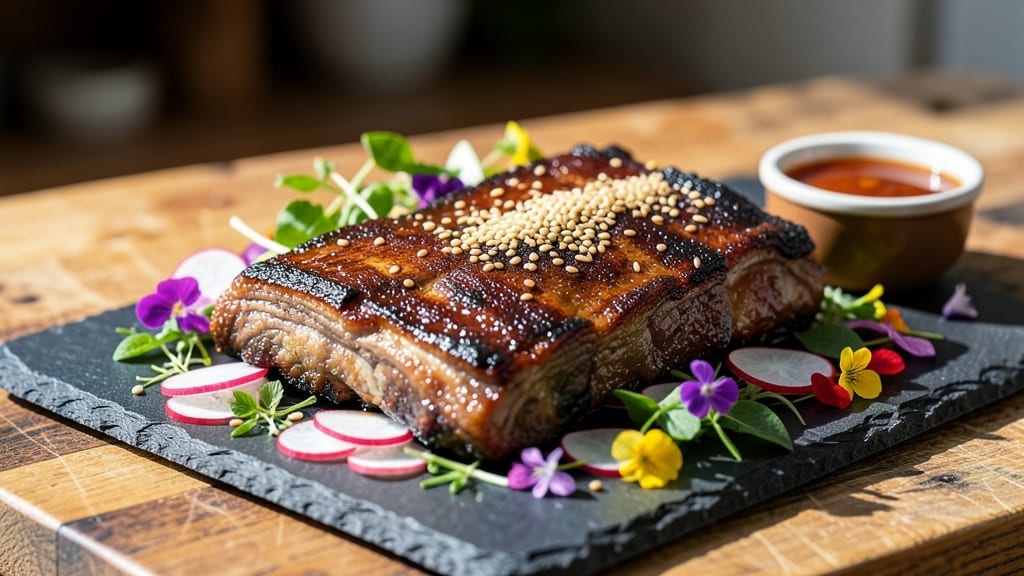
Smoked boneless beef ribs deliver fall-apart tenderness without the bone-in hassle, making them the perfect centerpiece for any cookout or family dinner. The secret lies in a precise dry rub and controlled smoking process that transforms tough cuts into melt-in-your-mouth perfection.
I’ve perfected this method over countless smoker sessions, ensuring even beginners can achieve restaurant-quality results.
This recipe simplifies the process by focusing on low-and-slow smoking at a consistent 225°F, which breaks down the meat’s connective tissue while keeping it juicy. A spice blend of brown sugar, smoked paprika, and garlic powder forms a flavorful bark, while regular basting with apple cider vinegar adds depth.
The ribs rest after smoking, allowing juices to redistribute for maximum tenderness.
By the end, you’ll have ribs that pull apart with minimal effort, their edges caramelized and glistening with a natural sheen. Serve them with a drizzle of homemade BBQ sauce or a sprinkle of fresh parsley for a finishing touch.
This method ensures foolproof results every time, whether you’re feeding a crowd or treating yourself to a special meal.
The beauty of boneless ribs is their versatility—use them in tacos, sandwiches, or as a standalone dish. With just a few pantry staples and a smoker (or even an oven with a meat thermometer), you’re ready to create a showstopping meal.
Let’s get started with the step-by-step guide to achieve that perfectly tender finish.
Ingredients for smoked boneless beef ribs
Pantry staples meet smoker magic for ribs that melt in your mouth.
| Ingredient | Amount | Notes |
|---|---|---|
| Boneless Beef Ribs (Chuck or Short Ribs) 🥩 | 4 ½ lb | Trimmed of excess fat, cut into 2-inch pieces |
| Brown Sugar 🍚 | ½ cup | Packed, for dry rub |
| Smoked Paprika 🌶️ | 2 tbsp | Sweet or medium heat |
| Garlic Powder 🧄 | 1 tbsp | Not garlic salt |
| Onion Powder 🧅 | 1 tbsp | For depth of flavor |
| Black Pepper 🌶️ | 1 tbsp | Freshly ground preferred |
| Sea Salt 🧂 | 1 tbsp | Kosher or fine grain |
| Apple Cider Vinegar 🍎 | ¼ cup | For basting during smoking |
| Fresh Parsley 🌿 | ¼ cup | Chopped, for garnish |
| Butter 🧈 | ¼ cup | Full-fat, for basting |
| Homemade BBQ Sauce 🍯 | 1 ½ cups | Or store-bought quality |
| Meat Thermometer 🔥 | 1 whole | Essential for accuracy |
[recipe_ingredient_scaler]
The beef is the star, so don’t skimp. Chuck or short ribs work best—look for well-marbled cuts with a bright red color. Costco or butcher shops often have pre-cut boneless ribs, but if you’re buying whole, trim the fat cap to about 1/8-inch thick. This ensures even cooking and a better bark. I always buy mine from Whole Foods or a trusted local butcher—they know how to handle meat properly. Don’t forget to ask for the ribs to be cut into even-sized pieces, about 2 inches thick, for consistent cooking.
No apple cider vinegar? White vinegar or lemon juice works in a pinch, but you’ll lose some of that tangy depth. Fresh parsley is ideal for garnish, but dried parsley at half the amount gets you close. Want to skip the homemade BBQ sauce? St. Mary’s or Sweet Baby Ray’s are solid choices—just make sure it’s not overly sweet. The butter for basting can be salted, but unsalted is better for controlling seasoning. And if you’re short on time, frozen ribs thaw beautifully in cold water for about 30 minutes.
Smoke the ribs at 225°F for about 4-5 hours, or until they hit 195°F internally. Let them rest for 15-20 minutes before slicing—this keeps all those juices inside. Store any leftovers in an airtight container in the fridge for 4-5 days, or freeze for up to 3 months. I always portion mine into containers so lunches are sorted for the week. The BBQ sauce? Keeps for 2 weeks in the fridge if you make it at home, or as long as the jar says if you buy it.
Why You’ll Love This Recipe
- No-Bone Hassle: Forget scrubbing bones—these boneless beef ribs cut the cleanup by half. Just pat them dry, slather on that sweet-spicy rub with brown sugar and smoked paprika, and let the smoker do the work while you sip something cold.
- Sweet-Smoky Addiction: The brown sugar caramelizes into that perfect sticky crust, while the smoked paprika and garlic powder give it that slow-cooked depth. Honestly, the first bite will make you forget you ever ate dry, rubbery ribs before.
- Crowd-Pleaser Guaranteed: These ribs are the kind of dish that disappears off the table—whether it’s a backyard BBQ, a game day spread, or just a lazy Sunday. My neighbor’s kid still asks for seconds, even though he’s seen me make them a dozen times.
- Leftovers That Last: Four pounds of ribs makes enough for three meals, and they keep beautifully for 4-5 days in the fridge. Reheat with a splash of water and a sprinkle of that same BBQ sauce, and they’ll taste like you just smoked them fresh.
Step-by-step instructions for smoked boneless beef ribs
Here’s how to transform tough beef ribs into melt-in-your-mouth perfection without the bone cleanup.
Prepare the Dry Rub and Season the Ribs
In a medium bowl, combine the ½ cup packed brown sugar, 2 tablespoons smoked paprika, 1 tablespoon garlic powder, 1 tablespoon onion powder, 1 tablespoon black pepper, and 1 tablespoon sea salt. Mix thoroughly until the spices are evenly distributed and the sugar forms a fine, clinging powder. This blend creates the perfect balance of sweetness and smoky depth.
Pat the 4½ pounds boneless beef ribs dry with paper towels—this step is crucial for developing that coveted bark. Generously coat each piece with the dry rub, pressing it into the meat so it adheres completely. Place the seasoned ribs on a wire rack set over a baking sheet and refrigerate uncovered for at least 2 hours, or preferably overnight. This resting period allows the rub to penetrate deeply and the meat to dry slightly, ensuring maximum flavor infusion and better smoke adhesion later.
Smoke the Ribs to Perfect Tenderness
Preheat your smoker to 225°F using hickory or oak wood chips for that classic BBQ flavor. Once the temperature stabilizes and you see clean, blue smoke (not white), place the ribs on the smoker grates, fat-side up. Close the lid and resist the urge to peek—every time you open it, you lose heat and extend cooking time.
Smoke the ribs for 5-6 hours, maintaining a consistent 225°F temperature. Use the meat thermometer to check internal temperature—when it reaches 195°F, the collagen will have broken down completely, transforming the meat into tender, pull-apart perfection. The ribs should have a deep mahogany color and a glossy sheen from the rendered fat. Real talk: if the temperature drops below 220°F, add more wood chips or adjust the airflow to maintain heat.
Baste and Finish with Apple Cider Vinegar
Once the ribs reach 195°F, remove them from the smoker and transfer to a clean cutting board. In a small saucepan, combine ¼ cup apple cider vinegar and ¼ cup butter, heating gently over low heat until the butter melts. Pour this mixture over the ribs, letting it baste and penetrate the meat. The vinegar tenderizes any remaining connective tissue while the butter adds richness.
Return the ribs to the smoker for 15-20 minutes to allow the baste to absorb. This step is where the magic happens—the vinegar’s acidity brightens the flavors while the butter creates a silky finish. The ribs should now be fork-tender, with a glossy, caramelized crust that practically falls apart at the touch. If the bark seems too dry, brush on a thin layer of 1½ cups homemade BBQ sauce during the final 10 minutes to add moisture and depth.
Rest and Serve with Fresh Parsley
Transfer the smoked ribs to a warm platter and tent loosely with aluminum foil. Let them rest for 15-20 minutes—this critical step allows the juices to redistribute throughout the meat, preventing them from pooling on the cutting board. The ribs will continue cooking slightly during this time, so don’t rush it.
While they rest, finely chop the ¼ cup fresh parsley and sprinkle it over the ribs just before serving. The parsley adds a fresh contrast to the rich, smoky flavors. To serve, use two forks or tongs to pull the ribs apart into generous portions. Each bite should deliver that perfect marriage of tender meat, smoky rub, and tangy-sweet BBQ sauce. For extra drama, drizzle any accumulated juices from the platter over the top before serving.
Pro Tips For Making Smoked Boneless Beef Ribs
- Trim Fat Precisely: Chuck ribs can be fatty—trim just the excess, leaving a thin layer for flavor and moisture. I used to go too aggressive and ended up with dry meat; leave about 1/8-inch of fat on each piece to help render flavor while smoking.
- Press Rub Harder: The dry rub won’t stick if you just sprinkle it on. Use your palms to really press the mix—especially the brown sugar and smoked paprika—into every crevice of the meat. Skimping here means flavor clumps and falls off mid-smoke.
- Don’t Rush the 195°F: The thermometer says 195°F, but the ribs might need another 15 minutes at that temp to fully tenderize. I learned this after pulling them early and getting chewy bites—let the collagen break down completely, even if it feels like forever.
- Baste Before Saucing: Brush on the apple cider vinegar-butter baste before adding BBQ sauce in the final 10 minutes. The vinegar’s acidity cuts through the richness, and the butter seals the bark better than sauce alone. Adding sauce too soon makes the ribs soggy.
Troubleshooting great smoked boneless beef ribs
Temperature Troubleshooting
Your smoker’s temperature is the most critical factor—if it dips below 220°F, your ribs will cook unevenly. I recommend investing in a digital meat thermometer like the Thermoworks Smoke to monitor both smoker and internal temps simultaneously.
If your smoker struggles to maintain heat, try closing the vents slightly to reduce airflow or add 1-2 cups of water to your smoker box to create steam and stabilize temps. 🌡️
Dry Bark Fixes
A dry, mealy bark happens when the ribs aren’t properly dried before smoking. Always pat them thoroughly dry with paper towels and let them rest uncovered in the fridge for at least 2 hours.
If your bark is already dry after smoking, brush on a thin layer of unsalted butter during the final 10 minutes to revive the crust. Avoid over-basting with vinegar—it can leach out moisture too quickly.
Uneven Cooking Solutions
If some pieces are undercooked while others are overdone, check your rib placement. Arrange them fat-side up and rotate the smoker grates halfway through cooking. Use a wire rack over a baking sheet to allow air circulation on all sides.
I also recommend trimming excess fat to 1/8-inch for even cooking—this prevents hot spots and ensures consistent tenderness.
Stuck at the Stall
The 160°F stall is inevitable but can feel like an eternity. To power through it, wrap the ribs loosely in butcher paper (not foil) after reaching 165°F and return them to the smoker.
This traps steam and helps break down collagen faster. I’ve found this trick shaves 1-2 hours off total cook time without sacrificing tenderness.
Overcooked Ribs Rescue
If your ribs hit 203°F and are too dry, don’t panic! Slice them thinly and pan-sear in ½ inch of beef broth over medium-low heat for 5-7 minutes. This rehydrates the meat while adding richness.
Alternatively, wrap them in foil with 2 tbsp apple cider vinegar and 1 tbsp butter, then bake at 250°F for 30 minutes to tenderize.
Nutrition facts
Frequently asked questions
Why does the recipe call for refrigerating the ribs uncovered?
Refrigerating the seasoned ribs uncovered for at least 2 hours (or overnight) is key for two reasons: it helps the dry rub cling better and allows the meat to dry slightly. This creates a perfect bark when smoked and ensures the seasoning penetrates deeply for maximum flavor. Skipping this step can lead to a less flavorful crust.
Can I use a different type of wood for smoking?
The recipe suggests hickory or oak wood chips for that classic BBQ flavor, but you can experiment with other woods like cherry or pecan for a milder taste. Just avoid fruitwoods like apple or cherry if you prefer a more traditional smoky profile. The wood choice affects the aroma, but the cooking process remains the same.
What if my smoker temperature fluctuates during cooking?
Fluctuations are normal, but aim to keep the temperature as close to 225°F as possible. If it dips below 220°F, add more wood chips or adjust the vents to maintain heat. A digital meat thermometer helps monitor both smoker and internal temps for accuracy. Consistency is critical for even cooking!
How do I know when the ribs are done without a thermometer?
While a thermometer ensures 195°F internal temp, you can also check for tenderness by probing with a fork. If the meat pulls apart easily and the bark is deep mahogany with a glossy sheen, they’re ready. The ribs should also have a slight give when pressed gently. Experience helps refine this visual cue!
Can I make these ribs ahead of time?
Yes! Smoked ribs taste even better the next day. Store them in an airtight container in the fridge for 4-5 days or freeze for up to 3 months. Reheat in the oven at 250°F for 20-30 minutes to restore tenderness. They’ll reheat beautifully with a light drizzle of BBQ sauce.

Trained in classic French technique but raised on slow-cooked ribs and spicy rubs, she blends culinary skill with smoke and soul.
- Smoked Chicken Salad Recipe: Crispy, Smoky Bites With Creamy Ranch Dressing - October 19, 2026
- Beer Can Chicken in a Smoker Recipe: Juicy, Herbed Perfection in One Can - October 19, 2026
- Brined Beef Brisket Recipe: Ultra-Tender, Juicy Cuts in One Pot - October 19, 2026