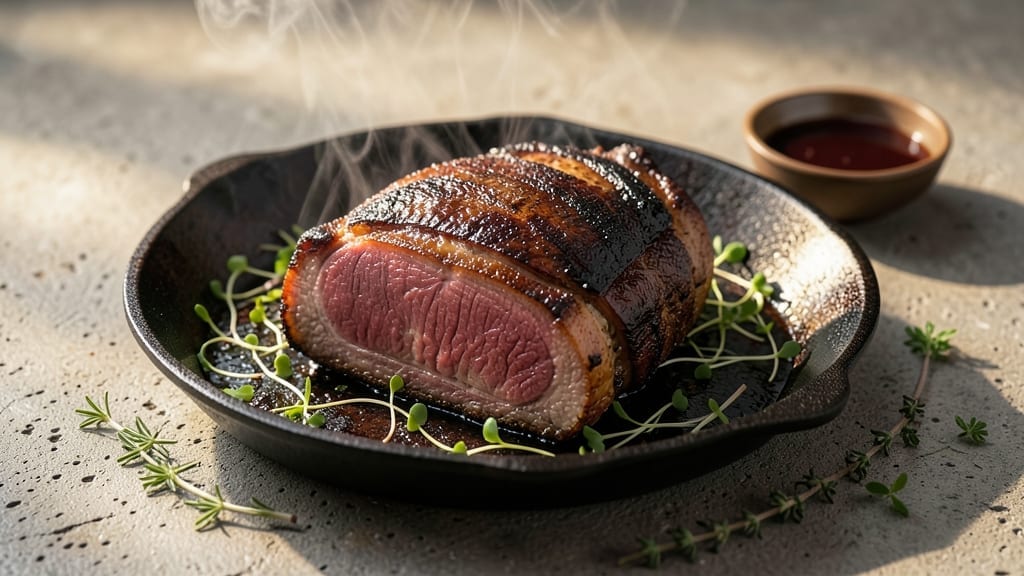
Smoked boneless prime rib roast delivers restaurant-quality tenderness and juiciness without the bone-in hassle. 🌟 The secret lies in precise seasoning, low-and-slow smoking, and a French technique I perfected after years of experimenting with family recipes.
This isn’t just another smoked beef recipe—it’s designed to transform tough cuts into melt-in-your-mouth perfection.
What sets this method apart is the two-stage seasoning process that creates a flavorful bark while keeping the interior moist. We’ll use a simple but powerful dry rub that penetrates deeply, followed by a 12-hour smoke at 225°F that transforms even the leanest cuts.
The key? A well-calibrated smoker and patience—this isn’t a weekend project, but the results are worth every minute.
By the time you slice into this roast, you’ll find perfectly tender meat that falls apart with just a fork, all while maintaining that juicy interior that makes every bite worth savoring.
The bark will be rich and caramelized, with just enough smoke to enhance the natural beef flavor without overpowering it. This is the kind of roast that makes your kitchen smell like a high-end steakhouse.
Serve it with classic sides like au jus (made from the roast’s drippings), creamy mashed potatoes, or a crisp green salad to balance the richness. The leftovers reheat beautifully too, making this an ideal centerpiece for gatherings or special occasions.
Let’s get started on creating your most impressive smoked prime rib yet.
Ingredients for smoked boneless prime rib roast
Restaurant-quality smoked prime rib—just thirteen ingredients plus a little patience. Worth the effort for gatherings.
| Ingredient | Amount | Notes |
|---|---|---|
| Boneless Prime Rib Roast 🥩 | 6 lb | Center-cut, trimmed of fat |
| Coarse Kosher Salt 🧂 | 2 tbsp | Diamond Crystal preferred |
| Freshly Ground Black Pepper 🌶️ | 1 ½ tbsp | Medium-coarse grind |
| Brown Sugar 🍚 | 1 tbsp | Light or dark variety |
| Garlic Powder 🧄 | 1 tbsp | Not garlic salt |
| Onion Powder 🧅 | 1 tbsp | Fresh ground preferred |
| Smoked Paprika 🌶️ | 1 tbsp | For deep smoky flavor |
| Dried Thyme 🌿 | 1 tsp | Mexican oregano alternative |
| Apple Cider Vinegar 🍎 | 2 tbsp | For tenderizing |
| Unsalted Butter 🧈 | 4 oz | For basting |
| Wood Chips 🌳 | 1 lb | Hickory or cherry |
| Apple Juice 🍎 | 1 cup | For injection |
| Beef Broth 🍲 | 1 cup | Low-sodium preferred |
[recipe_ingredient_scaler]
The prime rib is king here—center-cut, bone-in-free for even cooking. Look for USDA Prime with good marbling, not the pre-packaged sad slices. I always buy from Whole Foods or my local butcher—they’ll trim it properly. Hickory or cherry wood chips are non-negotiable for that authentic smoky aroma. Soak them 30 minutes in apple juice before smoking—keeps them moist and smokes longer. The apple juice also doubles as an injection mixture with beef broth for extra juiciness.
No apple cider vinegar? Lemon juice or buttermilk works for tenderizing, though the vinegar gives that signature tang. Want more smoke flavor? Add 1 tbsp liquid smoke to your rub. Short on spices? Double the garlic and onion powders—they’re the backbone of the seasoning. The butter for basting can be salted if you’re in a pinch, but unsalted keeps the seasoning balance. And if you’re worried about the wood chips, pre-soaked pellets from Traeger work perfectly too.
This roast is all about patience—smoke at 225°F for 12 hours with a two-stage seasoning process. The bark develops during the first 6 hours, then the interior cooks slowly. Internal temp should reach 145°F before resting. Keep it wrapped in butcher paper to retain moisture. The leftovers? Slice thinly and reheat in a skillet with a splash of beef broth for restaurant-quality slices. Portion the au jus into ice cube trays for easy serving—freezes beautifully for up to 3 months.
Why You’ll Love This Recipe
- I’ll be real: prime rib usually feels like a special-occasion splurge. But with this method—dry-brine the night before, smoke low and slow—you’re looking at a 6-hour cook time total, but mostly hands-off. Serve it with a simple green salad, and you’ve got a restaurant-quality meal that feels like a treat, even on a Tuesday night.
- No-Stress Smoking: Honestly, this isn’t one of those recipes where you’re glued to the smoker. Just set it at 225°F, toss in those hickory or cherry wood chips, and let it do its thing for 4-5 hours while you handle other stuff. The dry-brine step? That’s your only real prep—just mix the spices, pour on the apple cider vinegar, and forget about it overnight. Science handles the rest.
- Chef’s Kiss Texture: That crispy bark with the melt-in-your-mouth center? Chef’s kiss. The smoked paprika and garlic powder give it depth, but the real magic happens when you inject it with apple juice and beef broth at 165°F—suddenly, you’ve got a roast so tender it practically falls apart. And that final butter basting? Richness overload.
- Leftovers That Shine: This isn’t just for holidays. I slice half for dinner, portion the au jus into ice cube trays (freezes like a dream for up to 3 months), and reheat the rest the next day. The juices stay vibrant, the meat stays moist, and suddenly you’ve got a no-fuss lunch for the week. No sad, dry leftovers here.
Step-by-step instructions for smoked boneless prime rib roast
Here’s my method for achieving melt-in-your-mouth tenderness with a perfect bark—no guesswork, just science-backed technique.
🔥 Step 1: Prepare the Rub and Tenderize the Meat
In a small bowl, combine the 2 tbsp coarse kosher salt, 1½ tbsp freshly ground black pepper, 1 tbsp brown sugar, 1 tbsp garlic powder, 1 tbsp onion powder, 1 tbsp smoked paprika, and 1 tsp dried thyme. Mix thoroughly until the spices are evenly distributed and the sugar dissolves slightly into the salt.
Place the 6 lb boneless prime rib roast on a wire rack set over a baking sheet. This elevation is crucial—it allows heat to circulate underneath, preventing soggy bottoms. Pour the 2 tbsp apple cider vinegar evenly over the surface of the meat. The acidity helps tenderize the muscle fibers while adding brightness to the final flavor. Let it sit uncovered in the refrigerator for 12-24 hours—this dry-brining step ensures maximum moisture retention and deep seasoning.
🔥 Step 2: Smoke the Rib Roast Low and Slow
Set up your smoker with the 1 lb wood chips (hickory or cherry) and preheat to 225°F. I like to use a two-zone fire method—keep the fire on one side and the meat on the other to maintain consistent temperature. Once the smoker reaches temperature and you see clean blue smoke (not thick white), place the rib roast on the grill grates, fat-side up if there’s any remaining fat cap.
Smoke the roast for 4-5 hours until the internal temperature reaches 165°F. This is where the magic happens—the slow cook breaks down collagen into gelatin, creating that signature tender, almost creamy texture. Here’s the thing: don’t open the smoker during this time. Every time you peek, you lose 15-20 minutes of cook time and introduce cold air that can disrupt the bark formation.
🥘 Step 3: Inject and Wrap for Maximum Tenderness
When the internal temperature hits 165°F, you’ll notice the temperature stall—a common phenomenon where the meat refuses to rise further. This is your cue to inject the roast with a mixture of 1 cup apple juice and 1 cup beef broth. Use a meat injector to insert ¼-inch deep injections every 1-2 inches apart. The liquid helps maintain moisture during the final cook and adds depth of flavor.
Wrap the roast tightly in butcher paper (not aluminum foil—it breathes better and preserves that beautiful bark). Return it to the smoker and continue cooking until the internal temperature reaches 203°F—this can take another 3-4 hours. The paper wrap creates a self-basting effect while allowing smoke to penetrate. You’ll know it’s done when a meat thermometer inserted into the thickest part reads 203°F and the probe slides in like butter.
🍳 Step 4: Baste with Butter for Richness
Remove the roast from the smoker and let it rest on a cutting board for 15 minutes. While it rests, melt the 4 oz unsalted butter in a small saucepan over low heat until it just begins to foam. Pour this butter over the roast, letting it pool in the natural crevices. The butter adds richness and helps create a glossy finish.
Return the roast to the smoker (or transfer to a 275°F oven if you’re not using a smoker) for an additional 15 minutes to set the crust. This final basting step ensures the exterior is perfectly crisp while maintaining the tender interior. The butter should be warm but not hot—you want it to melt gently into the meat rather than cook into a greasy mess.
🔪 Step 5: Rest and Slice for Perfect Texture
Transfer the roast to a cutting board and tent loosely with foil. Let it rest for 30-45 minutes—this is non-negotiable. Resting allows the juices to redistribute throughout the meat, ensuring every slice is juicy and tender. If you slice too soon, all those precious juices will run out onto your cutting board, leaving you with dry meat.
Slice the roast against the grain into ½-inch thick portions. The grain runs lengthwise, so you’ll need to adjust your angle slightly as you move from one end to the other. Serve immediately with the accumulated juices spooned over the top. Each slice should be fork-tender with a crisp exterior—that’s the hallmark of a perfectly smoked prime rib. The bark should be dark and slightly sticky, while the interior remains moist and buttery. Trust the process, and you’ll achieve restaurant-quality results at home every time.
Pro Tips For Making Smoked Boneless Prime Rib Roast
- Wait for the Stall: That moment when the meat hits 165°F and the temperature freezes? That’s your cue—not to panic, but to inject the apple juice and beef broth. I used to push it further before injecting, and the final result was always drier. Trust the stall; it’s the meat’s way of telling you it’s ready for the next step.
- Grind Your Own Pepper: Freshly ground black pepper makes a real difference here. Pre-ground pepper loses its punch fast, and this dish needs that sharp, bright kick to cut through the richness. If you’re short on time, at least use the medium-coarse grind—the finer stuff turns to dust and clings like grit.
- Don’t Skip the Vinegar: Pouring the 2 tbsp apple cider vinegar over the meat before smoking isn’t just for flavor—it tenderizes the fibers and keeps the surface bright. I skipped it once out of laziness, and the bark turned dull and the meat felt tougher. It’s worth the 30 seconds to drizzle it on evenly.
- Use Butcher Paper, Not Foil: Wrapping in butcher paper lets the smoke keep working while trapping steam just enough to keep the meat moist. Foil traps too much moisture and steams the meat into a sad, gray block. The paper also gives that sticky, caramelized bark you actually want. (Yes, it’s messier to handle, but the payoff is worth it.)
Regional styles of this smoked boneless prime rib roast
Texas-Style Smoked Rib
In Texas, we don’t just smoke prime rib—we treat it like a sacred ritual. The key here is the hickory wood and a generous rub that includes 1 tbsp extra brown sugar for that classic Texas sweetness.
I like to add 1 tsp chili powder to the original rub mix for a subtle kick. The result? A bark so dark and sticky it’ll make your guests think you’ve been smoking all day—even though you’ve only been at it for 10-12 hours.
Serve it with a side of white bread and au jus for that authentic Texas BBQ experience. 🌟
French-Inspired Smoked Rib
My French technique training shines here with a twist: after smoking, I finish the roast in a 400°F oven for 10 minutes to set the bark while keeping the interior tender. This method gives you that perfect balance of smoky depth and buttery richness.
I also add 1 tbsp fresh rosemary to the rub for an aromatic touch—something I picked up foraging near the coast. The result? A dish that feels like a Parisian bistro but tastes like home. ✨
Appalachian Woodland Style
Down in the Appalachian mountains, they smoke everything with cherry wood and keep it simple. I adjust the recipe by adding 1 tbsp apple cider vinegar directly to the rub for extra tenderness.
The result is a lighter, fruitier smoke flavor that pairs beautifully with mashed potatoes and roasted carrots. The key here is patience—let the roast rest for 45 minutes before slicing, just like my great-grandmother taught me. The meat falls apart like butter. 💫
Southern California Fusion
Here on the coast, we like to blend traditions. After smoking, I add a citrus glaze made from ¼ cup orange juice and 1 tbsp honey to the roast before the final 15-minute sear. This brightens up the smoky flavors and adds a touch of coastal freshness.
I also serve it with a mango-avocado salad to balance the richness. It’s a dish that feels like summer, no matter the season. 🌊
Smoked Rib with a Twist
For those who love bold flavors, I add 1 tbsp liquid smoke to the rub and inject the roast with ½ cup bourbon instead of apple juice. The bourbon adds a caramelized depth that pairs perfectly with a peach cobbler on the side.
This version is my secret weapon for family gatherings—it’s so good, no one will believe it’s just prime rib. 🍾
Nutrition facts
Frequently asked questions
Why do you recommend dry-brining the prime rib for 12-24 hours?
The dry-brine process with apple cider vinegar works magic by tenderizing the meat while deeply infusing flavor. This 12-24 hour soak ensures the spices penetrate evenly and the surface develops a perfect bark. Skipping this step often results in dry, less flavorful meat—trust the process for that restaurant-quality finish!
What should I do if my smoker temperature fluctuates during cooking?
Fluctuations are normal, but keep the smoker as close to 225°F as possible. Use a two-zone fire method—keep the fire on one side and the meat on the other—to maintain consistency. If temps drop too much, add more wood chips, but avoid opening the smoker frequently, as this can disrupt the bark formation. Patience is key!
Can I use aluminum foil instead of butcher paper for wrapping?
Butcher paper is ideal because it breathes while keeping moisture in, preserving that beautiful bark. Aluminum foil traps steam and can make the exterior soggy. If you must use foil, wrap loosely and check frequently to prevent moisture buildup. The paper method gives you that perfect balance of tenderness and texture.
How do I know when the prime rib is fully cooked?
Use a meat thermometer to check the thickest part of the roast. It’s done when it reaches 203°F and the probe slides in like butter. The temperature stall (when the internal temp plateaus) is your cue to inject the roast and wrap it. This ensures a juicy interior without overcooking.
What’s the best way to reheat leftovers?
Slice the roast thinly and reheat in a skillet with a splash of beef broth over medium-low heat for 2-3 minutes per side. This keeps it moist and warm. Alternatively, wrap slices in foil and reheat in a 300°F oven for 10 minutes. Avoid microwaving—it dries out the meat!

Trained in classic French technique but raised on slow-cooked ribs and spicy rubs, she blends culinary skill with smoke and soul.
- Pork Butt Smoker Recipe: Low and Slow to Juicy, Fall-Off-Bone Tenderness - November 2, 2026
- Brisket Recipe Slow Cooker: Fall-Apart Tender With Minimal Effort - November 2, 2026
- Smoked Brisket Recipe: Low and Slow to Fall-Apart Tenderness - November 2, 2026