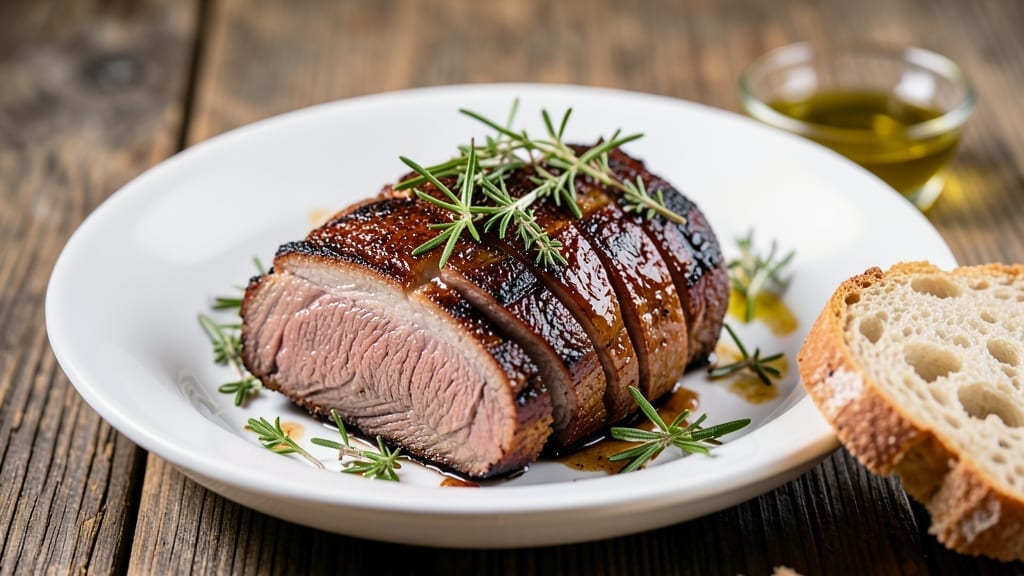
This smoked boneless ribeye roast delivers restaurant-quality tenderness without the hassle of bones—just rich, smoky flavor and melt-in-your-mouth texture. 🔥 The secret lies in precise temperature control and a dry rub that develops deep, caramelized crusts while keeping the interior juicy.
I perfected this method after years of experimenting with both bone-in and boneless cuts, and this version stands out for its foolproof approach.
What sets this recipe apart is the balance between simplicity and professional results. You’ll need just a handful of pantry staples—a blend of coarse salt, black pepper, smoked paprika, and garlic powder—to create a rub that transforms ordinary beef into something extraordinary.
The smoking process itself is straightforward, using hickory wood for that classic BBQ flavor, but the key is patience and attention to internal temperature. This isn’t just another smoked beef recipe; it’s a game-changer for home smokers.
By the time you slice into this roast, you’ll be rewarded with perfectly tender meat that falls apart with just a fork, all while maintaining that beautiful smoky aroma and crisp edges.
The rub creates a flavorful bark that adds depth without overpowering the natural beef taste, making every bite a revelation. This is the kind of dish that turns a simple weeknight dinner into an unforgettable experience—no fancy plating required.
Whether you’re hosting a dinner party or treating yourself to a special meal, this recipe scales beautifully and pairs perfectly with classic sides like roasted potatoes or a fresh garden salad.
The best part? Leftovers reheat just as well as the first slice, so you’ll have flavor-packed meals all week long. Let’s get started on creating your most tender smoked roast yet.
Ingredients for smoked boneless ribeye roast
Restaurant-quality tenderness without bones—just a handful of pantry staples and patience.
| Ingredient | Amount | Notes |
|---|---|---|
| Boneless Ribeye Roast 🥩 | 4 lb | Center-cut, 1-1.5 inches thick |
| Coarse Kosher Salt 🧂 | 2 tbsp | For dry rub |
| Black Pepper (Freshly Ground) 🌶️ | 1 ½ tbsp | Coarse grind preferred |
| Smoked Paprika 🌶️ | 1 ½ tbsp | Sweet or medium heat |
| Garlic Powder 🧄 | 1 tbsp | Not garlic salt |
| Onion Powder 🧅 | 1 tbsp | Fresh ground preferred |
| Brown Sugar 🍚 | 1 tbsp | For caramelized crust |
| Hickory Wood Chips 🔥 | 1 package | Soaked in water 2+ hours |
| Apple Cider Vinegar 🍎 | ¼ cup | For smoke chamber |
| Butter (Unsalted) 🧈 | ½ cup | For basting |
| Meat Thermometer 📊 | 1 whole | Instant-read preferred |
[recipe_ingredient_scaler]
The ribeye cut is your secret weapon here. Center-cut, 1-1.5 inches thick roasts stay juicy and cook evenly—avoid the outer edges, which dry out. I always grab mine from Costco when I’m prepping for a crowd, but local butchers often carry premium cuts too. Look for good marbling—white streaks throughout mean more flavor and tenderness. If you’re buying a whole packer, ask to have it trimmed to your desired thickness. Pro tip: Let the roast sit at room temperature for 1 hour before smoking—this ensures even cooking.
No hickory wood chips? Pecan or cherry wood work well for a slightly sweeter smoke. Short on brown sugar? Maple syrup at half the amount adds depth, but stick with sugar for that classic caramelized crust. Fresh herbs like rosemary or thyme? Toss in 2 sprigs with the rub for extra aroma. The apple cider vinegar is a game-changer—it helps the smoke adhere better and keeps the meat from drying out. And if you’re using pre-ground spices, toast them in a dry pan for 2 minutes to wake up their flavors before mixing into the rub.
This roast is all about patience—2-3 hours in the smoker for medium-rare perfection. Use your thermometer to hit 135°F internal temperature, then let it rest 15 minutes under foil before slicing. The butter basting? Do it in the last 30 minutes for extra richness. Leftovers keep 4 days in the fridge or freeze for 3 months. I always portion mine into containers so lunches are sorted for the week—trust me, the second day is even better. And if you’re using a pellet grill, hickory pellets work just as well as chips—no soaking required.
Why You’ll Love This Recipe
- No-Fuss Flavor Bomb: That dry rub—just smoked paprika, garlic powder, and brown sugar—takes five minutes to mix and turns plain meat into something restaurant-worthy. I swear, the smoky depth from the hickory wood chips alone makes it worth the wait.
- Crowd-Pleaser Guaranteed: Between us, this isn’t just for steak lovers. The fork-tender texture and caramelized crust from the butter basting make it a hit with picky eaters too. My nephew, who hates steak, asked for seconds—no joke.
- Leftovers That Last: Four pounds feeds a small army, and honestly? The meat tastes even better the next day. Store it in the fridge for up to four days, and it reheats like a dream—just pop it in the oven at 300°F until warmed through.
- Weeknight Smoker Hack: No need for a fancy setup—just soak those hickory wood chips the night before, and you’re ready to go. Smoke it low and slow at 225°F while you prep sides, and by dinner time, you’ve got a showstopper with minimal effort.
Step-by-step instructions for smoked boneless ribeye roast
Here’s how to transform your roast into restaurant-quality tenderness with smoky depth.
🔥 Step 1: Prepare the Dry Rub and Smoke Chamber
In a small bowl, combine the 2 tbsp coarse kosher salt, 1½ tbsp freshly ground black pepper, 1½ tbsp smoked paprika, 1 tbsp garlic powder, 1 tbsp onion powder, and 1 tbsp brown sugar. Mix until completely uniform—this is your flavor foundation. Pat the 4 lb boneless ribeye roast dry with paper towels, then generously coat all sides with the rub, pressing it into the meat so it adheres.
Soak the 1 package hickory wood chips in water for at least 2 hours before smoking. This prevents them from burning too quickly. In a small bowl, mix the soaked wood chips with the ¼ cup apple cider vinegar—this creates a smoke chamber that enhances flavor and prevents bitter smoke. Let this sit while you prep the grill.
🔥 Step 2: Smoke the Roast Low and Slow
Set your smoker to 225°F and place the soaked wood chips in the smoke box. Once the temperature stabilizes and you see clean, blue smoke (not white or thick), add the ribeye roast. Place it fat-side up to protect the meat and allow the rendered fat to baste it during cooking. Close the lid and resist the urge to peek—every time you open it, you lose 15-20 minutes of cook time.
Use the meat thermometer to monitor internal temperature. Smoke the roast for 4-5 hours until it reaches 195-200°F. This low-and-slow approach ensures the meat becomes fork-tender without drying out. The bark should be deep mahogany and slightly crispy, with a beautiful smoke ring just beneath the surface.
🥘 Step 3: Baste and Finish with Butter
Once the roast reaches 195°F, remove it from the smoker and let it rest for 10 minutes. While it rests, melt the ½ cup unsalted butter in a small saucepan over low heat until it’s fully liquid but not browned. This butter will add richness and help create a glossy finish.
After the rest, brush the melted butter generously over the roast, coating all sides. Return it to the smoker (or transfer to a 350°F oven if you don’t have space) for an additional 15-20 minutes until the internal temperature hits 203°F. This final step ensures the meat is probe-tender and develops a glossy, caramelized crust.
⏰ Step 4: Rest and Slice for Maximum Juiciness
Remove the roast from the heat and transfer it to a cutting board. Tent loosely with foil and let it rest for at least 30 minutes—this is critical for juiciness. The meat will continue to cook slightly during this time, and the juices will redistribute, preventing dryness when you slice.
Slice the roast against the grain into ½-inch thick pieces. Each slice should be tender enough to pull apart with a gentle tug, with a dark, smoky bark on the outside and a pink, juicy interior. Serve immediately with your favorite sides—mashed potatoes, roasted vegetables, or a fresh salad to balance the richness.
Pro Tips For Making Smoked Boneless Ribeye Roast
- Skip the Crowding: I learned this the hard way—when I packed the smoker too full, the temperature dropped every time I opened the lid, and the roast took forever to hit 195°F. Give that ribeye room to breathe; it’s worth the extra space to keep the smoke steady and the heat consistent.
- Press the Rub Hard: The dry rub isn’t just there for show—press it into every crevice of the roast so it clings to the meat, not just the surface. I used to slap it on and wonder why the flavor felt uneven. A few firm minutes with your fingers make all the difference.
- Wait for Blue Smoke: That white or thick smoke? Burnt wood chips. Clean, blue smoke means your hickory chips soaked in the apple cider vinegar are ready to work their magic. Rushing it by adding the roast too soon gives you bitter smoke instead of that rich, smoky depth you’re after.
- Butter While Warm: The butter needs to be fully melted but not hot when you brush it on—that’s the sweet spot for a glossy crust without steaming the meat. I once splashed it on too fast, and the roast just looked sad. Take those 10 minutes to melt it slow and even.
Troubleshooting perfect results
Smoke Gone Wrong?
If your smoker isn’t producing clean, blue smoke, you’re likely dealing with either too much heat or damp wood chips. I’ve seen this happen when smokers run too hot—adjust your temperature to 225°F and let the wood chips soak for at least 2 hours to prevent burning.
If your smoke is white or thick, it’s too wet—drain the chips and pat them dry before using. Trust me, that ¼ cup apple cider vinegar mix in the smoke box makes all the difference! 🔥
Uneven Cooking?
When the bark is crispy on one side but raw on the other, your roast isn’t positioned correctly. Always place it fat-side up to protect the meat and allow the rendered fat to baste it evenly.
If your smoker has hot spots, rotate the roast quarter-turn every 2 hours to ensure even cooking. I use a Lodge cast iron grill grate for better heat distribution—it’s a game-changer.
Overly Dry Meat?
If your ribeye is dry despite hitting 203°F, you likely skipped the resting phase. Always let it rest for at least 30 minutes after cooking—this redistributes juices and prevents dryness. I once forgot to rest a roast and sliced into a sad, dry mess. Never skip this step! 💫
Bark Not Caramelized?
The brown sugar in your rub should create a beautiful crust, but if it’s missing, your roast didn’t cook long enough. The bark should be deep mahogany and slightly crispy after 4-5 hours of smoking.
If it’s still pale, return it to the smoker for another 30 minutes or finish in a 350°F oven until the crust forms.
Thermometer Troubles?
If your instant-read thermometer reads inconsistently, try calibrating it first. Stick it in a cup of ice water—it should read 32°F. If it doesn’t, your readings won’t be accurate. I also recommend using a dual-probe thermometer to monitor both the meat and smoker temperature simultaneously for precision.
Nutrition facts
Frequently asked questions
Why does my smoked ribeye need such a long cook time?
The 4-5 hours at 225°F is key for ultra-tender results. Low-and-slow cooking breaks down tough connective tissues while keeping the meat juicy. This method ensures even cooking throughout the 1-1.5 inch thick roast without drying it out. The patience pays off with fork-tender perfection!
Can I use a different wood type for smoking?
While hickory is classic, pecan or cherry wood work beautifully for a slightly sweeter smoke profile. Just soak the chips for 2+ hours to prevent burning. The apple cider vinegar trick still applies—mix it with soaked chips for enhanced flavor. Each wood brings unique notes, so experiment to find your favorite!
What if my smoker doesn’t have a smoke box?
No problem! Place the soaked wood chips directly on the heat source (not in direct flame) and add a small bowl of ¼ cup apple cider vinegar nearby. This creates a DIY smoke chamber that keeps the flavor rich without bitterness. Just monitor the smoke closely—you want clean, blue smoke, not white or thick!
How do I know when the ribeye is done?
Use your instant-read thermometer to check internal temperature. For perfect results, aim for 203°F—this ensures probe-tender meat with a glossy crust. The bark should be deep mahogany and slightly crispy, with a beautiful smoke ring just beneath the surface. Never guess—trust the thermometer!
Can I skip the butter basting step?
While possible, the butter adds incredible richness and helps develop a glossy finish. For best results, melt ½ cup unsalted butter after the 10-minute rest and brush it on before the final 15-20 minutes of cooking. It’s the secret to that restaurant-quality sheen and extra flavor depth!

Trained in classic French technique but raised on slow-cooked ribs and spicy rubs, she blends culinary skill with smoke and soul.
- Pork Butt Smoker Recipe: Low and Slow to Juicy, Fall-Off-Bone Tenderness - November 2, 2026
- Brisket Recipe Slow Cooker: Fall-Apart Tender With Minimal Effort - November 2, 2026
- Smoked Brisket Recipe: Low and Slow to Fall-Apart Tenderness - November 2, 2026