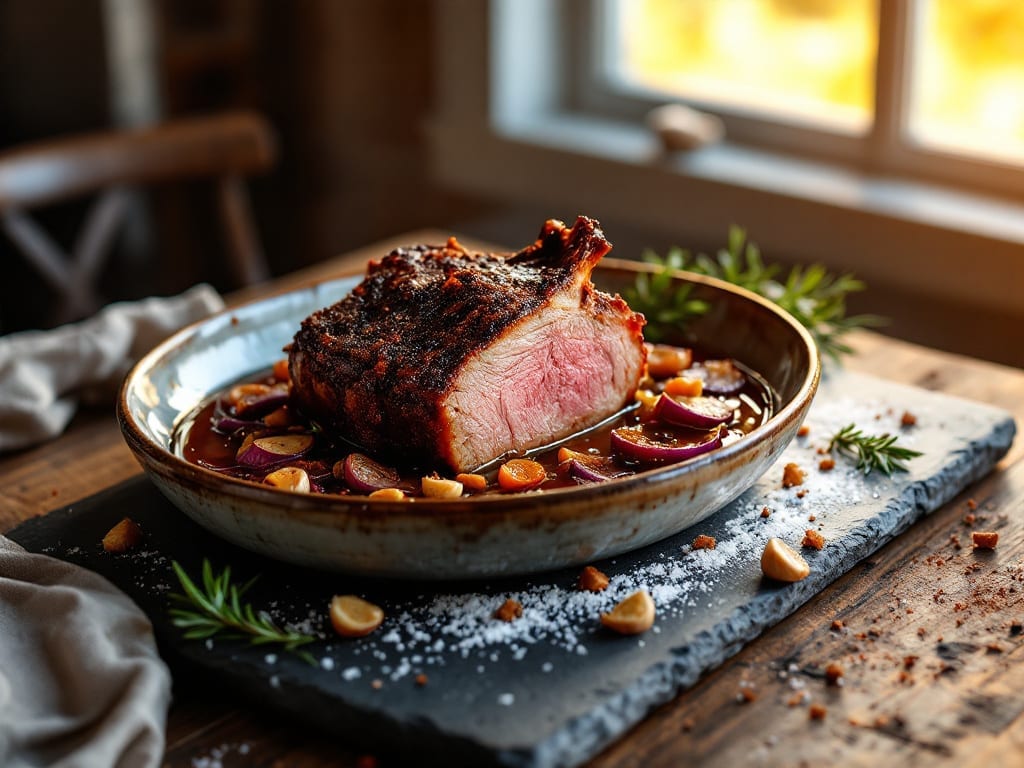
This smoked Boston butt recipe transforms a simple pork shoulder into a legendary centerpiece that’ll have your guests lining up for seconds. The key lies in the low-and-slow process—where patience and precision create melt-in-your-mouth tenderness with a bark so flavorful, it becomes the star of any spread.
I first perfected this technique at my family’s backyard cookouts, where the scent of hickory smoke drifting through the air set the stage for something truly special.
The magic begins with a bold spice rub—a blend of paprika, brown sugar, garlic powder, and cayenne—that develops a deep, caramelized crust while keeping the meat juicy inside.
Whether you’re using a traditional offset smoker, a modern pellet grill, or even a charcoal setup, maintaining a steady 225°F temperature is critical. This isn’t just barbecue; it’s a foolproof method that delivers restaurant-quality results every time, no matter your equipment.
By the time you pull that fall-apart tender Boston butt from the smoker—after a full 12-16 hours of slow cooking—you’ll be rewarded with meat so rich and flavorful, it practically melts on the bone.
The rub’s sweet-spicy notes pair perfectly with classic sides like tangy coleslaw, smoky baked beans, or buttery cornbread, creating a meal that feels like a celebration. This is the kind of dish that turns weeknights into memories.
Serve it sliced thick, piled high on buns, or shredded over tacos—either way, the juices will run freely, and every bite will be worth the wait. The secret?
Never rush it. Let the smoke work its magic, and you’ll end up with a masterpiece that tastes like it came from a pitmaster’s dream. Let’s get smoking.
Ingredients for smoked boston butt
Sixteen ingredients, twelve hours of magic. This is your all-in guide to smoked Boston butt perfection.
| Ingredient | Amount | Notes |
|---|---|---|
| Bone-In Pork Shoulder (Boston Butt) 🍖 | 8 lb | With fat cap intact for flavor |
| Yellow Onion 🧅 | 1 whole | Quartered for rub carrier |
| Garlic Cloves 🧄 | 8 cloves | Minced for rub consistency |
| Smoked Paprika 🌶️ | ½ cup | For deep smoky flavor |
| Brown Sugar 🍚 | ¼ cup | Lightly packed for balance |
| Granulated Garlic Powder 🧄 | 2 tbsp | Freshly ground preferred |
| Ground Cayenne Pepper 🔥 | 1 tbsp | Adjust for heat preference |
| Diamond Crystal Kosher Salt 🧂 | 1 tbsp | Fine grain for even coating |
| Black Peppercorns 🌶️ | 1 tbsp | Freshly cracked for aroma |
| Mustard Powder 🍯 | 1 tsp | Adds tangy depth |
| Apple Cider Vinegar 🍎 | 1 tbsp | For rub moisture retention |
| Hickory Wood Chips 🌳 | 2 lb | Soaked for 30 minutes |
| Yellow Mustard 🍯 | ½ cup | For post-smoke glaze |
| Honey 🍯 | ¼ cup | For glaze sweetness |
| Beef Broth 🍲 | ½ cup | For glaze richness |
[recipe_ingredient_scaler]
The pork shoulder is the foundation—look for bone-in, well-marbled cuts from your butcher or Costco for the best results. The fat cap isn’t just for looks; it renders down during smoking, creating that irresistible bark. If you’re buying pre-cut, check for even thickness—uneven pieces cook at different rates. For extra insurance, ask your butcher to trim the fat cap to about 1/4-inch thickness on one side. This rub needs to stick, so pat the pork dry with paper towels before applying. Trader Joe’s sells pre-cut shoulders that work perfectly if you’re short on time.
No smoked paprika? Substitute half regular paprika with a pinch of liquid smoke—just don’t overdo it. Running low on cayenne? Red pepper flakes at half the amount will give you similar heat without altering the rub’s texture. The mustard powder is crucial for that tangy depth, but if you’re out, Dijon mustard mixed with the brown sugar works in a pinch. For the wood chips, hickory is traditional, but cherry or pecan adds sweetness that pairs beautifully. The glaze ingredients can be swapped too—maple syrup instead of honey or worcestershire sauce instead of beef broth for umami.
This isn’t a recipe you want to rush. The pork keeps beautifully in the fridge for 4-5 days after cooking, though it’s best within 24 hours. For longer storage, vacuum-seal portions and freeze for up to 3 months. The rub mix itself stays fresh for 6 months in an airtight container. I always make extra glaze—it’s perfect for brushing on ribs or drizzling over cornbread. The key to reheating? Low and slow in the oven with a splash of broth to keep it moist. Or better yet, save leftovers for sandwiches—trust me, the next day is even better.
Why You’ll Love This Recipe
- Foolproof Slow Cooker: I swear by this method—just toss in the pork, onions, and garlic, then let the smoky paprika work its magic. No thermometer needed; the moment it shreds like butter, you’ve won.
- Sweet-Smoky Magic: That brown sugar caramelizes into the meat, balancing the smoky heat with a subtle sweetness. Honestly, the first bite makes me close my eyes—it’s that good.
- Game for Any Gathering: Pull it apart for tacos, sandwiches, or even breakfast hash the next day. Between us, I’ve fed 12 people with one shoulder—zero stress, all flavor.
- Budget-Friendly Feast: A whole Boston butt feeds my family for days, and the leftovers? Even better cold in sandwiches. I’ll be real: this is my go-to for stretching groceries without sacrificing taste.
Step-by-step instructions for smoked Boston butt
Here’s the method I’ve perfected for tender, bark-covered perfection every time.
Prepare the Dry Rub and Season the Meat
In a medium bowl, combine the 0.5 cup smoked paprika, 0.25 cup brown sugar, 2 tbsp granulated garlic powder, 1 tbsp ground cayenne pepper, 1 tbsp diamond crystal kosher salt, 1 tbsp freshly cracked black peppercorns, 1 tsp mustard powder, and 1 tbsp apple cider vinegar. Mix thoroughly until you achieve a fine, even texture with no visible dry spots. The vinegar helps the rub adhere better to the meat.
Pat the 8 lb bone-in pork shoulder completely dry with paper towels, removing any excess moisture from the surface. This step is crucial—wet skin prevents proper bark formation. Spread the rub generously over every inch of the meat, pressing it into the crevices and fat cap. Don’t be shy with the seasoning; you want a thick, flavorful coating that will cling even during the long smoke. Let the rubbed meat sit at room temperature for 1 hour before smoking to ensure even cooking and maximum flavor penetration.
Set Up the Smoker for Low-and-Slow Cooking
Soak the 2 lb hickory wood chips in water for 30 minutes before using. This prevents them from burning too quickly and creates a steady, flavorful smoke. When ready, load them into your smoker and preheat to 225°F. You’ll know the smoker is ready when you see a steady stream of clean blue smoke—thick white smoke indicates unburned wood, which can make your meat taste bitter.
Position the pork shoulder fat-side up on the smoker grate. The fat will render slowly during cooking, basting the meat and creating that coveted dark bark. Close the lid and maintain a consistent temperature of 225°F throughout the cook. Avoid opening the smoker unnecessarily—each time you do, you lose heat and extend cooking time. I recommend checking the temperature every 30-45 minutes to ensure it stays stable.
Monitor the Cook and Handle the Stall
Smoke the pork shoulder undisturbed for 6-8 hours, or until the internal temperature reaches 165-170°F. This is where you’ll encounter “the stall”—a period where the meat’s temperature stops rising as moisture evaporates. This is normal, but it can be frustrating. If the temperature stalls, wrap the pork tightly in butcher paper (not aluminum foil, which traps too much steam) and return it to the smoker. This technique, called the “Texas crutch,” helps push through the stall while preserving that beautiful bark.
Continue smoking until the internal temperature reaches 200-205°F and a meat probe inserted into the thickest part slides in like butter with no resistance. This usually takes an additional 4-6 hours, but trust the probe test over the thermometer—tenderness matters more than exact temperature. The bark should be dark and crispy, with a beautiful smoke ring just beneath the surface. If the bark isn’t dark enough, you can increase the smoker temperature to 250°F for the last 30-45 minutes to crisp it up.
Prepare the Post-Smoke Glaze
While the pork rests, prepare the glaze by combining 0.5 cup yellow mustard, 0.25 cup honey, and 0.5 cup beef broth in a small saucepan. Heat over medium-low heat and whisk until the mixture is smooth and slightly thickened, about 3-5 minutes. The glaze should coat the back of a spoon but still be pourable. Taste and adjust the seasoning if needed—you can add a pinch of the diamond crystal kosher salt or a dash of ground cayenne pepper for extra depth.
Brush the glaze generously over the pork shoulder, covering every inch of the bark. The combination of sweet, tangy, and savory flavors will elevate the meat to new heights. Let the pork rest wrapped in butcher paper for at least 1 hour (I prefer 2 hours) in a cooler or warm oven set to 170°F. This resting period allows the juices to redistribute, ensuring every slice is moist and flavorful.
Slice and Serve with Confidence
Unwrap the pork and slice it against the grain into ¼-inch thick slices. The grain direction will be visible as lines running through the meat. Cutting against the grain shortens the muscle fibers, making each bite more tender. Serve immediately while still warm, and watch as your guests rave about the perfect balance of smoky, sweet, and spicy flavors.
Each slice should be fork-tender with a crispy, dark bark that gives way to juicy, flavorful meat. The glaze should add a sticky, tangy-sweet contrast that ties everything together. For best results, serve with classic barbecue sides like coleslaw, cornbread, or baked beans. The leftovers will keep well in the refrigerator for 3-4 days or can be frozen for up to 3 months—though I doubt you’ll have any left!
Pro Tips For Making Smoked Boston Butt
- Trim the Fat Cap: DESCRIPTION: Cut the thick layer of fat off the top of the Boston butt before smoking—it doesn’t render flavor, just smoke. I learned this the hard way after my first batch turned into a grease fire in the smoker. Leave a thin layer (1/4 inch) to keep the meat moist, but the rest? Off with it.
- Slice Onions Thinly: DESCRIPTION: Dice those yellow onions into paper-thin slices—no need to chop them finely. They’ll caramelize faster on the smoker’s heat, adding sweetness without overpowering the pork. (Yes, even if you’re impatient like me, resist the urge to rush this.)
- Don’t Rush the Stall: DESCRIPTION: When the internal temp hits 150°F, the meat will stall—temperature drops, smoke slows. This is normal. Wrap it in butcher paper (not foil) at 160°F and let it ride. I used to panic and crank the heat, but patience here guarantees tender, pull-apart perfection.
- Use Wet Rub, Not Dry: DESCRIPTION: Mix your smoked paprika, brown sugar, and garlic into a paste with apple cider vinegar or mustard—about 1 tablespoon liquid per 2 tablespoons dry rub. It clings better, crisps the bark, and prevents the sugar from burning. (Your future self will thank you.)
Wine and beer pairings for these flavors
Red Wine Pairings
A bold, smoky Cabernet Sauvignon from Napa Valley stands up perfectly to the rich, spiced flavors of smoked Boston butt. Look for one with 14-15% ABV and notes of blackberry, vanilla, and cedar—like Caymus Vineyards or Opus One.
The tannins cut through the fat while the oak aging complements the smoky bark. I always keep a bottle chilled to 65°F before serving to let its aromas shine alongside the meat’s deep flavors. 🍷
Malbec for Heat Lovers
If your rub packs serious cayenne heat, a Argentinian Malbec from Mendoza balances the spice beautifully. Brands like Catena Zapata or Trapiche offer dark fruit and chocolate notes that harmonize with the sweet-spicy glaze.
The 13-14% ABV range keeps it smooth without overwhelming the pork’s tenderness. Serve slightly cooler than room temp—around 60°F—to highlight its vibrant acidity. 🌶️
Beer Pairings: Amber Ales
For beer lovers, a caramel amber ale like Fat Tire or New Belgium Fat Tire bridges the gap between sweet and smoky. The malty sweetness mirrors the glaze, while the hop bitterness cleanses the palate between bites.
Look for 5.5-6% ABV to complement the richness without clashing. I often serve it ice-cold to contrast the warm, smoky pork. 🍺
Stout for Bold Contrast
A dry stout such as Guinness or Founders Kentucky Breakfast Stout adds an unexpected but brilliant contrast. The roasted coffee and chocolate notes play off the bark’s smokiness, while the creamy texture balances the meat’s richness.
The 5-6% ABV keeps it approachable, and serving it at 45°F enhances its depth. Trust me, this combo turns heads at every cookout. ☕
Light White Wine
If you prefer white, a crisp Sauvignon Blanc from New Zealand—like Cloudy Bay—cuts through the fat with its citrus and herbal notes. The 12-13% ABV range keeps it refreshing, and chilling to 45°F lets its acidity shine. It’s a surprising but perfect match for the smoky-sweet glaze. 🍇
Non-Alcoholic Option
For those skipping alcohol, a smoky ginger beer like Thomas Henry or a sparkling hibiscus tea** (from Tazo) mirrors the smokiness without the booze. The ginger’s spice complements the cayenne, while the effervescence cleanses the palate. Serve chilled to 40°F for the best experience. 💫
Nutrition facts
Frequently asked questions
Can I use a different wood chip flavor instead of hickory?
While hickory is traditional, cherry adds sweetness that pairs beautifully with the glaze, or pecan for a nutty depth. Just avoid overly strong flavors like mesquite—stick to mild woods like apple or alder for a cleaner taste. The key is maintaining that 225°F consistency regardless of wood choice.
How do I know when the pork is done without a meat thermometer?
Use the probe test: Insert a sharp knife into the thickest part—if it slides in like butter with no resistance, it’s ready. The bark should also be dark and crispy, and the meat should pull away from the bone easily. For extra confidence, check for a smoke ring just beneath the surface, indicating proper doneness.
What’s the best way to reheat leftovers?
Never microwave! Wrap slices in foil and reheat in a 300°F oven for 10-15 minutes with a splash of broth to keep them moist. For sandwiches, toast the bun first—this creates that crispy texture you crave. Leftovers keep well for 4-5 days in the fridge or 3 months frozen.
Can I make this in an electric smoker or grill?
Yes! Electric smokers work perfectly—just maintain 225°F and use wood chips in the smoker box. For grills, use indirect heat with a smoker box or chimney starter filled with soaked chips. The key is patience: electric smokers may take 1-2 hours longer than charcoal, but the results are just as tender.
Why did my bark turn out too light?
Light bark usually means the smoker wasn’t hot enough or the meat was too wet. Next time, increase temp to 250°F for the last 30 minutes to crisp it up, and pat the pork extra dry** before applying the rub. Also, ensure your wood chips are burning steadily—not too much white smoke.

Trained in classic French technique but raised on slow-cooked ribs and spicy rubs, she blends culinary skill with smoke and soul.
- Beef Brisket Rolls Recipe: Flaky Layers and Smoky Sweet Filling - October 15, 2026
- Masterbuilt Smoker Beef Brisket Recipe: Bark-To-Meat Ratio Hack for Unmatched Flavor - October 15, 2026
- Costco Beef Brisket Recipe: Low-and-Slow Masterpiece With Molasses-Kissed Crust - October 15, 2026