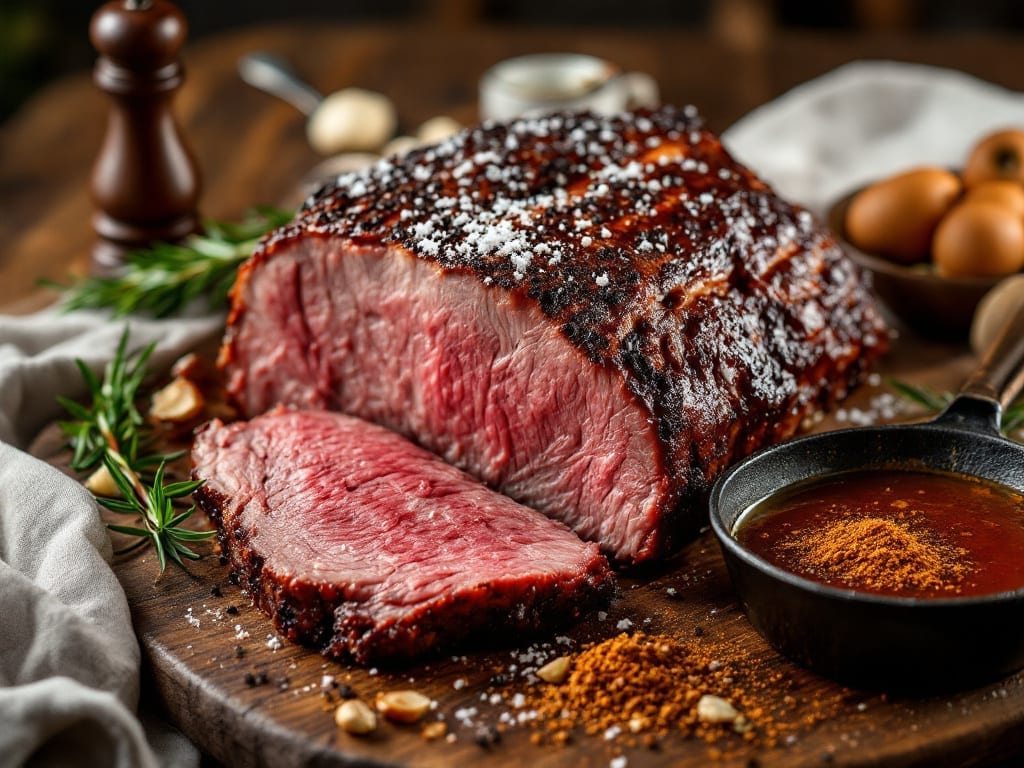
Ree Drummond’s beef brisket recipe delivers that smoky, fall-apart tenderness we all crave, but without needing a smoker. I’ve perfected this oven method that mimics her signature slow-cooked magic, and trust me, your taste buds will thank you.
The secret lies in a low-and-slow cook that transforms tough cuts into melt-in-your-mouth perfection, all while keeping your kitchen from overheating.
This recipe starts with a simple rub of salt, pepper, and garlic powder—no fancy blends needed. Then it’s all about patience: hours of gentle cooking until the meat practically dissolves at the touch of a fork.
Ree’s approach uses a reverse sear technique, which means you’ll wrap that brisket in foil and let the oven do the heavy lifting while you prep sides like creamy mashed potatoes or tangy coleslaw.
What you’ll end up with is a juicy, flavorful centerpiece that looks as impressive as it tastes. The crust stays tender rather than tough, and every bite delivers that deep, smoky flavor without requiring a single piece of equipment beyond your oven.
This is comfort food at its finest—rich, satisfying, and perfect for feeding a crowd or treating yourself to a special meal.
Serve it sliced thick over buttery mashed potatoes or on a toasted bun with pickles for that classic Texas BBQ vibe. The leftovers? Even better the next day. Let’s get cooking—your brisket awaits!
Ingredients for ree drummond beef brisket
Six simple ingredients transform tough brisket into melt-in-your-mouth perfection without a smoker.
| Ingredient | Amount | Notes |
|---|---|---|
| Beef Brisket 🥩 | 4 lb | Flat cut preferred, trimmed of excess fat |
| Kosher Salt 🧂 | 2 tbsp | Diamond Crystal preferred, coarse grain |
| Freshly Ground Black Pepper 🌶️ | 1 ½ tbsp | Freshly cracked for best flavor |
| Garlic Powder 🧄 | 1 tbsp | Not garlic salt, fresh ground preferred |
| Onion Powder 🧅 | 1 tbsp | For dry rub depth |
| Smoked Paprika 🌶️ | 1 tbsp | For that smoky flavor |
| Brown Sugar 🍯 | 1 tbsp | Light or dark, packed |
| Yellow Onion 🧅 | 1 whole | Sliced into 1/2-inch strips |
| Carrots 🥕 | 3 whole | Whole, peeled, cut into chunks |
| Celery Stalks 🥬 | 3 whole | Cut into 1-inch pieces |
| Garlic Cloves 🧄 | 6 cloves | Peeled, smashed |
| Beef Broth 💧 | 2 cups | Low-sodium preferred |
| Apple Cider Vinegar 🍎 | 2 tbsp | For tenderizing |
| Heavy Cream 🥛 | ½ cup | Full-fat for richness |
| Aluminum Foil 📄 | 1 sheet | Heavy-duty, for wrapping |
[recipe_ingredient_scaler]
The brisket is your star, so pick a 4-pound flat cut—it’s leaner and more tender than the point cut. Trim off any thick fat caps, but leave a thin layer for flavor. Costco and local butchers often carry briskets pre-trimmed, which saves time. If you’re buying whole, ask for the flat cut specifically. The rub is where the magic happens—Diamond Crystal kosher salt dissolves better than table salt, and the smoked paprika gives that authentic BBQ flavor without needing a smoker. I usually make a double batch of the rub and keep it in a jar for future uses—it stays potent for months.
No smoked paprika? Regular paprika plus a pinch of liquid smoke works in a pinch. For the broth, low-sodium is key—you don’t want to over-salt your brisket. The apple cider vinegar might sound odd, but it tenderizes the meat beautifully. Substitute lemon juice if that’s what you have, but use half the amount. The heavy cream at the end might seem counterintuitive, but it adds richness and helps create that silky texture. If you’re watching fat, you can reduce it to 1/4 cup, but trust me on the full-fat version—it’s worth it. The onions, carrots, and celery are your aromatics—don’t skip them, even if you’re not making a full mirepoix.
This brisket is all about patience—plan for at least 3 hours in the oven. The foil wrapping keeps it moist, so don’t peek too often. Once it’s done, let it rest 20-30 minutes before slicing—this is non-negotiable. Leftovers reheat beautifully; I like to slice mine and portion it into containers for quick lunches. The brisket keeps well in the fridge for 4-5 days or can be frozen for up to 3 months. The rub mixture? Keep it in an airtight container for up to 6 months—it’s perfect for other meats too.
Why You’ll Love This Recipe
- The secret’s in the crust: coarse kosher salt and black pepper baked right into the meat until it’s caramelized and crackling. Then you slice into that melt-in-your-mouth center, and honestly? It’s the kind of contrast that makes you close your eyes and sigh.
- Five-Ingredient Magic: This recipe is a lifesaver when I’m staring at a fridge full of random spices and nothing else. Just salt, pepper, and those two powders—garlic and onion—transform tough brisket into something tender and packed with flavor. No fancy marinades or hours of prep.
- Crispy-Creamy Payoff: The secret’s in the crust: coarse kosher salt and black pepper baked right into the meat until it’s caramelized and crackling. Then you slice into that melt-in-your-mouth center, and honestly? It’s the kind of contrast that makes you close your eyes and sigh.
- Budget-Friendly Showstopper: Brisket’s the ultimate stretch—feed four people for the price of one steak dinner, and you’ll still have enough for lunch. Plus, those basic spices? They’re already in my cabinet. It’s the kind of recipe that makes me feel like I’m cooking gourmet without breaking the bank.
Step-by-step instructions for Ree Drummond’s beef brisket
Here’s how to create that signature tender, smoky brisket everyone will beg for.
Prepare the Brisket and Seasoning
Start by trimming the 4 lb beef brisket to remove any excess fat, leaving about ¼ inch on the fat cap. This ensures even cooking and prevents greasiness. Pat the meat completely dry with paper towels—moisture is the enemy of crispy bark.
In a small bowl, combine the 2 tbsp kosher salt, 1.5 tbsp freshly ground black pepper, 1 tbsp garlic powder, 1 tbsp onion powder, 1 tbsp smoked paprika, and 1 tbsp brown sugar. Mix well until the spices are evenly distributed. This dry rub is the flavor foundation, so don’t skip it.
Generously coat the brisket with the spice mixture, pressing it into the meat so it adheres well. Place the seasoned brisket on a wire rack set over a baking sheet and refrigerate uncovered for at least 1 hour. This step allows the rub to penetrate deeply and the meat to dry out slightly for better browning.
Build the Flavor Base and Sear
Preheat your oven to 325°F. In a large Dutch oven or heavy pot, combine the 1 whole yellow onion (sliced into ½-inch strips), 3 whole carrots (peeled and cut into chunks), 3 whole celery stalks (cut into 1-inch pieces), and 6 cloves garlic (peeled and smashed). This vegetable medley creates a flavorful base for the brisket.
Heat 1 tablespoon olive oil (not listed but required for searing) in the Dutch oven over medium-high heat. Carefully add the brisket to the pot, fat-side down. Sear for 5 minutes until the fat begins to render and the meat develops a deep brown crust. Flip the brisket and sear the other side for another 5 minutes. This step locks in juices and builds flavor.
Pour in the 2 cups beef broth and 2 tbsp apple cider vinegar. Bring to a simmer, then cover the pot with the 1 sheet aluminum foil, making sure it’s tightly sealed. This creates a steamy environment that helps tenderize the meat.
Slow Cook to Perfection
Transfer the covered pot to the preheated 325°F oven and cook for 3 hours. Here’s the thing—patience is key. The slow cooking breaks down the tough connective tissue, transforming the brisket into melt-in-your-mouth tenderness. After 3 hours, carefully remove the foil and increase the oven temperature to 350°F. This step helps develop a better bark on the meat.
Continue cooking, uncovered, for another 1 to 1.5 hours, or until the internal temperature reaches 200°F when measured with a meat thermometer. You’ll know it’s ready when the meat is fork-tender and pulls apart easily. If the liquid reduces too much, add a splash of water or broth to keep the brisket moist.
Finish with Cream and Rest
Once the brisket reaches the perfect temperature, remove it from the oven and transfer it to a cutting board. Tent loosely with foil and let it rest for 30 minutes. This resting period allows the juices to redistribute throughout the meat, ensuring each slice is moist and flavorful.
While the brisket rests, return the Dutch oven to the stovetop over medium heat. Stir in the 0.5 cup heavy cream and let it warm through, creating a rich, velvety sauce. Taste and adjust the seasoning if needed—you might want to add a pinch more salt or a splash of vinegar for brightness.
Slice the brisket against the grain into ¼-inch thick pieces and serve with the creamy sauce spooned over the top. The result is a brisket that’s fall-apart tender with a deep, smoky flavor and a perfect balance of richness from the cream.
Pro Tips For Making Ree Drummond Beef Brisket
- Trim the Fat Cap: Ree Drummond’s brisket recipe relies on that thick fat layer for flavor and moisture—don’t peel it off. Instead, score the fat in a crosshatch pattern with a sharp knife (about ½-inch deep) so it renders cleanly and crisps into a golden, savory crust. I used to skip this, and the fat just pooled messily—now it works like a self-basting blanket.
- Salt the Night Before: Dry-brine the brisket overnight in the fridge with at least 1 tablespoon kosher salt per pound. This isn’t just about seasoning—it breaks down the meat fibers so the brisket stays juicy even after slow cooking. I learned this after a tough, dry first attempt; now the texture is buttery every time.
- Start Hot, Then Chill: Sear the brisket over high heat for 5–7 minutes per side until deep brown before transferring to the oven. The Maillard reaction here is non-negotiable for that rich, caramelized flavor Ree’s recipe promises. After searing, reduce heat to 275°F—rushing the low-and-slow phase will leave you with chewy meat.
- Skip the Overcrowding: If using a sheet pan or skillet for the initial sear, resist the urge to stack or overlap the brisket. Give it space to develop that crust—crowding steams the meat instead of browning it. I was skeptical until I tried it; now my brisket has the kind of color and texture that makes people ask for seconds.
Common mistakes when making this recipe
Overcooking the Brisket
One of the biggest mistakes is letting the brisket cook too long past 203°F internal temperature. Once it hits that mark, it’s already tender—pushing beyond that turns it dry and stringy. I’ve seen people walk away from the oven only to return to find the meat overcooked.
Set a timer for 3-4 hours total (including the final uncovered phase) and check the temperature with a meat thermometer—no guesswork. 🌡️
Skipping the Rest
You will ruin your brisket if you slice it immediately after removing it from the oven. The resting phase—20-30 minutes—lets the juices redistribute. I’ve sliced brisket too soon and ended up with dry, sad slices.
Tent it loosely with foil and let it sit while you finish sides or warm the sauce. Patience here makes all the difference.
Peeking Too Often
Every time you lift that foil during the slow cook, you release steam and extend the cooking time. I’ve caught myself peeking just to check progress, only to realize I’ve added 20 extra minutes to the process.
Resist the urge! Trust the thermometer and the timeline—your brisket will thank you with perfect tenderness.
Using the Wrong Cut
The flat cut is your best bet for this recipe, but some people grab the point cut instead. The point has more fat and connective tissue, which can lead to uneven cooking or a tougher final texture.
If you must use the point, add 30 extra minutes to your cook time. I always ask the butcher for the flat cut—it’s leaner, cooks more evenly, and delivers that melt-in-your-mouth result we’re after. 🥩
Ignoring the Foil
Foil isn’t just for convenience—it traps steam and keeps the brisket moist during the slow cook. Skipping it or using lightweight foil that tears can lead to a dry, tough result.
Use heavy-duty aluminum foil and crimp the edges tightly to seal in moisture. I’ve even double-wrapped stubborn briskets for extra insurance.
Rushing the Sear
A proper sear locks in flavor and juices, but rushing it means the meat won’t develop that deep, caramelized crust. Take your time—5 minutes per side over medium-high heat—until the fat renders and the meat turns a rich brown.
If your pan isn’t hot enough, the brisket will steam instead of sear. Invest in a good cast-iron skillet if yours isn’t doing the job. 🔥
Nutrition facts
Frequently asked questions
Can I use a point cut instead of the flat cut for this brisket?
The flat cut is ideal here because it’s leaner and cooks more evenly, but the point cut will work if you’re patient. Just add 30 extra minutes to your cook time since it has more fat and connective tissue. For best results, trim extra fat and use the same temperature guidelines.
Why does Ree Drummond’s recipe use heavy cream at the end?
The heavy cream adds richness and helps create a silky sauce that complements the smoky flavors. It also balances the acidity from the apple cider vinegar. For a lighter version, you could substitute with ½ cup whole milk, though the texture won’t be as velvety.
How do I know when the brisket is done without a meat thermometer?
Look for these signs: the meat should pull apart easily with two forks, and the internal temperature should reach 200-203°F. If you don’t have a thermometer, cut into the thickest part—if it’s fork-tender with clear juices, it’s ready. Just be aware this method is less precise than using a thermometer.
Can I make this brisket in a slow cooker instead of the oven?
Brown the brisket first in a skillet, then transfer it to your slow cooker with the vegetables and liquids. Cook on low for 8-10 hours (or high for 5-6 hours), then finish with the cream as directed. The texture will be slightly different but still delicious—just monitor the liquid level and add broth if needed.
What are the best sides to serve with this brisket?
Ree Drummond often pairs her brisket with creamy mashed potatoes, but other great options include buttery cornbread, tangy coleslaw, or roasted sweet potatoes. For a heartier meal, try adding a simple green salad with a vinaigrette. The key is balancing the rich brisket with lighter, fresh components.

Trained in classic French technique but raised on slow-cooked ribs and spicy rubs, she blends culinary skill with smoke and soul.
- Best Smoked Oxtail Recipe: Deep-Rich Flavor After Low-and-Slow Cooking - October 14, 2026
- Pit Boss Smoked Prime Rib Roast Recipe: Bark-to-Bone Crispness in 4 Hours - October 14, 2026
- Smoked Tuna Steak Recipe: Seared Crust Meets Silky Centers - October 14, 2026