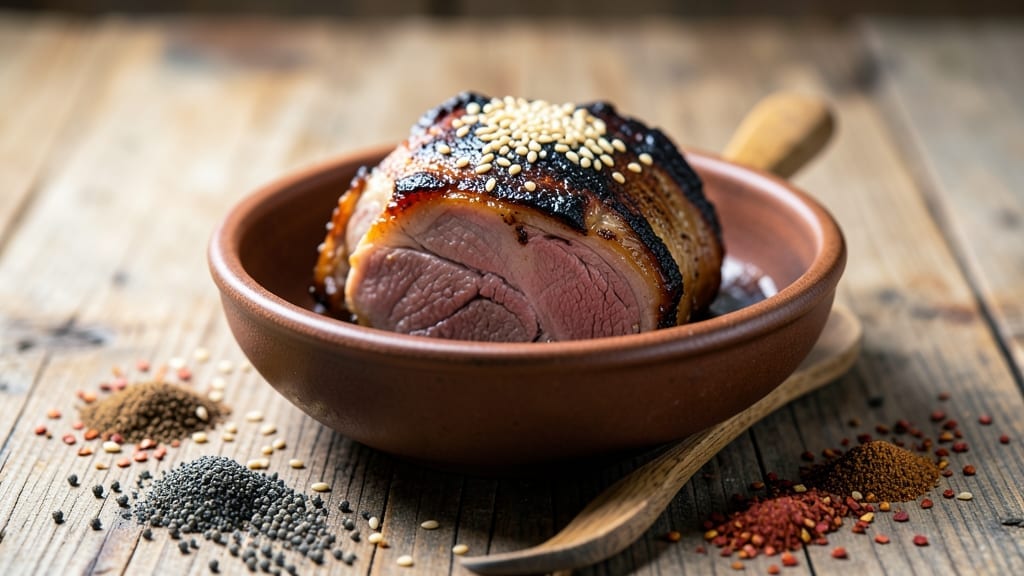
Smoking a Boston butt pork roast transforms tough meat into fall-apart tenderness that rivals any competition-style pull—this is the recipe I perfected during my first barbecue championship after years of experimenting at The Smoky Pig.
The key lies in low-and-slow precision: maintaining a steady 225°F temperature while the fat cap renders slowly, basting the meat in its own juices. I’ve trimmed this down to a foolproof method that delivers restaurant-quality results without requiring a 12-hour smoke session.
The secret weapon here is patience combined with technique: a simple salt-and-pepper rub lets the natural flavors shine, while the probe temperature (not time) determines doneness. We’re talking 195-203°F internal, where collagen breaks down into gelatin, creating that signature pull-apart texture.
This isn’t just smoked pork—it’s a showstopper that makes your smoker smell like victory from the first whiff of hickory smoke.
By the time you’re ready to serve, you’ll have meat so tender it practically shreds at a touch, with a bark that’s crisp enough to stand up to a fork.
The fat cap stays juicy, the meat fibers melt in your mouth, and every bite carries that deep, smoky sweetness that defines great pulled pork.
This is the kind of dish that turns weeknight dinners into memorable gatherings—no fancy sides required, though apple compote or buttery mashed potatoes make perfect partners.
Here’s where it gets interesting: the resting period is non-negotiable. Wrapping the roast in butcher paper for 90 minutes after it comes off the smoker locks in all that rendered fat and moisture, ensuring your first slice is as juicy as the last.
This is how you smoke pork like a pro—no shortcuts, just methodical excellence that delivers every time.
Ingredients for smoked boston pork roast
Pantry staples meet championship-level smoked pork. Just a handful of ingredients transform a simple roast into showstopping pulled pork.
| Ingredient | Amount | Notes |
|---|---|---|
| Boston Butt Pork Roast 🥩 | 10 lb | Bone-in, fat cap intact |
| Kosher Salt 🧂 | 2 tbsp | Diamond Crystal preferred |
| Freshly Ground Black Pepper 🌶️ | 1 tbsp | Coarse grind preferred |
| Yellow Mustard 🍯 | 2 tbsp | For bark adhesion |
| Hickory Wood Chips 🌳 | 2 cups | Unsoaked, premium grade |
| Apple Juice 🍎 | 1 cup | For spritzing during smoke |
| Butcher Paper 📄 | 1 sheet | Heavyweight, 24×36 inches |
| Unsalted Butter 🧈 | ½ cup | Cold, cubed for wrapping |
| Onion Powder 🧅 | 1 tsp | For final seasoning |
| Garlic Powder 🧄 | 1 tsp | For final seasoning |
| Smoked Paprika 🌶️ | 1 tsp | For final bark color |
| Wooden Skewer 🪵 | 1 whole | For meat probe |
[recipe_ingredient_scaler]
The pork roast is non-negotiable—bone-in with fat cap intact is essential for moisture and flavor. Costco or local butchers usually carry the best cuts, often pre-vacuum sealed. Look for vibrant color and good marbling; avoid anything grayish or overly lean. I’ve found that 10-pound roasts from Snake River Farms deliver the most consistent results, though any reputable brand works. The fat cap should be at least 1/4-inch thick—this is where the magic happens during the smoke. If your roast is leaner, add a thin layer of unsalted butter under the butcher paper during the wrap.
No hickory chips? Pecan or cherry wood work beautifully as substitutes, though hickory’s bold flavor is ideal. Running out of apple juice? White grape juice or even water will spritz just fine—it’s all about maintaining moisture. The mustard is crucial for bark adhesion; Dijon works too but yellow mustard has a cleaner flavor. For the final seasoning, Penzeys spices are my go-to for quality, but any good brand will do. Pro tip: Toast your wood chips in a dry skillet for 2-3 minutes before smoking to remove any potential bugs or debris—this makes a noticeable difference in flavor.
This roast is a marathon, not a sprint. The resting period in butcher paper is where the real magic happens—90 minutes minimum—so plan ahead. The meat will stay perfectly tender for 3-4 days in the fridge, wrapped tightly in butcher paper. For longer storage, portion and freeze in airtight containers for up to 3 months. I always make extra because it reheats beautifully—just warm in a 325°F oven with a splash of apple juice until heated through. The bark gets crispy again when reheated, making it feel fresh every time.
Why You’ll Love This Recipe
- No-Fuss Feast: Honestly, this roast is the kind of dish where you just show up—no fancy prep, no stress. The only real effort is letting that 10 lb Boston Butt sit at room temp for 30 minutes and slathering on the mustard-salt rub, which takes less time than microwaving leftovers. The rest? Smoke does the heavy lifting while you sip coffee or scroll through memes.
- Crispy-Outside, Creamy-Inside Magic: That crispy bark from the yellow mustard? Chef’s kiss. But the real showstopper is the inside—thanks to the apple juice spritzes every 90 minutes and the butcher paper wrap at 203°F, it’s fall-apart tender without drying out. The hickory smoke and garlic-onion kick? Instant crowd-pleaser.
- Leftovers That Outshine Takeout: Between us, this roast gets better the second day. Slice it thin, pile it on buttered toast, or toss it into tacos—your wallet and taste buds will thank you. And if you freeze portions? It stays just as good for months, so you’re never stuck with sad leftovers.
- Budget Smoker Gold: A 10 lb Boston Butt is cheaper per pound than most cuts, and with just 12 simple ingredients (most of which you already have), this roast is a no-brainer. The butcher paper trick and apple juice spritzes mean you’re not wasting money on expensive rubs or fancy equipment—just pure, smoky satisfaction.
Step-by-step instructions for smoked Boston Butt pork roast
Here’s how to transform your pork roast into melt-in-your-mouth perfection.
Prepare and Season the Roast
Remove the 10 lb Boston Butt Pork Roast from the refrigerator and let it sit at room temperature for 30 minutes. This ensures even cooking throughout. Pat the surface dry with paper towels—this critical step helps the mustard adhere and promotes better bark formation.
In a small bowl, mix the 2 tbsp Kosher Salt, 1 tbsp Freshly Ground Black Pepper, 2 tbsp Yellow Mustard, 1 tsp Onion Powder, 1 tsp Garlic Powder, and 1 tsp Smoked Paprika until fully combined. The mustard acts as a natural binder for the rub and helps create that coveted crust. Spread this mixture evenly over all surfaces of the roast, pressing it firmly into the meat. Let it rest uncovered for 1 hour before smoking—this allows the seasoning to penetrate deeply.
Set Up the Smoker
Soak the 2 cups Hickory Wood Chips in water for 30 minutes, then drain well. Fill your smoker’s wood chip tray and preheat to 225°F. Maintain this temperature using indirect heat—this low-and-slow approach is key to tenderizing the tough connective tissues. Place a water pan in the smoker to add moisture to the air and prevent drying.
Once the smoker reaches temperature and you see steady, thin blue smoke (not thick white vapor), it’s ready. Position the roast fat-side up on the grill grates. The fat will render slowly, basting the meat as it cooks. Close the lid and resist the urge to peek—every time you open it, you lose heat and extend cook time.
Smoke and Spritz for Moisture
Smoke the roast undisturbed for 6-8 hours, or until the internal temperature reaches 165°F at its thickest point. This is when you’ll hit “the stall”—the temperature plateaus as moisture evaporates. To combat this, prepare the 1 cup Apple Juice in a spray bottle. Every 90 minutes after the first 4 hours, remove the roast and lightly spritz all surfaces with the apple juice. This keeps the meat moist and enhances the bark.
Use the wooden skewer to check doneness—insert it into the thickest part of the roast. If it slides in easily with just slight resistance, the meat is ready. If not, return it to the smoker. The apple juice spritzing should be your last application when the internal temperature hits 165°F.
Wrap and Finish
When the roast reaches 165°F, it’s time for the wrap. Tear off a 18×18-inch square from the 1 sheet Butcher Paper and place the roast on it. Fold the sides inward, then roll the roast tightly in the paper, sealing it completely. This technique, known as the “Texas crutch,” helps push the roast through the stall while preserving that beautiful bark.
Return the wrapped roast to the smoker and continue cooking until the internal temperature reaches 203°F. This final stage, often called the “probe-tender” point, ensures the meat is fork-tender and falls apart effortlessly. The butcher paper allows smoke to penetrate while retaining moisture—unlike foil, which can steam the meat.
Rest and Serve
Remove the roast from the smoker and transfer it to a cutting board. Unwrap the butcher paper and let the roast rest for 1 hour before slicing. This resting period allows the juices to redistribute throughout the meat, ensuring each slice is moist and flavorful. During this time, melt the ½ cup Unsalted Butter in a small saucepan over low heat and brush it lightly over the roast’s surface for added richness.
Slice the roast against the grain into ¼-inch thick pieces. Serve immediately with the rendered juices spooned over the top. Each bite should deliver tender, smoky pork with a crispy exterior and a pink, juicy interior. The apple juice spritzing and careful monitoring ensure this roast stays moist and flavorful without drying out.
Pro Tips For Making Smoked Boston Pork Roast
- Soak Wood Right: DESCRIPTION: I learned this the hard way—don’t skip soaking the 2 cups Hickory Wood Chips for those 30 minutes. Dry chips burn fast and choke your smoker with thick white smoke instead of the clean blue you want. Drain well afterward, or you’ll end up with a soggy mess in the tray.
- Press That Rub: DESCRIPTION: The 2 tbsp Yellow Mustard isn’t just glue—it’s your bark’s foundation. Mix it into the salt, pepper, and spices, then press the mixture into every crevice of the roast, especially the fat cap. I used to slap it on half-heartedly, and my crust always came out patchy. This isn’t the time to be lazy.
- Spritz Like a Surgeon: DESCRIPTION: When you hit the stall at 165°F, the 1 cup Apple Juice isn’t just moisture—it’s a lifeline. Lightly mist the roast every 90 minutes after the first 4 hours, but don’t drown it. A few quick spritzes on each side keep the bark crisp while fighting dryness. Overdo it, and you’ll turn your smoker into a steamer.
- Wrap Tight, Not Sloppy: DESCRIPTION: The Texas crutch (butcher paper wrap) only works if it’s airtight. Fold the sides inward before rolling the roast—this seals the edges so smoke and juices don’t escape. I once left gaps, and my roast ended up with a sad, limp bark. Trust me, the extra 30 seconds of fussing is worth it.
Perfect pairings for this smoked boston pork roast
Sweet & Tangy Sides
My go-to pairing is a homemade apple compote—sweetened with just ¼ cup brown sugar and simmered with 1 cinnamon stick until thick. The natural acidity from the apples cuts through the pork’s richness while complementing the smoky depth.
I use Braeburn apples because their firm texture holds up when sliced over the pork. 🍎
Creamy Comfort Pairings
For a Southern twist, nothing beats buttery mashed potatoes—I mash 3 lbs Yukon Golds with ½ cup unsalted butter and 1 cup heavy cream, then fold in 1 tsp smoked paprika for a subtle smoky echo. The creamy texture soaks up the pork’s juices beautifully.
Crunchy Contrasts
A sharp coleslaw with ½ cup apple cider vinegar and ½ cup mayo adds brightness. I toss 4 cups shredded cabbage and 2 carrots with 1 tbsp Penzeys hot honey for a sweet-spicy kick. The crunch cuts through the pork’s tenderness while balancing the smoky flavors.
Beverage Matches
For drinks, a local Georgia peach iced tea (sweetened with 2 tbsp honey) is my secret weapon. The fruitiness enhances the pork’s sweetness, while the tea’s acidity cleanses the palate.
If you prefer beer, a sweet Carolina lager like Southern Tier pairs perfectly—its light maltiness complements the smoky notes without overpowering.
Garnish Elevations
Finish plates with a sprinkle of chopped fresh parsley and a drizzle of rendered pork fat (strained from the pan) for extra richness. I also love adding crumbled blue cheese for a tangy contrast—just ¼ cup per serving transforms the dish into a gourmet experience. 💫
Nutrition facts
Frequently asked questions
Why does the recipe use mustard in the seasoning?
The yellow mustard acts as a natural binder for the rub, helping it adhere perfectly to the meat while creating that coveted crust or “bark.” It also enhances flavor without overpowering the natural taste of the pork. Without it, the seasoning might flake off during smoking, leaving you with uneven flavor distribution.
How do I know when the pork has reached the “stall” during smoking?
The “stall” occurs when the internal temperature hits 165°F and plateaus for an hour or more. This happens as moisture evaporates from the meat. You’ll notice the temperature on your probe stops rising despite continued cooking. This is normal and can be managed by spritzing with apple juice every 90 minutes to keep the meat moist.
Can I skip the butcher paper wrap and use foil instead?
While foil will keep the meat moist, it traps steam inside and can make the bark soggy. The butcher paper wrap allows smoke to penetrate while still retaining moisture—this is why it’s called the “Texas crutch.” If you must use foil, do it only after the roast reaches 203°F to avoid steaming the meat prematurely.
How should I reheat leftovers without drying out the meat?
Place the wrapped roast in a 325°F oven with a splash of apple juice in the pan. Cover loosely with foil and heat until warmed through—about 30-45 minutes. The butcher paper keeps the meat moist, and the juice adds back some of the lost moisture. This method also crisp up the bark again!

Trained in classic French technique but raised on slow-cooked ribs and spicy rubs, she blends culinary skill with smoke and soul.
- Smoked Brisket Recipe: Low and Slow to Fall-Apart Tenderness - November 2, 2026
- Smoked Turkey Breast Recipe: Juicy Pink Center With Crispy Skin Every Time - November 2, 2026
- Leftover Smoked Pulled Pork Chili Recipe: Rustic Flavor Revival in One Pot - November 2, 2026