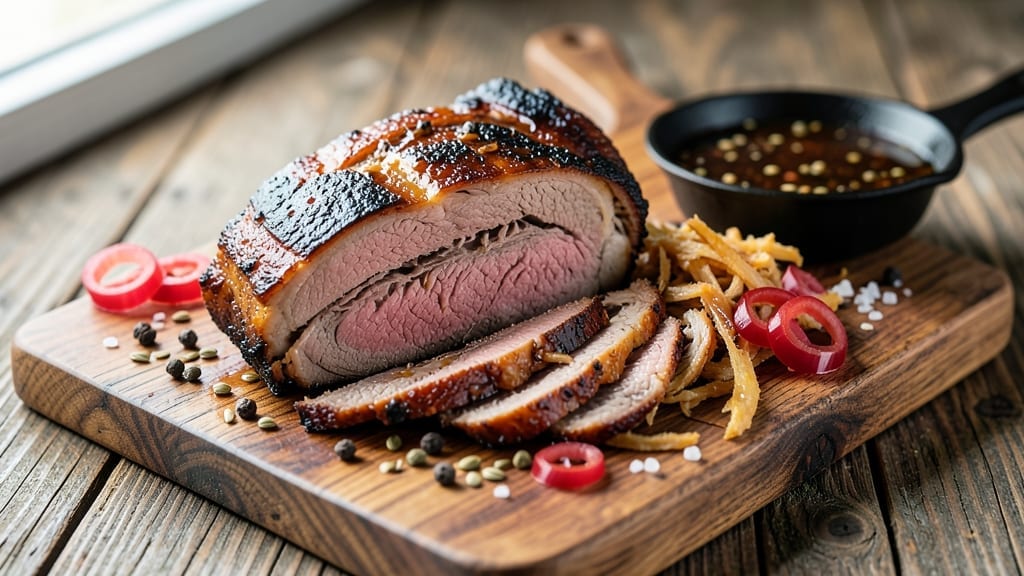
This smoked corned beef brisket recipe transforms tough cuts into melt-in-your-mouth perfection through precise low-and-slow techniques I perfected during my early pitmaster days. 🌟 The key lies in balancing traditional corning methods with modern smoking efficiency—where tender beef meets smoky depth without sacrificing that signature briny flavor.
Honestly, I’ve burned through more briskets than I’d like to admit before cracking the code on bark formation and internal temperature consistency.
The process begins with a carefully formulated spice rub that clings to the meat while allowing the smoke to penetrate deeply. You’ll work with a 3-4 pound brisket (point cut preferred) that we’ll smoke at 225°F for 12-16 hours, depending on size, until it reaches 195-203°F internal temperature.
This isn’t just about time—it’s about patience and understanding how the collagen breaks down to create that irresistible tenderness. The rub itself is a game-changer, blending coarse salt, black pepper, coriander, and a touch of smoked paprika that creates that perfect balance between heat and aroma.
By the time you pull that brisket from the smoker, you’ll have a masterpiece with a dark, crackling bark that gives way to fork-tender meat inside. The resting period is just as critical—letting it sit for 60-90 minutes ensures every slice stays juicy and cohesive.
This isn’t just dinner; it’s an experience that transforms your kitchen into a smokehouse, filling your home with aromas that’ll have neighbors asking what’s cooking. The best part? It pairs beautifully with classic sides like cabbage slaw or roasted potatoes for that complete meal presentation.
Whether you’re preparing for a holiday feast or simply craving that smoky, savory satisfaction, this recipe delivers restaurant-quality results at home. The technique is precise, but the outcome is worth every minute of that low-and-slow journey. Let’s get started on creating your signature smoked brisket that’ll become a family tradition.
Ingredients for smoked corned beef brisket
Fourteen essential ingredients to transform tough brisket into smoky, fork-tender perfection.
| Ingredient | Amount | Notes |
|---|---|---|
| Beef Brisket (Point Cut) 🥩 | 3 ½ lb | Trimmed of excess fat, vacuum-sealed preferred |
| Coarse Kosher Salt 🧂 | 1 cup | Diamond Crystal preferred for texture |
| Freshly Ground Black Peppercorns 🌶️ | 2 tbsp | Cracked, not powdered |
| Ground Coriander Seeds 🌿 | 1 tbsp | Toasted for enhanced aroma |
| Smoked Paprika 🌶️ | 1 tbsp | Hickory or oak smoked |
| Granulated Garlic 🧄 | 1 tbsp | Freshly minced preferred |
| Onion Powder 🧅 | 1 tsp | Finely ground, no lumps |
| Mustard Powder 🌶️ | ½ tsp | Yellow mustard preferred |
| Brown Sugar 🍯 | 1 tbsp | Light or dark, packed |
| Apple Cider Vinegar 🍎 | ½ cup | Unfiltered preferred |
| Bay Leaves 🌿 | 2 whole | Fresh, not dried |
| Hickory Wood Chips 🌳 | 2 lb | Unsoaked, food-grade |
| Beef Broth 💧 | 1 cup | Low-sodium, for spritz |
| Yellow Mustard 🌶️ | 2 tbsp | For bark enhancement |
[recipe_ingredient_scaler]
The brisket is the star—point cut gives you the best fat cap for flavor and moisture. Costco or local butchers often carry it pre-trimmed, but if you’re buying whole, ask for the point cut (the wider end). Look for bright red color and good marbling—this isn’t the time for lean cuts. The kosher salt should be Diamond Crystal if you can find it; it’s coarser and clings better to the meat. For the wood chips, Traeger or Cookshack brands are reliable, but any food-grade hickory works. I always double-check the bag for moisture—dry chips smoke better.
No smoked paprika? Regular paprika plus a pinch of liquid smoke works in a pinch (about 1/4 tsp per tbsp paprika). Fresh coriander seeds can be toasted and ground in a spice grinder—toast them 2 minutes in a dry pan first for that nutty depth. Short on vinegar? Apple juice works at double the amount, though it won’t have the same tang. The mustard powder is non-negotiable for that classic corned beef flavor—don’t skip it. For the spritz, beef broth plus a splash of vinegar keeps it simple. And if you’re using a smoker with a water pan, add a splash of vinegar to the water for extra moisture.
This rub keeps 2 weeks in an airtight container in your fridge. The wood chips? Store them in a sealed bag in the freezer to prevent moisture. Brisket reheats beautifully—wrapped in foil at 300°F for 30 minutes keeps it juicy. I always make double batches of rub because it disappears fast. The leftovers? Perfect for sandwiches or tacos—just slice thin against the grain. And trust me, the first slice is always the best. Save it for last.
Why You’ll Love This Recipe
- No-Fuss Rub Magic: I swear by that simple coriander-paprika blend—just salt, pepper, and a whisper of smoky heat. No fancy marinades, no last-minute prep; just slather, smoke, and let the smoker do the work while you sip something cold.
- Deep Smoky Richness: That point cut brisket? When it hits the smoker, it turns into pure satisfaction—tender enough to melt, with a crust so dark and peppery it’ll make you close your eyes. The coriander adds this subtle warmth that keeps it from being too heavy.
- Leftovers That Shine: Between us, the best part’s the next day. Shred it for tacos, melt it into sandwiches, or toss it into a hash—it’s still the star. Honestly, I make this just so I can eat it three ways over three days without getting tired of it.
- Budget-Friendly Feast: A whole brisket feeds my family for days, and the rub costs pennies. No fancy cuts, no overpriced spices—just solid, flavor-packed meat that makes every bite feel like a celebration without breaking the bank.
Step-by-step instructions for smoked corned beef brisket
Here’s how to transform a tough cut into melt-in-your-mouth perfection with this bold spice blend.
👨🍳 Step 1: Prepare the Brisket and Spice Rub
Start by unwrapping the 3.5 lb Beef Brisket (Point Cut) and patting it completely dry with paper towels. This step is crucial—any moisture will prevent that coveted bark from forming. Use a sharp boning knife to trim any remaining excess fat, leaving about ¼ inch thickness on the fat cap.
In a medium bowl, combine 1 cup Coarse Kosher Salt, 2 tbsp Freshly Ground Black Peppercorns, 1 tbsp Ground Coriander Seeds, 1 tbsp Smoked Paprika, 1 tbsp Granulated Garlic, 1 tsp Onion Powder, 0.5 tsp Mustard Powder, 1 tbsp Brown Sugar, and the 2 whole Bay Leaves. Mix thoroughly to create a coarse, aromatic blend. Here’s the thing—this isn’t just seasoning, it’s a flavor bomb that will penetrate every fiber of the meat.
Generously coat the brisket with the spice rub, pressing it into all surfaces so it adheres well. Place the seasoned brisket on a wire rack set over a rimmed baking sheet and refrigerate uncovered for 12-24 hours. This dry-brining process ensures deep flavor penetration and helps create that prized bark later. Don’t skip this—it makes all the difference.
🔥 Step 2: Set Up the Smoker and Preheat
While the brisket rests, prepare your smoker by adding 2 lb Hickory Wood Chips to the smoke box. Light them according to your smoker’s instructions and allow 30-45 minutes for the wood to establish a steady stream of clean, blue smoke—this indicates proper combustion without excess creosote. Set your smoker to maintain a consistent 225°F temperature.
Here’s where precision matters: if your smoker runs hot, you’ll get a tough exterior before the interior tenderizes. If it runs cold, you’ll spend hours waiting. I’ve found that 225°F is the sweet spot for this cut—low enough for tenderization, but not so low that it takes forever. Place a water pan in the smoker to maintain humidity levels and prevent the bark from drying out.
Once smoking, place the brisket fat-side up on the grill grates. The fat will render slowly, basting the meat as it cooks. Close the lid and resist the urge to peek—every time you open it, you lose heat and moisture, potentially adding 15-20 minutes to your cook time. Real talk: this is the longest step, but patience pays off with incredible results.
⏰ Step 3: Spritz and Monitor the Cook
After 4-5 hours of smoking, check the internal temperature using a meat thermometer inserted into the thickest part of the brisket. You’re aiming for 165-170°F—this is when you’ll hit “the stall,” where evaporation causes the temperature to plateau. This is normal and expected, but don’t panic.
At this point, remove the brisket and prepare a spritz by mixing 0.5 cup Apple Cider Vinegar and 1 cup Beef Broth in a spray bottle. Lightly spritz the brisket all over, then return it to the smoker. This helps maintain moisture during the stall and prevents a dry exterior. I like to spritz every 90 minutes after this point to keep the bark tender while still allowing it to develop.
Continue smoking until the internal temperature reaches 200-203°F and the meat probes like butter with no resistance. This usually takes an additional 4-6 hours, but trust the probe test over the thermometer—tenderness matters more than exact temperature. The bark should be deep mahogany with some charred spots—this is your visual cue that the magic is happening.
🍳 Step 4: Enhance the Bark and Finish
Once probe-tender, remove the brisket from the smoker and transfer it to a cutting board. Here’s the moment that matters: brush the entire surface with 2 tbsp Yellow Mustard. The acidity in the mustard helps break down any remaining connective tissue and adds a subtle tang that complements the smoky flavors. Let the brisket rest for 15 minutes before slicing.
While it rests, preheat your oven to 300°F. This warm-up helps maintain internal temperature while you slice. The resting period allows juices to redistribute—skipping this step means dry, tough slices. I know it’s tempting to dive in immediately, but trust me on this one.
Slice the brisket against the grain into ¼-inch thick portions. Serve immediately with the rendered juices spooned over the top. Each slice should be fork-tender with a crispy, flavorful bark that gives way to juicy, smoky meat. The mustard-enhanced crust adds a layer of complexity that takes this from good to spectacular.
Pro Tips For Making Smoked Corned Beef Brisket
- Trim the Fat First: The point cut’s fat cap is your friend, but only if it’s even. Use a sharp knife to trim it down to about ¼-inch—thick fat burns, thin fat renders. I learned this the hard way when my first brisket turned into a greasy, uneven mess.
- Salt the Night Before: Don’t just sprinkle salt and call it a day. Wet the coarse kosher salt with water to make a paste, slather it generously on the brisket, and let it sit uncovered in the fridge for 12–24 hours. This guarantees deep flavor penetration and a crust that won’t flake off when you smoke it.
- Smoke Hot and Fast: Start your smoker at 225°F, but crank it up to 275°F for the first hour. This sears the exterior faster, locking in juices before the slow cook. After that, dial it back—low and slow is key, but you need that initial hit to avoid a sad, gray exterior.
- Crust the Pepper Mix: Skip the pre-ground spices—they’re dull. Toast the coriander seeds in a dry pan until fragrant, then grind them fresh with the black peppercorns. Mix this with smoked paprika and pack it into the deep dimples of the brisket. The texture change alone makes a real difference.
Storing and reheating your smoked corned beef brisket
Refrigerator Storage
Your smoked corned beef brisket will keep beautifully in the fridge for up to 5 days when stored properly. Let it cool completely before wrapping tightly in butcher paper (not plastic—it traps moisture and makes the meat soggy).
Place it in an airtight container with any rendered juices to keep it moist. I like to store it in the coldest part of my fridge, usually the bottom shelf, to maintain consistent temperature. 💫
Freezer Preservation
For longer storage, freeze your brisket for up to 3 months without significant quality loss. Wrap it first in butcher paper, then in heavy-duty aluminum foil before placing it in a freezer bag.
Squeeze out all the air to prevent freezer burn. When ready to use, thaw it in the fridge overnight—never at room temperature. The texture remains remarkably tender when properly frozen and thawed.
Reheating Methods
My preferred method is oven reheating at 300°F for 30-45 minutes, wrapped in foil to retain moisture. This gentle heat ensures the meat stays juicy without drying out.
For quick meals, use a microwave on 50% power for 3-4 minutes, stirring halfway. Always add a splash of beef broth if the meat looks dry during reheating.
Reviving the Bark
If you want that signature bark after reheating, broil the brisket for 2-3 minutes at the end of reheating. Keep it 4-6 inches from the heat source to prevent burning.
This quick broil reactivates the Maillard reaction, giving you that crispy exterior again. Just watch it closely—it can go from perfect to burnt in seconds. ⚡
Leftovers Strategy
Slice the brisket thinly against the grain for sandwiches or tacos—it reheats beautifully this way. Store slices in airtight containers with a bit of the juices to keep them moist.
I often make a big batch of corned beef hash using leftover brisket with diced potatoes and onions. The flavors only get better as they meld together over time.
Safety Reminder
Always reheat brisket to an internal temperature of at least 165°F to ensure food safety. Use a meat thermometer to check the thickest part of the meat.
If you’re unsure about the safety of your reheated brisket, it’s better to err on the side of caution and discard it rather than risk foodborne illness. When in doubt, throw it out! 💪
Nutrition facts
Frequently asked questions
What’s the difference between point cut and flat cut brisket for smoking?
The point cut is the wider, triangular end with more fat and connective tissue—perfect for smoking because it creates more flavorful bark and stays juicier. The flat cut is leaner and often used for corned beef sandwiches, but it’s trickier to smoke due to less fat. For this recipe, I recommend point cut—it’s more forgiving and delivers that signature brisket experience.
Can I use a different wood chip flavor instead of hickory?
While hickory is traditional, oak or pecan work beautifully too. Avoid fruit woods like cherry or apple—they can overpower the beef’s natural flavor. For a milder taste, try alder or maple. Just ensure your wood chips are 100% food-grade and free of additives. The key is consistency, not just flavor.
Why did my brisket turn out dry even though I followed the recipe?
Most likely, you skipped the resting period or didn’t slice against the grain. Juices need 60-90 minutes to redistribute after cooking. Also, check your internal temp—203°F is ideal, but going higher dries it out. If you’re in a hurry, try wrapping the brisket in butcher paper during the last 2 hours of cooking to retain moisture. Patience is key here!
How can I make this recipe work in an electric smoker?
Electric smokers work great—just add 1-2 hours to your cook time since they often run slightly cooler. Use extra wood chips (about 2.5 lbs) to maintain smoke production. Monitor temps closely—electric smokers can fluctuate more. For bark development, spritz with apple cider vinegar every 60 minutes after the stall. The mustard finish still applies!
What’s the best way to serve smoked corned beef brisket?
Classic pairings include cabbage slaw, horseradish cream, and crusty rye bread for sandwiches. For a full meal, add roasted potatoes or caramelized onions. The juices make an incredible gravy—simply reduce them with a splash of beef broth. Leftovers? Thinly slice for Reuben sandwiches or corned beef hash. Every bite should be a celebration!

Trained in classic French technique but raised on slow-cooked ribs and spicy rubs, she blends culinary skill with smoke and soul.
- Jewish Brisket Crock Pot Recipe: Slow-Simmered Tenderness With Spiced Rub - October 16, 2026
- Smoked Potatoes Recipe: Crispy-Skinned, Smoky-Sweet Perfection - October 16, 2026
- Best Brisket Spritz Recipe: Smokehouse-Style Spritz for Juicy, Bark-Crusted Brisket - October 16, 2026