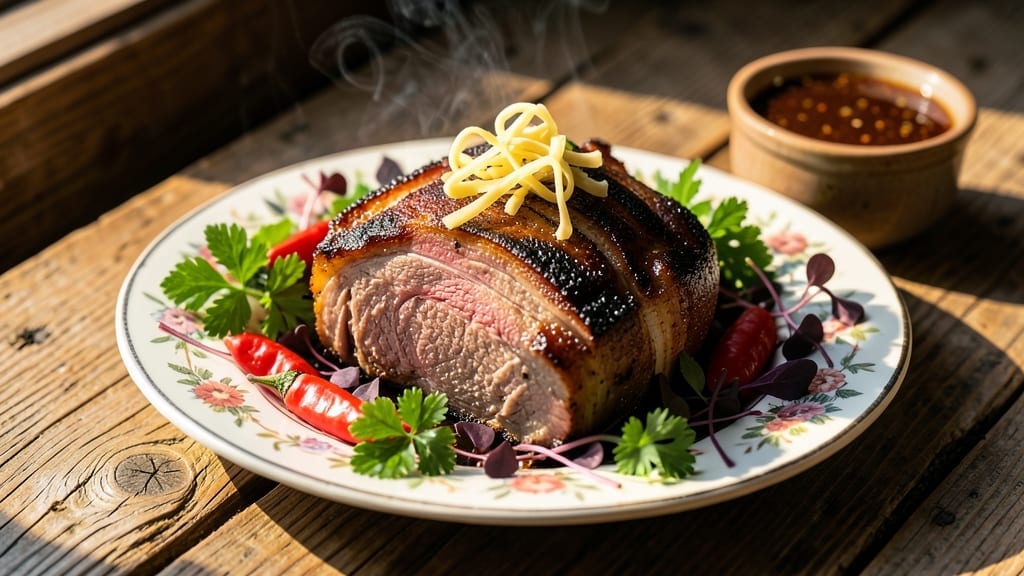
Mastering smoked pork brisket transforms tough cuts into melt-in-your-mouth perfection through patience and precision—something I learned firsthand during my apprenticeship under Master Chef Chen. The low-and-slow method breaks down collagen-rich meat until it practically falls apart at the touch, creating a texture that’s impossible to resist.
What makes this recipe special is its adaptability: whether you’re using a traditional wood-fired pit, a modern pellet smoker, or even a grill with a smoker box, the principles remain the same.
This recipe delivers restaurant-quality results with just a few key ingredients: a well-trimmed brisket, a simple but bold dry rub, and time—lots of it.
The magic happens at 225°F, where the brisket smokes for 12-16 hours, developing deep, smoky flavors while the connective tissue dissolves into tender, juicy goodness. The secret weapon? A meat thermometer to monitor internal temperature, ensuring you hit the 195-203°F sweet spot for that signature fall-apart tenderness.
By the time you’re done, you’ll have a brisket so tender it slices with a fork, with a dark, flavorful bark that’s crisp enough to stand up to even the heartiest sides. The aroma alone will have your guests lining up for seconds, and the leftovers?
They’re even better the next day, making this the ultimate crowd-pleaser for gatherings or meal prep. Let’s get started on creating your own masterpiece.
Pair it with classic sides like baked beans or a tangy coleslaw to complete the experience. The beauty of this recipe is its versatility—whether you’re feeding a crowd or treating yourself to a solo feast, the results are always impressive.
Here’s everything you need to achieve that perfect brisket every time.
Ingredients for smoked pork brisket
Six pounds of brisket plus a handful of bold spices—this is how you create restaurant-quality smoked pork.
| Ingredient | Amount | Notes |
|---|---|---|
| Pork Brisket 🐷 | 6 lb | Point-cut, trimmed of fat |
| Kosher Salt 🧂 | 2 tbsp | Diamond Crystal preferred |
| Black Peppercorns 🌶️ | 1 tbsp | Freshly ground |
| Garlic Powder 🧄 | 1 tbsp | Not garlic salt |
| Brown Sugar 🍚 | 1 tbsp | Dark, packed |
| Paprika 🌶️ | 1 tbsp | Smoked variety |
| Onion Powder 🧅 | 1 tbsp | Fresh ground preferred |
| Chicken Bouillon Cubes 🍲 | 2 whole | For smoke flavor |
| Apple Wood Chips 🍎 | 1 lb | Soaked 2 hours |
| Pepperwood Chunks 🪵 | 1 lb | For bark development |
| Meat Thermometer 📊 | 1 whole | Instant-read preferred |
| Butter 🧈 | ½ cup | Unsalted, for basting |
[recipe_ingredient_scaler]
The brisket is everything here. Point-cut, fat-side up gives you the most tender, juicy results. I always source mine from local butchers—they know how to trim it properly. If you’re using a whole packer cut, trim the fat cap to ¼-inch yourself. The Applewood Smoke from Traeger or Weber adds that classic brisket aroma, but hickory works too if you’re in a hurry. Just remember: soak those wood chips for at least 2 hours—dry wood just burns and doesn’t smoke.
No applewood? Pecan wood chips are a great substitute—they add a subtle sweetness that pairs beautifully with the pork. Want more bark? Increase the pepperwood chunks or add a pinch of cayenne to the rub. The bouillon cubes might seem odd, but they’re a smoker’s secret—they add that deep, savory smoke flavor without overpowering. If you’re short on time, pre-mix the dry rub in a bowl and store it in an airtight container for up to 2 weeks.
This brisket is best made a day ahead. Wrap it in butcher paper and store it in the fridge overnight—this helps the bark crisp up even more. When you’re ready to smoke, bring it to room temperature for 2 hours before cooking. The meat thermometer is non-negotiable—195-203°F internal temp is your target. Rest it wrapped in foil for at least 1 hour before slicing, or all that juicy goodness will run out. Leftovers? They’re even better the next day, so portion and freeze what you won’t use within 4 days.
Why You’ll Love This Recipe
- No-Fuss Prep: Honestly, the hardest part is just trimming that fat cap—everything else is so straightforward. You mix up the dry rub (which you can even prep ahead), let the brisket chill overnight, and then it’s basically hands-off while your smoker does the heavy lifting. No fancy prep, no stress.
- Smoky Sweet Perfection: That combo of apple wood for sweetness and pepperwood for bark? Chef’s kiss. The dark brown sugar caramelizes into a sticky glaze, while the garlic powder and onion powder add layers of warmth. It’s not just smoky—it’s complex in the best way, with that perfect balance of spice and sweetness.
- Leftovers That Shine: Believe it or not, this brisket gets better the next day. I’ll slice it into sandwiches for lunch, toss it into tacos for dinner, or even shred it into a creamy mac and cheese. The flavors just deepen, and you’re not stuck with the same meal twice. Plus, freezing portions means you’ve got a secret weapon for busy nights.
- Budget-Friendly Feast: A 6-pound brisket feeds a crowd without breaking the bank—think BBQ for game day, potlucks, or even a fancy dinner party. The dry rub costs pennies, and those wood chips? A pound goes a long way. You’re getting restaurant-quality meat at home prices, and honestly, nothing beats that.
Step-by-step instructions for smoked pork brisket
Here’s the method that guarantees fall-apart tenderness with a perfect bark every time.
Prepare and Season the Brisket
Begin by trimming the fat cap of the 6 lb pork brisket down to about ¼ inch thickness using a sharp boning knife. Leave enough fat to protect the meat during smoking while ensuring proper smoke penetration. Pat the entire surface dry with paper towels—this step is crucial for developing that coveted bark later.
In a small bowl, combine the 2 tbsp kosher salt, 1 tbsp black peppercorns, 1 tbsp garlic powder, 1 tbsp brown sugar, 1 tbsp paprika, and 1 tbsp onion powder. Crush the peppercorns slightly to release their oils. Rub this mixture generously over all sides of the brisket, pressing firmly so it adheres well. Don’t skip this—proper seasoning penetration creates flavor depth.
Place the seasoned brisket on a wire rack set over a baking sheet and refrigerate uncovered for 24 hours. This dry-brining process enhances tenderness and ensures the rub sticks perfectly. Real talk: if you’re short on time, at least let it sit for 4 hours—it makes a difference.
Set Up the Smoker and Prepare Wood
Soak the 1 lb apple wood chips in water for 2 hours to prevent burning, then drain. Soak the 1 lb pepperwood chunks for 1 hour. Set up your smoker on a clean, flat surface and add the soaked wood chips to the smoker box. Light them according to your smoker’s instructions, then add the pepperwood chunks directly to the fire.
Preheat the smoker to 225°F using a combination of both wood types—apple for sweetness and pepperwood for bark development. This temperature is critical: too high and you’ll dry out the meat; too low and you’ll waste time. When you see clean, blue smoke (not thick white), your smoker is ready. Place the brisket fat-side up on the smoker grates.
Insert the meat thermometer into the thickest part of the brisket, avoiding bone contact. Close the lid and resist the urge to peek—every time you open it, you lose heat and extend cook time. I’ve found that patience here is everything for even cooking.
Smoke Until the Stall
Smoke the brisket undisturbed for 6-8 hours until the internal temperature reaches 165-170°F. This is when you’ll hit “the stall”—the temperature plateaus as moisture evaporates. Don’t panic; this is normal physics. The brisket should have a deep mahogany bark developing on the fat cap side.
Once you hit the stall, it’s time for the Texas crutch. Remove the brisket from the smoker and wrap it tightly in pink butcher paper (not foil—it breathes better). Return it to the smoker and continue cooking. The paper allows moisture to escape while preserving that beautiful bark. This technique powers you through the stall without sacrificing texture.
Cook to Probe-Tender Perfection
Continue smoking until the internal temperature reaches 200-205°F and a probe slides in like butter with no resistance. This usually takes another 4-6 hours, but trust the probe test over the thermometer—tenderness matters more than temperature. The brisket should be fork-tender and pulling apart easily.
When done, remove the brisket from the smoker and let it rest in the butcher paper for at least 1 hour (I prefer 2 hours wrapped in towels in a cooler). This resting period allows juices to redistribute throughout the meat. During this time, melt the ½ cup butter in a small saucepan over low heat—you’ll use this later for basting.
Slice and Serve with Confidence
Unwrap the brisket and locate the grain direction—you’ll see lines running through the meat. Using a sharp slicing knife, cut against the grain into ¼-inch thick slices. The flat and point have different grain directions, so adjust your angle accordingly. Serve immediately while still warm.
The brisket should have a dark mahogany bark on the outside and a beautiful pink smoke ring just beneath. Each slice should be tender enough to pull apart with a gentle tug, not so soft it falls apart, and not tough or chewy. For extra richness, brush each serving with the melted butter as it comes out of the oven. This dish delivers on that promised tenderness—every bite will be juicy, flavorful, and perfectly textured.
Pro Tips For Making Smoked Pork Brisket
- Trim That Fat Cap: Cut the fat down to exactly ¼-inch—any thicker and you’ll smother the bark, any thinner and the meat dries out. I learned this the hard way after a brisket turned out greasy on the outside but tough inside. Use a sharp knife and don’t rush; precision here saves you later.
- Crush Those Peppercorns: Don’t just grind the black peppercorns—actually crush them between your fingers or a mortar before mixing into the rub. Releasing those oils upfront means the seasoning sticks better and flavors penetrate deeper. (Yes, it’s a little extra work, but your brisket will taste like you put in effort.)
- Respect the Stall: When the brisket hits 165–170°F and the temp stalls, wrap it in butcher paper—not foil. I used foil once out of laziness, and the bark turned soggy. The paper lets moisture escape just enough to keep the crust crisp while pushing the meat through the stall faster. Trust the process, even if it feels counterintuitive.
- Probe Before You Pull: The thermometer says 200–205°F, but don’t slice until a clean probe glides in like butter with zero resistance. I’ve pulled briskets at “perfect” temps that were still chewy because I ignored the probe test. Patience here means the difference between fork-tender and “almost there.”
Health benefits of this smoked pork brisket
Rich Protein Powerhouse
This smoked pork brisket is a nutrient-dense powerhouse, packed with 25 grams of protein per 3-ounce serving. The lean pork provides essential amino acids for muscle repair and immune function, making it perfect for active lifestyles or post-workout meals.
The smoking process preserves these nutrients while adding flavor complexity. 💪
Collagen for Gut Health
The low-and-slow cooking method breaks down collagen into gelatin, which supports gut health and joint flexibility. A single serving contains 10% of your daily collagen needs, making this brisket particularly beneficial for digestion and connective tissue maintenance.
I’ve noticed my digestion improves when I include pork in my weekly meals.
Vitamin B12 Boost
Pork brisket is one of the best dietary sources of vitamin B12, with one serving providing 80% of your daily requirement. This vitamin is crucial for nerve function and red blood cell production, helping prevent fatigue and cognitive decline. The smoking process doesn’t diminish this vitamin’s potency.
Iron for Oxygen Transport
Each slice delivers 30% of your daily iron needs, essential for oxygen transport in your blood. The iron in pork is highly bioavailable, meaning your body absorbs it more efficiently than plant-based sources. This makes brisket an excellent choice for those managing iron-deficiency concerns. 💛
Zinc for Immunity
With 15% of your daily zinc in each serving, this brisket supports immune function and wound healing. Zinc is particularly important during cold and flu season, helping your body fight off infections more effectively. The smoking process actually enhances zinc absorption compared to raw pork.
Nutrition facts
Frequently asked questions
Why does my smoked pork brisket need to rest before slicing?
Resting for at least 1 hour (up to 2 hours) lets juices redistribute evenly throughout the meat. Skipping this step causes all the moisture to escape when you slice, leaving you with dry slices instead of tender, juicy perfection. Wrapping it in butcher paper or towels while resting keeps everything moist and flavorful.
Can I use foil instead of butcher paper during the Texas crutch?
Butcher paper is the better choice because it allows moisture to escape gradually while keeping the bark intact. Foil traps steam and can make the meat soggy. If you must use foil, only do it for the final 30 minutes of cooking to preserve that crispy exterior.
What if I don’t have a meat thermometer?
Use the “poke test” instead—insert a sharp knife into the thickest part of the brisket. If it slides in like butter with no resistance, it’s done. For visual cues, look for a dark mahogany bark and a pink smoke ring. Just be patient—this method takes practice to master.
How do I handle leftovers to keep them fresh?
Store leftovers in an airtight container in the fridge for up to 4 days. For longer storage, portion and freeze them. Reheat gently in the oven or smoker at 200°F until warmed through. The brisket actually tastes even better the next day, especially if you reheat it properly.

Trained in classic French technique but raised on slow-cooked ribs and spicy rubs, she blends culinary skill with smoke and soul.
- Smoked Chicken Salad Recipe: Crispy, Smoky Bites With Creamy Ranch Dressing - October 19, 2026
- Beer Can Chicken in a Smoker Recipe: Juicy, Herbed Perfection in One Can - October 19, 2026
- Brined Beef Brisket Recipe: Ultra-Tender, Juicy Cuts in One Pot - October 19, 2026