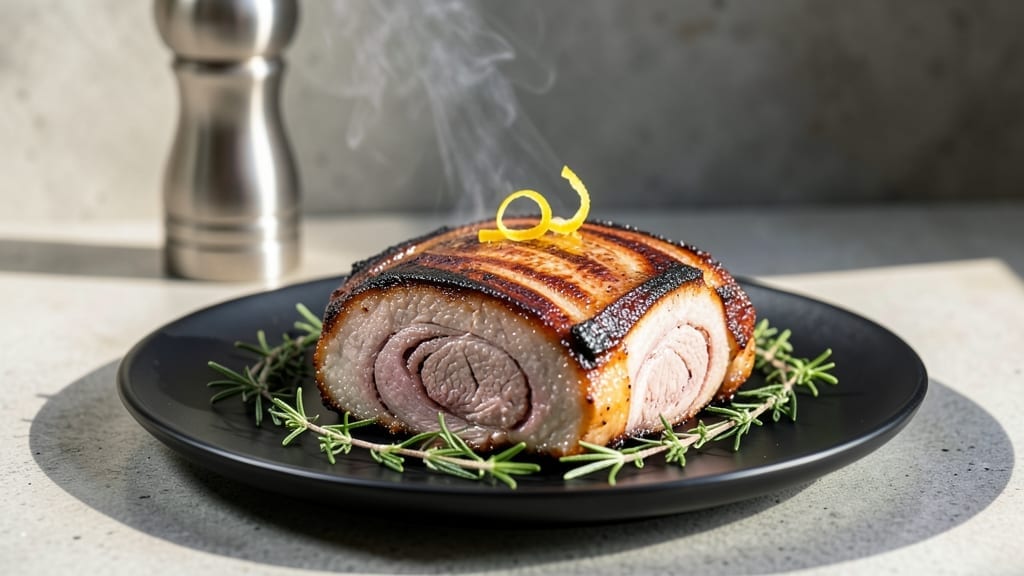
Mastering smoked pork roast on a Traeger transforms tough cuts into melt-in-your-mouth perfection with a crispy bark that crackles at every bite. Growing up in small-town Georgia, I learned that patience and precision turn simple ingredients into unforgettable meals—this recipe is my refined approach after years of perfecting low-and-slow techniques.
The key lies in temperature control, where 225°F becomes your constant companion for hours, ensuring tender meat without drying it out.
What sets this Traeger recipe apart is the balance between simplicity and technique—no fancy marinades or complicated rubs, just quality pork and the right conditions.
Using a meat probe connected to your Traeger ensures you never guess at doneness, while a light basting of apple cider vinegar creates that signature bark. The result?
Juicy, flavorful pork that falls apart with just a fork, encased in a crust so crisp it’ll have your guests asking for seconds.
This method delivers restaurant-quality results at home, with the added benefit of minimal cleanup. The resting period is just as critical as the smoking time—letting the juices redistribute ensures every slice is moist and tender.
Whether you’re feeding a crowd or treating yourself to a special meal, this recipe delivers consistent, foolproof results that honor the traditions I learned in Charleston.
Pair it with classic sides like creamy mashed potatoes or a tangy apple glaze to complete the experience. The beauty of Traeger cooking lies in its versatility—this same technique works for brisket, ribs, or even chicken, making it a foundational skill for any pitmaster.
Let’s get started on creating your next showstopper.
Ingredients for smoked pork roast traeger
Simple ingredients, incredible results—this pork roast transforms on your Traeger.
| Ingredient | Amount | Notes |
|---|---|---|
| Pork Shoulder Roast 🐷 | 5 lb | Bone-in preferred for flavor |
| Apple Cider Vinegar 🍎 | ¼ cup | For basting and bark |
| Traeger Pellets 🔥 | 3 lb | Hickory or cherry flavor |
| Kosher Salt 🧂 | 1 ½ tbsp | Freshly ground preferred |
| Black Peppercorns 🌶️ | 1 tbsp | Freshly cracked for aroma |
| Garlic Powder 🧄 | 1 tbsp | For depth of flavor |
| Onion Powder 🧅 | 1 tbsp | Sweet base for rub |
| Brown Sugar 🍚 | ½ cup | For caramelized bark |
| Meat Thermometer 📊 | 1 whole | Instant-read preferred |
| Butter 🧈 | ½ cup | For basting finish |
| Pork Broth 🍲 | 1 cup | For spraying during smoke |
| Dried Thyme 🌿 | 1 tsp | Earthy aroma booster |
| Dried Rosemary 🍃 | 1 tsp | Woodsy depth to flavor |
[recipe_ingredient_scaler]
The pork shoulder is your star here—bone-in cuts add layers of flavor that boneless just can’t match. I always grab 5 lbs from Costco when I’m prepping for a crowd, but even the local butcher will have great options. Look for good marbling—that fat will render out and create that juicy interior. The Traeger pellets? Hickory or cherry work best for pork—they give that classic smoky depth without overpowering. If you’re using a pre-made rub, skip it and make your own—garlic powder, onion powder, and brown sugar give you control over the sweetness and spice.
No apple cider vinegar? White vinegar with a splash of lemon juice gets you close, though the tang will be slightly different. Fresh herbs if you’ve got them, dried if you don’t—thyme and rosemary at half the amount works perfectly. The brown sugar is key for that crispy bark, but coconut sugar is a great substitute if you’re avoiding refined sugar. For the meat thermometer, instant-read is a must—you won’t trust a dial thermometer for this. Want to add more smokiness? Spray with apple cider vinegar every 30 minutes during the smoke.
This roast tastes even better the next day—rest for at least 1 hour before slicing to keep it juicy. Store leftovers in the fridge for 4-5 days or freeze for up to 3 months. I like to slice it thin and serve with the juices for maximum flavor. The bark stays crisp for 2-3 days if you wrap it loosely in foil, but it’s best eaten fresh. Don’t skip the butter basting at the end—just 2 minutes under the broiler adds that final golden sheen.
Why You’ll Love This Recipe
- Here’s what sold me: the pork gets better the next day, especially after resting for an hour. Slice it for tacos, sandwiches, or just pile it on mashed potatoes. My kids even beg for seconds, and that’s saying something.
- No-Fuss Flavor Bomb: Honestly, this recipe is that easy—just dry the pork, slather on the spice mix, and let the Traeger do the heavy lifting. No fancy prep, no constant babying the meat, just set it and forget it for hours while the wood pellets work their magic.
- Chewy Bark Meets Creamy Center: That crispy, mahogany bark from the brown sugar and apple cider vinegar? Chef’s kiss. But the real win is the fall-apart tenderness—thanks to the low-and-slow smoke and rendered fat—paired with the garlic, rosemary, and thyme. It’s like a hug in every bite.
- Budget-Friendly Feast: A 5-pound pork shoulder and 3 pounds of pellets feed a crowd without breaking the bank. Plus, the spices and broth are pantry staples you likely already have. It’s the kind of meal that makes you feel fancy without the fancy price tag.
Step-by-step instructions for smoked pork roast
Here’s how to transform that pork shoulder into tender, crispy perfection with a bark so good you’ll want seconds.
Prep the Pork Shoulder for Maximum Flavor
Remove the 5 lb pork shoulder roast from the refrigerator and pat it dry thoroughly with paper towels. I can’t stress this enough—dry meat is the secret to that coveted crispy bark. Work your way around the entire surface, including the crevices, until the meat looks completely dry and the towels come away clean.
In a small bowl, combine the 1½ tablespoons kosher salt, 1 tablespoon black peppercorns, 1 tablespoon garlic powder, 1 tablespoon onion powder, ½ cup brown sugar, 1 teaspoon dried thyme, and 1 teaspoon dried rosemary. Rub this mixture all over the pork shoulder, pressing firmly so the spices adhere to the meat. The brown sugar will help create that beautiful caramelized crust during smoking.
Place the seasoned pork shoulder on a wire rack set over a baking sheet. This allows air to circulate around all sides, ensuring even cooking. Cover loosely with plastic wrap and refrigerate for at least 4 hours, or overnight if possible. This step is crucial—it allows the salt to penetrate the meat and the spices to develop their full flavor.
Set Up Your Traeger for Low-and-Slow Cooking
Fill your Traeger with 3 lb hickory or cherry wood pellets. Set the temperature to 225°F and close the lid. Let the smoker preheat for at least 30 minutes, or until you see clean, blue smoke coming from the chimney. This indicates the pellets are burning properly and you’re ready to start cooking.
Once the smoker reaches 225°F, place the pork shoulder fat-side up on the grill grates. The fat will render slowly and baste the meat as it cooks, adding extra flavor and moisture. Close the lid and resist the urge to open it during the cooking process—every time you peek, you lose heat and potentially dry out the meat.
Prepare a spray bottle with the ¼ cup apple cider vinegar and 1 cup pork broth. The acidity in the vinegar helps tenderize the meat and creates a beautiful bark, while the broth adds moisture. I spray the pork shoulder every 30 to 45 minutes during the cook to keep it moist and enhance that crust formation.
Smoke Until Probe-Tender with Perfect Bark
Smoke the pork shoulder undisturbed for 6 to 8 hours, or until the internal temperature reaches 165°F on your meat thermometer. This is where the magic happens—the low and slow process breaks down the tough connective tissue, turning it into tender, pull-apart meat. You’ll notice the temperature will stall around 160°F for a while—that’s normal and expected.
At the 6-hour mark, check the internal temperature again. If it’s still below 165°F, continue smoking. The bark should be forming a dark, mahogany crust on the outside. If you’re concerned about drying out, you can wrap the pork shoulder in butcher paper at this stage, but I prefer to let it develop that beautiful bark naturally for as long as possible.
Once the pork shoulder reaches 165°F, remove it from the smoker and let it rest for 15 minutes. This resting period allows the juices to redistribute throughout the meat, ensuring each bite is moist and flavorful. During this time, melt the ½ cup butter in a small saucepan over low heat and keep it warm for basting.
Finish with Butter Baste for Extra Crispiness
After the 15-minute rest, return the pork shoulder to the smoker and increase the temperature to 275°F. This final step helps crisp up the bark and adds a rich, buttery flavor. Baste the pork shoulder with the melted butter, brushing it generously over the surface. The butter will melt and sizzle, creating a glossy, crispy finish.
Continue smoking for an additional 30 to 45 minutes, basting with butter every 15 minutes. The internal temperature should reach 195°F to 203°F at this point. You’ll know it’s done when the meat is fork-tender and the bark is deep, dark, and crispy. The pork shoulder should pull apart easily with two forks, indicating it’s ready to serve.
Remove the pork shoulder from the smoker and let it rest for another 15 minutes before slicing. This final rest ensures the juices are fully redistributed, making each bite incredibly moist and flavorful. Serve the pork shoulder with your favorite sides and enjoy the fruits of your low-and-slow labor!
Pro Tips For Making Smoked Pork Roast Traeger
- Don’t Rush the Salt Cure: DESCRIPTION:
- Spray Like a Pro: DESCRIPTION:
- Watch the Stall, Don’t Panic: DESCRIPTION:
- Butter Baste Early: DESCRIPTION:
Serving suggestions for smoked pork roast traeger
Classic Southern Comfort
Nothing pairs better with smoked pork roast than creamy mashed potatoes—the kind my grandma used to make with just whole milk, butter, and a touch of salt. I swear by using Yam’s brand Yukon Gold potatoes for their buttery texture.
Boil 2 lbs peeled potatoes until fork-tender, then mash with ½ cup melted butter and ½ cup warm milk. The secret? A pinch of freshly cracked black pepper right before serving—it elevates the dish instantly. 🥔
Tangy Apple Glaze
For a Southern twist, serve your pork with a spiced apple glaze that cuts through the richness. Simmer 2 cups chopped apples (I love Granny Smith for tartness) with ¼ cup brown sugar, 2 tbsp apple cider vinegar, and 1 tsp cinnamon until thickened.
Drizzle generously over sliced pork—this glaze balances the smoky bark beautifully. 🍏
Cornbread with Honey Butter
Freshly baked cornbread is a must for this meal. My go-to recipe uses 1 cup cornmeal, 1 cup self-rising flour, and 1 cup buttermilk. Bake until golden, then slice and top with honey butter—melted ¼ cup butter mixed with 2 tbsp honey.
The sweetness complements the smoky pork perfectly. 🍯
Simple Green Salad
A light arugula salad keeps the meal balanced. Toss 4 cups baby arugula with 2 tbsp olive oil, 1 tbsp apple cider vinegar, and flaky sea salt.
Add sliced apples and crumbled blue cheese for a tangy contrast. This salad cleanses the palate between bites of rich pork. 🥗
Gravy for the Win
No smoked pork meal is complete without homemade gravy. Use the pork drippings from your roast, simmered with 2 tbsp cornstarch and 1 cup chicken broth.
Stir in freshly ground black pepper and a splash of apple cider vinegar for brightness. Pour this over mashed potatoes or cornbread—it’s the ultimate comfort boost. 🍲
Nutrition facts
Frequently asked questions
Why does the pork shoulder need to rest after smoking?
The 15-minute rest after removing from the Traeger is critical—it lets juices redistribute evenly throughout the meat. Skipping this step means you’ll lose flavorful liquid when you slice, leaving dry spots. For best results, rest on a cutting board or plate, covered loosely with foil. This ensures every bite stays juicy and tender.
Can I use bone-in or boneless pork shoulder?
Bone-in pork shoulder is highly recommended for this recipe—it adds depth of flavor through the natural juices from the bones. If you must use boneless, choose a cut with good marbling (fat distribution) to compensate. The fat renders during smoking, creating that signature tender texture.
What if my Traeger runs out of pellets mid-cook?
If pellets run low, add 1-2 lbs more of hickory or cherry pellets and let the Traeger re-establish smoke. Avoid opening the lid too often—this loses heat and extends cook time. If smoke weakens, increase temperature slightly (230°F) to maintain even cooking. Always keep a backup bag nearby!
How do I know when the bark is perfectly crispy?
The ideal bark should be deep mahogany brown with a slightly glossy finish. Press gently with your finger—it should yield slightly but stay intact. If it crumbles easily, it’s overdone; if it’s pale, cook another 15-30 minutes at 275°F with butter basting. Patience here makes all the difference!
Can I substitute other spices in the rub?
Yes! Swap dried thyme and rosemary for 1 tsp each of smoked paprika or ½ tsp each of cinnamon and mustard powder for variation. Just keep the ½ cup brown sugar for bark formation. Avoid heavy spices like cayenne unless you want heat—this recipe is about balanced flavor.

Trained in classic French technique but raised on slow-cooked ribs and spicy rubs, she blends culinary skill with smoke and soul.
- Smoked Brisket Recipe: Low and Slow to Fall-Apart Tenderness - November 2, 2026
- Smoked Turkey Breast Recipe: Juicy Pink Center With Crispy Skin Every Time - November 2, 2026
- Leftover Smoked Pulled Pork Chili Recipe: Rustic Flavor Revival in One Pot - November 2, 2026