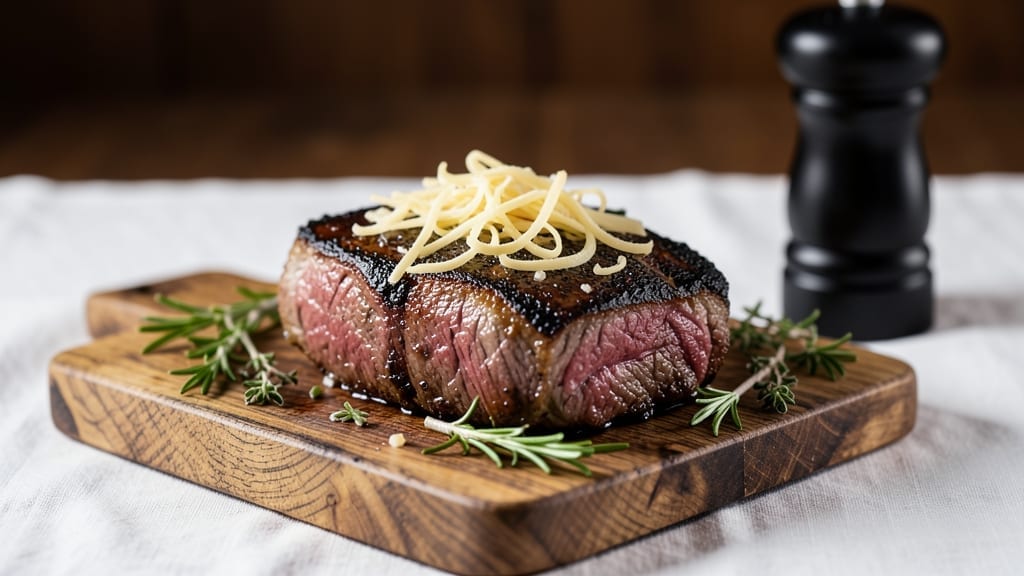
Transforming a simple ribeye roast into a showstopping centerpiece requires just a few proven techniques—smoking, precise temperature control, and a dry rub that builds flavor without masking the beef’s natural richness. The result?
A perfectly juicy roast with a deep smoky crust and tender interior that falls apart at the touch of a fork. I’ve perfected this method over countless test runs, adjusting wood blends and smoking times until the smoke ring formed consistently every time.
The secret lies in the preparation: a dry brine that enhances tenderness and a high-heat smoke that develops that coveted bark. You’ll work with a reverse sear approach—low-and-slow smoking followed by a quick sear in a hot pan—to lock in moisture while creating a caramelized exterior.
This isn’t just another smoked beef recipe; it’s a method that delivers restaurant-quality results at home with minimal equipment.
By the time you’re done, you’ll have a roast that’s juicy throughout, with a crust so flavorful it commands attention at any table. The aroma alone will have guests anticipating each bite, and the meat will slice cleanly, revealing that perfect pink center.
This is the kind of dish that elevates ordinary gatherings into memorable feasts.
Pair it with classic sides like garlic mashed potatoes or a bold red wine reduction to complete the experience. The instructions will guide you through every step—from choosing the right cut to slicing for maximum tenderness. Let’s get started on creating your best smoked ribeye roast yet.
Ingredients for smoked ribeye roast
A perfect ribeye roast meets smoky magic—just these ingredients transform beef into a showstopper.
| Ingredient | Amount | Notes |
|---|---|---|
| Ribeye Roast 🥩 | 6 lb | Bone-in, 1-2 inch thick |
| Kosher Salt 🧂 | 2 tbsp | Diamond Crystal preferred |
| Black Peppercorns 🌶️ | 1 tbsp | Freshly cracked, coarse |
| Smoked Paprika 🌶️ | 1 tbsp | For rub depth |
| Garlic Powder 🧄 | 1 tsp | Not garlic salt |
| Onion Powder 🧅 | 1 tsp | For sweetness balance |
| Brown Sugar 🍚 | 1 tbsp | Dark, packed |
| Applewood Chips 🌳 | 2 cups | Soaked 30 mins, no additives |
| Hickory Chips 🌳 | 1 cup | For balanced smoke |
| Butter 🧈 | ½ cup | Full-fat, unsalted |
| Fresh Rosemary 🌿 | 2 tbsp | Chopped, aromatic |
| Fresh Thyme 🌿 | 1 tbsp | Leaves only, fresh |
| Wooden Smoking Pellets 🔥 | 1 lb | Applewood or hickory |
[recipe_ingredient_scaler]
The ribeye matters most—look for bone-in cuts 1-2 inches thick from local butchers or Costco. Ribeye prime has the best marbling for tenderness. If you can’t find bone-in, boneless ribeye works but may dry out faster. The Diamond Crystal kosher salt dissolves evenly, while freshly cracked peppercorns add complexity. For the rub, Penzeys smoked paprika gives that deep color and flavor. The wood chips should be soaked in water for at least 30 minutes to avoid flare-ups. I always grab Traeger or Camp Chef pellets—they burn clean and consistent.
No applewood chips? Hickory alone works for a stronger smoke, or mix 1 cup pecan wood chips for a sweeter profile. Skip the brown sugar? 1 tsp liquid smoke mimics the caramelization. Fresh herbs are ideal, but dried rosemary and thyme at half the amount still work. Want extra smokiness? Add 1/2 cup liquid smoke to the butter baste. The butter should be full-fat unsalted—salted can make the meat too salty. And if you’re short on time, pre-soaked chips from the store work in a pinch.
The roast keeps beautifully for 4-5 days in the fridge if wrapped tightly in butcher paper. For longer storage, freeze for up to 3 months—thaw overnight in the fridge. The wood pellets last 6-12 months unopened, but once opened, use within 1 year. Store fresh herbs in airtight containers with a damp paper towel for up to 5 days. The smoked flavor intensifies as it rests, so let it sit 15-20 minutes before slicing. I always portion it ahead and freeze slices for quick meals—just reheat in a pan with a splash of beef broth.
Why You’ll Love This Recipe
- No-Fuss Smoking: I’ll be real—this isn’t one of those projects that requires a 10-step prep dance. Just toss the 6 lb ribeye roast with a handful of spices (kosher salt, black peppercorns, smoked paprika, and a touch of garlic powder), let it rest an hour, and you’re done with the hard part. The rest is just watching the smoker do its thing while you sip a drink.
- Smoky-Sweet Perfection: That smoked paprika and brown sugar combo? Game-changer. The low-and-slow smoke from the applewood and hickory chips infuses the meat with depth, while the final brush of herb-infused butter (rosemary and thyme, obviously) adds a caramelized crust that practically melts in your mouth. It’s like a hug for your taste buds.
- Leftovers That Win Friends: Cook once, eat twice—or five times. This roast holds up so well, you can wrap it tightly in butcher paper and keep it fresh for 4-5 days in the fridge. My kids even ask for seconds the next day, no guilt. And if you’re meal-prepping for a busy week? Freeze it for up to 3 months—just thaw overnight, and boom, dinner’s ready.
- Budget-Friendly Luxury: A 6 lb ribeye roast might sound pricey, but it’s a steal when you consider how much you get—enough for a crowd, leftovers, and maybe even a sandwich later. Plus, the spices (onion powder, garlic powder) and wooden smoking pellets are cheap enough to make this a weekly treat without breaking the bank. Worth every penny.
Step-by-step instructions for smoked ribeye roast
Here’s how to transform a simple ribeye roast into a showstopping centerpiece with perfect juiciness and smoky crust.
Prepare the Dry Rub and Season the Roast
In a medium bowl, combine the 2 tablespoons kosher salt, 1 tablespoon freshly cracked black peppercorns, 1 tablespoon smoked paprika, 1 teaspoon garlic powder, 1 teaspoon onion powder, and 1 tablespoon dark brown sugar. Mix thoroughly with your hands until the spices are evenly distributed and the salt crystals are broken down.
Pat the 6 lb ribeye roast completely dry with paper towels, focusing on the thickest sections where moisture tends to linger. This drying step is non-negotiable—it ensures maximum crust development. Generously coat the roast with the spice mixture, pressing it into the meat so it adheres evenly. Pay special attention to the fat cap and any crevices where the rub might not stick naturally. Let the seasoned roast rest uncovered on a wire rack in the refrigerator for 1 hour before smoking. This resting period allows the rub to penetrate and the meat to come to a more uniform temperature.
Set Up the Smoker and Preheat
Soak the 2 cups applewood chips and 1 cup hickory chips in water for 30 minutes to prevent flare-ups. Drain well before using. Load the soaked chips into your smoker according to the manufacturer’s instructions, aiming for a 225°F smoking temperature. Use the 1 lb wooden smoking pellets (applewood or hickory) to maintain steady heat once the chips establish the initial smoke.
Preheat the smoker for 20 minutes before adding the roast. You’ll know it’s ready when you see clean, blue smoke (not white or thick) billowing from the chimney. Place a drip pan filled with ice cubes in the bottom of the smoker to help maintain moisture and prevent the heat from getting too intense. This technique also creates a more stable smoking environment, which is crucial for even cooking.
Smoke the Roast Low and Slow
Place the seasoned ribeye roast fat-side up on the smoker grates. The fat cap will render slowly, basting the meat and contributing to the crust. Smoke the roast undisturbed for 6 hours, maintaining a consistent 225°F temperature. Avoid opening the smoker lid during this time—each time you do, you lose 15-20 minutes of cook time and disrupt the delicate balance of heat and smoke.
After 6 hours, check the internal temperature using a meat thermometer inserted into the thickest part of the roast (avoid touching bone). The ideal temperature for pulling the roast is 195-200°F. At this point, the meat should be fork-tender but still holding its shape. If the temperature hasn’t reached 195°F, continue smoking for another 30-60 minutes, checking periodically. The roast is ready when it reaches the target temperature and the probe slides in with minimal resistance.
Create the Crust and Rest the Roast
Once the roast reaches 195-200°F, remove it from the smoker and transfer it to a clean cutting board. Let it rest at room temperature for 15 minutes to allow the juices to redistribute. While it rests, prepare the crust by melting the ½ cup butter in a small saucepan over low heat. Once melted, remove from heat and stir in the 2 tablespoons chopped fresh rosemary and 1 tablespoon fresh thyme. Let the herb-infused butter cool slightly but remain liquid.
Brush the cooled herb butter generously over the entire surface of the roast, including the fat cap. Return the roast to the smoker and increase the temperature to 300°F. Smoke for an additional 15-20 minutes to develop a deep, caramelized crust. The roast is ready when the exterior is dark mahogany and the fat cap is crispy. This high-heat finish is what creates the signature crust while keeping the interior juicy.
Slice and Serve with Confidence
Transfer the roast to a large cutting board and let it rest for an additional 10 minutes before slicing. This final rest ensures the juices are fully redistributed, guaranteeing a moist, tender slice every time. Using a sharp carving knife, slice the roast against the grain into ½-inch thick slices. The grain will be visible as faint lines running through the meat—cutting perpendicular to these lines ensures each bite is as tender as possible.
Serve the smoked ribeye roast immediately, accompanied by the rendered juices from the pan. Each slice should be deeply smoky, with a crispy exterior and juicy, melt-in-your-mouth interior. The crust should shatter slightly when you cut into it, releasing a burst of flavor. Pair with roasted vegetables or a simple arugula salad to let the roast take center stage. The key to success here is patience—smoking low and slow ensures the meat stays tender, while the final high-heat crust adds the perfect contrast.
Pro Tips For Making Smoked Ribeye Roast
- Crack Those Peppercorns: DESCRIPTION: Freshly cracked black peppercorns make a real difference—skip the pre-ground stuff. The coarse texture clings better to the fat cap and stays vibrant longer. I used to skip this, and the flavor just didn’t cut through the smoky depth.
- Ice Pan Trick: DESCRIPTION: That drip pan with ice cubes isn’t just for show—it keeps the smoker stable and prevents the roast from drying out. I learned this the hard way after my first batch turned out tougher than expected.
- Don’t Rush the Rest: DESCRIPTION: The 15-minute room-temperature rest before the high-heat crust isn’t optional. I know, I know—you’re eager to slice—but skipping it means juices pool at the bottom, and your first few slices will be dry.
- Butter Timing Matters: DESCRIPTION: Melt the butter low and slow, then cool it slightly before brushing. Too hot, and you’ll steam the roast instead of caramelizing it. Too cold, and the herbs won’t infuse properly. Find that middle ground—it’s the thing that matters most for that shatter-worthy crust.
Essential equipment for great smoked ribeye roast
Your Smoker’s Best Friend
The Traeger Pro Series 22 is my go-to smoker for this recipe—it delivers consistent 225°F temps and has a built-in meat probe for hands-off cooking. If you’re on a budget, the Weber Smokey Mountain Cooker (around $200) gives great value with a simple design that’s easy to master.
For pellet smokers, Camp Chef SmokePro offers Wi-Fi connectivity so you can monitor temps from your phone. 🔥
Non-Negotiable Tools
A digital meat thermometer (like ThermoWorks Smoke) is essential for hitting that perfect 195-200°F internal temp. I also use a Lodge cast iron skillet for the final high-heat crust—its even heat distribution makes all the difference.
Don’t skip a wire cooling rack for resting your roast; it keeps the bottom crispy while letting juices redistribute.
Wood Chip Game-Changers
Pre-soaked Traeger brand wood chips are my top pick—they burn clean and produce that signature smoky aroma without flare-ups. For extra depth, mix 1 cup applewood with 1 cup cherry wood chips (available at Home Depot or Tractor Supply).
If you’re short on time, Traeger’s pre-soaked chips cut prep time by half while maintaining quality.
Budget-Friendly Swaps
Skip the fancy smoker? A charcoal grill with a smoker box (like the Weber Smokey Mountain accessory) works perfectly. For the herb butter, use dried rosemary and thyme (half the fresh amount) if fresh isn’t available.
I’ve even used aluminum foil to create a makeshift smoker by placing wood chunks on top of the grill—just keep an eye on temps!
Pro Upgrades Worth It
The Meater Plus wireless probe system lets you track internal temps without opening the smoker lid, saving 15-20 minutes of cook time. For the final crust, a Le Creuset Dutch oven (around $150) creates a deeper Maillard reaction than a skillet.
I also recommend Butcher’s Twine for wrapping the roast—it’s more forgiving than foil when you need to adjust the wrap.
Nutrition facts
Frequently asked questions
Why does the recipe call for a 1-hour rest
before smoking?
The 1-hour rest after seasoning lets the dry rub penetrate deeply into the meat while equalizing its temperature. This prevents uneven cooking and ensures the crust develops evenly throughout. Skipping this step can lead to a less flavorful interior and a tougher texture. Trust the process—it’s what separates a good roast from a great one!
Can I use a different type of wood for smoking?
While the recipe uses applewood and hickory, you can experiment with cherry wood for sweetness or pecan wood for a nutty depth. Just avoid strong flavors like mesquite, which can overpower the beef. Soaking the chips for 30 minutes is key to avoiding flare-ups regardless of wood type.
What if my smoker temperature fluctuates during cooking?
Fluctuations are normal, but keep an eye on it! Use your meat thermometer to monitor internal temps instead of relying solely on the smoker gauge. If temps drop, add more pellets or chips, and if they rise too high, open the lid briefly to cool down. Patience is key—consistency is what makes the perfect roast.
Is it okay to slice the roast right after removing it from the smoker?
No—always let it rest for 15-20 minutes after smoking and another 10 minutes before slicing. This lets the juices redistribute, ensuring every bite is as tender as the first. Slicing too soon means dry, uneven slices. Trust the rest time—it’s worth the wait!
How do I store leftovers without drying them out?
Wrap the cooled roast tightly in butcher paper (not foil) to preserve moisture. It keeps for 4-5 days in the fridge. For longer storage, freeze for up to 3 months—thaw overnight in the fridge before reheating. Never refreeze!

Trained in classic French technique but raised on slow-cooked ribs and spicy rubs, she blends culinary skill with smoke and soul.
- Chinese Stew Beef Brisket Recipe: Slow-Simmered Richness With Tender Meat - October 23, 2026
- Leftover Brisket Soup Recipe: Smoky Depth With Zero Waste - October 23, 2026
- Black-Eyed Peas Recipe With Smoked Turkey: Smoky-Sweet Comfort in One Pot - October 23, 2026