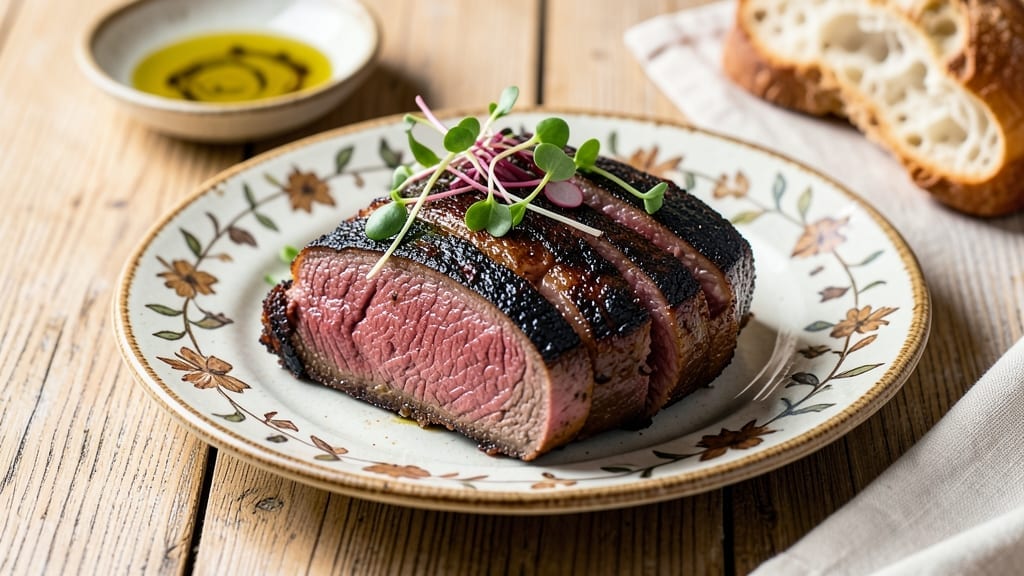
Transforming a simple sirloin roast into a showstopping centerpiece requires just a few strategic steps and patience—this smoked version delivers restaurant-quality flavor that outshines anything you’d buy pre-cooked.
The key lies in proper trimming, a bold dry rub, and precise temperature control to achieve a perfect 135°F internal temperature without drying out the meat.
I’ve perfected this method over countless backyard sessions, and the results speak for themselves: tender, deeply flavorful slices with a smoky crust that’s impossible to resist.
What sets this recipe apart is the balance between simplicity and technique—no fancy marinades or hours of prep, just a well-trimmed roast, a 30-minute dry rub, and a steady 225°F smoke for 3 to 4 hours.
The choice of wood (hickory or cherry) adds depth, while occasional basting with melted butter keeps the exterior juicy. This isn’t just another smoked meat recipe; it’s a method that turns a basic cut into a crowd-pleasing masterpiece with minimal effort.
By the time you carve into this roast, you’ll have slices that are tender yet firm, with a caramelized bark and a smoky aroma that fills the room.
The beauty of this method is its versatility—serve it with roasted potatoes, grilled asparagus, or a fresh garden salad to round out the meal. Every bite delivers that perfect harmony of smoky, savory, and slightly charred notes, proving that great flavor doesn’t require complexity.
Whether you’re hosting a backyard barbecue or treating yourself to a special dinner, this smoked sirloin roast delivers results that will impress even the most discerning guests. The process is straightforward, but the payoff—juicy, flavorful meat with a professional touch—is worth every minute.
Let’s get started on creating a roast that’ll have everyone asking for seconds.
Ingredients for smoked sirloin roast
A center-cut sirloin roast transforms with just a few strategic ingredients and precise technique.
| Ingredient | Amount | Notes |
|---|---|---|
| Sirloin Roast 🥩 | 4 lb | Center-cut, trimmed of excess fat |
| Kosher Salt 🧂 | 1 ½ tbsp | Diamond Crystal preferred |
| Freshly Ground Black Pepper 🌶️ | 1 ½ tbsp | Coarse grind for texture |
| Smoked Paprika 🌶️ | 1 tbsp | High-quality, vibrant color |
| Garlic Powder 🧄 | 1 tbsp | Freshly ground preferred |
| Onion Powder 🧅 | 1 tbsp | No added MSG |
| Ground Cumin 🌿 | ½ tbsp | Toasted for depth |
| Brown Sugar 🍯 | 1 tbsp | Light or dark preferred |
| Unsalted Butter 🧈 | ½ cup | Cold, cubed for basting |
| Hickory Wood Chips 🌳 | 1 lb | Or cherry for sweeter smoke |
| Apple Cider Vinegar 🍏 | 1 tbsp | For basting liquid |
| Fresh Rosemary 🌿 | ¼ cup | Chopped, stems removed |
| Fresh Thyme 🌿 | ¼ cup | Leaves only, no stems |
| Yellow Onion 🧅 | 1 whole | Quartered, for basting |
[recipe_ingredient_scaler]
The sirloin roast is non-negotiable—center-cut delivers the best tenderness, and trimming excess fat ensures a cleaner smoke ring. Costco or high-end butchers carry premium cuts, but even standard grocery store sirloin works if you trim aggressively. Look for marbling (those white fat streaks) as a quality indicator—it keeps the meat juicy during smoking. For a 6-pound roast, plan on 1.5 hours per pound at 225°F, though the internal temperature dictates doneness. The hickory wood chips should be soaked for 30 minutes before use to prevent flare-ups, but cherry wood adds a sweeter profile if you prefer. Fresh herbs like rosemary and thyme elevate the dry rub beyond basic seasoning—never dried substitutes here, as they lack the aromatic complexity.
No smoked paprika? Regular paprika plus a pinch of liquid smoke (¼ tsp) mimics the depth, though purists will notice the difference. Substituting brown sugar with white sugar works, but the caramelization is less pronounced. For basting, apple cider vinegar cuts through the richness—substitute with red wine if needed, though the acidity balance shifts slightly. The onion in the basting liquid can be swapped for garlic cloves (4 whole, peeled) if you prefer a stronger savory note. If your wood chips burn too quickly, soak them longer—they should smolder, not flame. And for the butter, unsalted** is critical to avoid over-salting the crust.
Store leftover roast in an airtight container with a paper towel pressed against the surface to absorb moisture—keeps for 4-5 days in the fridge. For longer storage, vacuum-seal portions and freeze for up to 3 months. The bark is delicate post-smoking, so reheat slowly in the oven (275°F) with a splash of broth to restore moisture. This roast reheats beautifully—better the second day as flavors meld. Portion into single-serving slices for meal prep, but leave the crust on; that’s where all the magic happens.
Why You’ll Love This Recipe
- No-Fuss Smoking: I love that this recipe lets me set it and forget it—just season, smoke for 4-5 hours, and let the hickory wood chips and rosemary do the work. The only active time is that one-hour room temp rest, and honestly, that’s my “me time” while I prep the rest of the meal.
- Smoky-Sweet Surprise: The smoked paprika and brown sugar give this roast that perfect balance—deep, woodsy smoke with a touch of caramelized sweetness. Trust me, the first bite will have you reaching for seconds because that crispy bark hides a juicy, tender center that’s just begging for a fork.
- Leftovers That Shine: I make this for Sunday dinner, and honestly, the leftovers are even better the next day. Slice it thin, toss it in a salad with fresh greens and a drizzle of that pan juice, or pile it on top of mashed potatoes. The flavors just get richer with time, and it’s the kind of meal that disappears fast.
- Budget-Friendly Feast: A 4-pound sirloin roast feeds a crowd without breaking the bank, and the spices? You probably already have most of them. The hickory wood chips are a small splurge, but they make such a difference—plus, you can use them for other smoked dishes later. It’s the kind of recipe that gives you restaurant-quality meat for a fraction of the cost.
Step-by-step instructions for smoked sirloin roast
Here’s the method that delivers deep smoke penetration and a perfect crust every time.
Prepare and Season the Roast
Begin by trimming any remaining fat from the 4 lb sirloin roast, leaving just a thin layer over the meat. This ensures even cooking and a proper bark. Pat the roast dry with paper towels, removing all moisture from the surface—this is critical for developing that signature crispy crust.
In a small bowl, combine the 1½ tablespoons kosher salt, 1½ tablespoons freshly ground black pepper, 1 tablespoon smoked paprika, 1 tablespoon garlic powder, 1 tablespoon onion powder, ½ tablespoon ground cumin, and 1 tablespoon brown sugar. Mix thoroughly to create an even seasoning blend. Generously coat the roast with this mixture, pressing the spices into the meat so they adhere well. Let the seasoned roast sit at room temperature for 1 hour before smoking—this allows the spices to penetrate and the meat to cook more evenly.
Set Up the Smoker
Soak the 1 lb hickory wood chips in water for 30 minutes to prevent burning. Preheat your smoker to 225°F using these soaked wood chips. Once the smoker reaches temperature and you see clean, blue smoke (not thick white steam), you’re ready to proceed. Place the quartered yellow onion and the ¼ cup fresh rosemary and ¼ cup fresh thyme leaves in a small foil packet to create a flavorful smoke infusion. Add this packet to the smoker along with the wood chips.
Position a drip pan in the smoker to catch any rendered fat and juices. This helps maintain moisture and prevents flare-ups. The roast should be placed fat-side up on the smoker grate to allow the rendered fat to baste the meat as it cooks. Close the lid and resist the urge to open it—each time you peek, you lose heat and extend the cooking time.
Smoke the Roast Low and Slow
Smoke the roast undisturbed for 4 to 5 hours, or until the internal temperature reaches 145°F. This low-and-slow approach ensures tender meat with deep smoke flavor. Every hour, baste the roast with a mixture of ½ cup unsalted butter, 1 tbsp apple cider vinegar, and any accumulated juices from the drip pan. This basting step adds moisture and enhances the bark.
Here’s the key: you’ll notice the roast hitting “the stall” around 160°F, where the internal temperature stops rising. This is normal and happens as moisture evaporates. Don’t panic—this is when the roast develops its signature texture. Continue smoking until the internal temperature reaches 160°F, at which point you can remove it from the smoker and let it rest.
Rest and Slice for Maximum Juiciness
Transfer the roast to a cutting board and tent loosely with aluminum foil. Let it rest for at least 30 minutes—this allows the juices to redistribute throughout the meat, ensuring each slice is moist and flavorful. The resting period is crucial; if you skip it, you’ll end up with dry, tough meat.
Once rested, slice the roast against the grain into ½-inch thick slices. The meat should be fork-tender with a dark, mahogany bark on the outside and a beautiful pink smoke ring just beneath. Serve immediately with any accumulated pan juices spooned over the top for extra flavor. Each bite should deliver a perfect balance of smoky, savory, and slightly sweet notes.
Pro Tips For Making Smoked Sirloin Roast
- Trim the Fat Right: Don’t just eyeball it—scrape off all but a thin layer of fat before seasoning. I learned this the hard way when my first roast turned greasy instead of crispy. That fat’s for basting, not clinging to the meat like a soggy blanket.
- Soak Those Wood Chips: Skip the dry wood chips—soak the 1 lb hickory for 30 minutes before smoking. I used to skip this, and my smoker filled with acrid white smoke instead of that clean, blue haze. Trust me, your roast will thank you.
- Press the Spices In: Rub the seasoning mix—especially the 1½ tbsp kosher salt and 1 tbsp smoked paprika—hard into the meat. I used to just sprinkle, and half the flavor ended up in the drip pan. A little elbow grease = flavor in every bite.
- Baste Like a Boss: Use the ½ cup cold butter and 1 tbsp apple cider vinegar basting mix every hour—not just when you remember. The vinegar cuts through the richness, and the butter locks in moisture. (Yes, even if you’re impatient like me.)
Troubleshooting great smoked sirloin roast
Stall Struggles
If your roast hits 160°F but refuses to budge beyond the stall, it’s likely due to insufficient moisture loss. To break the stall, wrap the roast tightly in pink butcher paper (not foil) and return it to the smoker for 30-45 minutes.
This traps steam and helps push through the temperature plateau. I’ve found that adding a damp towel over the roast can also create a mini-greenhouse effect. 💡
Uneven Bark Formation
An inconsistent bark often means uneven heat exposure. Rotate the roast 90 degrees every 2 hours to ensure all sides develop that prized crust. If the top is charred but the bottom is pale, check your smoker’s airflow—adjust the vents to 1/3 open for even heat distribution.
I use a thermoworks probe to monitor surface temps; aim for 140-160°F on the crust.
Dry or Tough Meat
Overcooking past 160°F internal temperature is the #1 cause of dryness. If the meat feels tough, it’s likely been on the smoker too long. Remove it immediately and tent with foil to hold heat while resting.
For future cooks, reduce the smoker temp by 10°F and add a drip pan with apple cider vinegar to create more steam. I’ve learned the hard way—once the internal temp passes 165°F, it’s game over.
Smoke Flare-Ups
Excessive smoke or flames during cooking usually means your wood chips are burning. Soak them longer (60 minutes instead of 30) or switch to mesquite wood for a slower burn. If flare-ups persist, add a water pan to the smoker’s lower rack to absorb excess fat.
I once had a hickory chip bonfire that ruined my roast—now I always double-check the soaking time. 🔥
Temperature Probe Issues
A faulty probe can give false readings, making it hard to determine doneness. Test your probe by inserting it into a glass of ice water—it should read 32°F. If not, clean the tip with fine-grit sandpaper or replace it.
I keep a backup probe in my smoker bag for just this reason. A dual-probe thermometer (like Meater Plus) helps track both internal and surface temps simultaneously.
Nutrition facts
Frequently asked questions
Why does the recipe call for trimming excess fat from the sirloin?
Trimming excess fat ensures even cooking and prevents flare-ups during smoking. A thin fat layer helps develop that signature crispy bark while keeping the meat juicy. This step also creates a cleaner smoke ring, enhancing the roast’s visual appeal.
How do I know when the roast has reached the stall?
The stall occurs when the internal temperature hits 160°F and stops rising for 30-60 minutes. This happens as moisture evaporates from the meat. You’ll notice the probe reading plateau—just keep smoking and baste occasionally to help break through. Patience is key during this phase!
Can I substitute fresh herbs with dried ones in the dry rub?
For best results, use fresh rosemary and thyme—they add vibrant aroma and depth. If substituting, use 1/3 the amount of dried herbs (e.g., 1 tablespoon dried thyme instead of ¼ cup fresh). The flavor won’t be identical, but it’ll work in a pinch.
What should I do if my smoker runs out of wood chips halfway through?
Add fresh, soaked wood chips to the smoker box or foil packet. If using hickory, soak them for 30 minutes again to prevent burning. For a smoother smoke, switch to cherry wood chips if available—they burn slower and add a sweeter profile.
Is it necessary to baste the roast during smoking?
Basting every hour with butter and vinegar keeps the exterior moist and enhances the bark. While not mandatory, it’s worth the effort for restaurant-quality results. If short on time, baste at least twice during the final 2 hours of cooking.

Trained in classic French technique but raised on slow-cooked ribs and spicy rubs, she blends culinary skill with smoke and soul.
- Chinese Braised Beef Brisket with Daikon Recipe: Silky Tender Meat and Crunchy Roots - October 18, 2026
- Oklahoma Joe’s Smoked Beans Recipe: Slow-Smoked Flavor That Rivals the Original - October 18, 2026
- Beef Brisket Chili Recipe: Slow-Simmered Richness with Deep Flavor Layers - October 18, 2026