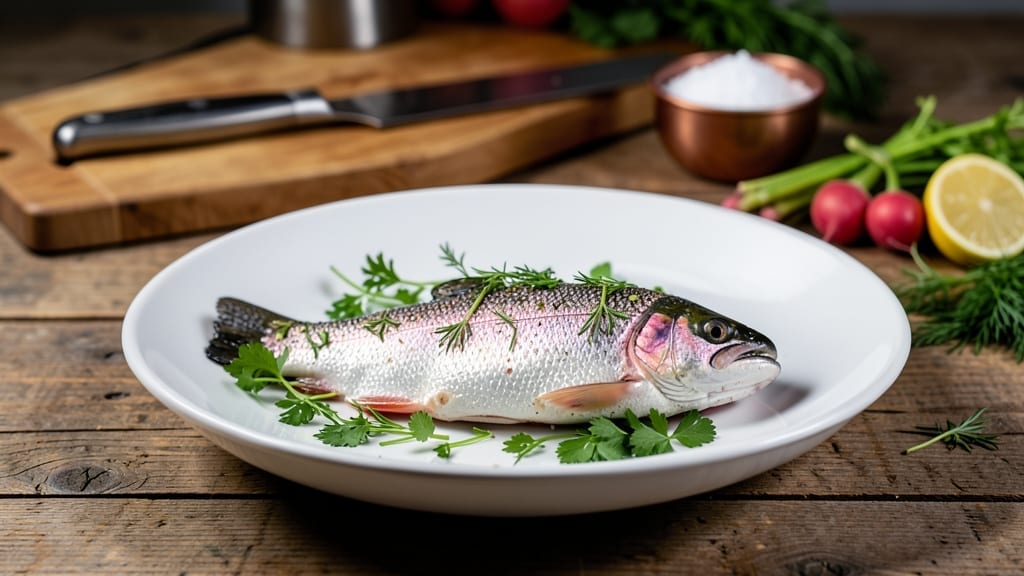
This smoked trout recipe delivers crispy skin and flaky flesh in just 20 minutes, transforming simple ingredients into a restaurant-worthy dish. The secret lies in proper preparation and precise smoking techniques that preserve the fish’s delicate texture while infusing it with rich, smoky flavor.
I developed this method after years of experimenting with different curing times and smoking temperatures to achieve perfect results every time.
What sets this recipe apart is the balance between crispy skin and tender flesh—achieved through a combination of cold-smoking and quick pan-searing. The process begins with a light cure using salt and sugar, which enhances the fish’s natural flavor without overpowering it.
Once smoked, the trout develops a subtle, aromatic profile that pairs beautifully with fresh herbs and citrus.
By the time you serve this dish, you’ll have golden, crispy skin that shatters at the touch and flaky flesh that melts in your mouth. The smoky aroma alone will draw everyone to the table, making this an impressive yet approachable centerpiece for any meal.
It’s especially perfect for pescatarians or anyone looking to elevate their seafood game.
Serve with a bright lemon-dill sauce, roasted vegetables, or crusty bread to soak up every last bit of flavor. The recipe scales easily for gatherings, and leftovers keep well in the refrigerator for up to two days. Here’s how to make it—step by step—for foolproof results every time.
Ingredients for smoked trout
A precise balance of fresh seafood and aromatic herbs transforms simple ingredients into restaurant-quality smoked trout.
| Ingredient | Amount | Notes |
|---|---|---|
| Fresh Rainbow Trout Fillets 🐟 | 1 ½ lb | Skin-on, center-cut preferred |
| Kosher Salt 🧂 | 1 tbsp | Diamond Crystal preferred |
| Granulated Sugar 🍚 | 1 tbsp | Fine grain for even curing |
| Fresh Dill Weeds 🌿 | ¼ cup | Finely chopped, stems removed |
| Extra-Virgin Olive Oil 🫒 | 2 tbsp | High quality, fruity variety |
| Fresh Lemon Zest 🍋 | 1 tbsp | Organic preferred for purity |
| Black Liquorice Wood Chips 🌳 | ½ cup | For authentic smoky flavor |
| Unsalted Butter 🧈 | 2 tbsp | Cold, cubed for skin crisping |
| Fresh Lemon Juice 🍋 | 1 tbsp | Freshly squeezed, no pulp |
| Ground Black Peppercorns 🌶️ | ½ tsp | Freshly cracked for intensity |
| Fresh Thyme Leaves 🌿 | ⅛ cup | Finely minced for aroma |
| Smoked Sea Salt 🧂 | ½ tsp | For finishing presentation |
[recipe_ingredient_scaler]
The trout selection is critical—rainbow trout delivers the ideal fat-to-lean ratio for crispy skin without compromising tenderness. Opt for center-cut fillets from Whole Foods Market or your local fishmonger, as they maintain shape better during smoking. Look for fillets with vibrant pink flesh and minimal bruising. For the wood chips, Traeger brand or Butcher’s Smokehouse varieties yield the most authentic, clean smoke profile. The black liquorice wood provides a subtle sweetness that complements the trout’s natural flavor without overpowering it.
No smoked sea salt? Diamond Crystal kosher salt with a pinch of liquid smoke achieves similar results. Fresh dill is non-negotiable here—dried oregano at one-third the amount won’t provide the same bright, citrusy aroma. For the olive oil, California avocado oil works equally well if you prefer a neutral base. The lemon zest can be substituted with orange zest for a slightly sweeter profile, though lemon maintains the classic balance. When curing, ensure the salt and sugar mixture is evenly distributed—use a fine-mesh sieve for the best coverage.
Store smoked trout in an airtight container lined with parchment paper to maintain crispiness for up to 2 days in the refrigerator. For longer storage, vacuum-seal portions and freeze for up to 3 months. The wood chips should be stored in a sealed container in the freezer to preserve their aromatic oils. When reheating, a quick pan-sear with 1 tbsp of butter restores the crispy skin—never microwave, as it renders the texture rubbery. Serve immediately for optimal texture and flavor.
Why You’ll Love This Recipe
- I’ll be real: this isn’t some fancy restaurant dish. You’ve got 1.5 lb of skin-on fillets, a smoker (or even a sheet pan if you’re in a pinch), and 30 minutes max. Serve it over toasted baguette slices with a drizzle of the leftover lemon butter, and suddenly you’re hosting a dinner party without the stress.
- No-Fuss Flavor Boost: That dry brine with kosher salt and granulated sugar? It’s the secret to crispy skin without the fuss. I pat the trout dry, sprinkle the mix, and forget about it for an hour—while I make coffee or scroll through recipes. The sugar caramelizes just enough to make the skin crackle like a pro’s, but honestly, it’s foolproof.
- Smoky-Sweet Magic: The black liquorice wood chips give this trout a depth that’s unexpected but perfect—like a hint of licorice’s warmth without being overpowering. Paired with the bright fresh lemon zest and extra-virgin olive oil, it’s smoky-sweet with a zesty kick. My picky friend who hates fish always asks for seconds after one bite.
- Weeknight Luxe: I’ll be real: this isn’t some fancy restaurant dish. You’ve got 1.5 lb of skin-on fillets, a smoker (or even a sheet pan if you’re in a pinch), and 30 minutes max. Serve it over toasted baguette slices with a drizzle of the leftover lemon butter, and suddenly you’re hosting a dinner party without the stress.
Step-by-step instructions for smoked trout with crispy skin
Here’s the precise method to achieve restaurant-quality smoked trout in your home kitchen.
Prepare the Trout and Dry Brine
Pat the 1½ lb fresh rainbow trout fillets completely dry with paper towels, removing any moisture from the skin and flesh. This step is critical for achieving crispy skin later. Place the fillets skin-side up on a wire rack set over a baking sheet.
In a small bowl, combine the 1 tbsp kosher salt and 1 tbsp granulated sugar. Sprinkle this dry brine mixture evenly over both sides of each trout fillet, pressing gently to adhere. Let the fillets sit uncovered in the refrigerator for exactly 1 hour. This dry curing process draws out moisture and creates the perfect texture for smoking.
While the trout brines, prepare the smoking chamber by filling a small smoker or smoking tray with the ½ cup black liquorice wood chips. Soak them in water for 10 minutes if using a cold smoke method, or use them dry for hot smoking. The liquorice wood will impart a distinctive, aromatic flavor that pairs perfectly with trout.
Smoke the Trout to Perfect Doneness
Preheat your smoker to 225°F using the prepared black liquorice wood chips. Maintain this temperature throughout the smoking process. Place the brined trout fillets skin-side down on the smoker grates, ensuring they don’t overlap. Smoke for 12-15 minutes until the internal temperature reaches 130°F when measured with an instant-read thermometer inserted into the thickest part of the flesh.
Here’s where the 2 tbsp extra-virgin olive oil comes into play. After removing the trout from the smoker, immediately brush both sides of each fillet with the olive oil using a pastry brush. This creates a protective barrier that will help maintain moisture while developing that coveted crispy skin. The high-quality olive oil also enhances the natural flavors of the trout.
Return the oiled trout to the smoker for an additional 3-4 minutes to allow the oil to penetrate slightly and set up for crisping. Watch carefully as the skin begins to develop a delicate sheen – this indicates it’s ready for the final crisping step.
Finish with Butter and Herbs for Crispy Skin
Remove the trout from the smoker and transfer to a clean baking sheet. Place the 2 tbsp unsalted butter in a small saucepan and melt over low heat. Add the 1 tbsp fresh lemon zest and ½ tsp ground black peppercorns, stirring constantly for 1 minute until fragrant. Remove from heat and let cool slightly.
Using a pastry brush, generously coat both sides of each trout fillet with the butter mixture. The butter will create a golden crust while the lemon zest and pepper add bright, aromatic notes that complement the smoky flavor. Return the trout to the smoker for 1-2 minutes until the skin becomes crispy and golden brown.
While the trout crisps, prepare the herb garnish by combining the ¼ cup fresh dill weeds and ⅛ cup fresh thyme leaves in a small bowl. Sprinkle this herb mixture evenly over each fillet. Finally, finish with the ½ tsp smoked sea salt, distributing it evenly over the top. The combination of these fresh herbs and smoked salt creates a sophisticated flavor profile that elevates the dish.
Rest and Serve Immediately
Remove the smoked trout from the smoker and transfer to a serving platter. Let rest for 2-3 minutes – this brief rest allows the juices to redistribute, ensuring each slice remains moist and flaky. The skin should be crispy enough to hold its shape when lifted gently with tongs.
For serving, drizzle with the remaining lemon butter mixture and a final sprinkle of smoked sea salt. The trout should have beautiful golden-brown skin that contrasts perfectly with the tender, flaky flesh. Serve immediately with lemon wedges and crusty bread to soak up the delicious juices.
Pro Tips For Making Smoked Trout
- Dry the Skin Thoroughly: I learned this the hard way—wet skin won’t crisp, no matter how much butter you slather on. Use two layers of paper towels and press firmly, even on the flesh side. The extra effort guarantees that golden crust you’re after.
- Use Cold Butter Cubes: Skip melting the butter ahead of time—cold cubes of unsalted butter on the skin during the final crisping step create steam pockets that make the skin shatter when you cut in. Trust me, it’s worth the minor inconvenience of scraping them off later.
- Don’t Rush the Rest: That 2-3 minute rest after smoking isn’t optional. I used to skip it, thinking the trout would stay warm longer, but the flesh gets gummy and the skin loses its snap. Cover loosely with foil if you’re worried about cooling—just don’t skip the rest.
- Soak Wood Chips Properly: If you’re cold-smoking, soak the black liquorice wood chips for the full 10 minutes—this prevents flare-ups and ensures a steady, even smoke. I once rushed it and ended up with bitter-tasting trout. Patience here makes all the difference.
Serving suggestions for smoked trout
Plating with Elegance
Use a long, narrow platter to showcase the trout’s golden skin and flaky flesh. Arrange fillets parallel to the platter’s edge, slightly overlapping to create a visually striking presentation.
I like to place the thickest end of each fillet at the center, then fan them out gently—this mimics the natural shape of the fish and draws the eye. Add a single lemon wedge cut in half lengthwise, nestled between fillets for a pop of color and freshness. 💛
Sauce Pairings
A bright lemon-dill sauce made with 2 tbsp Greek yogurt, 1 tbsp fresh lemon juice, 1 tbsp chopped dill, and a pinch of smoked sea salt cuts through the richness.
For a richer option, blend 2 tbsp crème fraîche with 1 tbsp lemon zest and a dash of Dijon mustard. Serve both sauces in small dipping bowls alongside the trout.
Crusty Bread Companions
Crusty baguette slices or sourdough toasted with olive oil and garlic make perfect vessels for soaking up the trout’s juices. I like to toast the bread just before serving so it stays crisp.
For a lighter option, serve with herbed crostini topped with ricotta and microgreens—it adds a fresh, creamy contrast.
Vegetable Accents
Roasted asparagus or green beans with olive oil, salt, and a squeeze of lemon add vibrant color and texture. For a Mediterranean touch, serve with charred zucchini or roasted cherry tomatoes tossed with balsamic glaze. The smoky trout pairs beautifully with these bright, fresh sides. ✨
Dipping Sauce Variations
For heat lovers, add ½ tsp cayenne to the lemon-dill sauce or drizzle with spicy harissa. A creamy tarragon aioli made with 3 tbsp mayo, 1 tbsp tarragon vinegar, and 1 tsp Dijon adds a tangy, herby depth.
These sauces elevate the dish while keeping it versatile for any palate.
Nutrition facts
Frequently asked questions
Why does the recipe call for a dry brine instead of just salting the trout?
The dry brine with kosher salt and granulated sugar works magic by drawing out moisture and enhancing flavor penetration. This step creates the perfect texture for crispy skin while preventing the trout from becoming overly salty. The sugar also helps develop a subtle caramelization during smoking, adding depth to the final dish.
Can I use a different type of wood for smoking?
While black liquorice wood chips are ideal for this recipe, you can experiment with mild woods like apple or cherry if you prefer a sweeter smoke. Avoid strong flavors like hickory or mesquite, as they can overpower the delicate trout. The key is to maintain a consistent 225°F temperature throughout smoking for best results.
What if my trout isn’t fully cooked after 15 minutes?
Check the internal temperature with an instant-read thermometer—it should reach 130°F for perfect doneness. If it’s undercooked, return it to the smoker for another 2-3 minutes, watching closely to avoid overcooking. The trout will continue cooking slightly as it rests, so err on the side of slightly underdone if unsure.
How do I prevent the skin from becoming greasy instead of crispy?
Pat the trout completely dry before brining, and avoid over-oiling it during the final crisping step. The 2 tbsp olive oil application should be light—just enough to create a barrier, not a coating. Returning it to the smoker for just 1-2 minutes after buttering is key for achieving that perfect crisp without greasiness.

Trained in classic French technique but raised on slow-cooked ribs and spicy rubs, she blends culinary skill with smoke and soul.
- Smoked Brisket Recipe: Low and Slow to Fall-Apart Tenderness - November 2, 2026
- Smoked Turkey Breast Recipe: Juicy Pink Center With Crispy Skin Every Time - November 2, 2026
- Leftover Smoked Pulled Pork Chili Recipe: Rustic Flavor Revival in One Pot - November 2, 2026