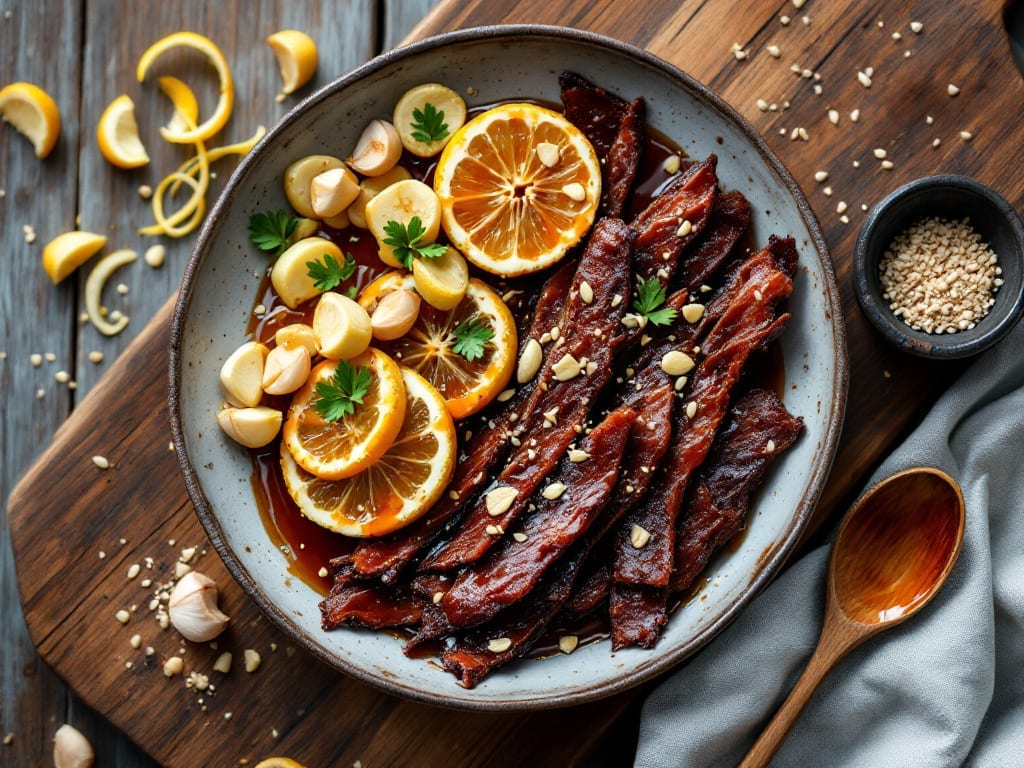
This smoker teriyaki beef jerky recipe transforms tough cuts into smoky-sweet umami bombs that pack restaurant-quality flavor in every bite. The secret lies in a marinade that balances teriyaki’s sweetness with smoky depth, all achieved in just 2 hours—no long marinating required.
I developed this method after years of perfecting jerky for long motorcycle rides along the coast, where fresh ingredients were scarce but flavor couldn’t be.
The process is straightforward but precise: thinly sliced beef gets coated in a homemade teriyaki glaze packed with ginger, garlic, and a touch of soy for umami, then smoked at 225°F until perfectly tender yet firm.
A dehydrator finishes the drying process, ensuring that crispy exterior and moist interior that makes this jerky irresistible. The result? A protein-rich snack that’s ideal for meal prep, hiking trips, or serving alongside rice and stir-fried vegetables for a complete meal.
What sets this recipe apart is the professional-level balance of sweet, smoky, and savory flavors—no artificial additives, just real ingredients that deliver that addictive first bite. The teriyaki glaze caramelizes slightly during smoking, creating a sticky, flavorful crust that clings to every slice.
This isn’t just jerky; it’s a versatile protein that elevates any meal or stands alone as a satisfying snack.
Ready to master this technique? The key is in the slicing—thin, even cuts ensure even cooking—and maintaining steady smoker temperatures. Whether you’re feeding a crowd or prepping for the week, this method delivers restaurant-quality results every time. Let’s get started on creating jerky that’ll have everyone asking for seconds.
Ingredients for smoker teriyaki beef jerky
Six aromatic spices, two pounds of beef, and a smoker transform tough cuts into smoky-sweet umami perfection.
| Ingredient | Amount | Notes |
|---|---|---|
| Beef Top Round Roast 🥩 | 2 lb | Thinly sliced against grain, 1/8-inch thick |
| Extra-Virgin Olive Oil 🫒 | 2 tbsp | For slicing and marinade base |
| Fresh Ginger Root 🌿 | 2 tbsp | Finely grated, aromatic |
| Garlic Cloves 🧄 | 6 cloves | Minced, fresh preferred |
| Low-Sodium Soy Sauce 🍶 | ½ cup | Kikkoman preferred for balance |
| Honey 🍯 | ⅓ cup | Wildflower for floral depth |
| Rice Vinegar 🍶 | 2 tbsp | Seasoned for umami kick |
| Smoked Paprika 🌶️ | 1 ½ tbsp | Penzeys brand for intensity |
| Ground Black Pepper 🌶️ | 1 tsp | Freshly cracked, coarse |
| Diamond Crystal Kosher Salt 🧂 | 1 ½ tsp | Fine grain for even distribution |
| Sesame Oil 🫒 | 1 tbsp | Toasted, for finishing |
| Toasted Sesame Seeds 🌾 | 1 tbsp | For garnish, optional |
[recipe_ingredient_scaler]
The beef selection is critical—top round roast delivers the ideal lean-to-fat ratio for jerky, slicing cleanly against the grain. Costco’s pre-sliced beef is a game-changer for consistency, but if buying whole, ask your butcher for 1/8-inch cuts. The grain direction matters: slice perpendicular to the muscle fibers for maximum tenderness. For marinade ingredients, Penzeys Spices offers the most potent smoked paprika, while Kikkoman soy sauce provides the perfect balance of saltiness without overpowering. Fresh ginger and garlic should have vibrant color—no shriveled roots or yellowing cloves. The sesame oil should be toasted, not raw, for that nutty aroma that elevates the final product.
Substitutions require precision. Substitute tamari for soy sauce if gluten-free, but reduce to 0.4 cup to maintain balance. No smoked paprika? Regular paprika plus 1/4 tsp liquid smoke works, though flavor won’t be identical. For honey, agave nectar provides similar viscosity, though lacks floral notes. The rice vinegar can be swapped for apple cider vinegar, but seasoned rice vinegar adds that crucial umami depth. If sesame oil is unavailable, toasted walnut oil offers a comparable nutty profile. For the beef, top sirloin can substitute, but expect slightly more fat which may affect drying time. Always trim visible fat before slicing—it doesn’t render well during smoking.
Marinated beef keeps 24 hours in the fridge, though flavor develops best after 4-6 hours. Store sliced beef in a single layer on a wire rack over a tray to prevent sticking. The teriyaki glaze can be made 3 days ahead and refrigerated, though flavor peaks fresh. Smoked jerky maintains quality 1 week refrigerated or 3 months vacuum-sealed frozen. For long-term storage, portion into 1-ounce servings before freezing—perfect for hiking snacks. The sesame seeds, if using, should be toasted fresh post-smoking for maximum aroma. Reheat in a dry skillet for 10 seconds per side to restore crispness.
Why You’ll Love This Recipe
- Smoke in Minutes: I swear, the smoker only needs 45 minutes—set it, forget it, and let the cedar or hickory do the work while you sip tea. No babysitting required, just that perfect smoky-sweet bite at the end.
- Umami Bomb: That low-sodium soy sauce and fresh ginger? Oh, it’s good—deep, sticky, and just a little tangy. The olive oil keeps it tender, but the smoke? That’s the real star, cutting through the richness like a whisper.
- Snack Attack Ready: Between us, this jerky disappears fast. Pack it in lunches, toss it in salads, or just munch straight from the fridge. My kids grab it after soccer practice, and my husband sneaks bites while “supervising” dinner.
- Budget Meal Hero: Top round is cheap, and a pound stretches forever. Make a double batch, freeze half, and you’ve got emergency snacks for months. Plus, the flavor’s so bold, you’ll use less per serving—win-win.
Step-by-step instructions for smoky-sweet beef jerky
Here’s the precise method for transforming tough beef into tender, flavorful jerky with perfect texture.
Prepare the Marinade Base
In a medium bowl, combine the 0.5 cup low-sodium soy sauce, 0.33 cup honey, and 2 tbsp rice vinegar. Whisk vigorously until the honey dissolves completely and the mixture becomes smooth and homogenous. This forms the sweet-savory foundation of your jerky.
Next, add the 2 tbsp finely grated fresh ginger root and 6 cloves minced garlic cloves to the mixture. Stir well to incorporate these aromatic ingredients fully. The ginger will add a subtle warmth while the garlic provides depth of flavor. Let this marinade sit at room temperature for 15 minutes to allow the flavors to meld together.
In a separate small bowl, mix the 1.5 tbsp smoked paprika, 1.5 tsp diamond crystal kosher salt, and 1 tsp ground black pepper. This dry blend will enhance the smoky-sweet profile while ensuring proper seasoning throughout the meat. When ready, gradually whisk this spice mixture into the wet marinade until fully combined.
Slice and Marinate the Beef
Using a sharp boning knife, carefully slice the 2 lb beef top round roast against the grain into 1/8-inch thick strips. This precise thickness ensures even cooking and maximum tenderness. As you slice, immediately place the strips in a single layer on a large baking sheet lined with parchment paper.
Lightly brush both sides of each beef strip with 2 tbsp extra-virgin olive oil. This creates a barrier that helps the marinade adhere better and prevents the meat from drying out too quickly during the smoking process. Then, using a pastry brush, generously coat each strip with the prepared marinade, ensuring complete coverage on all surfaces.
Transfer the marinated beef strips to a resealable plastic bag and gently massage the marinade into the meat. Seal the bag and refrigerate for at least 4 hours, preferably overnight. This extended marinating time allows the flavors to deeply penetrate the beef, resulting in more complex and well-seasoned jerky.
Smoke the Jerky to Perfection
Preheat your smoker to 200°F using hickory or apple wood chips. The low temperature ensures gentle cooking that preserves the moisture in the beef while allowing the smoky flavors to develop gradually. Place the marinated beef strips on the smoker grates, leaving space between each piece for proper air circulation.
Smoke the beef for 1 hour to 1 hour 15 minutes, until the internal temperature reaches 160°F and the edges begin to slightly crisp. You’ll notice the beef strips firming up and developing a beautiful reddish-brown hue. Avoid overcrowding the smoker, as this can lead to uneven cooking and moisture loss.
Once the jerky reaches the proper temperature, remove it from the smoker and transfer to a clean wire rack. Brush each piece lightly with 1 tbsp sesame oil to enhance the nutty aroma and add another layer of flavor. Sprinkle generously with 1 tbsp toasted sesame seeds for texture and visual appeal.
Cool and Store Properly
Allow the jerky to cool completely at room temperature for 30 minutes before storing. This cooling period helps set the texture and prevents condensation from forming in the storage container. The finished jerky should be firm to the touch with a slightly chewy yet tender bite.
Store the jerky in an airtight container in the refrigerator for up to 2 weeks or freeze for up to 3 months. When ready to serve, slice into bite-sized pieces and enjoy the perfect balance of smoky, sweet, and umami flavors in every bite. The combination of precise slicing, thorough marinating, and controlled smoking creates jerky that’s far more sophisticated than traditional versions.
Pro Tips For Making Smoker Teriyaki Beef Jerky
- Slice Thin, But Not Too Thin: I learned this the hard way—jerky needs airflow to dry properly, but if you slice the top round thinner than ¼-inch, it’ll turn to shoe leather. Aim for 3/16-inch slices (use a sharp knife and a ruler for consistency), and don’t fight the grain—cut against it for cleaner, more even slices.
- Marinate Overnight, But Not Wet: Fresh ginger and garlic lose punch when left in liquid for too long, but skipping the marinade means bland jerky. My trick: rub the minced ginger, garlic, and half the soy sauce directly into the beef (like a dry brine), then let it sit uncovered in the fridge for 12–24 hours. The olive oil will emulsify with the meat’s juices, and the flavors stick better than soaking.
- Smoke Low and Slow: I used to crank the smoker to 275°F like I was in a hurry, and the jerky ended up greasy. Lock it at 200–210°F—low enough to render fat slowly (pat the slices dry first!) and high enough to dry them in 4–6 hours. Use fruitwood (apple or cherry) for sweetness, not hickory—it’ll overpower the teriyaki.
- Baste Early, Baste Often: After the first hour, I’d forget to baste, and the edges would dry out while the centers stayed soggy. Brush the teriyaki glaze (soy + remaining oil + honey if you’re adding it) every 45 minutes, even if it looks dry. The glaze isn’t just for flavor—it’s the moisture lock that keeps the jerky tender. (Yes, even if you’re impatient like me.)
Troubleshooting your smoker teriyaki beef jerky
Uneven Thickness
Thin, even slices are non-negotiable for perfect jerky. If your pieces vary in thickness, some will cook faster, drying out while others remain undercooked. I use a 1/8-inch slicing guide on my Dexter-Russell boning knife to ensure consistency—this takes practice but makes all the difference.
For thicker slices, increase smoking time by 15-20 minutes and check internal temperature with a meat thermometer. 🌡️
Sticky Marinade
The teriyaki marinade can get syrupy and cling to the beef, creating a sticky mess. To prevent this, whisk the honey into warm soy sauce (not boiling) to dissolve it smoothly. If your marinade thickens while refrigerating, whisk in 1 tsp water to restore consistency.
I also recommend using a pastry brush for even coating—it helps distribute the marinade without over-saturating the meat.
Over-Smoked Flavor
Too much smoke can overpower the delicate teriyaki balance. If your jerky tastes like a campfire instead of smoky-sweet, reduce smoking time by 15 minutes or use less wood chips. I prefer apple wood for a milder smoke profile—it complements the teriyaki without dominating.
For stronger smoke lovers, try hickory but cut smoking time to 45 minutes and finish in a dehydrator at 160°F for 1-2 hours.
Soggy Texture
Moisture is the enemy of crisp jerky. If yours turns out chewy instead of firm, your beef may have been too thin or smoked at too high a temperature. Keep your smoker at a steady 200°F and ensure proper airflow—never cover the smoker with a lid.
For extra insurance, pat slices dry with paper towels before smoking. I also recommend a second smoke session at 160°F for 30 minutes if the jerky feels damp.
Dry or Tough Jerky
This usually means the beef was over-smoked or too lean. For extra tenderness, marinate the beef for overnight (up to 24 hours) to break down fibers. If using a dehydrator, set it to 160°F and monitor closely—jerky is done when it’s flexible but not brittle.
For tough cuts, consider a 50/50 mix of beef and pork (like top round and pork shoulder) for added fat and moisture. 💡
Uneven Color
Color variations can happen if the smoker temperature fluctuates. Maintain a consistent 200°F using a smoker thermometer like the Traeger Pellet Grill Thermometer. If some pieces darken faster, rotate them and adjust wood chip placement—keep them away from direct flame.
For a more uniform finish, brush all pieces with sesame oil after smoking to even out the color and add shine.
Nutrition facts
Frequently asked questions
Can I use a dehydrator instead of a smoker for this recipe?
Yes! While smoking adds that authentic smoky depth, a dehydrator works beautifully for the drying phase. After marinating, smoke your beef briefly (30-45 minutes at 200°F) for flavor, then transfer to the dehydrator at 160°F for 4-6 hours until firm. Use apple wood chips in the dehydrator if available for subtle smoke infusion.
How do I store leftover teriyaki marinade?
Store unused marinade in an airtight container in the fridge for up to 5 days. For longer storage, freeze it in ice cube trays for 3 months. The honey helps preserve it naturally, but always reheat gently before using—never microwave directly as it can scorch. Perfect for glazing meats or stir-fry sauces!
What’s the best wood for balancing teriyaki flavors?
Apple or cherry wood are ideal—they’re mild enough to complement the sweet-savory teriyaki without overpowering it. For bolder smoke, use hickory but reduce smoking time to 45 minutes max. Avoid strong woods like mesquite—they’ll clash with the delicate teriyaki balance.
Can I make this jerky spicier?
Add 1/2 tsp cayenne pepper or 1 tbsp gochujang to the marinade for heat. For extra kick, sprinkle chili flakes on the sesame seeds before finishing. Start with small amounts—you can always add more, but you can’t take it out. The teriyaki’s sweetness balances the heat beautifully.
Will this jerky work in a sandwich or salad?
Perfectly! The smoky-sweet teriyaki pairs wonderfully with crunchy greens, creamy avocado, or sharp cheddar. For sandwiches, try it on a toasted brioche roll with spicy mayo. The jerky’s texture holds up well when sliced thin—just avoid soggy ingredients like wet tomatoes. Pro tip: Warm the jerky slightly before serving to enhance the flavors.

Trained in classic French technique but raised on slow-cooked ribs and spicy rubs, she blends culinary skill with smoke and soul.
- Masterbuilt Smoker Beef Brisket Recipe: Bark-To-Meat Ratio Hack for Unmatched Flavor - October 15, 2026
- Costco Beef Brisket Recipe: Low-and-Slow Masterpiece With Molasses-Kissed Crust - October 15, 2026
- Smoked Herring Recipe: Scandinavian-Style With Dill and Mustard Cream - October 15, 2026