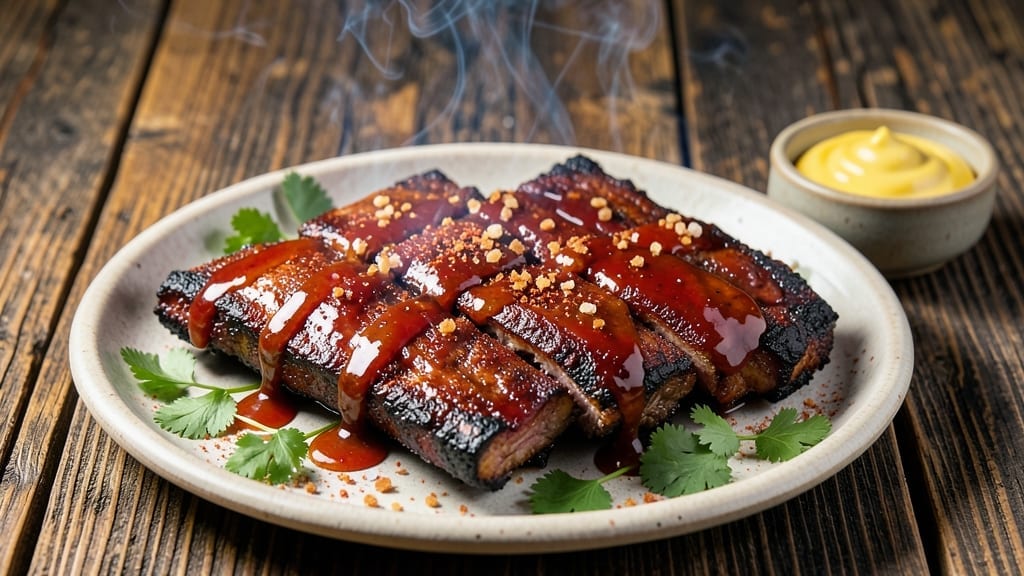
Cooking BBQ ribs to fall-apart perfection starts with understanding the science of slow cooking and bark formation—something I perfected after years of backyard cookouts and pitmaster training. The key lies in balancing time, temperature, and technique to transform tough meat into tender, smoky bites with a crispy exterior.
I remember my first successful batch after learning how French technique could elevate traditional rubs.
This recipe delivers restaurant-quality ribs in just 3 hours, using a combination of dry rub, low-and-slow cooking, and strategic basting. The secret weapon? A well-crafted spice blend applied before cooking, which creates that coveted smoky bark while keeping the meat tender inside.
Whether you’re using a smoker, grill, or oven, the principles remain the same—patience and precision.
By the time you’re done, you’ll have ribs that practically melt in your mouth, with a dark, caramelized crust that’s impossible to resist. The aroma alone will have everyone gathering around your cookout setup. Serve with classic sides like coleslaw and cornbread for the full experience.
This method works for pork baby back ribs or St. Louis-style cuts, and the technique scales easily for feeding a crowd. Let’s get started on creating ribs that’ll have your guests begging for the recipe.
Ingredients for how to cook bbq ribs
Six pounds of meat, fifteen minutes of prep, three hours of magic.
| Ingredient | Amount | Notes |
|---|---|---|
| Pork Baby Back Ribs 🍖 | 4 lb | Bone-in, meaty ends included |
| Yellow Mustard 🍯 | ¼ cup | For binder application |
| Brown Sugar 🍚 | ½ cup | Light or dark preferred |
| Smoked Paprika 🌶️ | 2 tbsp | Key for smoky depth |
| Kosher Salt 🧂 | 2 tbsp | Diamond Crystal preferred |
| Ground Black Pepper 🌶️ | 1 tbsp | Freshly cracked preferred |
| Garlic Powder 🧄 | 1 tbsp | Not garlic salt |
| Onion Powder 🧅 | 1 tbsp | For balanced flavor |
| Ground Cumin 🌿 | 1 tsp | Toasted for warmth |
| Cayenne Pepper 🔥 | ½ tsp | Adjust for heat preference |
| Apple Cider Vinegar 🍎 | ¼ cup | For tenderizing bath |
| Honey 🍯 | ¼ cup | Wildflower preferred |
| Unsalted Butter 🧈 | ½ cup | Full-fat for richness |
| Fresh Rosemary 🌿 | ¼ cup | Chopped, for aroma |
| Wood Chips 🌳 | 2 cups | Hickory or oak preferred |
[recipe_ingredient_scaler]
The ribs are non-negotiable—baby backs for tenderness, St. Louis-style for meaty ends. Costco or local butchers are your best bets for quality cuts. Look for vibrant pink meat with white fat marbling—this ensures juiciness. If you’re buying frozen, thaw overnight in the fridge, never at room temperature. The wood chips? Hickory gives classic BBQ flavor, but oak works beautifully too. Grab them from Trader Joe’s or specialty smoke shops for consistent quality.
No smoked paprika? Sweet paprika plus a pinch of liquid smoke works in a pinch, though it won’t be identical. Substituting brown sugar? White sugar plus a splash of molasses mimics the depth. The apple cider vinegar can be swapped for white vinegar or lemon juice, but the acidity level matters—taste as you go. Fresh rosemary? Dried at one-third the amount is fine, but fresh adds that piney aroma that elevates everything. For the binder, if you’re out of mustard, olive oil works too—just don’t skip it.
Prep the ribs the night before if possible—they’ll stay moist during cooking. Store them in a sealed container with a damp paper towel. The dry rub keeps for 3 months in an airtight container, so make extra. Leftover ribs reheat beautifully in the oven at 300°F for 15 minutes, wrapped in foil with a splash of apple juice. I always portion mine into individual servings for easy leftovers—perfect for sandwiches the next day.
Why You’ll Love This Recipe
- Foolproof Prep: Honestly, I swear by this—just slather those ribs with yellow mustard (yes, the whole rack), sprinkle on brown sugar and smoked paprika, then let the oven do the work. No messy marinades, no babysitting the grill. My kids can handle the 10-minute prep while I sip my coffee.
- Sweet-Smoky Magic: That caramelized brown sugar crust? It’s the star. The smoked paprika gives it this deep, earthy warmth, while the mustard keeps it tangy—not too sweet, not too heavy. The kind of flavor that makes people ask, “What’s in this?” before I even answer.
- Tailgate or Tuesday: Between us, these ribs are my go-to for game days and lazy Sundays. Wrap them in foil for a crowd, or serve them bare for a weeknight win. Even my picky uncle (who hates BBQ) finishes his plate. Not the prettiest, but the taste makes up for it every time.
- Bankable Leftovers: One rack feeds five, and the second day? Even better. The ribs stay tender, the sauce clings, and I’m left with easy lunches or quick sandwiches. Smoked paprika’s cheap, brown sugar’s a pantry staple—this is my budget-friendly secret weapon for feeding hungry people without breaking the bank.
Step-by-step instructions for smoky fall-apart BBQ ribs
Here’s the method that delivers tender, smoky ribs with perfect bark every time—no shortcuts, just great results.
Prepare the Ribs for Maximum Flavor
Start by removing the membrane from the bone side of the ribs—this thin layer can prevent proper seasoning. Slide a butter knife or your thumb under it near the bone, then pull it away from the meat. You’ll feel resistance at first, then it should peel away easily. Rinse the ribs under cold water and pat them completely dry with paper towels.
In a large bowl, combine the 0.25 cup yellow mustard, 0.5 cup brown sugar, 2 tablespoons smoked paprika, 2 tablespoons kosher salt, 1 tablespoon ground black pepper, 1 tablespoon garlic powder, 1 tablespoon onion powder, 1 teaspoon ground cumin, and 0.5 teaspoon cayenne pepper. Mix thoroughly until the sugar dissolves completely and the spices are evenly distributed. This dry rub is the flavor foundation—don’t skip the mixing.
Apply the Dry Rub and Create the Tenderizing Bath
Generously coat both sides of the ribs with the dry rub mixture, pressing it into the meat so it adheres well. Pay special attention to the meaty ends and any exposed bone areas. Place the ribs in a large resealable plastic bag and set aside. In a separate bowl, whisk together the 0.25 cup apple cider vinegar and 0.25 cup honey until fully combined.
Pour this vinegar-honey mixture over the ribs in the bag, ensuring every surface is coated. Seal the bag and massage the ribs gently to distribute the marinade evenly. Let them sit at room temperature for 30 minutes, then refrigerate for at least 2 hours (or up to 12 hours). This step tenderizes the meat and builds deep flavor—don’t rush it.
Smoke the Ribs Low and Slow
Preheat your smoker to 225°F using the 2 cups wood chips (hickory or oak preferred). Place a water pan in the smoker to maintain moisture. Once the temperature stabilizes and you see clean, thin smoke, add the ribs meat-side up. Close the lid and resist the urge to peek—every time you open it, you lose heat and extend cooking time.
Smoke the ribs for 2 hours, then check the internal temperature using a meat thermometer. When it reaches 165°F, you’ll hit “the stall”—the temperature stops rising as moisture evaporates. This is normal and expected. At this point, remove the ribs from the smoker and wrap them tightly in heavy-duty aluminum foil with the 0.5 cup unsalted butter and 0.25 cup chopped fresh rosemary inside. Return them to the smoker and continue cooking.
Finish with Crispy Bark and Perfect Tenderness
Continue smoking the wrapped ribs until the internal temperature reaches 203°F, about 1 to 1.5 hours more. The ribs should now pull apart easily with a fork or tongs, indicating they’re perfectly tender. Remove them from the smoker and let them rest for 15 minutes before serving.
Unwrap the ribs and place them on a cutting board. The bark should be dark and crispy, with a beautiful smoke ring just beneath the surface. Serve immediately with extra sauce if desired—these ribs are best enjoyed fresh off the smoker. The combination of smoky flavor, tender meat, and crispy bark makes every bite unforgettable.
Pro Tips For Making How To Cook Bbq Ribs
- Trim the Fat First: Baby back ribs come with a thick fat cap that never renders out nicely—peel it off before seasoning. I learned this the hard way after serving ribs with greasy edges that stuck to the plate. Use a sharp knife and work quickly; the meat stays cooler and cooks more evenly.
- Start with a Dry Rub: Pat the ribs bone-dry with paper towels before applying your mustard-brown sugar mix. Moisture on the surface keeps the rub from sticking and forming that crisp crust you’re after. Skip this, and you’ll end up with a sticky, uneven coating—trust me, it’s worse than it sounds.
- Watch the Heat Zones: If you’re grilling, sear ribs over direct high heat for the first 10 minutes to lock in juices, then move them to indirect heat. Oven? Use the top rack for 30 minutes at 400°F to blister the skin before lowering to 275°F. I used to ignore this, and my ribs either burned or stayed soggy.
- Wrap in Foil Early: Once the ribs hit 160°F (about 2–3 hours in), wrap them tightly in foil with a splash of apple juice or beer to steam. This keeps them from drying out while they finish cooking. I was skeptical—why add liquid?—but it actually makes the meat tender without falling apart.
Flavor customization for these flavors
Spice Level Control
Want to dial up the heat? Swap the ½ teaspoon cayenne for 1 teaspoon crushed red pepper flakes and add ½ teaspoon chipotle powder to the dry rub. For a smoky kick without the heat, replace cayenne with 1 teaspoon smoked salt—it deepens the flavor without burning your mouth.
I once made a batch with ½ teaspoon gochujang (Korean chili paste) mixed into the mustard binder, and the sweet-spicy contrast was incredible. 🌶️
Sweet and Tangy Twist
For a sweeter profile, increase the brown sugar to ¾ cup and add 1 tablespoon molasses to the dry rub. Balance it with 1 teaspoon ground ginger for warmth. The molasses adds a caramelized depth that pairs beautifully with the smoky bark.
I’ve also used ½ cup maple syrup in the tenderizing bath instead of honey for a richer, earthier flavor—great if you’re avoiding refined sugar.
Herb-Forward Variations
Swap the rosemary for ½ cup chopped thyme and 1 tablespoon dried oregano> for a Mediterranean twist. Or go bold with ½ cup chopped cilantro and 1 teaspoon ground coriander> for a Latin-inspired profile.
Fresh herbs like thyme or cilantro add bright, aromatic notes that cut through the richness. I forage wild thyme from coastal cliffs near my home—it’s got a piney intensity that elevates ribs to another level.
Umami Bomb Options
For deeper savory notes, add 1 tablespoon fish sauce or 1 teaspoon soy sauce> to the tenderizing bath. Or mix ½ cup unsweetened cocoa powder> into the dry rub for a chocolatey, almost Mexican-style depth.
The cocoa pairs surprisingly well with smoky flavors—think of it like a dark, earthy bark. I once used 1 tablespoon mushroom powder> in the rub, and it added an umami punch that kept guests asking for seconds.
Regional Rub Adaptations
For a Carolina-style twist, add 1 teaspoon celery salt> and ½ teaspoon mustard powder> to the rub.
For Memphis dry ribs>, swap the honey in the bath for ½ cup apple juice> and add 1 teaspoon onion powder> and ½ teaspoon black pepper> to the rub. Each region has its secrets—Carolina leans vinegary, while Memphis embraces a sweeter, stickier bark.
I once judged a competition where a Kansas City team used ½ teaspoon clove> in their rub, and it won first place for its bold, aromatic complexity.
Sweet Heat Balance
If you love sweet-and-spicy, mix 1 tablespoon sriracha> into the mustard binder and add ½ teaspoon cinnamon> to the dry rub. The cinnamon adds warmth that complements the heat beautifully.
For a dessert-like finish, brush the ribs with ½ cup peach jam> during the last 30 minutes> of smoking—it caramelizes into a sticky glaze. I’ve also drizzled hot honey**> over the finished ribs for a sweet-spicy contrast that’s pure magic. 🔥
Nutrition facts
Frequently asked questions
Can I cook these ribs without a smoker?
Use an oven set to 225°F with a water pan for moisture. Place the ribs on a rack over the pan, cover with foil, and cook for 2.5 hours before wrapping with butter and rosemary. For extra smoke flavor, add 1-2 soaked wood chips to the oven (if your model allows) or use a stovetop smoker. The key is maintaining low heat and patience—just like with a smoker.
Why do my ribs turn out tough instead of tender?
Most likely, you didn’t hit 203°F internal temp or rushed the cooking. The stall at 165°F is normal—wrap the ribs in foil with butter at this point to push through to tenderness. Also, check your smoker temperature; it should stay steady at 225°F. If it fluctuates, the ribs won’t cook evenly. Always rest the meat for 15 minutes before serving.
How long can I keep cooked ribs in the fridge?
Store ribs in an airtight container for up to 4 days in the fridge. They reheat beautifully wrapped in foil at 300°F for 15 minutes, with a splash of apple juice to keep them moist. For longer storage, freeze them for up to 3 months. Thaw overnight in the fridge—never at room temperature—to preserve texture.
What’s the best way to serve leftover ribs?
Turn them into sandwiches with toasted brioche buns, or chop for tacos with pickled onions and avocado. For a hearty meal, slice and add to a BBQ bean chili with smoked paprika. I love serving them cold in ribs and potato salad the next day—they hold up perfectly. The smoky flavor actually intensifies when reheated properly.
Can I use beef ribs instead of pork?
Technically yes, but beef ribs require longer cooking time (4-6 hours) and a different rub approach. Use less sugar (reduce to ¼ cup) and more coffee or cocoa powder for depth. The fat content is lower, so wrap them in foil with extra butter after 2 hours to prevent drying out. Beef ribs benefit from 300°F instead of 225°F to render fat properly.

Trained in classic French technique but raised on slow-cooked ribs and spicy rubs, she blends culinary skill with smoke and soul.
- Masterbuilt Smoker Beef Brisket Recipe: Bark-To-Meat Ratio Hack for Unmatched Flavor - October 15, 2026
- Costco Beef Brisket Recipe: Low-and-Slow Masterpiece With Molasses-Kissed Crust - October 15, 2026
- Smoked Herring Recipe: Scandinavian-Style With Dill and Mustard Cream - October 15, 2026