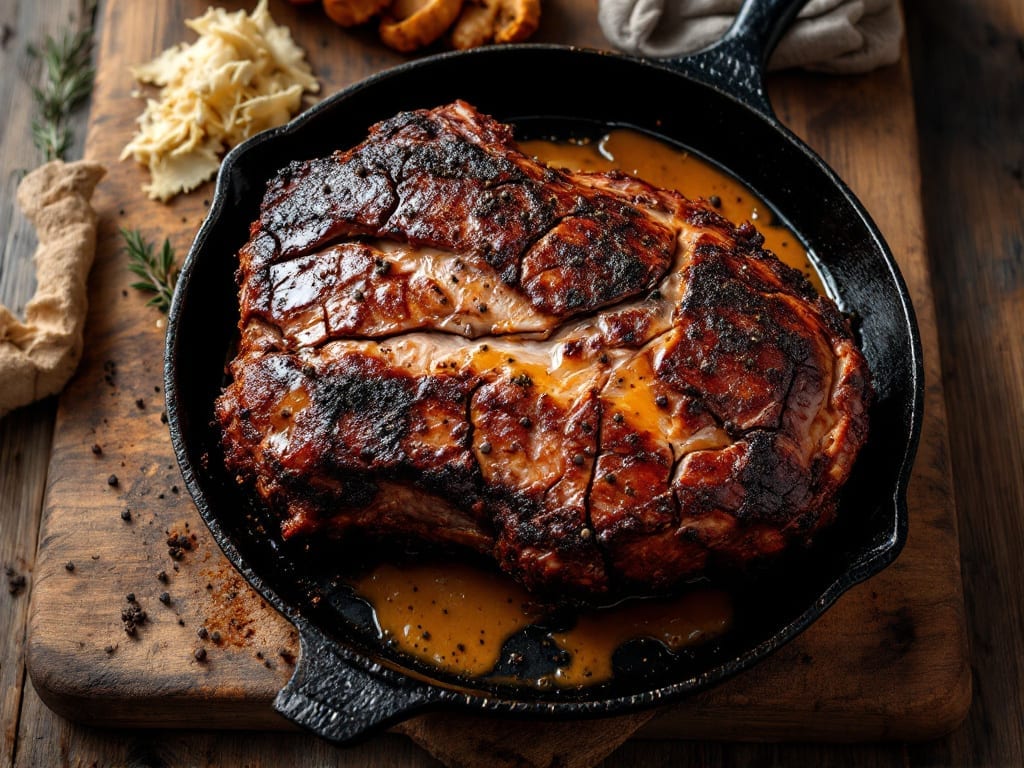
This bar BQ brisket recipe delivers that legendary Texas-style perfection—deep smoky flavor, a glossy dark bark, and meat so tender it practically melts. The key lies in low-and-slow cooking with precise temperature control, a technique I perfected after years of backyard cookouts where my family’s expectations were always sky-high.
What makes this recipe stand out is the balance between sweet and smoky, achieved through a carefully crafted rub and the right wood choice.
The process begins with trimming the brisket to expose the fat cap, which we’ll render down for flavor and protection. Using a mix of hickory and oak wood chips, we’ll maintain a steady temperature of 225°F for 12-15 hours, ensuring the meat develops that signature bark while staying fork-tender inside.
The secret weapon? A two-stage cooking approach that prevents the outer layers from drying out before the center reaches temperature.
By the time you slice against the grain, you’ll have perfectly tender brisket with a glossy, crackling bark that’s sweet and smoky all at once.
The aroma alone will have everyone gathering around the table, and each bite delivers that perfect balance of textures—crispy exterior, juicy interior, and just the right amount of fat. This is the kind of brisket that makes people ask for seconds before they’ve even finished their first plate.
Serve with classic BBQ sides like tangy coleslaw, buttery cornbread, and smoky baked beans for the full experience. The leftovers? Even better the next day, making this recipe perfect for meal prep or feeding a crowd. Let’s get started on creating brisket that’ll have your guests begging for the recipe.
Ingredients for bar bq brisket
Six ingredients for the rub, two types of wood chips, and one massive brisket.
| Ingredient | Amount | Notes |
|---|---|---|
| Packer Brisket 🥩 | 8 lb | Whole packer cut, fat cap intact |
| Yellow Mustard 🍯 | ½ cup | For sticky bark application |
| Coarse Kosher Salt 🧂 | ½ cup | Diamond Crystal preferred |
| Black Peppercorns 🌶️ | 2 tbsp | Freshly cracked for intensity |
| Granulated Garlic 🧄 | 2 tbsp | Not garlic powder |
| Ground Cumin 🌿 | 1 tbsp | Toasted for deeper flavor |
| Smoked Paprika 🌶️ | 1 tbsp | For authentic smoky depth |
| Brown Sugar 🍚 | 2 tbsp | Light or dark preferred |
| Onion Powder 🧅 | 1 tbsp | Freshly ground preferred |
| Chopped Hickory Wood Chips 🌳 | 2 cups | 100% pure, no fillers |
| Chopped Oak Wood Chips 🌳 | 1 cup | Complements hickory perfectly |
| Beef Tallow or Bacon Fat 🍖 | ¼ cup | For extra moisture |
| Apple Juice Concentrate 🍎 | ½ cup | For sweet bark glaze |
| Beef Broth 💧 | 1 cup | Low-sodium preferred |
[recipe_ingredient_scaler]
The brisket is non-negotiable—packer cut with that thick fat cap is what gives you the best flavor and protection during cooking. Most butchers will trim it for you, but if you’re buying whole, look for good marbling and ask them to leave the fat cap intact. Costco or local butchers usually have the best cuts, and they’ll often sell it pre-trimmed for convenience. For the wood chips, Traeger or Cookshack brands are reliable, but any 100% pure hickory and oak will work—just avoid anything with fillers or additives. The fat cap is your friend here; don’t trim it too aggressively unless you’re experienced.
No yellow mustard? Dijon mustard or even mayo in a pinch will work for the bark application, though it won’t be quite as sticky. The rub spices can be adjusted—swap smoked paprika for regular paprika if you can’t find it, but you’ll lose some of that authentic smoky depth. For the wood chips, if you can’t find oak, cherry or pecan are great substitutes, though hickory is the star of the show. The apple juice concentrate can be replaced with unsweetened apple juice reduced by half, but it won’t be as concentrated. And if you’re short on time, pre-made bark spray from the BBQ section will save you a step—just add a splash of apple juice to thin it out.
This brisket tastes even better the next day, so plan ahead. Wrap the cooked brisket tightly in butcher paper or foil, then place it in a cooler with a couple of ice packs to keep it warm while it rests—4-6 hours is ideal for maximum tenderness. Store leftovers in the fridge for up to 5 days, or freeze for 3 months. For serving, slice against the grain into 1/4-inch thick slices. The bark gets even more flavorful as it sits, so don’t be afraid to let it rest overnight if you’re prepping for a big gathering.
Why You’ll Love This Recipe
- Four-Ingredient Magic: That’s right—just salt, pepper, garlic, and mustard. No fancy rubs, no stressing over layers. Slap it on the brisket, slap it on the grill, and let the smoky magic happen.
- Smoky-Sweet Crust: The mustard caramelizes into this sticky, tangy crust that cracks like glass when you cut in. Honestly, that first bite—where the crispy edge gives way to tender meat—is why I keep coming back.
- Tailgate to Tuesday: Between us, this is my go-to for game days, lazy Sundays, or when I’m too wiped to cook but still crave something hearty. (Yes, even on a Tuesday night.)
Step-by-step instructions for smoky-sweet brisket
Here’s how to transform a tough cut into melt-in-your-mouth perfection with that coveted bark.
Prepare the Rub and Season the Brisket
In a large bowl, combine the 0.5 cup coarse kosher salt, 2 tablespoons black peppercorns, 2 tablespoons granulated garlic, 1 tablespoon ground cumin, 1 tablespoon smoked paprika, 2 tablespoons brown sugar, and 1 tablespoon onion powder. Mix thoroughly until the spices are evenly distributed and the salt crystals are fully coated. This blend creates the perfect balance of sweet, smoky, and savory flavors that will penetrate the meat.
Place the 8 lb packer brisket fat-side up on a cutting board. Using your hands, gently press the spice mixture into every inch of the meat, including the fat cap. The fat cap is crucial—it will render down during cooking, basting the meat and creating that prized bark. Pay special attention to the edges and the thickest parts of the brisket where the rub tends to stick less. Once fully coated, let the brisket sit at room temperature for 1 hour before smoking. This resting period allows the rub to adhere better and ensures more even cooking.
Apply the Mustard and Apple Juice Glaze
After the brisket has rested, spread a thin, even layer of the 0.5 cup yellow mustard all over the surface. The mustard acts as a binder and helps the bark stick to the meat during the cook. Don’t use too much—you want a light coating that won’t run off. Then, brush the entire surface with the 0.5 cup apple juice concentrate. This sweet glaze will caramelize during smoking, creating a glossy, sticky bark that’s both beautiful and delicious.
Place the brisket fat-side up in a roasting pan or on a wire rack set over a baking sheet. This elevation allows heat to circulate around the meat, promoting even cooking. Cover loosely with plastic wrap and refrigerate for at least 4 hours or overnight. This step is essential for deep flavor penetration and moisture retention. The longer it rests, the better the results—this is where the magic happens.
Smoke the Brisket Low and Slow
Preheat your smoker to 225°F using a mix of 2 cups chopped hickory wood chips and 1 cup chopped oak wood chips. These woods complement each other perfectly, giving you that classic barbecue flavor without overpowering the meat. Once the smoker reaches temperature and you see steady, blue smoke (not white steam), it’s ready for the brisket.
Place the brisket in the smoker with the fat cap facing up. Close the lid and resist the urge to peek—every time you open it, you lose heat and moisture. Smoke the brisket undisturbed for 6 hours, or until the internal temperature reaches 165°F. This is where patience pays off. The meat will hit “the stall” around 160°F, where the temperature plateaus as moisture evaporates. Don’t worry—this is normal and part of the process.
Wrap and Finish Cooking
When the brisket hits 165°F, it’s time to wrap it. In a large piece of butcher paper (not aluminum foil), place 0.25 cup beef tallow or bacon fat and pour 1 cup beef broth over it. Fold the brisket into the paper, enclosing the fat and broth inside. Seal the edges tightly to create an airtight wrap. This technique, known as the “Texas crutch,” helps the brisket push through the stall and continue cooking without drying out.
Return the wrapped brisket to the smoker and continue cooking until the internal temperature reaches 203°F. This can take an additional 4 to 6 hours, depending on your smoker’s consistency. The brisket is done when it’s fork-tender—you should be able to easily pierce it with a probe and have it slide in like butter. The bark should be dark mahogany with a glossy sheen from the apple juice glaze.
Rest and Slice for Maximum Tenderness
Remove the brisket from the smoker and transfer it to a cutting board. Let it rest, still wrapped in the butcher paper, for at least 1 hour before slicing. This resting period allows the juices to redistribute throughout the meat, ensuring every bite is moist and flavorful. If you’re short on time, you can rest it for 30 minutes, but the longer it rests, the better the results.
Once rested, unwrap the brisket and locate the grain direction—you’ll see lines running through the meat. Using a sharp carving knife, slice the brisket against the grain into ¼-inch thick slices. The flat and point may have slightly different grain directions, so adjust your angle accordingly. Serve immediately with your favorite barbecue sides. Each slice should be fork-tender with a perfect balance of smoky, sweet, and savory flavors, and that coveted bark that makes it worth the wait.
Pro Tips For Making Bar Bq Brisket
- Trim the Fat Cap: DESCRIPTION:
- Salt the Night Before: DESCRIPTION:
- Smoke Hot, Then Slow: DESCRIPTION:
- Mustard Slather, Not Drizzle: DESCRIPTION:
Wine and beer pairings for these flavors
Red Wine Pairings
For brisket lovers who enjoy wine, a bold Cabernet Sauvignon from Napa Valley is my go-to choice. The tannins in a well-aged 2018 or newer Cabernet stand up to the smoky, fatty richness of brisket while its dark fruit notes complement the caramelized bark.
Look for a bottle with 14-15% ABV—something like Caymus Vineyards or Opus One that has spent time in oak barrels. The acidity cuts through the fat, cleansing your palate between bites. 🍷
Malbec for Smoky Depth
If you prefer something with a touch more spice, a Argentinian Malbec from Mendoza delivers that perfect smoky-sweet harmony. The dark plum and blackberry flavors in a 2019 or newer Malbec mirror the brisket’s fruitiness, while its velvety texture contrasts beautifully with the bark’s crispness.
I love Catena Zapata or Trapiche—both offer excellent quality without breaking the bank. The lower tannins make it more approachable than Cabernet for those who prefer a smoother sip.
Beer Pairings
A crisp American Pale Ale with a touch of oak is my ideal beer match for brisket. Look for a 5-6% ABV beer like Allagash White or Goose Island Bourbon County Brand Stout (if you want something richer).
The pale ale’s citrus notes brighten the smoky flavors, while the stout’s roasted maltiness enhances the bark’s caramelization. For a local favorite, try a Texas-style blonde ale from Deep Ellum Brewing—it’s light enough to not overpower but still adds a refreshing contrast. 🍺
Regional Beer Specialty
If you’re cooking in the Midwest, a Kansas City-style amber ale like Schlafly Amber Ale (6.5% ABV) is a must. The caramel malt notes mirror the brisket’s sweet bark, while the hop bitterness balances the fat.
For a West Coast twist, a California Common Beer like Anchor Steam (5% ABV) offers a malty, slightly sweet profile that pairs beautifully with the brisket’s depth. The key is to avoid overly hoppy IPAs—they can clash with the meat’s richness.
Non-Alcoholic Options
Don’t drink alcohol? No problem. A smoky black tea like Lapsang Souchong (infused with pine needles) mimics the brisket’s smokiness perfectly. For something sweeter, try a sparkling apple cider—the acidity and fruitiness complement the bark’s caramel notes.
I also love ginger beer** (non-alcoholic) for its spicy kick that cuts through the fat. Just avoid sodas with artificial flavors—they’ll overpower the brisket’s natural sweetness. 💧
Pro Tip for Pairing
Let your drink breathe alongside the brisket. Open the wine or beer 30 minutes before serving to allow it to reach its ideal temperature and release aromas. For wine, serve Cabernet at 65°F and Malbec at 60°F—too warm, and the alcohol will dominate.
With beer, chill pale ales to 45°F and stouts to 50°F. The right temperature makes all the difference in highlighting the brisket’s flavors. 🌡️
Nutrition facts
Frequently asked questions
What’s the best wood choice for authentic barbecue brisket flavor?
A mix of hickory and oak gives you that classic smoky depth without overpowering the meat. Hickory provides strong, bold smoke while oak adds a touch of sweetness. For a milder profile, swap 50% of the hickory with cherry or pecan—just avoid fruit woods like apple, which can taste artificial when paired with beef.
How do I know when my brisket is done without drying it out?
Use a meat probe thermometer—the brisket is done when it reaches 203°F internally. The key is wrapping it in butcher paper (not foil) when it hits 165°F to push through “the stall” while keeping moisture. The bark should be dark mahogany with a glossy sheen, and it should pull away from the meat easily when you try to separate it.
Can I cook brisket in an oven instead of a smoker?
Preheat your oven to 250°F and place a water pan on the bottom rack for moisture. Use a meat thermometer to monitor temperature—follow the same 203°F target. For smoke flavor, add wood chips to a smoker box or wrap the brisket in foil with soaked wood chips inside. The texture will be slightly different but still delicious.
Why does my brisket turn out tough instead of tender?
Most likely, it didn’t cook long enough or was sliced with the grain instead of against it. The ideal internal temp is 203°F—any lower and the connective tissue won’t break down. Also, avoid cutting until it’s fully rested (1 hour minimum). If you’re short on time, try the Texas crutch (wrapping in butcher paper at 165°F) to speed up cooking without drying it out.
How long can I store cooked brisket in the fridge?
Wrap tightly in butcher paper or foil and store for up to 5 days in the fridge. For longer storage, freeze for 3 months. The flavor actually improves overnight as the juices redistribute. Reheat gently in the oven at 300°F until warmed through—never microwave, as it makes the bark rubbery.

Trained in classic French technique but raised on slow-cooked ribs and spicy rubs, she blends culinary skill with smoke and soul.
- Masterbuilt Smoker Beef Brisket Recipe: Bark-To-Meat Ratio Hack for Unmatched Flavor - October 15, 2026
- Costco Beef Brisket Recipe: Low-and-Slow Masterpiece With Molasses-Kissed Crust - October 15, 2026
- Smoked Herring Recipe: Scandinavian-Style With Dill and Mustard Cream - October 15, 2026