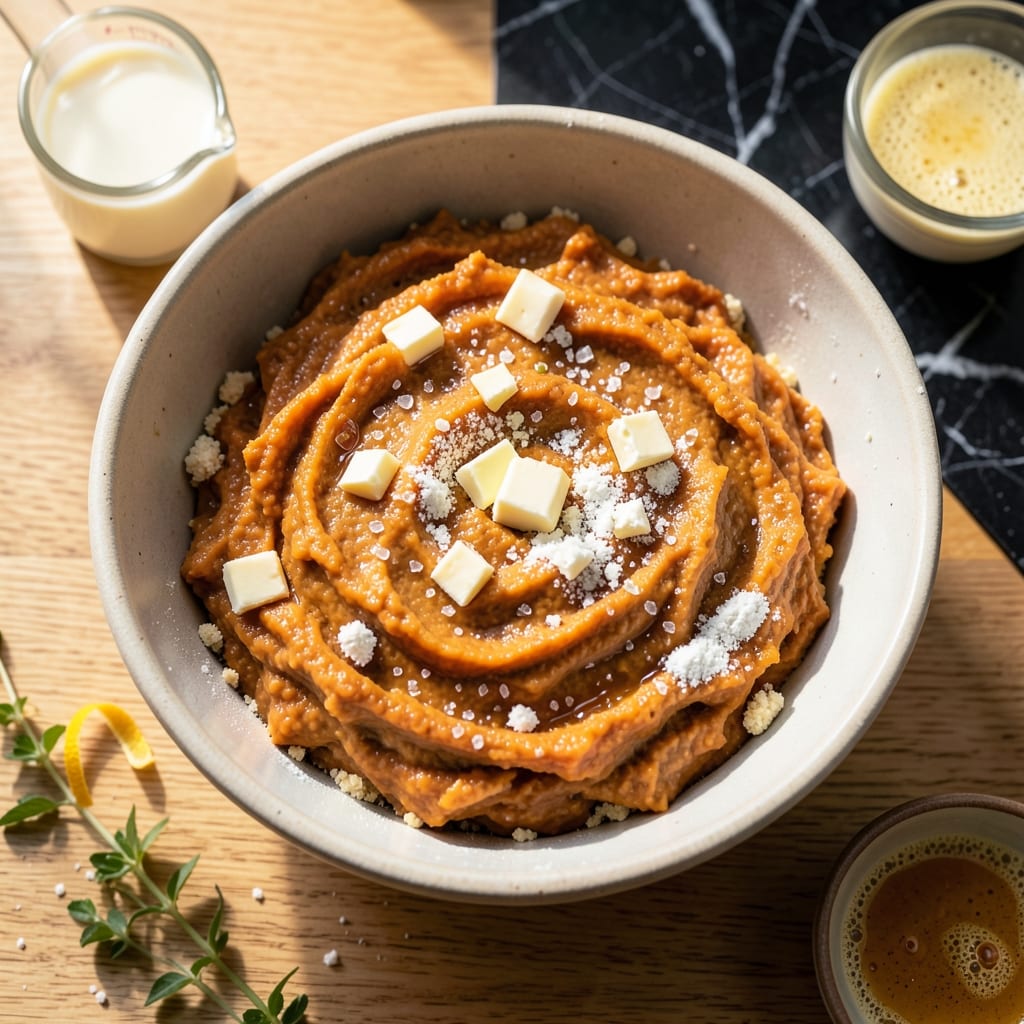
This sweet potato dough delivers a soft, slightly sweet base perfect for pies, rolls, or even dumplings. The natural sugars in the potato create a tender crumb that’s both flavorful and versatile.
I developed this recipe to work with standard baking techniques, using roasted sweet potato for depth and consistency. The dough comes together quickly with minimal kneading, making it ideal for both beginners and experienced bakers.
After resting, the dough rolls out smoothly and holds its shape during baking. It pairs beautifully with warm spices like cinnamon or nutmeg for seasonal treats.
Use it for hand pies, dinner rolls, or as a unique twist on traditional pastry recipes. The possibilities are endless.
Ingredients for Sweet Potato Dough
Roasted sweet potato puree creates this tender, subtly sweet dough base for versatile baking.
| Ingredient | Amount | Notes |
|---|---|---|
| Roasted Sweet Potato Puree 🍠 | 1 ½ cups | Cooled to room temperature |
| All-Purpose Flour 🌾 | 3 ½ cups | Plus extra for dusting |
| Vegan Butter 🧈 | ½ cup | Cold, cubed, unsalted |
| Granulated Sugar 🍚 | ¼ cup | Optional for sweetness |
| Active Dry Yeast 🍞 | 2 ¼ tsp | One 0.25 oz package |
| Unsweetened Almond Milk 🥛 | ¾ cup | Warmed to 110°F |
| Ground Cinnamon 🌿 | 1 tsp | Optional for flavor |
| Ground Nutmeg 🌰 | ¼ tsp | Freshly grated preferred |
| Sea Salt 🧂 | 1 tsp | Fine grain for even distribution |
| Maple Syrup 🍁 | 2 tbsp | For natural sweetness |
| Olive Oil 🫒 | 1 tbsp | For greasing bowl |
[recipe_ingredient_scaler]
The sweet potato puree is critical here. Roast and mash your own—canned puree often contains additives and lacks depth. Choose orange-fleshed varieties like Beauregard or Jewel for natural sweetness and vibrant color. Whole Foods or Trader Joe’s carry organic options if you’re avoiding pesticides. For consistent results, weigh your puree: 12-14 oz should yield the needed 1.5 cups.
No almond milk? Any unsweetened plant milk (soy, oat, cashew) works at a 1:1 ratio. Short on fresh yeast? Use instant yeast at the same quantity—no proofing needed. The flour can be swapped with bread flour for chewier texture, but reduce by 2-3 tbsp since it absorbs more liquid. Skip the spices if making savory applications like dumplings or empanadas.
The dough keeps 2-3 days refrigerated in an oiled bowl, or 1 month frozen in an airtight container. For best results, thaw frozen dough overnight in the fridge before shaping. Baked items made from this dough stay fresh 3-4 days at room temperature in a sealed container.
Why You’ll Love This Recipe
- One Bowl Wonder: I just dump the roasted sweet potato puree, flour, and yeast in a single bowl—no fancy mixing required.
- Warm Sweet Comfort: The roasted sweet potato gives it this cozy, caramelized depth that pairs perfectly with the buttery richness.
- Endless Sweet Creations: I’ve used this dough for cinnamon rolls, dinner rolls, and even hand pies—it’s my blank canvas for everything sweet.
- Budget Stretch: Honestly, a single batch makes enough for two meals, and the ingredients are pantry staples I always have on hand.
Step-by-Step Instructions for Sweet Potato Dough
Master the technique for creating a soft, elastic dough with rich autumnal flavors.
Step 1: Activate the Yeast and Warm the Liquids
Begin by warming the 0.75 cup Unsweetened Almond Milk to precisely 110°F—this is the sweet spot for activating yeast without killing it. I use a digital thermometer for accuracy. In a small bowl, combine the warm almond milk with the 2.25 tsp Active Dry Yeast and the 2 tbsp Maple Syrup.
Let this mixture sit for 5-7 minutes until it becomes frothy and slightly domed. This visual confirmation means the yeast is active and ready to work. The maple syrup not only adds subtle sweetness but also provides food for the yeast to thrive during the initial fermentation stage.
Step 2: Combine Wet Ingredients and Sweet Potato Base
In a large mixing bowl, combine the 1.5 cups Roasted Sweet Potato Puree with the 0.5 cup Vegan Butter, 0.25 cup Granulated Sugar, 1 tsp Ground Cinnamon, 0.25 tsp Ground Nutmeg, and 1 tsp Sea Salt. The sweet potato should be at room temperature to prevent the butter from seizing up.
Using a hand mixer or stand mixer with paddle attachment, beat these ingredients on medium speed for 2-3 minutes until completely smooth and homogeneous. The spices should be fully incorporated, and the mixture should have a vibrant orange hue with no visible butter chunks. This creates a consistent base for the dough.
Step 3: Incorporate Dry Ingredients and Knead
Gradually add the 3.5 cups All-Purpose Flour to the wet mixture, about 1 cup at a time, mixing on low speed until just combined. Switch to a dough hook attachment and knead on medium speed for 6-8 minutes. The dough will be slightly sticky but should pull away from the sides of the bowl.
If the dough is too sticky to handle, add flour 1 tablespoon at a time until it reaches the right consistency. Conversely, if it feels too dry, add warm water 1 teaspoon at a time. You’re aiming for a soft, supple dough that springs back slowly when poked with a finger.
Step 4: First Rise and Dough Development
Lightly grease a large bowl with the 1 tbsp Olive Oil. Transfer the dough to the bowl, turning once to coat all sides with oil. Cover with a clean kitchen towel or plastic wrap and place in a warm, draft-free location.
Allow the dough to rise for 1 to 1.5 hours or until it has doubled in volume. In a properly warm environment (75-80°F), you should see visible growth within the first 30 minutes. The dough is ready when it holds an indentation when gently pressed with a finger and springs back slowly.
Step 5: Shape and Prepare for Final Use
Once risen, gently punch down the dough to release excess air. Turn it out onto a lightly floured surface and knead by hand for 1-2 minutes to redistribute the air bubbles. The dough should feel smooth and elastic at this stage.
Divide the dough according to your recipe needs—whether for rolls, pie crusts, or other applications. Shape as desired, then let it rest for 15-20 minutes before baking or further processing. This final rest allows the gluten to relax, ensuring your final product has the perfect soft, pillowy texture.
Pro Tips For Making Sweet Potato Dough
- Warm the Puree: Always bring your roasted sweet potato puree to room temperature before mixing—cold puree can shock the yeast and slow down the rise.
- Activate the Yeast: Bloom your active dry yeast in warm water (around 110°F) with a pinch of sugar for 5-10 minutes until foamy—this guarantees it’s alive and ready to work.
- Skip Cold Butter: Use softened vegan butter, not cold, to avoid uneven mixing and tough dough—I learned this the hard way after wrestling with clumpy dough.
- Measure Flour Right: Spoon your all-purpose flour into the measuring cup and level it off—scooping directly from the bag packs it down and leads to dense, dry dough.
Common Mistakes When Making sweet potato dough
Overproofing the Dough
Letting the dough rise too long can cause it to collapse. I’ve found that 1.5 hours max at 75-80°F is ideal. If your kitchen is warmer, check it at 1 hour. The dough should double in size, not triple. 💡
Using Cold Ingredients
Cold sweet potato puree or vegan butter can prevent proper incorporation. Always bring these to room temperature first. I learned this the hard way when my butter refused to blend smoothly into the mixture.
Inaccurate Yeast Temperature
Almond milk that’s too hot (above 115°F) will kill the yeast, while too cool (below 105°F) won’t activate it. Use a thermometer for precision—I recommend ThermoWorks Instant Read for accuracy.
Skipping the Rest Period
Rushing to shape the dough without the final 15-20 minute rest can result in tough, elastic textures. This step allows the gluten to relax, ensuring your rolls or pie crusts stay tender. Honestly, patience pays off here.
Over-flouring the Surface
Adding too much flour while kneading can make the dough dry and dense. Stick to 1 tbsp at a time if it’s sticky. The dough should remain slightly tacky for that perfect pillowy texture.
Ignoring Dough Consistency
Your dough should pull away from the bowl but still feel soft. If it’s too dry, add warm water 1 tsp at a time. I check the texture after 5 minutes of kneading to adjust early. ✨
Nutrition Facts
Frequently Asked Questions
Can I use canned sweet potato puree instead of fresh?
Fresh roasted puree works best for flavor and texture. Canned can work in a pinch, but drain it well and reduce other liquids by 2-3 tbsp to compensate for added moisture.
Why did my dough not rise properly?
Check your yeast freshness and liquid temperature—it must be 110°F. Also ensure your kitchen is warm enough (75-80°F). Old yeast or cold environments often cause this issue.
How long can I store the dough before using?
In the fridge, it stays fresh for 2-3 days in an oiled bowl. For longer storage, freeze for up to 1 month in an airtight container. Thaw overnight in the fridge before using.
Can I make this without a stand mixer?
Knead by hand for 8-10 minutes until smooth and elastic. The process takes more effort but yields the same soft, pillowy result.

Trained in classic French technique but raised on slow-cooked ribs and spicy rubs, she blends culinary skill with smoke and soul.
- Recipe for Boneless Pork Chops in Cast Iron Skillet: Sear and Baste to Juicy Perfection - October 3, 2026
- Recipe for Boneless Cross Rib Roast: Slow-Roasted Beef with Herb Crust - October 3, 2026
- Hamburgers in Sauce Recipe Crock Pot: Slow-Cooked Savory Delight - October 3, 2026