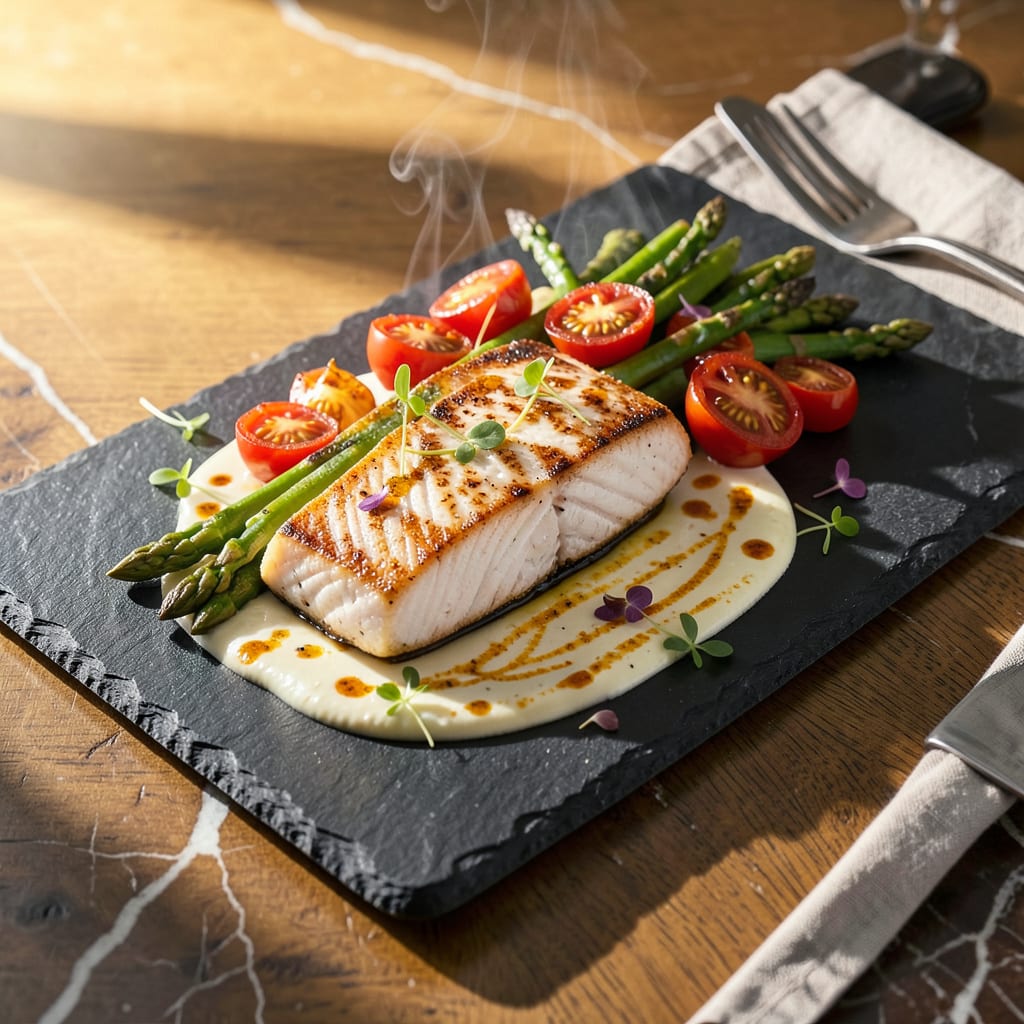
Swordfish is perfectly cooked when it reaches an internal temperature of 145°F (63°C). At this point, the flesh should be opaque and flake easily with a fork while remaining moist and tender.
This temperature sweet spot isn’t arbitrary—it’s where the fish’s proteins tighten just enough to transform the texture without squeezing out precious moisture. 🔥 I’ve found that swordfish’s dense, meaty structure handles heat differently than flakier fish, which is why hitting that 145°F mark gives you that ideal balance between firmness and juiciness. What’s fascinating is how the flesh changes from translucent to milky white at this exact point, signaling the proteins have properly coagulated while still retaining their natural oils.
💡 In This Article
- Why 145°F Is the Ideal Swordfish Cooking Temperature
- Best Methods to Check Swordfish Doneness Without a Thermometer
Why 145°F Is the Ideal Swordfish Cooking Temperature
At 145°F (63°C), swordfish proteins undergo perfect denaturation—the point where they unfurl and rebond just enough to create that coveted firm yet tender texture. This isn’t just about safety (though the USDA confirms this temperature eliminates parasites); it’s about hitting the sweet spot where collagen begins to soften while muscle fibers remain juicy.
Unlike delicate flaky fish, swordfish’s dense, steak-like structure needs this precise heat to transform its raw translucence into opaque, buttery layers. 🔥
The science gets fascinating when you examine what happens below the surface. At 120°F (49°C), the proteins start tightening, but the flesh remains too soft. By 145°F, myosin (the primary muscle protein) has fully coagulated, creating that clean flake while actin filaments maintain enough moisture to prevent dryness.
Go beyond 150°F (65°C), and you risk squeezing out those precious natural oils that give swordfish its signature richness—like wringing out a sponge. ✨
Here’s what I’ve observed after years of testing: swordfish cooked to 140°F (60°C) feels underdone (almost sushi-like), while 155°F (68°C) yields that dreaded chalky texture. That 5°F window between 145-150°F is where magic happens—the flesh resists slightly when pressed but separates into clean, moist flakes.
Think of it like a perfectly cooked steak’s medium-rare window, but for seafood. The meat’s natural fat content (about 10%) melts at this range, basting the flesh from within. 💫
Thickness plays a crucial role in hitting this target. A 1-inch steak will reach 145°F in about 4-5 minutes per side on a screaming-hot grill (450°F), while a 2-inch cut needs gentle heat (375°F) and 8-10 minutes total to avoid a burnt exterior.
Pro tip: Let thicker cuts rest off heat for 3-5 minutes—the residual heat will carry it to perfection while the juices redistribute. I’ve ruined more swordfish by rushing this step than I care to admit! ⚡
What most home cooks miss is how carryover cooking affects swordfish. That 145°F reading should be taken when the fish is pulled from heat, as the temperature will climb another 5-10°F during resting.
This is why I always pull at 140°F for thick cuts—the difference between juicy and dry can be just 30 seconds too long on the grill. The flesh should glisten when sliced, not weep clear liquid (undercooked) or appear dull (overcooked). 🌟
Compare this to other popular fish:
- Salmon: Best at 125-130°F (lower fat melts earlier)
- Tuna: Often served rare at 110-120°F (dense muscle structure)
- Cod: Flakes at 135°F (delicate proteins denature faster)
The final test? Press the flesh gently with your finger. Properly cooked swordfish should spring back like the palm of your hand when you press it—not stay indented (under) or feel rock-hard (over). This tactile check, combined with the internal temp, gives you that restaurant-quality result every time.
Trust me, once you nail this temperature, you’ll never settle for dry, cottony swordfish again.

Trained in classic French technique but raised on slow-cooked ribs and spicy rubs, she blends culinary skill with smoke and soul.
- Recipe for Boneless Pork Chops in Cast Iron Skillet: Sear and Baste to Juicy Perfection - October 3, 2026
- Recipe for Boneless Cross Rib Roast: Slow-Roasted Beef with Herb Crust - October 3, 2026
- Hamburgers in Sauce Recipe Crock Pot: Slow-Cooked Savory Delight - October 3, 2026