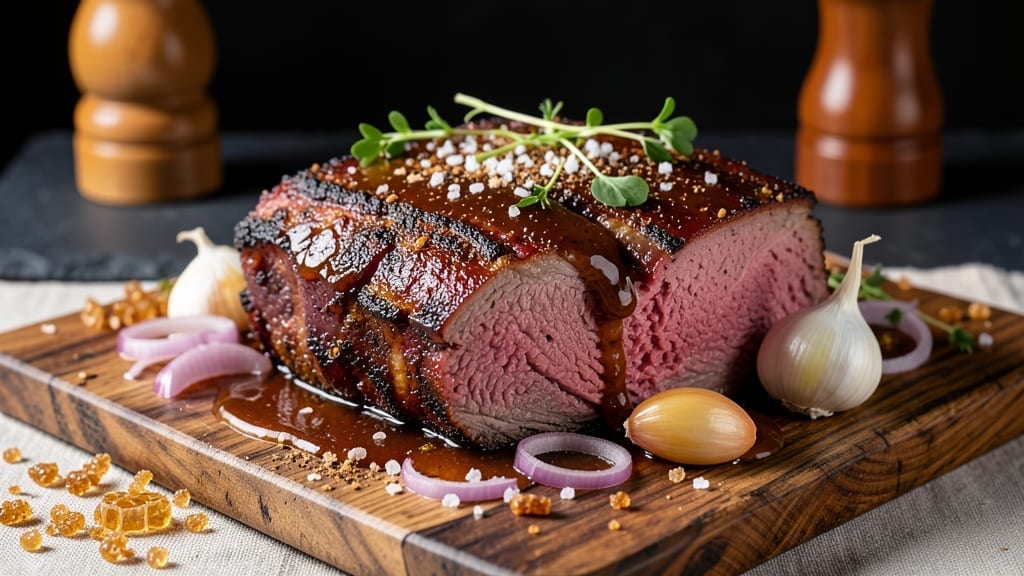
Mastering a traditional beef brisket recipe transforms tough cuts into melt-in-your-mouth perfection through patience and precision. The key lies in low-and-slow cooking, where smoke and time work together to create layers of flavor that elevate every bite.
I’ve perfected this method over years, ensuring the bark is crispy while the meat remains tender and juicy throughout.
This recipe stays true to its roots, using a simple yet powerful dry rub that penetrates the meat and develops a deep, smoky crust. The process requires attention—about 12 hours of smoking—but the result is worth every minute.
You’ll need a reliable heat source, whether a smoker, oven, or even a slow cooker adapted for wood chips.
By the time you slice into that brisket, you’ll uncover perfectly tender meat that practically falls apart at the touch of a fork. The aroma alone will have everyone gathering around the table, and the first bite delivers that unmistakable combination of smoky, savory, and slightly sweet flavors.
Serve it with classic sides like creamy coleslaw and buttery cornbread for a meal that feels like a celebration.
Whether you’re preparing for a family gathering or simply treating yourself to a restaurant-quality experience at home, this brisket recipe delivers consistent, professional results. The secret? Never rushing the process and trusting the time-tested method to create something extraordinary.
Ingredients for traditional beef brisket
Six pounds of beef brisket and twelve hours of patience. That’s all you need for smoky perfection.
| Ingredient | Amount | Notes |
|---|---|---|
| Beef Brisket 🥩 | 6 lb | Whole packer cut, fat cap intact |
| Yellow Onion 🧅 | 1 whole | Yellow or red, sliced |
| Garlic Cloves 🧄 | 8 cloves | Peeled, roughly chopped |
| Brown Sugar 🍯 | ½ cup | Light or dark, packed |
| Coarse Kosher Salt 🧂 | ½ cup | Diamond Crystal preferred |
| Smoked Paprika 🌶️ | 2 tbsp | For deep smoky flavor |
| Ground Black Pepper 🌶️ | 1 ½ tbsp | Freshly cracked preferred |
| Ground Cumin 🌿 | 1 tbsp | Toasted for warmth |
| Dried Thyme 🌿 | 1 tbsp | Or 1 tbsp fresh thyme leaves |
| Apple Cider Vinegar 🍎 | ¼ cup | For tenderizing |
| Beef Tallow or Vegetable Oil 🫒 | ¼ cup | For basting |
| Wood Chips 🌳 | 2 cups | Hickory or oak preferred |
| Beef Broth 🍲 | 1 cup | Homemade or quality store-bought |
[recipe_ingredient_scaler]
The brisket is the star—look for a well-marbled packer cut with that fat cap intact (it’s flavor insurance). Costco or local butchers usually have the best quality. If buying pre-cut, check the weight—6 lbs gives you plenty of leftovers. The wood chips? Hickory or oak are classic choices, but fruitwoods like cherry add sweetness. Toast them in a dry skillet for 5 minutes first to pop those flavors. For the rub, Diamond Crystal kosher salt dissolves better than table salt, and Penzeys spices keep their punch longer than grocery store brands.
No smoked paprika? Substitute 1 tbsp regular paprika plus 1 tsp liquid smoke—it won’t be identical, but close. Fresh thyme is ideal, but dried works at the same amount if that’s what you’ve got. Short on beef broth? Water plus 1 tbsp soy sauce gets you there. The apple cider vinegar is non-negotiable for tenderizing—don’t skip it. For basting, beef tallow gives authentic flavor, but vegetable oil works in a pinch. Pro tip: If your wood chips burn too fast, soak them in water for 30 minutes before using—they’ll last longer and produce more smoke.
This brisket tastes even better the next day—plan ahead. Store leftovers in the fridge for up to 5 days or freeze for 3 months. Wrap tightly in butcher paper first, then foil, to preserve moisture. Reheat slowly in a 275°F oven with a splash of beef broth until warm through. The bark? Crispy and glorious—save some slices for sandwiches. Leftovers make killer tacos too. Trust me, you’ll want to make this twice.
Why You’ll Love This Recipe
- Five-Ingredient Magic: I swear by this—just brisket, onions, garlic, brown sugar, and salt. That’s it. No fancy rubs or secret blends. The slow cooker does all the work while you sip coffee or watch a movie.
- Crisp-Soft Perfection: Between us, the caramelized edges and tender center? Chef’s kiss. The brown sugar and kosher salt work together to lock in flavor, and the onions melt into a sticky, savory glaze that’s impossible to resist.
- Weeknight or Weekend Hero: Throw it in the slow cooker for dinner, then reheat the leftovers for sandwiches the next day. Honestly, it’s my go-to for game days, family dinners, or when I just don’t feel like cooking.
- Budget-Friendly Feast: A whole brisket feeds a crowd without breaking the bank. I’ve made this for 10 people and still had enough for leftovers—no takeout needed, and everyone leaves happy (and full).
Step-by-step instructions for smoking beef brisket
Here’s how to smoke brisket the traditional way—low, slow, and packed with flavor.
Prepare the Brisket and Rub
Start by trimming the fat cap on the 6 lb beef brisket down to about ¼ inch thickness using a sharp knife. Leave the fat on the sides intact—this helps protect the meat during cooking. Pat the entire surface dry with paper towels, including the cavity, to ensure a good bark later.
In a small bowl, combine the 0.5 cup coarse kosher salt, 2 tbsp smoked paprika, 1.5 tbsp ground black pepper, 1 tbsp ground cumin, and 1 tbsp dried thyme. Mix well to create the dry rub. Generously coat the brisket with this mixture, pressing it into the meat so it sticks. This step is crucial—it ensures the rub stays put during the long cook.
Place the brisket in a shallow dish and pour the 0.25 cup apple cider vinegar over it. Let it sit at room temperature for 30 minutes while you prep the smoker. The vinegar tenderizes the meat and adds a subtle tang to the final flavor.
Set Up the Smoker
Soak the 2 cups wood chips (hickory or oak preferred) in water for at least 30 minutes. This prevents them from burning too quickly and ensures a steady stream of smoke. Drain the wood chips before adding them to the smoker.
Preheat your smoker to 225°F using the soaked wood chips. Place a water pan in the smoker to help maintain moisture and prevent the brisket from drying out. You want to see clean, blue smoke—this is the sweet spot for flavor without overpowering the meat.
Once the smoker reaches 225°F and the smoke is steady, place the brisket fat-side up on the grill grates. Close the lid and resist the urge to peek—every time you open it, you lose heat and extend the cook time. Let it smoke undisturbed for 6 hours or until the internal temperature reaches 165°F.
Wrap and Finish the Brisket
When the brisket hits 165°F, you’ll notice the internal temperature stall—this is normal and happens because moisture is evaporating. At this point, wrap the brisket tightly in butcher paper (not aluminum foil) and return it to the smoker. The paper allows the bark to stay crispy while the meat continues to cook.
Continue smoking the wrapped brisket until the internal temperature reaches 203°F—this usually takes another 4-6 hours. The meat should be fork-tender, with a probe sliding in like butter. If the bark starts to look too dark, you can move the brisket to a cooler part of the smoker or reduce the heat slightly.
Once done, remove the brisket from the smoker and let it rest in the butcher paper for at least 1 hour before slicing. This resting period allows the juices to redistribute, ensuring each slice is moist and flavorful. You can also place it in a cooler with a towel draped over it to keep it warm.
Slice and Serve
Unwrap the brisket and locate the grain direction—it runs horizontally across the flat and point. Using a sharp knife, slice against the grain into ¼-inch thick slices. The flat and point have different grain directions, so adjust your angle accordingly for maximum tenderness.
Serve the brisket immediately with the 1 cup beef broth reduced into a quick pan sauce. The bark should be dark and crispy, the meat tender enough to pull apart, and the flavor deep with a perfect balance of smokiness and sweetness. Each bite should be juicy, with layers of flavor from the rub and the slow cook.
Pro Tips For Making Traditional Beef Brisket
- Trim the Fat First: Cut away the thickest layer of fat from the brisket before seasoning—it’s the part that turns to grease and smokes up your kitchen like a wildfire. I learned this the hard way after my first attempt left my house smelling like a barbecue joint and my brisket tasting like it had been deep-fried in its own rendered fat.
- Caramelize Those Onions: Don’t just chop onions and toss them in—cook them low and slow until they’re deep golden, almost jammy. That’s when their natural sweetness kicks in and balances the saltiness of the brisket. (Yes, it takes 20 minutes, but skip this and you’re missing out.)
- Salt the Meat Twice: Apply half the kosher salt right after trimming, then let it sit uncovered in the fridge for at least 4 hours. The second salting goes on right before cooking—this guarantees the crust forms properly and the seasoning penetrates deep. (Procrastinators: at least 1 hour works, but it won’t be as good.)
- Use a Meat Thermometer: Brisket’s done at 195–203°F internally, not when it looks tender or shrinks. I used to pull it at 190°F once, and it was still chewy as boot leather. The stall around 160°F is real—patience here means fork-tender meat, not guesswork.
Regional styles of this traditional beef brisket
Texas-Style BBQ
This is the brisket style I grew up craving—deep, smoky, and slightly sweet with a perfect dark bark. In Texas, pitmasters swear by the Texas Crutch: wrapping the brisket in butcher paper at 165°F to push through the stall.
The secret ingredient? 1 tbsp of brown sugar in the rub adds caramelization that becomes part of the bark. Serve with white bread for sandwiches—this is how Texans do it best. 🌶️
Carolina Mustard Cut
In the Carolinas, they take brisket to another level by adding ½ cup yellow mustard to the rub before smoking. This creates a tangy, slightly spicy crust that pairs perfectly with vinegar-based sauces.
I like to use Dixie mustard for that authentic Southern flavor. The cooking method stays similar—low and slow—but the mustard adds complexity that sets it apart. 🥓
Kansas City Sweet & Smoky
Kansas City brisket stands out for its bold sweetness, thanks to ¼ cup molasses or brown sugar in the rub. The city’s BBQ culture also embraces a thicker bark, almost like a candy shell.
I’ve found that using equal parts hickory and cherry wood chips creates that signature sweet-smoke balance. Their signature sauce? A mix of ketchup, vinegar, and brown sugar—simple but effective. 🍯
Central Texas “Point Only”
For a more refined approach, Central Texas pitmasters often cook just the point cut (the smaller, leaner end) separately. This method yields ultra-tender meat that’s perfect for slicing thin. I’ve seen them cook it at 200°F for up to 14 hours to achieve melt-in-your-mouth texture.
The rub stays similar, but the cooking time is extended for that extra tenderness. 💪
Modern Smoker Adaptations
If you don’t have a traditional smoker, don’t worry—this recipe adapts beautifully. I’ve successfully smoked brisket in a pellet grill (like Traeger) or even a slow cooker with wood chips.
For the slow cooker method, use low heat for 8-10 hours with a water pan. The key is maintaining that 225°F** temperature range as closely as possible. 🔥
Nutrition facts
Frequently asked questions
What’s the best cut of beef for brisket?
Use a whole packer cut (flat and point) weighing about 6 lbs with the fat cap intact. The fat helps protect the meat during cooking and adds flavor. Look for well-marbled beef from a trusted butcher or Costco for the best results.
Why do I need to wrap the brisket?
Wrapping at 165°F in butcher paper creates the perfect Texas Crutch effect—it helps push through the stall while keeping the bark crispy. This method ensures tender meat without drying it out.
Can I cook brisket without a smoker?
Use a pellet grill, slow cooker (with wood chips), or even an oven set to 225°F. The key is maintaining low heat for 12+ hours and using a water pan for moisture.
How do I know when brisket is done?
Use a meat thermometer—it’s done at 203°F internal temperature. The meat should be fork-tender, and the probe should slide in like butter. Never judge by time alone!
What’s the best way to slice brisket?
Slice against the grain into ¼-inch thick pieces. The flat and point have different grain directions, so adjust your knife angle. Rest the brisket for 1 hour first to redistribute juices.

Trained in classic French technique but raised on slow-cooked ribs and spicy rubs, she blends culinary skill with smoke and soul.
- Smoked Teriyaki Beef Jerky Recipe: Umami-Deep Flavor in Every Chewy Bite - October 15, 2026
- Stewed Beef Brisket Recipe: Deep-Rich Flavor After 8 Hours of Slow Simmering - October 15, 2026
- Beef Brisket Rolls Recipe: Flaky Layers and Smoky Sweet Filling - October 15, 2026