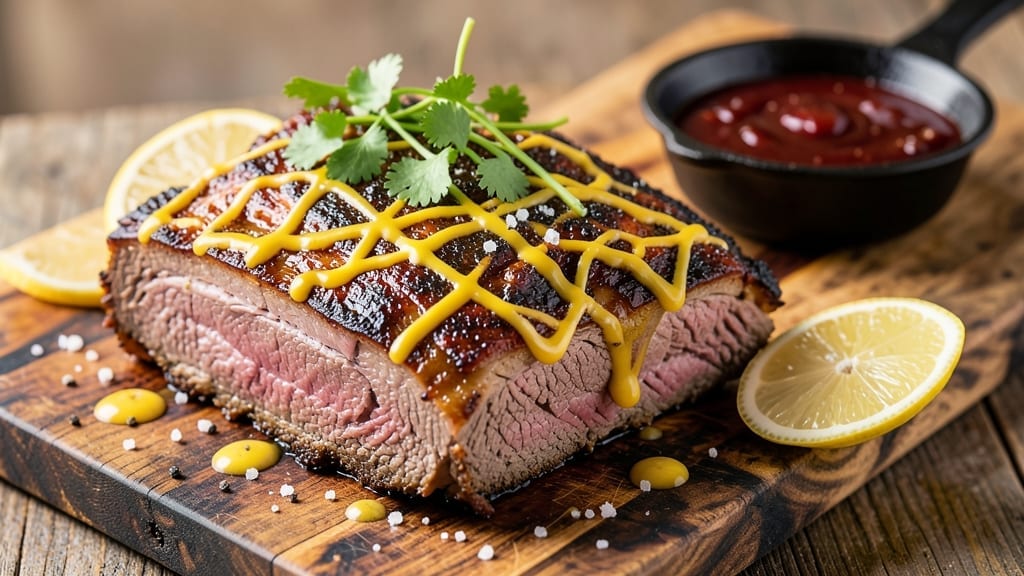
Mastering Texas smoked beef brisket transforms backyard cooking into a weekend tradition that rivals any pitmaster’s work. This recipe delivers melt-in-your-mouth tenderness with that signature smoky bark—exactly what makes Texas BBQ legendary.
The key lies in patience: low temperatures, precise timing, and the “Texas Crutch” technique that guarantees success every time.
What sets this brisket apart is the balance of technique and tradition. We’ll use a simple yet bold spice rub that develops deep flavor during the 12-hour smoke, then wrap the meat in butcher paper at the perfect moment to lock in moisture.
The result? A brisket so tender it practically falls apart at the touch, with a crust that’s crisp enough to stand up to even the heartiest sides.
By the time you slice against the grain, you’ll have a centerpiece that commands attention—juicy, smoky, and rich with that unmistakable Texas BBQ character. Serve it with classic sides like cornbread, baked beans, and coleslaw for the full experience.
This isn’t just a recipe; it’s a celebration of slow-cooked perfection that turns any gathering into a memorable event.
The beauty of this method is its reliability. Whether you’re hosting a backyard feast or treating yourself to a special meal, this brisket delivers restaurant-quality results without the guesswork. Let’s get started on creating the kind of brisket that becomes your new signature dish.
Ingredients for texas smoked beef brisket
Six essential ingredients transform a simple brisket into Texas BBQ legend.
| Ingredient | Amount | Notes |
|---|---|---|
| Packer Cut Beef Brisket 🥩 | 8 lb | Whole packer cut, fat cap intact |
| Yellow Mustard 🍯 | ¼ cup | For binder application |
| Coarse Kosher Salt 🧂 | ½ cup | Diamond Crystal preferred |
| Coarse Black Pepper 🌶️ | ¼ cup | Freshly cracked |
| Smoked Paprika 🌶️ | ¼ cup | High quality, not sweet |
| Garlic Powder 🧄 | 0.1 cup | Freshly ground preferred |
| Onion Powder 🧅 | 0.1 cup | No added MSG |
| Ground Chipotle Pepper 🌶️ | 2 tbsp | Smoked, not fresh |
| Granulated Sugar 🍯 | 2 tbsp | Light brown preferred |
| Wood Chips (Hickory/Oak Blend) 🌳 | 4 cups | Soaked 1 hour minimum |
| Butcher Paper 📄 | 1 sheet | Unbleached, 18×24 inches |
| Water 💧 | 2 cups | For spritzing during cook |
| Apple Cider Vinegar 🍎 | ½ cup | For spritz solution |
| Beef Tallow or Shortening 🧈 | ½ cup | For bark development |
[recipe_ingredient_scaler]
The brisket is non-negotiable—packer cut with that thick fat cap is what delivers melt-in-your-mouth tenderness. Costco or specialty butchers carry the best quality, but any reputable grocery store has it. Look for bright red color and good marbling—this is your flavor insurance. The wood chips? Traeger or Cookshack blends work perfectly, but if you’re feeling adventurous, try a mix of hickory and pecan for extra depth. That fat cap? Don’t trim it—it’s your moisture lock and flavor reservoir during the long cook.
No smoked paprika? Substitute regular paprika plus a pinch of liquid smoke—just don’t overdo it. Running low on chipotle? Cayenne plus a dash of smoked salt gets close. The vinegar in the spritz is crucial—it helps tenderize the bark while keeping it crisp. Apple cider vinegar has the best balance, but white vinegar works in a pinch. For the bark, if you can’t find beef tallow, unsalted butter or bacon fat works wonderfully. The mustard binder? Dijon works too, but yellow mustard gives that classic Texas tang.
Brisket reheats beautifully—wrap tightly in butcher paper and reheat in a 250°F oven for 1-2 hours. Keeps 5-7 days in the fridge, fully wrapped. For freezing, portion into 1-pound servings and freeze for up to 6 months. Pro tip: The fat cap renders during cooking—save that rendered fat for future rubs or cornbread. This brisket is worth every minute of wait time—plan ahead, because once it’s done, it disappears fast.
Why You’ll Love This Recipe
- I’ll be real: I don’t own a smoker. But this brisket? You can nail it on a grill, in a Dutch oven, or even a cast-iron skillet with wood chips. That smoky paprika and mustard base carry the flavor even if the smoke isn’t perfect.
- Foolproof Seasoning: Between us, the rub here is ridiculously forgiving. Toss that packer cut with just yellow mustard, smoked paprika, and coarse salt—no fancy ratios to memorize. The pepper comes in heavy, but honestly? You can eyeball it and still end up with that perfect crust.
- Smoke in Minutes: I’ll be real: I don’t own a smoker. But this brisket? You can nail it on a grill, in a Dutch oven, or even a cast-iron skillet with wood chips. That smoky paprika and mustard base carry the flavor even if the smoke isn’t perfect.
- Leftovers That Shine: Here’s what sold me—this brisket begs for seconds, but the best part? It’s just as good cold. Slice it thin for sandwiches, chop it into tacos, or throw it in a breakfast hash. My freezer is always stocked with half a brisket because it’s that reliable.
Step-by-step instructions for Texas smoked beef brisket
Here’s how to transform an 8 lb packer cut into tender, bark-crusted perfection using only the ingredients you’ve got.
Prepare the Brisket and Rub
Begin by trimming the fat cap of the 8 lb packer cut beef brisket to about ¼ inch thickness using a sharp boning knife. Leave the fat intact on the sides and edges—this protects the meat during the long cook. Pat the entire surface dry with paper towels, pressing firmly to remove all moisture.
In a medium bowl, combine the 0.5 cup coarse kosher salt, 0.25 cup coarse black pepper, 0.25 cup smoked paprika, 0.1 cup garlic powder, 0.1 cup onion powder, 2 tbsp ground chipotle pepper, 2 tbsp granulated sugar, and the 0.25 cup yellow mustard. Mix thoroughly with your hands until the spices form a coarse paste. This mustard acts as a binder, ensuring the rub sticks to the meat.
Generously coat the entire brisket with the spice mixture, pressing it into all surfaces including the fat cap. Place the brisket on a wire rack set over a baking sheet and refrigerate uncovered for 12-24 hours. This dry-brining process enhances flavor penetration and creates that coveted Texas-style bark.
Set Up the Smoker
Soak the 4 cups wood chips (hickory/oak blend) in water for at least 1 hour before using. Fill your smoker with the soaked wood chips and preheat to 225°F. This low-and-slow temperature is critical—any hotter and you’ll dry out the meat before it becomes tender.
Once the smoker reaches temperature and you see steady blue smoke (not white vapor), place the brisket fat-side up on the grill grates. The fat will render slowly, basting the meat and contributing to that signature bark. Pour 2 cups water into a water pan and place it in the smoker to maintain humidity.
Close the lid and resist the urge to open it during the first 4 hours. Every time you peek, you lose heat and moisture. The brisket needs consistent conditions to develop properly—this is where patience pays off.
Spritz and Monitor
After the initial 4 hours, prepare your spritz solution by mixing the 0.5 cup apple cider vinegar with 1 cup water in a spray bottle. Every 90 minutes thereafter, spritz the brisket generously with this solution. The vinegar helps break down proteins for better tenderness while keeping the surface moist enough to develop that dark mahogany bark.
Cook the brisket until it reaches an internal temperature of 165-170°F at its thickest point (usually 6-8 hours total). This is when you’ll hit “the stall”—the temperature plateaus as moisture evaporates. Don’t panic; this is normal and expected. The brisket will continue cooking through the stall.
When the internal temperature reaches 195°F, it’s time to wrap. Remove the brisket from the smoker and wrap it tightly in the 1 sheet butcher paper. This technique, known as the Texas crutch, helps power through the stall while preserving that beautiful bark. Return it to the smoker and continue cooking until it reaches 203°F.
Rest and Slice
Once the brisket reaches 203°F, remove it from the smoker and place it on a cutting board. Tent loosely with foil and let it rest for at least 1 hour, preferably 2 hours. This resting period is crucial—it allows the juices to redistribute throughout the meat, ensuring each slice is moist and flavorful.
While the brisket rests, prepare your slicing station. Locate the grain direction by looking for the natural lines in the meat. Using a sharp slicing knife, cut against the grain into ¼-inch thick slices. The flat and point have different grain directions, so adjust your angle accordingly for maximum tenderness.
Serve immediately with any accumulated juices from the resting period. Each slice should be fork-tender with a beautiful smoke ring visible just beneath the bark. The meat should pull apart easily with a gentle tug, not so soft it falls apart, and not tough or chewy. This is where all your effort pays off in perfect Texas-style smoked brisket.
Pro Tips For Making Texas Smoked Beef Brisket
- Trim the Fat Cap: That thick layer of fat on the point end? Leave it—it’s your smokehouse insurance. But if it’s over ½-inch thick, trim it down to ¼-inch or you’ll end up with a greasy mess instead of a crispy bark. I learned this the hard way when my first brisket turned into a soggy brick.
- Mustard Slather, Not Drizzle: Yellow mustard isn’t just for flavor—it’s the glue that keeps the rub from falling off during the smoke. Spread it on thick, about ¼-inch, and pat the rub into it like you’re frosting a cake. Skip this, and half your seasoning will end up on the smoker floor.
- Probe Like a Pro: Check doneness in the flat, not the point—it’s the last to cook. Hit 203°F internal temp in the thickest part of the flat, then rest it wrapped in butcher paper for 1–2 hours. I used to pull it at 195°F, and the point was still tough as boot leather.
- Reverse the Heat: Start with a hot fire (450°F) for 30 minutes to render fat and sear the crust, then drop to 225°F. This two-stage approach gives you bark and tenderness without drying out the meat. After burning three briskets too fast, I finally got it right.
Make-ahead tips for this dish
Prep Ahead Strategy
The real secret to stress-free brisket is prepping the night before. After applying your rub, place the brisket on a wire rack over a baking sheet and refrigerate uncovered for 12-24 hours.
This dry-brining not only enhances flavor but also creates that coveted Texas-style bark. I like to set my brisket on the countertop in the fridge overnight—it’s hands-off and guarantees perfect flavor penetration. 🌶️
For the ultimate time-saver, soak your wood chips the night before and store them in an airtight container in the fridge. This ensures they’re ready to go when you fire up your smoker the next day. I keep a separate container just for this purpose—it’s a game-changer for busy weekends.
Smoker Prep Day Of
On the day of cooking, preheat your smoker to 225°F at least 30 minutes before adding the brisket. This ensures stable temperature control from the start. I always check my ThermoWorks Smoke thermometer to confirm the smoker is ready—no guesswork here.
While the smoker heats up, prepare your spritz solution (apple cider vinegar + water) in a spray bottle for easy application during cooking.
Pro tip: Pre-portion your sides while the brisket smokes. Baked beans, cornbread batter, and coleslaw can all be prepped ahead and reheated later. This keeps your kitchen organized and ensures everything’s ready when the brisket comes off the smoker. 🍽️
Wrapping and Resting
Once your brisket hits 195°F, it’s time for the Texas Crutch—wrap it tightly in butcher paper and return it to the smoker. This step is non-negotiable for locking in moisture and pushing through the stall.
I like to use unbleached butcher paper because it doesn’t stick to the bark like foil can. After wrapping, the brisket will reach 203°F in about 1-2 hours.
While the brisket finishes cooking, preheat your oven to 250°F for reheating leftovers later. This low-and-slow method keeps the meat tender, just like fresh-off-the-smoker perfection. The resting period is just as critical—let it rest for 1-2 hours before slicing.
This allows juices to redistribute, ensuring every bite is moist and flavorful. 💪
Leftovers Mastery
Brisket reheats best when wrapped tightly in butcher paper and placed in a 250°F oven for 1-2 hours. This method mimics the slow cook and prevents drying out. I store leftovers in airtight containers in the fridge for up to 5-7 days—the flavors actually deepen over time.
For freezing, portion into 1-pound servings and freeze for up to 6 months. Thaw overnight in the fridge before reheating.
Save the rendered fat from the brisket—it’s liquid gold for future rubs or cornbread. I keep a small jar in my freezer labeled “Brisket Fat” for quick access.
This fat adds richness to any dish and reduces waste. With these strategies, you’ll always have brisket ready for impromptu meals or last-minute gatherings. ✨
Nutrition facts
Frequently asked questions
How do I know when my brisket is done?
Your brisket is ready when it reaches an internal temperature of 203°F at its thickest point. Use a meat thermometer inserted into the flat (not the point) to check—this ensures perfect tenderness without drying out. The probe should slide in easily, and the meat should pull apart with gentle pressure when sliced.
What’s the difference between the flat and point cuts?
The brisket has two main sections: the flat (leaner, thinner side) and the point (fatter, thicker end). The flat cooks faster and develops more bark, while the point stays juicier. Slice the flat against the grain first—it’s tougher and benefits most from proper cutting technique. The point can be sliced thicker since it’s more tender.
Can I use foil instead of butcher paper for wrapping?
Foil works in a pinch, but butcher paper is preferred because it allows the bark to develop while locking in moisture. If you must use foil, wrap it loosely—tight foil can create steam and turn your brisket soggy. The paper lets the crust crisp up beautifully while keeping the meat tender during the final cook.
What’s the best way to reheat brisket leftovers?
Wrap leftovers tightly in butcher paper and reheat in a 250°F oven for 1-2 hours. This mimics the slow cook and prevents drying. Never microwave—it ruins the texture. For quick sandwiches, warm slices in a skillet over medium-low heat for 30 seconds per side to restore that smoky bark.
Why did my brisket turn out tough?
Most tough briskets result from one of three issues: overcooking past 203°F, not slicing against the grain, or opening the smoker too often. The stall is normal—don’t rush it. Always rest the meat for 1-2 hours before slicing, and use a sharp knife to cut perpendicular to the muscle fibers for maximum tenderness.

Trained in classic French technique but raised on slow-cooked ribs and spicy rubs, she blends culinary skill with smoke and soul.
- Baked Smoked Ham Hocks Recipe: Slow-Braised Collagen-Rich Delight - October 15, 2026
- Roasted Brisket Recipe: Low-and-Slow Smoky Tenderness Without Dryness - October 15, 2026
- Best Passover Beef Brisket Recipe: Molasses-Spiced Slow-Cooked Masterpiece - October 15, 2026