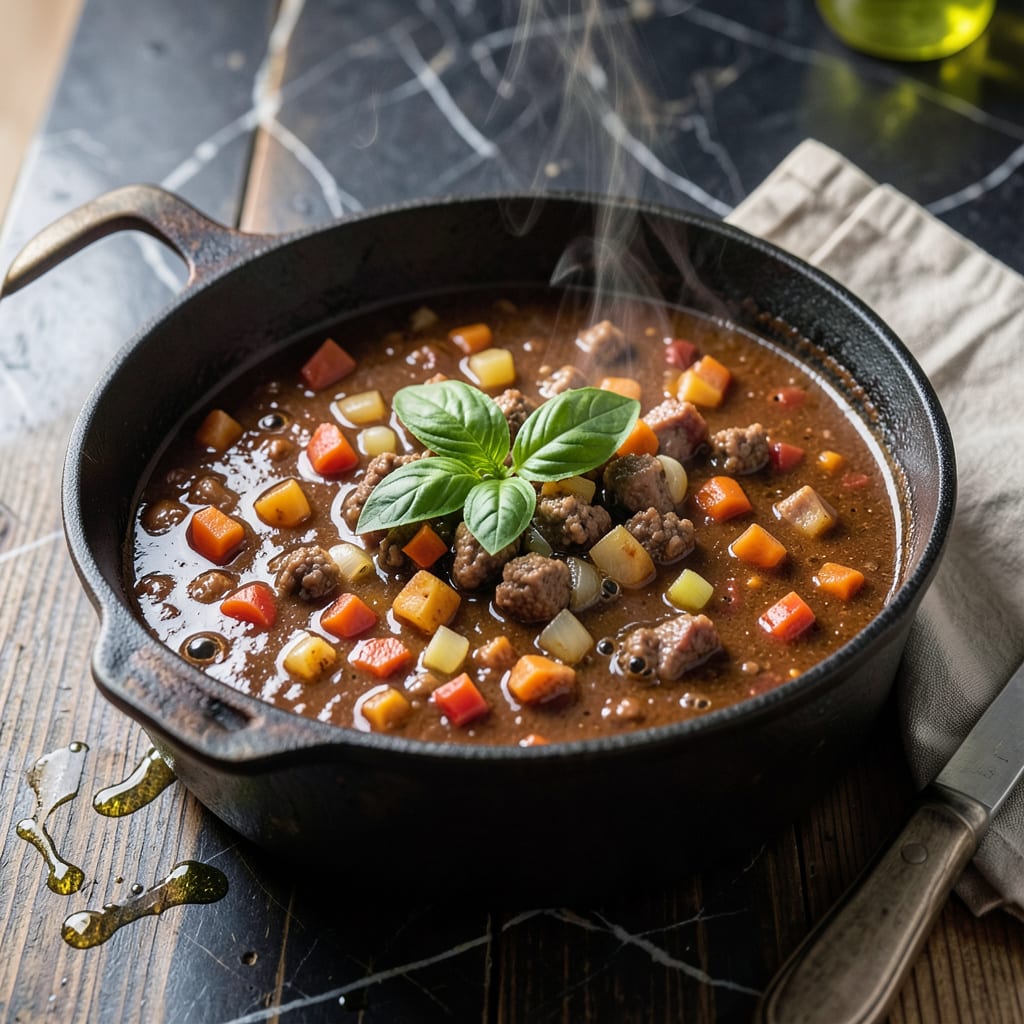
There’s a reason nonna’s bolognese remains the gold standard for authentic Italian ragù. This traditional sauce builds deep, complex flavors through slow cooking and careful layering of ingredients.
What sets this version apart is its commitment to time-honored techniques—no shortcuts, just the authentic method passed down through generations. The result is a rich, traditional sauce that transforms simple pasta into something extraordinary.
Ingredients for Traditional Bolognese Sauce Recipe Italian Nonna
Authentic Italian ingredients for a sauce that honors tradition with every slow-simmered bite.
| Ingredient | Amount | Notes |
|---|---|---|
| Ground Beef Chuck 🥩 | 1 lb | 20% fat for richness |
| Ground Pork 🥩 | ½ lb | Shoulder or belly preferred |
| Panchetta 🥓 | ¼ lb | Diced, Italian cured pork |
| Yellow Onion 🧅 | 1 whole | Finely diced for soffritto |
| Carrots 🥕 | 2 whole | Finely diced for soffritto |
| Celery Stalks 🌿 | 2 whole | Finely diced for soffritto |
| Garlic Cloves 🧄 | 2 cloves | Minced finely |
| Dry White Wine 🍷 | 1 cup | Italian variety preferred |
| San Marzano Whole Peeled Tomatoes 🍅 | 2 cans | 28 oz cans, hand-crushed |
| Tomato Paste 🍅 | 2 tbsp | Double-concentrated preferred |
| Whole Milk 🥛 | 1 cup | For tenderizing meat |
| Heavy Cream 🥛 | ¼ cup | Optional for richness |
| Extra-Virgin Olive Oil 🫒 | 3 tbsp | For sautéing vegetables |
| Sea Salt 🧂 | 1 ½ tsp | Adjust to taste |
| Freshly Ground Black Pepper 🌶️ | 1 tsp | Coarsely ground preferred |
[recipeingredientscaler]
The meat blend is non-negotiable for authenticity. Ground chuck with 20% fat provides optimal marbling, while pork shoulder adds sweetness. Panchetta—not bacon—delivers the signature Italian cured pork flavor. Source these from Eataly or a trusted butcher for the best quality. The soffritto (onion, carrot, celery) must be finely diced for proper melting into the sauce.
No panchetta? Uncured pork belly works in a pinch, though the flavor profile shifts slightly. For a lighter version, substitute ground turkey for the pork, but expect less depth. The wine should be dry and drinkable—Pinot Grigio is ideal. San Marzano tomatoes are essential for their sweet, low-acid profile; Muir Glen is a solid backup. Skip the pre-grated Parmesan—fresh only.
The sauce improves with age. Refrigerate for up to 5 days or freeze for 3 months. Portion into airtight containers before freezing, leaving headspace for expansion. The fat will solidify on top—simply stir it back in when reheating for full flavor integration.
Why You’ll Love This Recipe
- One Pot Wonder: I brown the panchetta, onions, and carrots together, then just let it simmer—no extra pans, no fuss.
- Deep Rich Flavor: The beef chuck and pork slow-cook with panchetta until it’s so savory, I swear Nonna’s watching over my shoulder.
- Feeds a Crowd: I make a big batch for Sunday dinner, then freeze half for those crazy weeknights when no one has time to cook.
- Leftovers for Days: Honestly, it tastes even better the next day—pasta, lasagna, or just a spoon straight from the pot.
Step-by-Step Instructions for Traditional Bolognese Sauce
Authentic technique meets nonna-approved timing for a ragù that builds flavor slowly and deliberately.
Step 1: Render Panchetta and Build the Soffritto Foundation
Heat 3 tbsp Extra-Virgin Olive Oil in a heavy Dutch oven over medium-low heat. Add 0.25 lb Panchetta diced into small cubes and render slowly for 8-10 minutes, stirring occasionally until the fat has fully rendered and the panchetta turns golden and crisp.
Add 1 whole Yellow Onion, 2 whole Carrots, and 2 whole Celery Stalks, all finely diced, to the rendered fat. Cook for 10-12 minutes until the vegetables soften and become translucent but not browned. This soffritto base is the aromatic backbone of authentic Bolognese.
Stir in 2 cloves Garlic Cloves minced finely and cook for 30 seconds just until fragrant. Be careful not to let the garlic brown, as it will turn bitter and overpower the delicate flavor balance.
Step 2: Brown the Meat and Develop Fond
Increase heat to medium-high and add 1 lb Ground Beef Chuck and 0.5 lb Ground Pork. Break the meat into small pieces with a wooden spoon and cook for 8-10 minutes until browned and crumbly.
Allow the meat to develop a deep brown color and create a fond on the bottom of the pot. This caramelized layer is essential for building the rich, complex flavor that defines traditional ragù. Don’t rush this step—proper browning takes time and attention.
Season with 1.5 tsp Sea Salt and 1 tsp Freshly Ground Black Pepper once the meat has browned. The salt will help draw out moisture, which then evaporates, concentrating the flavor as the meat continues to cook.
Step 3: Deglaze and Incorporate Tomato Elements
Pour in 1 cup Dry White Wine and scrape the bottom of the pot with a wooden spoon to release all the browned bits. Simmer for 3-4 minutes until the liquid has mostly evaporated and the alcohol has cooked off, leaving behind its acidity to balance the richness.
Add 2 tbsp Tomato Paste and cook for 2-3 minutes, stirring constantly, until it turns a deeper red color. This step removes the raw taste from the paste and allows its sweetness to develop. Then add 2 cans San Marzano Whole Peeled Tomatoes, hand-crushed, along with their juices.
Step 4: Simmer Slowly with Milk for Tenderness
Reduce heat to low and add 1 cup Whole Milk. Simmer uncovered for 3-4 hours, stirring occasionally. The milk tenderizes the meat and balances the acidity of the tomatoes, a hallmark of traditional Bolognese.
After 2 hours, stir in 0.25 cup Heavy Cream for additional richness. The sauce should reduce to a thick, meaty consistency with the liquid just barely covering the meat. If it becomes too dry, add a splash of water or broth to maintain the proper consistency.
Taste and adjust seasoning with additional Sea Salt if needed. The sauce is ready when it has developed a deep, rich flavor and the meat is incredibly tender.
Pro Tips For Making Traditional Bolognese Sauce Recipe Italian Nonna
- Render Panchetta First: Cook the diced panchetta until the fat renders and it’s golden—this builds the flavor base. I learned this the hard way: skipping this step leaves the sauce tasting flat, no matter how long it simmers.
- Finely Dice the Veggies: Pulse the onion and carrots in a food processor until they’re almost paste-like. My grandmother swore by this, and she was right: the tiny pieces melt into the sauce, thickening it naturally.
- Skip the Garlic: Sounds weird, but it works: traditional nonna-style bolognese often omits garlic to let the meat and panchetta shine. I was skeptical until I tried it—suddenly, the sauce tasted more balanced.
- Simmer Uncovered: After adding the liquid, let it bubble away with the lid off for 2-3 hours. This reduces the sauce to a rich, thick consistency—resist the urge to cover it, or you’ll end up with a watery mess.
Storing and Reheating Leftovers
🍳 Refrigerator Storage
To store your traditional bolognese sauce recipe italian nonna in the fridge, let it cool to room temperature first. Transfer it to an airtight container—glass or BPA-free plastic works best. Properly stored, your ragù will stay fresh for 3-4 days. For best results, portion it into smaller containers to speed up cooling and reheating.
❄️ Freezer Storage
For longer storage, freezing is your best friend. Spoon the sauce into freezer-safe bags or containers, leaving a little space for expansion. Squeeze out excess air to prevent freezer burn. Label with the date, and your bolognese will keep its rich flavor for 2-3 months. Pro tip: 💡 Freeze in single-serving portions for easy thawing!
🔥 Reheating Methods
To reheat, thaw frozen sauce overnight in the fridge. On the stovetop, warm it over medium-low heat (160°F) in a saucepan, stirring occasionally for 10-15 minutes. For the microwave, use 50% power in 1-minute intervals, stirring in between. Avoid high heat to prevent separation. A slow cooker on low (170°F) for 1-2 hours also works beautifully.
✨ Quality Preservation
To maintain the sauce’s deep, meaty flavor, avoid rapid temperature changes. If the sauce thickens too much, stir in a splash of broth or water. For thawing, never use hot water—always defrost in the fridge or at room temperature. 🎯 For extra richness, add a drizzle of olive oil before reheating!
Nutrition Facts

Trained in classic French technique but raised on slow-cooked ribs and spicy rubs, she blends culinary skill with smoke and soul.
- Recipe for Boneless Pork Chops in Cast Iron Skillet: Sear and Baste to Juicy Perfection - October 3, 2026
- Recipe for Boneless Cross Rib Roast: Slow-Roasted Beef with Herb Crust - October 3, 2026
- Hamburgers in Sauce Recipe Crock Pot: Slow-Cooked Savory Delight - October 3, 2026