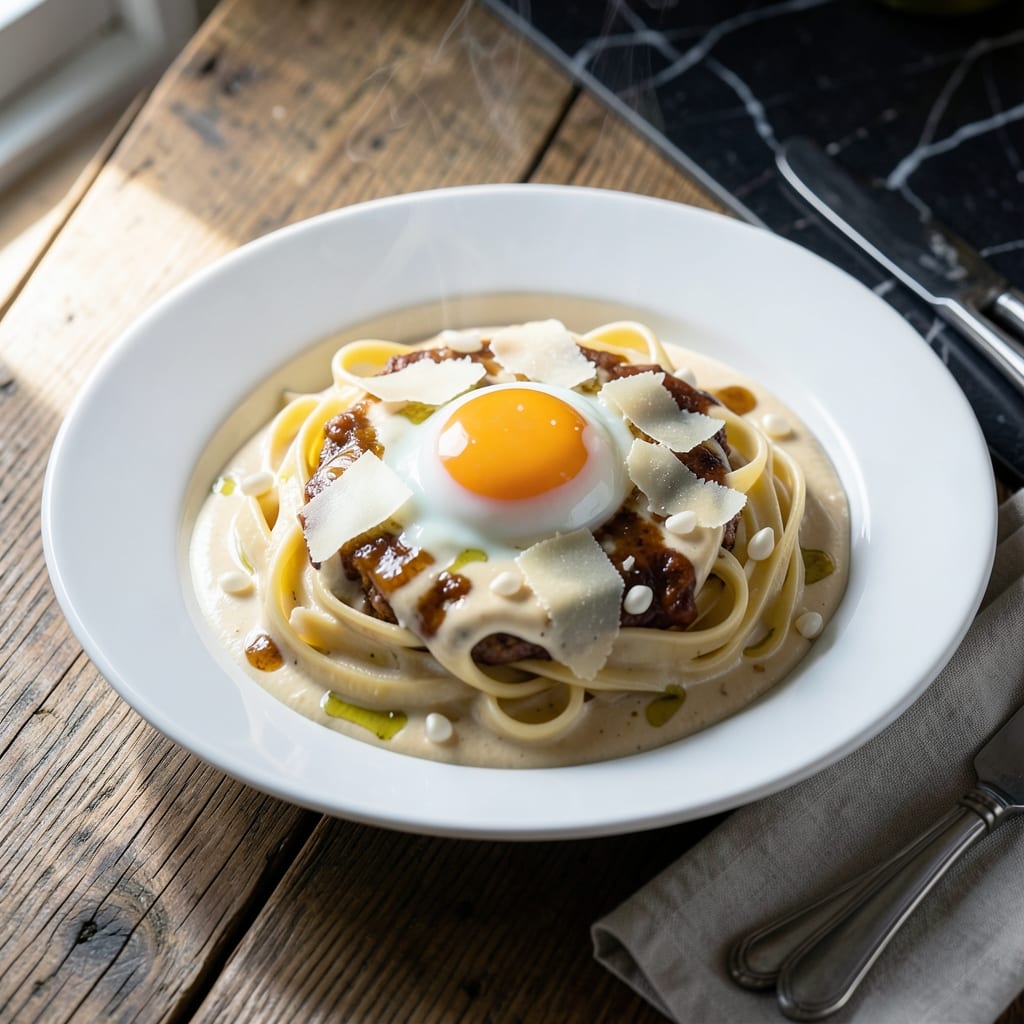
This egg-based alfredo sauce redefines what a classic sauce can be. The egg adds a silky richness that butter and cream alone simply cannot achieve.
I developed this recipe to solve the common problem of alfredo breaking or separating. The egg creates a stable emulsion, binding the cheese and dairy into a smooth, velvety texture that clings beautifully to pasta.
What you get is a sauce with depth and body, transforming simple ingredients into something restaurant-quality. It comes together in 15 minutes with minimal effort.
Perfect for fettuccine, as a dip, or drizzled over roasted vegetables. Here is how to make it.
Ingredients for Alfredo Sauce Recipe Egg
Nine ingredients transform into a velvety, restaurant-quality sauce with an egg-based twist.
| Ingredient | Amount | Notes |
|---|---|---|
| Unsalted Butter 🧈 | ½ cup | High-quality for rich flavor |
| Heavy Cream 🥛 | 1 cup | Full-fat for creaminess |
| Parmesan Cheese 🧀 | 1 ½ cups | Freshly grated from block |
| Large Egg 🥚 | 1 whole | Room temperature for smooth emulsion |
| Garlic Cloves 🧄 | 3 cloves | Minced finely for even flavor |
| All-Purpose Flour 🌾 | 1 tbsp | For thickening the sauce |
| Kosher Salt 🧂 | ½ tsp | Diamond Crystal preferred |
| Freshly Ground Black Pepper 🌶️ | ¼ tsp | For subtle heat |
| Nutmeg 🌰 | 0.125 tsp | Freshly grated for depth |
| Whole Milk 🥛 | ¼ cup | For balancing richness |
[recipe_ingredient_scaler]
The Parmesan is non-negotiable here—grab a wedge from the deli counter and grate it yourself. Pre-grated versions contain anti-caking agents that prevent smooth melting. The egg must be room temperature to emulsify properly with the dairy. For butter, European-style (higher fat content) yields superior richness. I source my cheese from Whole Foods or a local specialty shop for optimal quality.
No fresh nutmeg? Ground nutmeg at half the amount works, though it lacks the same brightness. Substitute Pecorino Romano for Parmesan if you want a sharper flavor. Heavy cream can be replaced with half-and-half for a lighter version, but the texture won’t be as luxurious. If avoiding raw eggs, pasteurized eggs are a safe alternative—just ensure they’re labeled as such.
Sauce keeps in the fridge for 3-4 days in an airtight container. Reheat gently on low heat, stirring constantly to prevent separation. For longer storage, freeze in ice cube trays (up to 3 months) and thaw in the fridge overnight before reheating.
Why You’ll Love This Recipe
- Unfussy Process: I melt butter, whisk in the egg, and let the cream do the rest. Honestly, it’s almost too easy.
- Rich & Velvety: The egg binds the Parmesan and cream into this luxurious, cling-to-the-pasta sauce I could eat with a spoon.
- Weeknight Hero: Between us, I’ve served it over fettuccine, chicken, and even roasted veggies—always a hit.
- Budget Stretch: A little Parmesan goes a long way here, so I save money without skimping on flavor.
Step-by-Step Instructions for Alfredo Sauce with Egg
Master this technique and you’ll achieve a velvety, restaurant-quality sauce with perfect consistency every time.
Step 1: Create a Roux Base for Stability
Melt the 0.5 cup Unsalted Butter in a heavy-bottomed saucepan over medium heat. The butter should foam but not brown—this ensures the raw flour taste cooks out properly without scorching.
Whisk in the 1 tbsp All-Purpose Flour immediately and cook for 1-2 minutes until the mixture turns pale golden and smells nutty. This roux thickens the sauce and prevents the egg from curdling later. Keep the heat moderate; too high and you risk burning the flour.
Step 2: Infuse with Garlic and Bloom Flavors
Add the 3 cloves Garlic Cloves (minced) to the roux and cook for 30-45 seconds until fragrant but not browned. Garlic burns quickly, so stir constantly—you want its aroma to mellow into the fat without adding bitterness.
Slowly pour in the 1 cup Heavy Cream, whisking vigorously to avoid lumps. The mixture will thicken as it comes to a gentle simmer. This is where the sauce gains its luxurious body. Simmer for 2-3 minutes until the edges barely bubble.
Step 3: Temper and Incorporate the Egg
In a small bowl, whisk the 1 whole Large Egg with the 0.25 cup Whole Milk until smooth. This step creates an emulsion that enriches the sauce without scrambling.
Temper the egg mixture by slowly drizzling ½ cup of the hot cream sauce into it while whisking constantly. Then, pour the tempered egg back into the saucepan, whisking nonstop. Cook over low heat for 3-4 minutes until the sauce thickens enough to coat the back of a spoon.
Step 4: Finish with Cheese and Seasonings
Remove the sauce from heat and stir in the 1.5 cups Parmesan Cheese until fully melted and smooth. The residual heat will continue to melt the cheese without breaking the sauce. Use freshly grated cheese—pre-shredded contains anti-caking agents that prevent a silky texture.
Season with the 0.5 tsp Kosher Salt, 0.25 tsp Freshly Ground Black Pepper, and 0.125 tsp Nutmeg. The nutmeg adds a subtle warmth that balances the richness. Taste and adjust seasoning if needed, but remember the Parmesan is already salty.
Return the sauce to low heat for 1 minute if it’s too thick, or thin with a splash of Whole Milk if needed. Serve immediately over pasta for the creamiest results.
Pro Tips For Making Alfredo Sauce Recipe Egg
- Temper the Egg: Whisk a ladle of hot cream into the egg before adding it to the pot—I learned this the hard way after scrambling eggs in my alfredo twice. The slow temperature rise keeps it silky.
- Grate Fresh Parmesan: Skip the pre-shredded stuff; it’s coated in anti-caking agents that make the sauce grainy. Freshly grated melts smoothly and actually changes the outcome.
- Low and Slow Heat: After adding the egg, keep the flame low—medium heat will curdle the sauce. I was skeptical until I tried it, but patience wins here.
- Use Room-Temp Eggs: Pull the egg out 30 minutes before cooking. Cold eggs shock the hot cream, and you’ll fight lumps the whole time—your future self will thank you.
Wine and Beer Pairings for This alfredo sauce recipe egg
Creamy White Wines
A buttery Chardonnay from California pairs beautifully with this rich sauce. I love Kendall-Jackson Vintner’s Reserve—its vanilla notes complement the egg base perfectly. Serve chilled at 50-55°F for best results. 🍷
Crisp White Wines
For contrast, try a zesty Pinot Grigio from Italy. The bright acidity cuts through the creaminess. A Santa Margherita offers reliable quality at most grocery stores. Its citrus notes refresh your palate between bites.
Light Red Wines
A light-bodied Pinot Noir from Oregon works surprisingly well. The red fruit flavors don’t overpower the sauce. I recommend Meiomi for its approachable price and smooth finish. Serve slightly chilled at 55°F.
Italian Beer Pairings
An Italian lager like Peroni offers crisp carbonation that cleanses your palate. Its mild bitterness balances the richness. For craft lovers, a witbier with citrus notes provides interesting contrast. 🍺
Non-Alcoholic Options
Sparkling water with lemon or lime cuts through the sauce’s richness. I also enjoy a ginger beer like Bundaberg for its spicy kick. These pairings work especially well for lunch servings.
Nutrition Facts
Frequently Asked Questions
Why add an egg to alfredo sauce?
The egg creates a stable emulsion, binding the cheese and dairy for a silky-smooth texture. It also enriches the sauce, adding depth that cream alone can’t achieve.
Can I use pasteurized eggs?
Pasteurized eggs are a safe alternative to raw eggs. They work the same way in the recipe and eliminate any risk of foodborne illness.
What if my sauce curdles?
Lower the heat immediately and whisk vigorously. If it still looks grainy, strain through a fine-mesh sieve. Cooking too fast or at too high a temperature is usually the culprit.
How do I store leftovers?
Keep in an airtight container in the fridge for 3-4 days. Reheat gently on low, stirring constantly. For longer storage, freeze in ice cube trays for up to 3 months.

Trained in classic French technique but raised on slow-cooked ribs and spicy rubs, she blends culinary skill with smoke and soul.
- Recipe for Boneless Pork Chops in Cast Iron Skillet: Sear and Baste to Juicy Perfection - October 3, 2026
- Recipe for Boneless Cross Rib Roast: Slow-Roasted Beef with Herb Crust - October 3, 2026
- Hamburgers in Sauce Recipe Crock Pot: Slow-Cooked Savory Delight - October 3, 2026