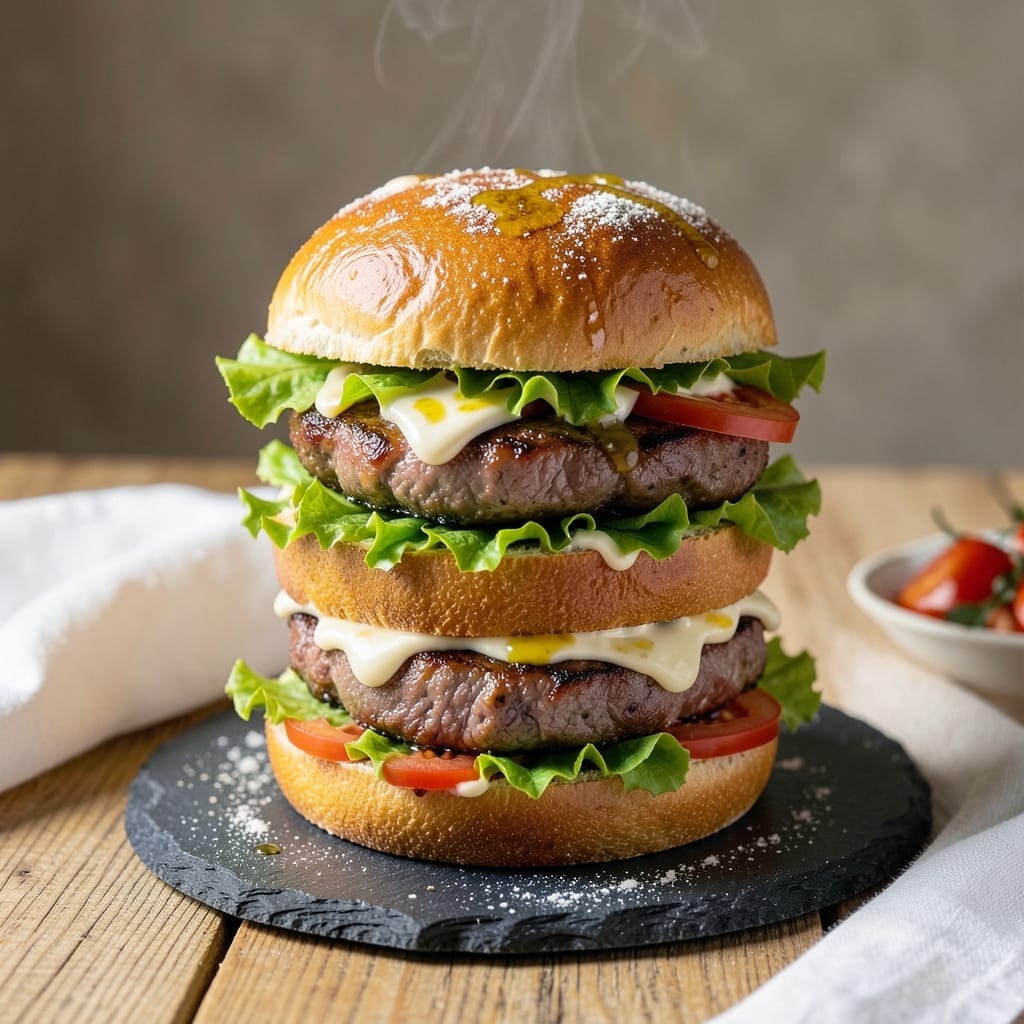
Elevate your sandwich game with homemade artisan rolls that deliver bakery-quality texture with every bite. I developed this recipe after years of testing to create soft, fluffy bread that holds up to the heartiest fillings.
The rolls require just a few simple ingredients and 2 hours of rise time, with a baking technique that ensures a golden crust and airy interior. Their mild flavor complements any gourmet filling without overpowering it.
Fill with roasted meats, fresh vegetables, or artisanal cheeses for a meal that feels special. The combination of homemade bread and thoughtful fillings transforms an ordinary sandwich into something extraordinary.
Perfect for lunches, picnics, or casual dinners. This is sandwich-making at its finest.
Ingredients for Artisan Rolls Sandwich
Premium flour, quality yeast, and simple pantry staples create bakery-level sandwich rolls from scratch.
| Ingredient | Amount | Notes |
|---|---|---|
| Bread Flour 🌾 | 4 cups | High protein for structure |
| Warm Water 💧 | 1 ¼ cups | 110°F to activate yeast |
| Active Dry Yeast 🍞 | 2 ¼ tsp | One packet plus extra |
| Granulated Sugar 🍚 | 2 tbsp | Feeds the yeast |
| Kosher Salt 🧂 | 2 tsp | Diamond Crystal preferred |
| Unsalted Butter 🧈 | 2 tbsp | Melted, for dough |
| Large Egg 🥚 | 1 whole | For egg wash finish |
| Olive Oil 🫒 | 1 tbsp | For greasing bowl |
| Roasted Turkey Breast 🦃 | ½ lb | Thinly sliced for filling |
| Arugula 🥗 | 2 cups | Fresh, for sandwich filling |
| Aged Cheddar Cheese 🧀 | 4 oz | Sharp, sliced thin |
| Dijon Mustard 🟡 | 2 tbsp | For spreading on rolls |
| Mayonnaise 🥫 | 2 tbsp | Quality brand preferred |
| Heirloom Tomatoes 🍅 | 2 whole | Sliced for freshness |
[recipe_ingredient_scaler]
The bread flour is non-negotiable here. King Arthur or Bob’s Red Mill deliver consistent protein content (12-14%) that ensures the right texture. Yeast freshness matters—check the expiration date and store unopened packets in the freezer to extend shelf life. For the turkey, Boar’s Head or a local butcher’s roasted breast offers superior quality and flavor that elevates the entire sandwich.
No bread flour? All-purpose plus vital wheat gluten (1 tbsp per cup of flour) works in a pinch. Substitute vegetable oil for the butter if needed, though the flavor won’t be as rich. For a vegetarian option, smoked tofu or grilled portobello mushrooms make excellent turkey alternatives. The Dijon can be swapped for whole-grain mustard if you prefer more texture.
Dough rises best in a warm, draft-free spot (like an unlit oven). Baked rolls keep 2-3 days at room temperature in an airtight container or freeze for 1 month. Assemble sandwiches just before serving to prevent sogginess—the rolls’ texture is best fresh.
Why You’ll Love This Recipe
- No-Knead Magic: I just mix the bread flour, warm water, yeast, sugar, and salt—no fancy techniques or elbow grease required.
- Warm, Buttery Flavor: The yeast and sugar create this subtle sweetness that makes the rolls taste like they came from a bakery.
- Meal Prep Hero: I bake a batch on Sunday and use them for sandwiches all week—lunchbox savior.
- Penny-Wise Bake: Five basic ingredients, most of which I already keep in my pantry, and it’s way cheaper than store-bought artisan bread.
Step-by-Step Instructions for Artisan Rolls Sandwich
Master the process with precision—dough first, then assembly for optimal texture and flavor.
Step 1: Activate Yeast and Mix Dough
In a stand mixer bowl, combine the 1.25 cups Warm Water, 2.25 tsp Active Dry Yeast, and 2 tbsp Granulated Sugar. Let sit for 5-7 minutes until the mixture becomes frothy and opaque—this confirms yeast activation.
Add the 4 cups Bread Flour and 2 tsp Kosher Salt, then mix on low with the dough hook. Once combined, increase to medium and knead for 6-8 minutes until the dough is smooth and elastic. It should pull away from the bowl but remain slightly tacky.
Step 2: Incorporate Fat and Proof
With the mixer running on low, slowly add the 2 tbsp Unsalted Butter (melted and cooled) and knead for another 2 minutes until fully integrated. The dough will be soft but not sticky. Lightly grease a large bowl with the 1 tbsp Olive Oil.
Transfer the dough to the oiled bowl, cover with a damp towel, and let rise in a warm, draft-free place for 1 to 1.5 hours or until doubled in volume. I check for readiness by pressing a finger into the dough—if the indent remains, it’s proofed.
Step 3: Shape, Second Rise, and Bake
Punch down the dough and divide it into 4 equal portions (about 6 oz each). Shape each into a tight ball and place on a parchment-lined baking sheet, spacing them 3 inches apart. Cover and let rise for 45-60 minutes until puffy.
Preheat the oven to 375°F. Brush the rolls with a beaten Large Egg wash for a golden finish. Bake for 20-25 minutes until deep golden brown and the internal temperature reaches 190°F. Cool completely on a wire rack before slicing.
Step 4: Assemble with Gourmet Fillings
Slice the cooled rolls horizontally. Spread the bottom half of each with 1 tbsp Mayonnaise and the top with 1 tbsp Dijon Mustard. Layer with 0.5 lb Roasted Turkey Breast (divided evenly), 4 oz Aged Cheddar Cheese (sliced thin), 2 cups Arugula, and sliced Heirloom Tomatoes.
Press the tops gently to compress the fillings. For best results, serve immediately so the bread’s crust stays crisp and the fillings retain their freshness. The contrast of the sharp cheddar, peppery arugula, and sweet tomatoes creates a balanced, restaurant-quality bite.
Pro Tips For Making Artisan Rolls Sandwich
- Proof Properly: Let the dough rise until nearly doubled—about 1-2 hours in a warm spot. I learned this the hard way after pulling rolls from the oven that were dense as hockey pucks.
- Use Bread Flour: Skip the all-purpose; bread flour’s higher protein content gives your rolls that chewy, bakery-style texture you’re after.
- Check Yeast Freshness: If your water isn’t bubbly within 5-10 minutes after adding yeast and sugar, your yeast is dead. After wasting a batch, I now test it every time.
- Score the Dough: Use a sharp knife or razor to slash the rolls just before baking—it’s not just for looks, it lets them expand without cracking. Sounds weird, but it works.
Common Mistakes When Making This Recipe
Overproofing the Dough
Let your dough rise too long and it’ll collapse under its own weight. Stick to the 1-1.5 hour first rise and 45-60 minute second rise—any longer in my Boston kitchen means flat rolls. The finger test never lies: if the indent springs back, it needs more time. 💡
Using Cold Ingredients
Your 1.25 cups Warm Water must be 110°F to wake up the yeast. I learned this the hard way with a failed batch that refused to rise. Same goes for the 2 tbsp Unsalted Butter—melted and cooled, never straight from the fridge.
Skipping the Egg Wash
That beaten Large Egg isn’t just for looks—it creates a professional bakery shine. Skip it and your rolls will look pale and dull. I brush it on just before baking at 375°F for that golden finish.
Rushing the Cooling
Slicing into hot rolls turns the inside gummy. Let them cool completely on a wire rack—about 30 minutes. This step is non-negotiable for that perfect soft, fluffy texture.
Overloading Fillings
More isn’t better here. Stick to the recipe’s 0.5 lb Roasted Turkey Breast and 4 oz Aged Cheddar Cheese amounts. Overfill and your sandwich will be a soggy mess. Trust me, I’ve tested this in my tiny kitchen.
Wrong Flour Choice
Bread flour’s 12-14% protein is what gives these rolls structure. I’ve tried all-purpose in a pinch, but the texture suffers. For best results, use King Arthur or Bob’s Red Mill. ✨
Nutrition Facts
Frequently Asked Questions
Can I make the dough the night before?
Yes, prepare the dough through the first rise, then refrigerate overnight. Let it warm to room temperature for 30-45 minutes before shaping. This slow fermentation actually enhances flavor.
What if my kitchen is too cold for rising?
Preheat your oven to 200°F, turn it off, then place the dough inside with the door closed. This creates a perfect warm environment for proofing. Just check after 1 hour.
Can I use a different cheese?
Try Swiss for nutty flavor or provolone for mildness. Avoid very wet cheeses like fresh mozzarella, which can make the rolls soggy.
How do I store leftover rolls?
Keep in an airtight container at room temperature for 2-3 days. For longer storage, freeze for up to 1 month and reheat in a 350°F oven for 5-10 minutes.

Trained in classic French technique but raised on slow-cooked ribs and spicy rubs, she blends culinary skill with smoke and soul.
- Recipe for Boneless Pork Chops in Cast Iron Skillet: Sear and Baste to Juicy Perfection - October 3, 2026
- Recipe for Boneless Cross Rib Roast: Slow-Roasted Beef with Herb Crust - October 3, 2026
- Hamburgers in Sauce Recipe Crock Pot: Slow-Cooked Savory Delight - October 3, 2026