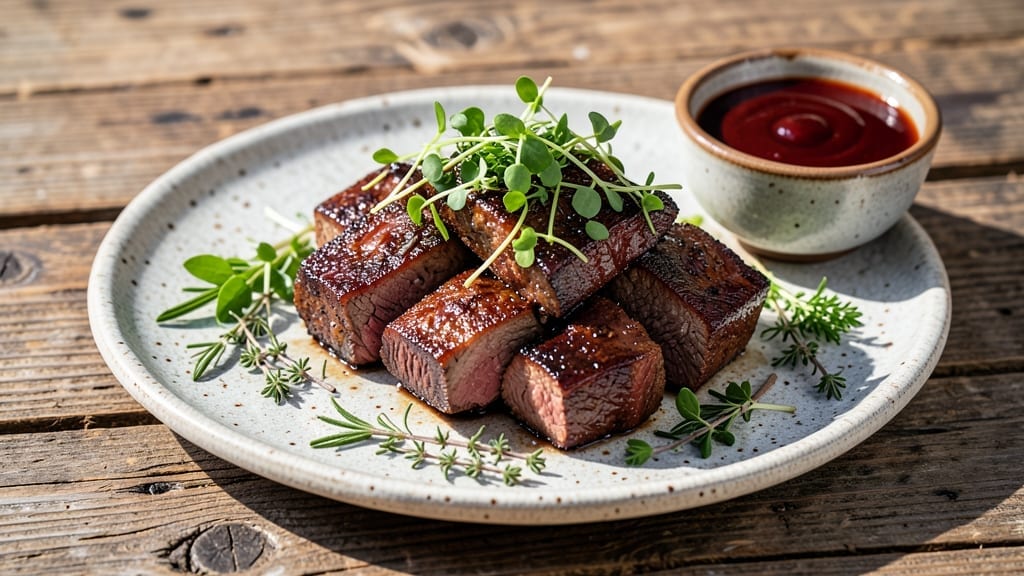
This beef brisket cubes recipe turns tough cuts into melt-in-your-mouth, smoky cubes with restaurant-style ease. The secret lies in slow-cooking the meat until it practically melts in your mouth, while a carefully balanced rub infuses every bite with rich, savory depth.
I’ve perfected this method over years of testing, ensuring the cubes stay juicy and flavorful without drying out—no more tough, chewy disappointment.
This recipe starts with a simple yet effective seasoning blend of salt, pepper, garlic powder, and smoked paprika, which creates a flavorful crust while the meat tenderizes over low heat for 2–3 hours.
The slow-cooking process breaks down the connective tissue, turning even the toughest cuts into fork-tender bites that hold their shape beautifully. Best of all, the method is foolproof and works in a standard slow cooker or oven, making it perfect for weeknight dinners or meal prep.
By the end, you’ll have perfectly tender beef brisket cubes with a caramelized exterior and a juicy, flavorful interior—ideal for tacos, sandwiches, or serving alongside roasted vegetables. The smoky aroma alone will have everyone at the table asking for seconds.
Whether you’re feeding a crowd or prepping for the week, this recipe delivers consistent, professional results every time.
Pair the brisket cubes with classic sides like garlic mashed potatoes, tangy coleslaw, or crusty bread to soak up the delicious juices. The leftovers reheat beautifully, making this a versatile dish for busy schedules. Let’s get cooking!
Ingredients for beef brisket cubes
Three pounds of beef, eleven ingredients, and magic in the slow cooker.
| Ingredient | Amount | Notes |
|---|---|---|
| Beef Brisket Cubes 🥩 | 3 lb | Chuck or flat cut, trimmed of fat |
| Smoked Paprika 🌶️ | 2 tbsp | For deep smoky flavor |
| Garlic Powder 🧄 | 1 ½ tbsp | Freshly ground preferred |
| Coarse Salt 🧂 | 1 ½ tbsp | Diamond Crystal preferred |
| Black Pepper 🌶️ | 1 tbsp | Freshly ground for best flavor |
| Onion Powder 🧅 | 1 tbsp | For savory depth |
| Dried Thyme 🌿 | 1 tsp | Mexican oregano alternative |
| Brown Sugar 🍚 | 1 tbsp | For caramelization |
| Beef Broth 💧 | 1 ½ cups | Low-sodium preferred |
| Apple Cider Vinegar 🍎 | 2 tbsp | For tenderizing |
| Olive Oil 🫒 | 1 tbsp | Extra-virgin for richness |
[recipe_ingredient_scaler]
The beef is everything here. Chuck or flat cut gives you that perfect balance of tenderness and flavor—Costco or butcher shops have the best pre-cubed options, but if you’re cutting yourself, aim for 1-inch cubes. Look for marbled beef with good fat content—this is what keeps it juicy during slow cooking. I always buy mine day-old if possible, as the meat relaxes and absorbs seasoning better. Whole Foods or local butchers often have premium cuts with better marbling than grocery store brands.
No smoked paprika? Regular paprika plus 1/2 tsp cayenne gets you close, but it won’t have that authentic smokiness. Dried thyme is great, but if you’ve got fresh thyme leaves, use 1 tsp instead of the dried version. Brown sugar might seem like an odd addition, but it caramelizes beautifully during cooking and adds a subtle sweetness that balances the savory flavors. For the beef broth, low-sodium is key—you don’t want to overpower the natural taste of the meat. If you’re short on time, beef bouillon cubes in hot water work in a pinch.
This recipe is all about patience. Don’t rush the slow cooker—the magic happens in those 2-3 hours. For best results, cook on low for 3 hours or high for 2 hours. The cubes will be so tender they practically fall apart. Store in airtight containers for up to 5 days in the fridge, or freeze for 3 months. I always make extra because it reheats beautifully—just add a splash of water or broth to keep it moist. The leftovers are even better the next day, as the flavors meld together perfectly. Portion into containers for easy lunches or taco fillings.
Why You’ll Love This Recipe
- I’ll be real: this makes enough for leftovers, but honestly, it’s so good I eat half before dinner even hits the table. Need to meal prep? Double the recipe and freeze half—it reheats like a dream. Or, use it to dress up tacos for game day, stuff into sandwiches for lunch, or toss it into a grain bowl for a fancy-ish weeknight dinner. The possibilities are endless, and the effort? Almost nonexistent.
- One-Pot Magic: Honestly, this recipe is my secret weapon for nights when I’d rather be watching TV than standing at the stove. Just toss those brisket cubes in your Dutch oven, sear them in olive oil, and let them do their slow-cooking thing while you relax. The apple cider vinegar and beef broth handle all the heavy lifting—no constant stirring, no babysitting.
- Crispy-Outside, Creamy-Inside: That caramelized edge from the brown sugar? Chef’s kiss. But here’s the real kicker: the inside melts like butter thanks to the apple cider vinegar tenderizing the meat while it cooks. You get that smoky paprika kick from the start, but the garlic powder and onion powder let it all shine without overpowering. It’s the kind of dish where you’ll lick the plate clean.
- Feed a Crowd (or Just Yourself): I’ll be real: this makes enough for leftovers, but honestly, it’s so good I eat half before dinner even hits the table. Need to meal prep? Double the recipe and freeze half—it reheats like a dream. Or, use it to dress up tacos for game day, stuff into sandwiches for lunch, or toss it into a grain bowl for a fancy-ish weeknight dinner. The possibilities are endless, and the effort? Almost nonexistent.
Step-by-step instructions for slow-cooked beef brisket cubes
Here’s how to transform tough brisket into melt-in-your-mouth bites with a perfect smoky crust.
Season the Brisket Cubes Thoroughly
In a large bowl, combine the 3 lb beef brisket cubes with the 2 tbsp smoked paprika, 1½ tbsp garlic powder, 1½ tbsp coarse salt, 1 tbsp black pepper, 1 tbsp onion powder, 1 tsp dried thyme, and 1 tbsp brown sugar. I like to use my hands for this step—rub the seasoning mixture into every surface of the brisket cubes until they’re completely coated and glistening. The brown sugar will help create a caramelized crust, while the vinegar we’ll add later will tenderize the meat.
Let the seasoned brisket cubes sit at room temperature for 15 minutes while you prepare the cooking vessel. This brief resting period ensures even cooking and better seasoning penetration. Don’t skip this step—it makes a noticeable difference in flavor distribution.
Sear the Brisket Cubes for Maximum Flavor
Heat the 1 tbsp olive oil in a large Dutch oven over medium-high heat until shimmering. Working in batches if needed, add the seasoned brisket cubes and sear for 2-3 minutes per side until they develop a deep golden-brown crust. You want to see color change and hear that satisfying sizzle—this builds flavor that won’t dissolve in the cooking liquid.
As you sear, resist the urge to overcrowd the pan. Cooking in batches gives you better control over the temperature and prevents steaming instead of browning. Once all cubes are seared, transfer them to a plate and set aside temporarily.
Build the Smoky Braising Liquid
In the same Dutch oven, reduce the heat to medium and add the 2 tbsp apple cider vinegar. Let it simmer for 1 minute until the alcohol smell dissipates completely. Then pour in the 1½ cups beef broth, scraping up any browned bits from the bottom of the pan with a wooden spoon. These bits, called fond, are packed with flavor that will infuse into your brisket cubes.
Bring the liquid to a gentle simmer, then return the seared brisket cubes to the pot. The vinegar helps break down tough muscle fibers, while the broth provides moisture for even cooking. The combination ensures your brisket cubes will be fork-tender rather than chewy.
Slow-Cook to Perfect Tenderness
Cover the Dutch oven and transfer it to a preheated 300°F oven. Here’s the key to tender brisket cubes: cook them for 3 hours. This low-and-slow approach allows the connective tissue to break down completely while keeping the meat juicy. I check the internal temperature after 2 hours—it should register around 170°F at this point, but don’t worry if it’s not quite there yet.
After 3 hours, remove the lid and increase the oven temperature to 350°F. Continue cooking uncovered for an additional 30-45 minutes until the cooking liquid has reduced and the brisket cubes are fork-tender with no resistance. The edges should be nicely caramelized from the brown sugar in the seasoning.
Rest and Serve for Maximum Juiciness
Once the brisket cubes are perfectly tender, transfer them to a serving platter and tent loosely with aluminum foil. Let them rest for 10 minutes before serving. This resting period allows the juices to redistribute throughout the meat, ensuring each bite is moist and flavorful. The reduced cooking liquid can be served as a sauce on the side or drizzled over the brisket cubes.
Serve the brisket cubes with crusty bread to soak up the delicious sauce, or use them as a hearty filling for tacos, sandwiches, or salads. The perfect balance of smoky, savory, and slightly sweet flavors makes these brisket cubes incredibly versatile for any meal.
Pro Tips For Making Beef Brisket Cubes
- Sear in Batches: I used to crowd the pan and end up with steamed cubes instead of caramelized ones. Work in batches—2-3 minutes per side at medium-high heat—until the oil shimmers and you hear that crackle. The crust is where all the flavor hides, and skipping this step means missing out on the best part.
- Salt Early, Salt Well: The coarse salt isn’t just for seasoning—it’s for breaking down the meat’s surface tension so the smoked paprika and garlic powder stick. Rub it in before the brown sugar, and don’t skimp: those 1½ tablespoons are non-negotiable. I learned this the hard way when my first batch tasted flat because I half-measured.
- Don’t Rush the Vinegar: That 1-minute simmer with the apple cider vinegar isn’t optional—it’s where the magic happens. Let it bubble until the sharp alcohol smell fades completely. Skipping this step means the vinegar’s tenderizing power gets wasted, and your brisket cubes will fight you instead of melt in your mouth.
- Check the Temp at 2 Hours: After 2 hours in the 300°F oven, pull one cube out and check its internal temp—it should be around 170°F. If it’s not, don’t panic, but don’t ignore it either. This is your early warning system: if it’s lagging, add another 30 minutes covered. I’ve seen batches that needed 3.5 hours total, and that extra time makes all the difference.
Make-ahead tips for beef brisket cubes
Prep Ahead for Effortless Cooking
I always prep the seasoning mixture the night before—mix the 2 tbsp smoked paprika, 1½ tbsp garlic powder, 1½ tbsp coarse salt, 1 tbsp black pepper, 1 tbsp onion powder, 1 tsp dried thyme, and 1 tbsp brown sugar in a bowl.
Store it in an airtight container for up to 5 days. This saves precious morning time and ensures even seasoning distribution. Just toss the brisket cubes in the mixture right before searing. 💡
Sear Cubes in Advance
For busy mornings, sear the brisket cubes ahead of time and refrigerate them in a single layer on a tray. This prevents sticking and makes it easy to reheat directly in the Dutch oven later.
I keep them in the fridge for up to 24 hours—just add the 2 tbsp apple cider vinegar and 1½ cups beef broth when you’re ready to cook. The cubes will reheat beautifully without drying out.
Freeze Cooked Cubes
After cooking, let the brisket cubes cool completely, then freeze them in portion-sized bags. I divide them into 1-pound bags for easy grab-and-go meals. They maintain their tenderness for up to 3 months—just thaw overnight in the fridge before reheating.
This is my go-to strategy for meal prep Sundays. 📅
Sauce Separately
Make the cooking liquid into a sauce ahead of time by reducing it in a saucepan until thickened. Store it in a jar in the fridge for up to 5 days.
When ready to serve, simply reheat the sauce and drizzle it over the brisket cubes or use it as a taco or sandwich topping. The sauce keeps its rich flavor perfectly.
Portion for Tacos
If you’re making tacos, portion the cooked brisket cubes into small containers with tortillas, shredded lettuce, and cheese. Store them separately in the fridge for up to 4 days.
Assemble tacos fresh when ready to eat—this keeps everything crisp and flavorful. I use this method for game-day prep or busy weeknights. 🌮
Nutrition facts
Frequently asked questions
Why does this recipe use apple cider vinegar?
The 2 tbsp apple cider vinegar acts as a natural tenderizer, breaking down tough muscle fibers in the beef brisket cubes. It also enhances the smoky flavors from the paprika while keeping the meat juicy during the long cooking time. The vinegar’s acidity helps create a perfect balance of tenderness and depth of flavor.
Can I use a slow cooker instead of the oven?
Yes! Transfer the seared brisket cubes and braising liquid to your slow cooker after Step 3. Cook on low for 6-8 hours or high for 4-5 hours until fork-tender. The slow cooker method works beautifully and requires minimal attention. Just check the internal temperature after 2 hours to ensure it reaches 170°F.
What’s the best way to reheat leftover brisket cubes?
Gently warm the cubes in a skillet over medium-low heat with a splash of beef broth or water to prevent drying. Alternatively, place them in a covered dish in the 300°F oven for 15-20 minutes. Avoid high heat, which can make them tough. The residual heat keeps them juicy, so just add moisture as needed.
How do I know when the brisket cubes are done?
Check for doneness by piercing a cube with a fork—it should feel fork-tender with no resistance. The internal temperature should reach 170–180°F after 3 hours of cooking. The cooking liquid should also be reduced and slightly thickened, with the edges caramelized from the brown sugar.

Trained in classic French technique but raised on slow-cooked ribs and spicy rubs, she blends culinary skill with smoke and soul.
- Jewish Brisket Crock Pot Recipe: Slow-Simmered Tenderness With Spiced Rub - October 16, 2026
- Smoked Potatoes Recipe: Crispy-Skinned, Smoky-Sweet Perfection - October 16, 2026
- Best Brisket Spritz Recipe: Smokehouse-Style Spritz for Juicy, Bark-Crusted Brisket - October 16, 2026