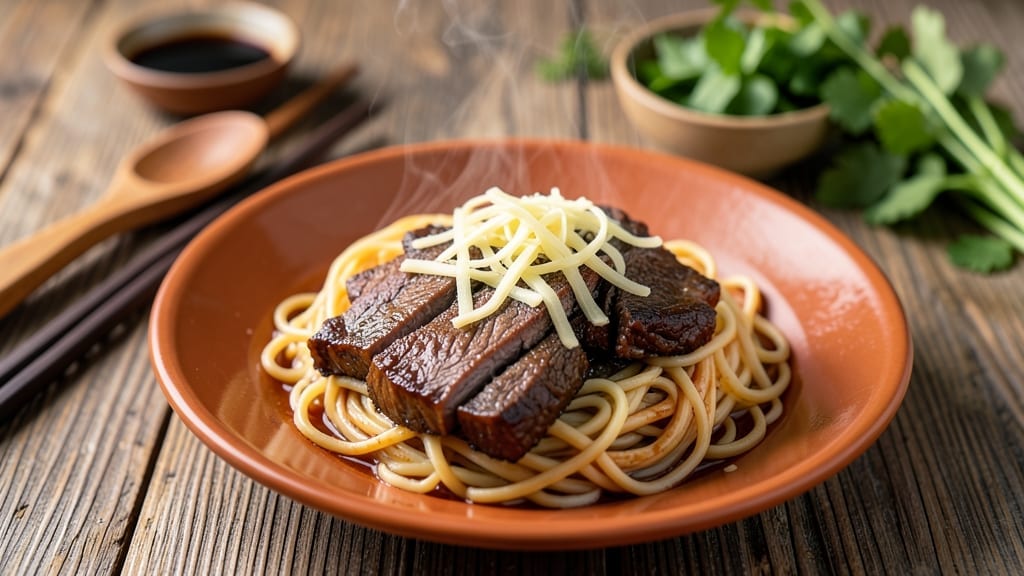
This beef brisket noodles Hong Kong recipe delivers the restaurant-quality richness and depth you crave, with tender beef that practically melts in your mouth and chewy noodles that hold up to every bite.
The secret lies in a slow-braised beef brisket infused with traditional Hong Kong seasonings—soy sauce, oyster sauce, and five-spice—that create a silky, aromatic broth. I’ve perfected this dish over countless batches, ensuring the beef stays juicy while developing layers of savory flavor.
The foundation of this recipe is patience—letting the beef braise for hours until it’s fork-tender while the aromatics build complexity. Fresh or dried egg noodles absorb the rich broth perfectly, becoming chewy and satisfying.
What makes this dish truly special is the balance: the beef’s deep umami flavor, the noodles’ satisfying texture, and the bright, fresh toppings that cut through the richness. This isn’t just a meal; it’s an experience that transports you to a bustling Hong Kong noodle shop.
By the time you serve this dish, your kitchen will smell like a Hong Kong street market, and your table will be set for a meal that feels both comforting and celebratory.
The slow-braised beef falls apart easily, the noodles are perfectly chewy, and the broth is rich enough to sip straight from the bowl. Every component comes together to create a dish that’s hearty, flavorful, and impossible to resist. Let’s bring this Hong Kong classic to your kitchen.
While this recipe is designed for a complete meal, it’s also versatile enough to adapt to your preferences. Add bean sprouts for crunch, drizzle with chili oil for heat, or garnish with fresh cilantro for brightness.
The key is assembling everything with care—hot noodles, tender beef, and a generous ladle of that fragrant broth. This is the kind of dish that gets better with leftovers, so make extra for tomorrow’s lunch.
Ingredients for beef brisket noodles hong kong
Pantry staples meet Hong Kong street market flavors. Just a few key ingredients transform into restaurant-style beef brisket noodles.
| Ingredient | Amount | Notes |
|---|---|---|
| Beef Brisket 🥩 | 2 lb | Flat cut, well-marbled |
| Rice Noodles 🍜 | 12 oz | Fresh or dried, egg noodles |
| Light Soy Sauce 🥫 | ½ cup | Kikkoman preferred |
| Oyster Sauce 🦪 | ¼ cup | High-quality, thick consistency |
| Fresh Ginger 🌿 | ½ cup | Julienned, skin removed |
| Garlic Cloves 🧄 | 8 cloves | Minced, fresh preferred |
| Five-Spice Powder 🌶️ | 2 tsp | Authentic Hong Kong blend |
| Sesame Oil 🫒 | 1 tbsp | Toasted, for aroma |
| Green Onions 🧅 | 4 whole | Sliced, white and green parts |
| Bean Sprouts 🌱 | 2 cups | Fresh, for crunch |
| Chili Oil 🔥 | 1 tbsp | For finishing, optional |
| Salt 🧂 | 1 ½ tsp | Kosher or sea salt |
| Black Pepper 🌶️ | ½ tsp | Freshly ground |
| Water 💧 | 6 cups | For braising beef |
[recipe_ingredient_scaler]
The beef is everything here. Look for well-marbled brisket flat cuts—the fat renders down to keep the meat juicy. Most Asian markets carry pre-cut brisket, but if you’re at a regular grocery store, ask the butcher for a 2-pound flat cut. The ginger and garlic? Fresh is non-negotiable—dried just won’t give you that bright, aromatic punch. For five-spice powder, Penzeys or any reputable Asian market will have the authentic blend. I always double-check the label for ‘Hong Kong five-spice’—some generic blends miss the star anise or fennel that make it special.
No oyster sauce? Substitute with a mix of soy sauce and a splash of fish sauce—it’s not identical, but you’ll still get that umami depth. Short on fresh ginger? Dried ginger at half the amount works in a pinch, though it’s less vibrant. The rice noodles can be dried (soaked first) or fresh—dried are more common in stores and keep longer. For extra richness, stir in a tablespoon of hoisin sauce at the end. The bean sprouts add freshness, but if you’re skipping them, extra green onions or shredded cabbage work too. Chili oil? Trader Joe’s has a great pre-made version if you don’t want to make your own.
This dish tastes even better the next day—make extra for leftovers. Store the beef and broth separately in the fridge for up to 5 days, then reheat everything together. The noodles can be cooked fresh when serving or soaked separately and tossed in later. For freezing, portion the beef and broth into single-serving containers—just thaw and toss with cooked noodles. The fresh toppings (green onions, bean sprouts) should always be added fresh after reheating, so they stay crisp.
Why You’ll Love This Recipe
- No-Fuss Braising: Honestly, the hardest part is just getting the brisket into the pot—after that, it’s hands-off for 2 hours while the magic happens. The ginger and garlic do all the work while you relax, and you’ll end up with meat so tender it practically falls apart with a fork. No fancy techniques, just patience.
- Umami Bomb: That combo of oyster sauce, five-spice powder, and sesame oil? It’s like a flavor explosion in your mouth. The beef soaks up all that rich braising liquid, and the noodles get a deep, savory coating—every bite is packed with layers of taste that keep you going back for more.
- Leftover Legend: I make this for dinner, then eat it cold for lunch the next day (yes, even on a Tuesday night). The flavors actually get better as the beef absorbs more of that aromatic broth—just reheat everything together, and you’ve got a no-fuss meal ready in minutes. Zero waste, zero stress.
- Budget-Friendly Feast: A 2-pound brisket and a bag of rice noodles won’t break the bank, but the result feels like a restaurant-worthy dish. You’re getting protein-packed beef, chewy noodles, and fresh toppings for a fraction of the cost of takeout. Plus, it’s the kind of meal that disappears fast—even my picky roommate keeps asking for seconds.
Step-by-step instructions for beef brisket noodles Hong Kong style
This dish delivers tender, fall-apart beef and perfectly chewy noodles—here’s how to nail it every time.
Prepare the Brisket for Slow Braising
Pat the 2 lb beef brisket dry with paper towels, removing any excess moisture. This helps the seasoning adhere and creates better browning. Place the brisket in a large pot or Dutch oven and add the 6 cups water. Bring to a boil over high heat, then immediately reduce to a gentle simmer.
Add the ½ cup light soy sauce, ¼ cup oyster sauce, ½ cup julienned fresh ginger, 8 minced garlic cloves, 2 tsp five-spice powder, 1½ tsp salt, and ½ tsp black pepper. Stir gently to combine. The brisket should be mostly submerged—if not, add a splash of water. Here’s the thing—this initial simmer helps tenderize the meat before the long braise.
Braise Until Fork-Tender
Cover the pot and simmer gently for 2 hours. You’ll notice the brisket releases into the liquid as it cooks—this is normal. After 2 hours, check for doneness by inserting a fork. The meat should pull apart easily with minimal resistance. If it’s not quite tender, continue cooking another 30 minutes.
Once tender, remove the brisket and let it cool slightly before shredding with two forks. Return the shredded beef to the pot and keep warm. The braising liquid should now be rich and flavorful—this is the foundation of your dish. Don’t drain it; we’ll use it to cook the noodles.
Cook the Noodles in the Braising Liquid
Add the 12 oz rice noodles to the pot with the braising liquid. Stir gently to separate the strands and bring to a simmer. Cook for 5-7 minutes, stirring occasionally, until the noodles are tender but still have a slight bite. The noodles should be al dente—overcooking makes them mushy.
Remove from heat and stir in 1 tbsp toasted sesame oil. This adds depth of flavor and helps coat the noodles. Taste the liquid and adjust seasoning if needed—add a splash more light soy sauce if it’s too mild. The noodles should be coated in the savory beef broth.
Assemble and Finish
Divide the cooked noodles among serving bowls. Top each portion with an equal share of the shredded beef brisket. Arrange the 2 cups bean sprouts and 4 sliced green onions on top for freshness and crunch. Drizzle with 1 tbsp chili oil for heat and aroma.
Serve immediately while the noodles are hot and the flavors are vibrant. The combination of tender beef, chewy noodles, and fresh toppings creates the perfect balance of textures and temperatures. This dish tastes even better the next day, so consider making extra for leftovers!
Pro Tips For Making Beef Brisket Noodles Hong Kong
- Simmer Gently, Not Hard: That first 2-hour braise isn’t the time to rush—keep the heat low enough that you barely see bubbles. I used to crank it up, and the beef came out tough instead of melting. A gentle simmer is the only way to get that fall-apart texture without drying it out.
- Peel That Ginger: Skip the skin on the ginger, even if it’s annoying. The pith is bitter and ruins the clean, bright flavor you’re going for. A vegetable peeler works faster than a knife, and you’ll thank yourself when the broth tastes polished.
- Don’t Drain the Broth: That rich, beefy liquid? That’s not just water—it’s the soul of the dish. Draining it means losing all the caramelized depth you braised for hours to build. Cook those noodles right in the broth, and the flavor will stick like glue.
- Toast the Sesame Oil: Cold sesame oil just sits there. Heat it until it’s fragrant but not smoking—about 30 seconds in a dry pan—then toss it with the noodles. That nutty aroma is what turns a good bowl into a great one. (Yes, even if you’re impatient like me.)
Storing and reheating your beef brisket noodles hong kong
Fridge Storage Tips
Store your shredded beef and braising liquid separately in airtight containers—I use glass Pyrex containers with snap-on lids for best results. Keep both components refrigerated at 40°F or below for up to 5 days.
The beef will keep its juiciness if submerged in a little broth, while the liquid retains its rich, aromatic depth. This separation ensures the beef doesn’t dry out while the broth stays vibrant. ❄️
Reheating the Beef
When ready to serve, place the shredded beef in a pot with 1 cup of the reserved broth. Heat over medium-low heat until warm through, about 10 minutes.
Avoid boiling—this keeps the meat tender and prevents drying. Stir occasionally to redistribute the juices. The broth will thicken slightly, intensifying the flavors.
Reviving the Noodles
For the noodles, soak dried rice noodles in hot water for 5-7 minutes until pliable, then drain. If using fresh noodles, cook them fresh in the reheated beef broth for 3-5 minutes until tender.
Stir in ½ tbsp sesame oil to revive their aroma and coat them in the rich broth. This method ensures they stay chewy rather than turning mushy.
Assembling Fresh
After reheating, divide the noodles among bowls and top with the warmed beef. Add fresh bean sprouts and green onions for crunch and brightness. Drizzle with 1 tbsp chili oil just before serving to preserve its aroma.
The contrast of hot noodles, tender beef, and fresh toppings makes each bite feel restaurant-fresh. 💛
Freezing for Later
For longer storage, freeze the shredded beef and broth in quart-sized freezer bags, leaving 1 inch of headspace to prevent expansion. Label with the date—this combo keeps well for 3 months.
To use, thaw overnight in the fridge, then reheat as directed. The noodles should always be cooked fresh when serving for optimal texture.
Nutrition facts
Frequently asked questions
Why does the recipe call for a gentle simmer instead of boiling the brisket?
A gentle simmer ensures the beef brisket becomes fork-tender without toughening the collagen too quickly. Boiling can make the meat stringy, while simmering lets the fat render slowly and the flavors meld into the broth. This method keeps the beef juicy and rich, just like Hong Kong-style braising.
Can I substitute dried rice noodles for fresh ones?
Yes! Dried rice noodles work perfectly—they just need to soak for 20-30 minutes in hot water before cooking. Soak them separately, then toss them into the simmering broth for 5-7 minutes. Fresh noodles cook faster (just 3-5 minutes), but dried are more accessible and last longer. Both achieve that perfect chewy texture!
How do I know when the beef is fully tender?
Insert a fork into the thickest part of the brisket—it should slide in with minimal resistance. If it feels slightly firm, cook another 15-30 minutes. Overcooking can dry it out, so check often after 2 hours. The meat should shred easily with two forks, like pulled pork.
What if my broth tastes too salty after cooking?
No problem! Dilute it by adding ½ cup hot water and simmering for 5 minutes. For extra depth, stir in 1 teaspoon rice vinegar to balance the saltiness. Taste as you go—adjustments are easy before adding the noodles. The key is balance!
Can I make this dish ahead of time?
Store the shredded beef and broth separately in the fridge for up to 5 days. Reheat the beef gently with 1 cup broth over medium-low heat for 10 minutes. Cook noodles fresh when serving—they’ll stay chewy and vibrant. Leftovers taste even better the next day!

Trained in classic French technique but raised on slow-cooked ribs and spicy rubs, she blends culinary skill with smoke and soul.
- Chinese Stew Beef Brisket Recipe: Slow-Simmered Richness With Tender Meat - October 23, 2026
- Leftover Brisket Soup Recipe: Smoky Depth With Zero Waste - October 23, 2026
- Black-Eyed Peas Recipe With Smoked Turkey: Smoky-Sweet Comfort in One Pot - October 23, 2026