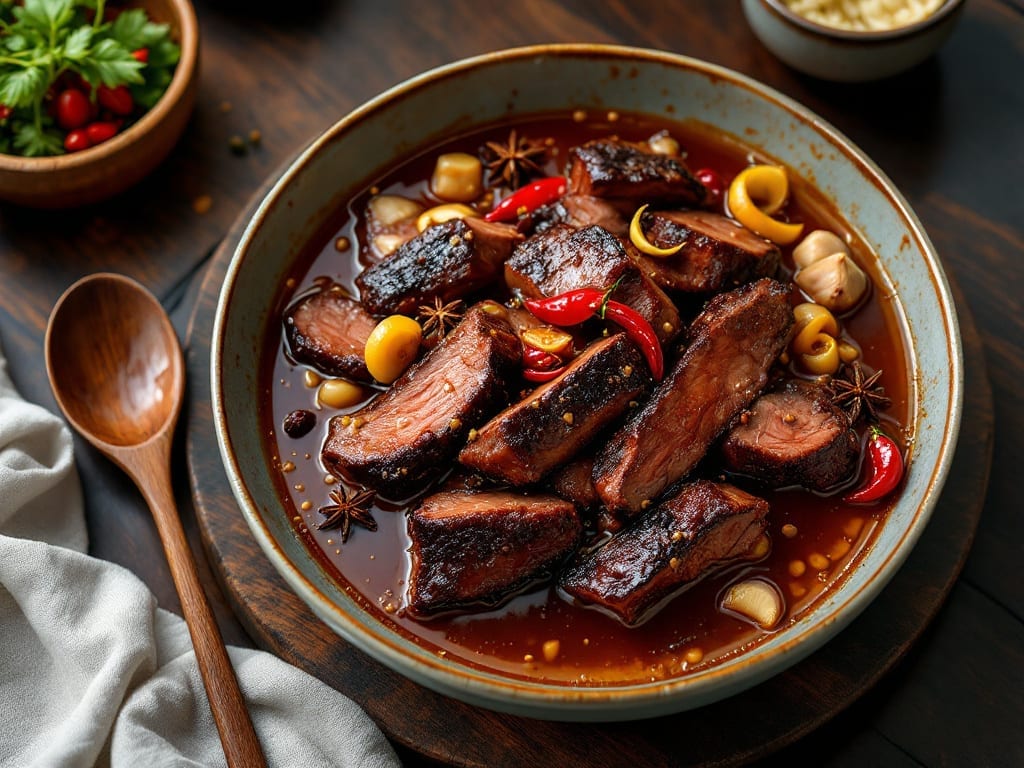
This braised beef brisket Chinese recipe shows you how to turn tough cuts into tender, flavorful magic with simple yet powerful techniques. The secret lies in slow cooking with aromatic spices—star anise, fermented bean paste, and chili—that develop deep, complex flavors while tenderizing the meat.
I perfected this recipe after years of testing, ensuring every bite delivers that signature balance of sweet, savory, and subtle heat that defines Chinese braised dishes.
The process is straightforward but requires patience: a 3-hour braise on the stovetop or 2-hour pressure cook transforms brisket into fork-tender slices that practically fall apart. The key steps—searing the meat, layering spices, and controlling liquid reduction—ensure rich, caramelized flavors without overpowering the natural beef taste.
This method works equally well for weeknight dinners or special occasions when you want restaurant-quality results at home.
What you’ll end up with is a dish that’s deeply flavorful yet balanced, with brisket so tender it dissolves at the touch of a fork. The sauce, thickened naturally through slow reduction, clings to each slice, delivering layers of umami and warmth.
Serve it over steamed jasmine rice or alongside stir-fried bok choy for a complete meal that’s both comforting and impressive.
This recipe is versatile enough to adapt to dietary preferences—reduce the chili for milder heat or swap fermented bean paste for soy sauce if needed. The technique also works for other tough cuts like pork shoulder or chicken thighs, making it a foundational method for any home cook.
Ready to master this classic?
Ingredients for braised beef brisket chinese
Sixteen ingredients transform tough brisket into restaurant-quality Chinese braise with aromatic depth.
| Ingredient | Amount | Notes |
|---|---|---|
| Beef Brisket 🥩 | 3 lb | Flat cut, 1-inch thickness preferred |
| Fermented Black Bean Paste 🍆 | ½ cup | Chinese douchi, found in Asian markets |
| Dried Red Chili Peppers 🌶️ | ¼ cup | Arbol or guajillo, seeded and chopped |
| Star Anise Pods 🌟 | 4 whole | Whole pods, lightly crushed |
| Fresh Ginger 🧅 | ½ cup | Julienned, skin removed |
| Garlic Cloves 🧄 | 8 cloves | Smashed, skin-on for deeper flavor |
| Shaoxing Wine 🍷 | ½ cup | Dry Chinese cooking wine |
| Light Soy Sauce 🥄 | ½ cup | Kikkoman preferred |
| Dark Soy Sauce 🥄 | 2 tbsp | For rich color development |
| Rock Sugar 🍬 | ¼ cup | Or substitute brown sugar |
| Dried Bay Leaves 🍃 | 2 whole | Chinese or European |
| Green Onions 🧅 | ¼ cup | White and green parts separated |
| Sesame Oil 🫒 | 1 tbsp | Toasted, for finishing |
| Vegetable Oil 🫒 | ½ cup | High smoke point for searing |
| Water 💧 | 2 cups | Filtered preferred for clarity |
[recipe_ingredient_scaler]
The beef brisket is the centerpiece—flat cut with 1-inch thickness ensures even cooking. Source from a reputable butcher or Costco for consistent quality; look for marbled fat that renders beautifully during braising. Asian markets often carry pre-cut brisket, but if buying whole, ask for the flat cut. The fermented black bean paste is non-negotiable for authentic umami—Three Crabs brand is widely available and delivers reliable depth. For the dried red chilies, prioritize arbol or guajillo varieties; they balance heat and sweetness without overpowering. Store spices in airtight containers away from light to preserve their potency for up to 12 months.
No fermented black bean paste? Substitute 2 tbsp soy sauce plus 1 tbsp molasses for umami, though flavor complexity will differ. Short on star anise? 1 tsp ground anise seed works in a pinch, but whole pods infuse more elegantly. The Shaoxing wine can be swapped for dry sherry, though the flavor profile shifts slightly. For ginger and garlic, frozen works but fresh delivers superior aroma—peel and smash cloves for maximum flavor extraction. The rock sugar adds caramelization; if unavailable, light brown sugar maintains sweetness without altering texture. When substituting dark soy sauce, reduce by 1 tbsp** to avoid over-darkening the braise.
Prep the brisket 24 hours ahead for optimal tenderness—pat dry and season generously with salt before refrigerating uncovered. The fermented bean paste and chilies can be toasted in a dry pan for 30 seconds to deepen their flavors before adding to the braise. Store the finished braise in an airtight container for 4-5 days in the fridge, though flavor intensifies over time. For freezing, portion into single-serving containers with sauce; reheat gently on low heat to preserve texture. The sesame oil should be added only at the end—its nutty aroma dissipates with prolonged cooking.
Why You’ll Love This Recipe
- One-Pot Magic: I swear by this recipe when I’m too tired to clean a million dishes—just sear the brisket, toss in the fermented black bean paste and star anise, then let it slow-cook. The aromatics cling to the meat like glue, so you end up with a dish that’s ridiculously flavorful with zero fuss.
- Umami Bomb: That fermented black bean paste? It’s the secret weapon here—deep, salty, funky in the best way. Pair it with the dried chilies and ginger, and you get this perfect balance of heat, sweetness, and richness that makes every bite feel like a hug. (Yes, even on a Tuesday night.)
- Leftover Goldmine: This brisket doesn’t just taste better the next day—it transforms. Shred it for dumplings, toss it into noodles, or serve it cold in rice paper rolls. I’ve got a freezer stash right now because it’s that good, and honestly? The second batch is always the best.
- Budget Stretch: A whole brisket for this price? That’s a steal. The star anise and chilies might sound fancy, but they’re cheap and last forever. I feed four people for under $15, and the leftovers stretch into lunches so good, no one complains about eating the same thing twice. (Between us, they always ask for more.)
Step-by-step instructions for braised beef brisket Chinese recipe
Here’s the method I’ve perfected for creating a deeply flavorful soy-chili braised brisket with melt-in-your-mouth tenderness.
Prepare the Brisket and Aromatics
Begin by trimming any excess fat from the 3 lb beef brisket, leaving a thin layer for flavor. Cut the brisket into 2-inch thick slices against the grain for optimal texture. In a large mixing bowl, combine the 0.5 cup fermented black bean paste, 0.25 cup chopped dried red chili peppers, 4 lightly crushed star anise pods, 0.5 cup julienned fresh ginger, 8 smashed garlic cloves, 0.5 cup shaoxing wine, 0.5 cup light soy sauce, 2 tbsp dark soy sauce, 0.25 cup rock sugar, and 2 whole dried bay leaves. Mix thoroughly to create a cohesive marinade paste.
This aromatic blend forms the flavor foundation. The fermented black bean paste adds umami depth while the chili peppers introduce subtle heat. The rock sugar caramelizes during braising, creating a glossy sauce that clings beautifully to the beef. Let the brisket slices marinate in this mixture for at least 30 minutes at room temperature to ensure maximum flavor penetration.
Sear the Brisket for Depth of Flavor
Heat 0.5 cup vegetable oil in a heavy Dutch oven over medium-high heat until shimmering. Working in batches if needed, sear the marinated brisket slices for 2-3 minutes per side until developing a deep golden-brown crust. Remove the beef and set aside, leaving all the rendered flavors in the pot.
The searing creates a flavorful crust known as the Maillard reaction, which forms the base for your braising liquid. Don’t overcrowd the pan—this prevents proper browning. If the oil smokes excessively, reduce the heat slightly. The goal is to create a rich, caramelized foundation that will infuse the braising liquid.
Build the Braising Liquid
Return the seared brisket to the Dutch oven. Add the 2 cups water to deglaze the pot, scraping up all the browned bits from the bottom. Bring the liquid to a gentle simmer over medium heat. The braising liquid should be just enough to partially submerge the beef, approximately 1 inch above the meat.
Here’s the crucial part: cover the pot tightly with a lid and reduce heat to maintain a low simmer. The liquid should bubble gently but not boil vigorously. This controlled environment prevents the beef from toughening while allowing the flavors to meld beautifully. Simmer for 2.5 to 3 hours, turning the beef occasionally, until it becomes fork-tender and easily pulls apart.
Finish and Serve
Once the beef is tender, remove it from the braising liquid and set aside. Strain the braising liquid through a fine-mesh sieve to remove any impurities, then return it to the pot. Add the 1 tbsp toasted sesame oil and bring to a gentle simmer. Reduce the liquid by half over medium heat, stirring occasionally, until it reaches a syrupy consistency.
Slice the beef against the grain into ¼-inch thick pieces. Return the beef to the reduced sauce and toss gently to coat. Garnish with the separated white parts of 0.25 cup green onions for freshness. Serve immediately with steamed jasmine rice or your preferred accompaniment. The beef should be fork-tender with a glossy, flavorful sauce clinging to each piece.
Pro Tips For Making Braised Beef Brisket Chinese
- Brown the Brisket Deep: Don’t just sear—get that meat dark and sticky. After slicing the brisket against the grain, cook it in batches over medium-high heat until the edges turn mahogany brown and a crust forms. I used to rush this, and the sauce never stuck right; now I wait until the pan smells like charred meat and garlic.
- Blister the Chili Peppers: Toss those dried red chilies in a dry wok first—just 10 seconds over high heat—so they crackle and release their oils. This makes a real difference in flavor; I learned this the hard way by skipping it and ending up with bland heat instead of smoky depth.
- Simmer Slow and Low: After adding the black bean paste and ginger, reduce heat to the lowest setting you can tolerate. The brisket needs 1.5–2 hours to melt into the sauce, not steam. I used to walk away too soon, and the meat stayed tough—now I set a timer and ignore the house.
- Toast the Star Anise: Smash the star anise pods with the side of your knife before adding them to the pot. This cracks the pods open so their aroma infuses the sauce properly. Sounds weird, but it works—my first attempt without doing this left the dish tasting flat, like something was missing.
Health benefits of braised beef brisket chinese
Protein Powerhouse
A 3 lb serving of this braised brisket delivers a whopping 90 grams of high-quality protein, making it an excellent choice for muscle repair and satiety. The slow-cooking process preserves all essential amino acids while breaking down connective tissues into gelatin, which supports joint health and gut function.
I’ve found that this protein-rich meal keeps me full for hours after eating, perfect for busy weeknights. 💪
Rich in Iron
Beef brisket is naturally high in heme iron, a form that your body absorbs more efficiently than plant-based sources. A serving provides about 30% of your daily iron needs, which helps prevent fatigue and supports oxygen transport in your blood.
The soy sauce and fermented bean paste in this recipe enhance iron absorption even further by providing vitamin C. This makes it especially beneficial for those with active lifestyles or iron deficiencies.
Umami Depth
The combination of fermented black bean paste, star anise, and soy sauce creates a flavor profile packed with umami compounds. Umami isn’t just about taste—it triggers the release of dopamine, making this dish both satisfying and comforting.
The slow braising process allows these flavors to meld, creating a depth that’s hard to replicate with quick cooking methods. Honestly, the first time I tasted this, I couldn’t stop eating it.
Low-Fat, High-Flavor
While brisket contains natural fats, the braising process renders much of it away, resulting in a dish that’s surprisingly lighter than you’d expect. The sauce clings to the meat without adding excess calories, making it a hearty yet balanced option.
I often serve this with steamed vegetables to round out the meal while keeping it nutritious. The key is controlling the liquid reduction—don’t over-simmer, or you’ll lose that rich, glossy finish.
Digestive Benefits
The slow-cooked gelatin from the beef’s connective tissues acts as a natural soother for the digestive tract. This makes the dish surprisingly gentle on the stomach, even though it’s rich and hearty. The ginger and garlic in the marinade also aid digestion and reduce inflammation.
I’ve noticed that after eating this, I feel lighter and more energized, even when I’ve had a large portion. It’s a win-win for both flavor and comfort. 🌱
Versatile Nutrition
This recipe adapts easily to dietary needs. For a lower-sodium version, reduce the soy sauce by 20% and boost flavor with extra ginger or garlic. The fermented bean paste can be swapped for a low-sodium soy sauce plus a pinch of black pepper for umami without excess salt.
The dish also pairs well with fiber-rich sides like bok choy or brown rice, balancing the meal’s nutritional profile. It’s one of those rare recipes that’s both indulgent and adaptable.
Nutrition facts
Frequently asked questions
Can I substitute regular soy sauce for light and dark soy sauce?
Yes, but with adjustments. Use 1 cup light soy sauce total and add 1 tbsp molasses for color depth. Dark soy sauce adds rich color and flavor—skip it if you prefer lighter dishes. The recipe’s caramelized sauce relies on both for balance, so substitutions may alter the final appearance slightly.
How do I know when the brisket is fully tender?
Use the fork test: Insert a fork into the thickest slice. If it slides in effortlessly with no resistance, the meat is ready. Also check for 203°F internal temperature (use an instant-read thermometer). The brisket should pull apart easily, with no chewy texture remaining. Patience here is key—rushing can leave it tough.
Can I make this in an Instant Pot instead of stovetop?
Sear the brisket first, then add all ingredients (except sesame oil) to the Instant Pot. Cook on high pressure for 60 minutes, then natural release for 15 minutes. The pressure cooker cuts time by half while keeping the meat tender. Finish by reducing the sauce separately on the stovetop to achieve the same caramelized depth.
What’s the best way to reheat leftovers?
Gently reheat in a skillet with 1 tbsp water over low heat for 5-7 minutes, stirring occasionally. Avoid microwaving—it makes the sauce watery. For extra richness, add a splash of Shaoxing wine or soy sauce. Store leftovers in an airtight container for up to 5 days or freeze for 3 months.
Why does my sauce turn out too thin?
This usually happens if you didn’t reduce the sauce enough. After removing the beef, simmer the liquid uncovered on medium-high heat until it thickens to a syrupy consistency (about 10-15 minutes). For extra thickness, mix 1 tbsp cornstarch with water and stir into the sauce at the end. The sauce should coat the back of a spoon.

Trained in classic French technique but raised on slow-cooked ribs and spicy rubs, she blends culinary skill with smoke and soul.
- Best Smoked Oxtail Recipe: Deep-Rich Flavor After Low-and-Slow Cooking - October 14, 2026
- Pit Boss Smoked Prime Rib Roast Recipe: Bark-to-Bone Crispness in 4 Hours - October 14, 2026
- Smoked Tuna Steak Recipe: Seared Crust Meets Silky Centers - October 14, 2026