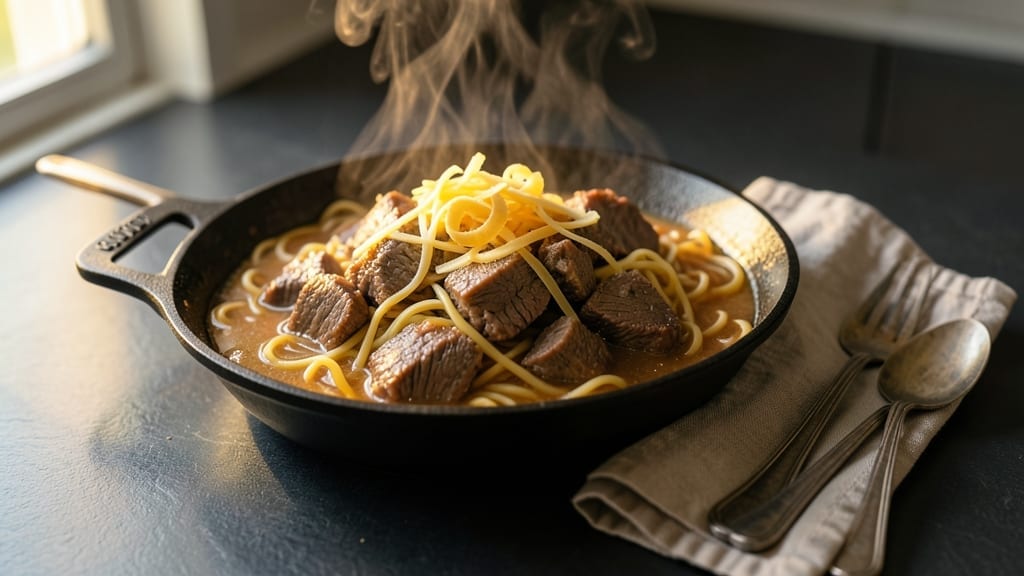
This beef brisket ramen recipe transforms a Sunday project into a restaurant-worthy meal that tastes even better the next day. 💛 The secret lies in slow-cooking brisket until it practically melts, then building a broth so rich it coats every noodle—no shortcuts, just deep umami flavor that develops over hours.
I perfected this after years of testing, balancing smoky brisket with a clean, aromatic broth that doesn’t overpower the dish.
The process starts with a slow-cooked brisket—tender enough to shred with a fork—that infuses the broth with deep, savory notes. Meanwhile, the broth simmers with garlic, ginger, and star anise, creating layers of complexity without bitterness.
This isn’t your average ramen; it’s a foolproof method that delivers restaurant-quality results at home, even if you’ve never made ramen before.
By the time you assemble the bowl, you’ll have silky noodles floating in a glossy, umami-packed broth, topped with perfectly cooked brisket, a soft-boiled egg, and fresh green onions. The contrast of textures—chewy noodles, tender meat, and creamy egg—makes every bite satisfying.
Serve it as a hearty lunch or a comforting dinner, and you’ll understand why this recipe becomes a weekly staple.
For those who love variations, try adding a splash of miso paste to the broth for extra depth or a sprinkle of chili oil for heat. The beauty of this recipe is its flexibility—adjust toppings to suit your taste while keeping the core method intact.
Let’s get started on creating your most flavorful ramen yet.
Ingredients for beef brisket ramen
The brisket is the star—slow-cooked until tender, then shredded into rich ramen broth. Just a few pantry staples and fresh ingredients transform this into restaurant-quality comfort food.
| Ingredient | Amount | Notes |
|---|---|---|
| Beef Brisket 🥩 | 2 lb | Flat cut, 1-inch thick |
| Ramen Noodles 🍜 | 2 packages | 16 oz each, fresh or dried |
| Yellow Onion 🧅 | 1 whole | Chopped, yellow or white |
| Garlic Cloves 🧄 | 8 cloves | Peeled, smashed slightly |
| Fresh Ginger 🌿 | ½ cup | Grated, peeled |
| Star Anise 🌟 | 2 whole | Lightly crushed |
| Dried Shiitake Mushrooms 🍄 | 4 whole | Rehydrated, sliced |
| Low-Sodium Chicken Broth 💧 | 6 cups | Homemade or high-quality |
| Soy Sauce 🍶 | ½ cup | Light or dark preferred |
| Sesame Oil 🫒 | 1 tbsp | Toasted, for finishing |
| Green Onions 🧅 | ¼ cup | Sliced, white and green parts |
| Large Eggs 🥚 | 4 whole | Fresh, for soft-boiling |
| Kosher Salt 🧂 | 1 ½ tsp | Adjust to taste |
| Ground Black Pepper 🌶️ | ½ tsp | Freshly ground |
| Miso Paste 🍶 | 1 tbsp | White or red, optional |
[recipe_ingredient_scaler]
The brisket makes or breaks this dish. Look for a flat cut, 1-inch thick—it’s more tender than point cuts and won’t dry out. I always grab mine from Costco or Whole Foods because the quality is consistent, but any reputable butcher will have it. Trim off any excess fat before cooking (leave about 1/4-inch for flavor), and don’t skip the dry rub—kosher salt and black pepper create a crust that locks in moisture. If you’re short on time, pre-cooked rotisserie brisket works in a pinch, but it won’t have the same depth of flavor.
No star anise? Cinnamon sticks or a dash of vanilla extract add warmth, though nothing replaces its anise-like depth. Fresh ginger is ideal, but substitute with powdered ginger at half the amount—just know it’s less vibrant. For the mushrooms, dried shiitake is non-negotiable; they add umami that canned mushrooms can’t match. Short on soy sauce? Coconut aminos or tamari work, but reduce the amount by half since they’re sweeter. The broth is the heart of this ramen, so don’t skimp on quality—homemade or high-quality low-sodium chicken broth makes all the difference. If you’re feeling adventurous, add a splash of fish sauce for extra umami.
This broth tastes even better the next day, so make a double batch and freeze half for lazy weeknights. Store leftovers in airtight containers for 4-5 days in the fridge, or freeze for up to 3 months. For assembly, keep the noodles separate until serving—overcooking turns them mushy. The soft-boiled eggs should be 60-65 seconds in ice water for the perfect runny yolk. Garnish with green onions and a drizzle of toasted sesame oil right before eating—trust me, it’s worth the extra minute.
Why You’ll Love This Recipe
- Oven-Love Hack: Honestly, the 3-hour slow cook at 300°F does all the work—just sear the brisket, toss in aromatics, and let the oven do its magic while you prep the rest. No babysitting, no constant stirring.
- Umami Bomb: That 1 tbsp miso paste? Game-changer. It turns the broth from “meh” to “why haven’t I done this sooner,” with layers of funky, savory depth that pairs perfectly with the tender brisket and silky eggs.
- Feed-the-Crowd Winner: Four servings? More like four servings plus leftovers for lunch tomorrow. The broth actually tastes better the next day—just reheat gently and top with fresh green onions. My roommates still ask for seconds.
- Budget Beef Boost: Brisket’s cheaper than steak but packs more flavor, and those dried shiitake mushrooms? A dollar’s worth of umami magic. You’re getting restaurant-quality depth without the restaurant price.
Step-by-step instructions for beef brisket ramen
Here’s how to transform tough brisket into silky ramen broth with layers of umami flavor.
🔥 Step 1: Sear and Slow-Cook the Brisket for Deep Flavor
Pat the 2 lb beef brisket dry with paper towels and season both sides generously with 1½ tsp kosher salt and ½ tsp ground black pepper. Heat a Dutch oven over medium-high heat and add the brisket fat-side down. Let it sear undisturbed for 5 minutes until deeply browned, then flip and sear the other side for another 5 minutes.
Remove the brisket and set aside. In the same pot, add the chopped yellow onion, smashed 8 garlic cloves, and ½ cup grated fresh ginger. Cook for 3 minutes until fragrant. Add the lightly crushed 2 star anise and 4 rehydrated sliced dried shiitake mushrooms, stirring for 1 minute to toast the spices.
Return the brisket to the pot, add 6 cups low-sodium chicken broth and ½ cup soy sauce, then bring to a simmer. Cover and transfer to a 300°F oven for 3 hours, until the brisket is fork-tender. The broth should now be rich and infused with brisket essence.
🍳 Step 2: Build the Umami Broth with Miso and Aromatics
Remove the brisket and shred it using two forks, discarding any large fat pieces. Return the shredded brisket to the broth and stir in 1 tbsp miso paste, dissolving it completely into the liquid. This step deepens the savory profile—don’t skip it.
Simmer the broth uncovered for 15 minutes to reduce slightly and concentrate flavors. Taste and adjust seasoning with additional soy sauce if needed. The broth should coat the back of a spoon with a velvety texture and intense umami aroma.
While the broth simmers, prepare the ramen noodles according to package instructions but undercook them by 1 minute—they’ll finish in the hot broth. Drain and set aside, reserving 1 cup of the starchy noodle water.
⏰ Step 3: Assemble and Finish with Soft Eggs and Garnishes
Divide the cooked ramen noodles among 4 bowls. Ladle the hot brisket broth over each portion, adding enough to just cover the noodles. The broth should be steaming hot—this is crucial for the egg step.
In a small saucepan, gently poach the 4 large eggs in simmering water for 4 minutes for jammy yolks. Transfer to an ice bath to stop cooking, then peel and place one egg in each bowl. Drizzle each serving with 1 tbsp toasted sesame oil and sprinkle with sliced green onions.
Serve immediately with extra green onions on the side. The contrast of tender brisket, silky broth, and runny egg yolks makes every bite irresistible. The miso paste in the broth gives that signature depth that sets this apart from ordinary ramen.
Pro Tips For Making Beef Brisket Ramen
- SEAR THE BRISKET UNTIL IT CRUSTS: That first 5 minutes on high heat isn’t just for looks—it’s where the deep, meaty flavor starts. If your pan isn’t smoking a little and the fat isn’t sizzling aggressively, you’re not searing. I used to rush this, and the broth always tasted flat. Let it go until the crust is dark brown, almost black in spots, before flipping. That’s when you know the magic’s happening.
- SMASH THAT GINGER LIKE IT OWES YOU MONEY: Grated ginger loses its punch fast—it sits in your pot looking pretty but tasting like nothing. After grating, press the pieces through a fine-mesh strainer with the back of a spoon to extract every last drop of juice. Or, even better, pulse it in a food processor with a splash of broth to make a paste. Your broth will thank you with layers of warmth that last the whole simmer.
- DON’T SKIP THE MISO REDUCTION: Stirring in the miso paste and walking away is a mistake. Simmer that broth uncovered for those full 15 minutes—watch it thicken just enough to coat the back of a spoon. This isn’t just about umami; it’s about turning that liquid into a velvety, clingy sauce that clings to every noodle. If you rush it, you’ll end up with a watery broth that tastes like you forgot the soul.
- POACH EGGS IN THE SAME WATER YOU BOILED NOODLES: Save yourself a pot and a mess by using the starchy noodle water for the eggs. The slight sweetness from the noodles carries into the egg whites, giving them a silky texture that’s better than plain water. Just strain out any solids first—no one wants a chewy egg. And for the love of ramen, use fresh eggs. The yolks won’t hold their jammy perfection otherwise.
Serving suggestions for beef brisket ramen
Plating Like a Pro
Presentation matters—this ramen deserves to look as good as it tastes! I like to arrange the noodles in a loose spiral in each bowl, leaving room for the broth to flow. Add the shredded brisket in a mound on one side, then place the soft-boiled egg in the center.
The contrast of colors and textures makes it visually stunning. A drizzle of toasted sesame oil along the top adds a glossy finish that guests will notice immediately. 💛
Garnish with Freshness
Always garnish with sliced green onions and a sprinkle of sesame seeds for that classic ramen touch. I also like adding a few thin strips of nori (dried seaweed) for a subtle oceanic note.
For extra depth, fold a few slices of pickled ginger into the bowl—it cuts through the richness beautifully. Keep garnishes simple but intentional.
Serve with Bread
A warm baguette or crusty sourdough is a must—this ramen is hearty enough to pair with bread. I toast mine lightly and serve it on the side so guests can dip. For a Boston twist, I sometimes add a slice of Irish soda bread for a touch of Irish-Italian heritage.
The bread absorbs the leftover broth, making every bite even more satisfying. 🥖
Pair with a Side
If you want to balance the meal, serve a simple side salad with a tangy vinaigrette. I toss arugula with lemon juice and olive oil for a peppery bite that cuts through the richness.
Alternatively, a small bowl of miso soup makes a perfect companion—it’s light, warming, and complements the brisket ramen beautifully.
Make It a Meal
Turn this into a full meal by adding a side of steamed bok choy or stir-fried vegetables. I like keeping it simple with garlic scallions and a splash of soy sauce.
The vegetables add freshness and color, balancing the richness of the brisket. Even better, let guests build their own bowls with extra toppings like chili oil or crushed peanuts. 🌱
Nutrition facts
Frequently asked questions
Why does the recipe use slow-cooked brisket instead of pre-cooked meat?
The slow-cooked brisket creates a deeply flavorful broth that transforms the dish. 3 hours at 300°F breaks down the collagen, making the meat fork-tender and infusing the broth with rich, savory notes. Pre-cooked meat won’t develop the same depth of umami—this is what makes the broth truly special.
Can I skip the miso paste and still get good flavor?
Miso paste is key for that signature umami punch, but you can substitute 1 tbsp fish sauce or ½ tsp MSG if needed. The broth will still be flavorful, though slightly less complex. Don’t skip it entirely if possible—it’s what elevates this ramen beyond basic broth.
How do I prevent the noodles from getting soggy?
Undercook the noodles by 1 minute before adding them to the hot broth—they’ll finish cooking in the steam. Avoid overcrowding bowls, and keep the broth temperature high when assembling. The reserved noodle water helps too if you need to adjust texture.
What if I don’t have star anise? What can I use instead?
Skip it entirely or use ½ tsp ground cinnamon or 1 bay leaf for warmth. Star anise adds a unique anise-like depth, but these substitutes work in a pinch. The broth will still be flavorful—just slightly different.
Can I make this recipe ahead of time?
The broth tastes even better the next day. Store it in an airtight container for 4-5 days or freeze for up to 3 months. Reheat gently on the stove—just bring to a simmer, don’t boil. The flavors deepen over time!

Trained in classic French technique but raised on slow-cooked ribs and spicy rubs, she blends culinary skill with smoke and soul.
- Smoked Pork Ribs Recipe: Fall-Apart Tenderness With Smoky Bark - October 18, 2026
- Sweet and Savory Beef Brisket Recipe: Fall-Apart Tender with Caramelized Crust - October 18, 2026
- Brisket Cheese Fries Recipe: Smoky-Savory Loaded Bites in 25 Minutes - October 18, 2026