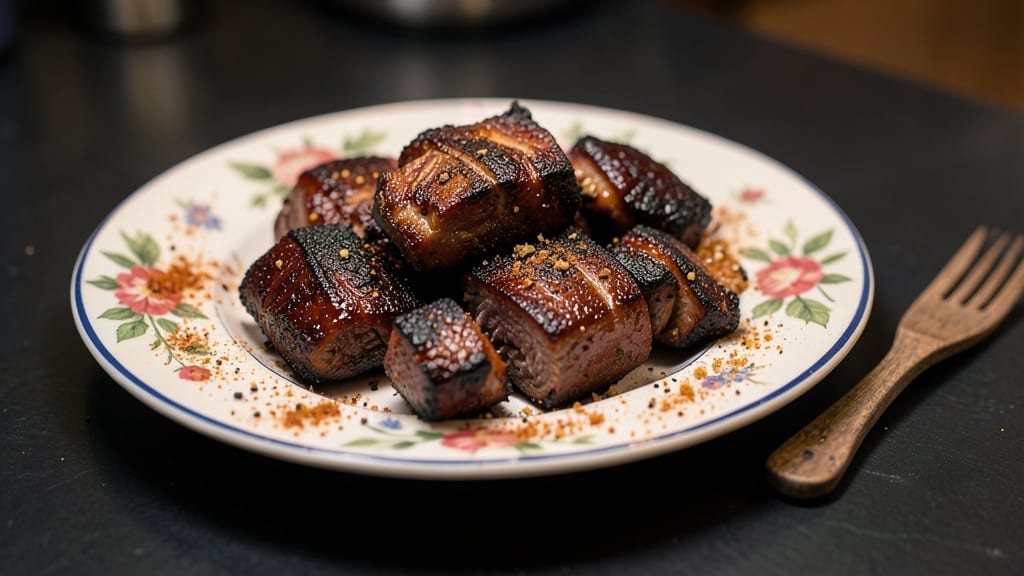
Mastering smoked chuck roast burnt ends transforms tough cuts into melt-in-your-mouth perfection through slow smoking and careful charring. After years of perfecting this technique—starting with my grandmother’s Sunday roast chicken—I’ve developed a method that delivers restaurant-quality results in your own smoker.
The key lies in low-and-slow cooking followed by high-heat charring to create those coveted crispy edges and tender, fall-apart meat.
This recipe begins with a 3-5 pound chuck roast brined overnight for maximum tenderness, then smoked at 225°F until the internal temperature reaches 195°F—where the magic happens.
The long cook time breaks down collagen into rich, gelatinous juices, while the final charring step (using a torch or broiler) adds depth and texture. Every bite delivers that perfect contrast: crispy, caramelized edges and succulent, juicy meat that practically dissolves on your tongue.
Pair these burnt ends with classic sides like creamy mashed potatoes, tangy pickled onions, and a drizzle of your favorite BBQ sauce for a meal that feels like a celebration.
The smoky aroma alone will draw everyone to the table, and the effortless presentation makes it ideal for gatherings or a special weeknight dinner. With precise timing and attention to temperature, you’ll achieve results that rival your favorite BBQ joint.
Ready to elevate your slow-cooking game? This recipe is designed for home smokers and ovens alike, ensuring foolproof success whether you’re a seasoned pitmaster or just starting out.
The secret weapon? Patience—letting the meat work its own magic over hours will reward you with a dish that’s worth every minute of wait time.
Ingredients for smoked chuck roast burnt ends
Just a few core ingredients transform tough chuck roast into melt-in-your-mouth burnt ends.
| Ingredient | Amount | Notes |
|---|---|---|
| Chuck Roast 🥩 | 4 lb | Bone-in, well-marbled preferred |
| Yellow Onion 🧅 | 1 whole | Quartered, skin on for flavor |
| Garlic Cloves 🧄 | 6 cloves | Crushed, skin on for aroma |
| Smoked Paprika 🌶️ | 2 tbsp | For deep smoky flavor |
| Kosher Salt 🧂 | 1 ½ tbsp | Diamond Crystal preferred |
| Black Peppercorns 🌶️ | 1 tbsp | Freshly cracked, coarse grind |
| Brown Sugar 🍯 | 2 tbsp | Light or dark, packed |
| Apple Cider Vinegar 🍎 | ½ cup | For brining solution |
| Water 💧 | 4 cups | Filtered preferred for taste |
| Beef Tallow 🧈 | ¼ cup | Or substitute duck fat |
| Hickory Wood Chips 🌳 | 1 package | Soaked for 30 minutes |
| Butter 🧈 | ½ cup | Unsalted, melted for basting |
| Fresh Thyme 🌿 | ¼ cup | Leaves only, chopped fine |
[recipe_ingredient_scaler]
The chuck roast is non-negotiable here—bone-in, well-marbled cuts from Costco or local butchers deliver the best results. Look for thick slices of fat running through the meat; this is what renders into flavor. If your store only carries pre-cut roasts, check the packaging for ‘chuck roll’ or ‘chuck arm’—these are the prime cuts for burnt ends. I always buy mine from Whole Foods when possible, but the regular grocery store chuck works just fine if it’s fresh. The hickory wood chips should be 100% natural—none of that sawdust stuff. Soak them in water for at least 30 minutes before using to prevent flare-ups.
No beef tallow? Duck fat or rendered bacon grease works perfectly—just use the same amount. The apple cider vinegar in the brine isn’t optional; it tenderizes the meat and adds a subtle tang that balances the richness. Swapping the smoked paprika for regular paprika will still work, but you’ll miss that deep, smoky complexity. For the brown sugar, don’t use powdered—it dissolves too quickly and can make the bark too sweet. If you’re short on fresh thyme, dried thyme at one-third the amount gets you close, but fresh is worth the extra minute to chop. The butter for basting should be unsalted—you’re already controlling the salt with the Diamond Crystal kosher salt.
The brined meat keeps in the fridge for up to 3 days before smoking, but I recommend cooking it within 24 hours for best texture. Once smoked, store the burnt ends in an airtight container with their juices for 4-5 days, or freeze for up to 3 months. The fat will solidify when chilled, so let them sit at room temperature for 10 minutes before serving. I always portion mine into individual serving containers so they’re ready to reheat for quick weeknight meals. The crispy edges soften when reheated, so I save those for the first serving—trust me on this.
Why You’ll Love This Recipe
- No-Fuss Prep: Honestly, this isn’t one of those recipes where you’re chopping for hours. Just quarter that onion, crush six garlic cloves, and mix the dry rub—done. The brining does the heavy lifting while you nap or watch TV. Even my roommate, who thinks cooking is “optional,” can handle this.
- Chef’s Kiss Texture: That crispy bark with the melt-in-your-mouth center? It’s not just good—it’s dangerously addictive. The smoked paprika and brown sugar caramelize into something magical, while the thyme and garlic infuse the meat like you’re eating a whole flavor profile. Trust me, it’s the kind of dish that makes people ask for seconds.
- Budget-Friendly Luxury: A 4-pound chuck roast is one of the most affordable cuts, and this recipe stretches it into something restaurant-worthy. The apple cider vinegar brine and beef tallow keep costs low, but the result? A dish that feels like a splurge. Plus, freezing the extras means you’ll always have a backup for game days or when you’re too tired to cook.
Step-by-step instructions for smoked chuck roast burnt ends
Here’s the method that transforms tough chuck roast into melt-in-your-mouth burnt ends.
Prepare the Brining Solution and Season the Meat
In a large bowl, combine the ½ cup apple cider vinegar and 4 cups water to create the brining solution. This acidic mixture helps tenderize the meat while adding subtle tang. Add the 1 yellow onion, quartered with skin on, and 6 garlic cloves, crushed with skin on, to infuse flavor into the brine.
In a separate bowl, mix the 2 tablespoons smoked paprika, 1½ tablespoons kosher salt, 1 tablespoon black peppercorns (freshly cracked), 2 tablespoons brown sugar, and ¼ cup fresh thyme, chopped fine. This dry rub delivers deep smoky warmth and a touch of sweetness that caramelizes beautifully during smoking.
Submerge the 4 lb chuck roast in the brine, ensuring it’s fully coated. Cover and refrigerate for 12-24 hours, turning occasionally. The longer it brines, the more tender and flavorful the final result. After brining, remove the meat and pat it dry with paper towels—this step is critical for developing that coveted bark during smoking.
Smoke the Chuck Roast Low and Slow
Soak the 1 package hickory wood chips in water for 30 minutes to prevent burning. Set up your smoker to maintain a steady 225°F temperature. Once the smoker reaches this temperature and you see clean, blue smoke, place the chuck roast fat-side up on the grill grates. The fat will render slowly, basting the meat and creating that signature smoky crust.
Add the ¼ cup beef tallow to the smoker’s water pan if using one—this adds extra fat for moisture and flavor. Smoke the roast undisturbed for 10-12 hours, or until the internal temperature reaches 195-203°F. You’ll notice the meat will “stall” around 165°F, where evaporation slows progress. This is normal; resist the urge to open the smoker, as each peek can add 15-20 minutes to cook time.
Here’s the thing—at 195°F, the connective tissue breaks down completely, and the meat should pull apart effortlessly with just your fingers. If it doesn’t, return it to the smoker for another 30-60 minutes. The goal is fall-apart tenderness, not just cooked-through meat.
Wrap and Finish for Maximum Tenderness
When the internal temperature hits 195°F, remove the roast from the smoker and wrap it tightly in butcher paper (not foil). This “Texas crutch” technique traps steam while allowing the bark to remain crispy. Return the wrapped roast to the smoker and continue cooking until the internal temperature reaches 203°F. This final push ensures every fiber is tender.
While the roast finishes, melt the ½ cup butter in a small saucepan over low heat. Stir in 2 tablespoons brown sugar from the rub to create a simple basting glaze. Once the butter is fully melted, set it aside—you’ll use it to enhance the bark before serving.
Rest and Prepare for Serving
Remove the roast from the smoker and let it rest for 1-2 hours in a warm oven set to 170°F, wrapped in the butcher paper. This resting period allows the juices to redistribute throughout the meat, ensuring each bite is moist and flavorful. The bark will firm up slightly during this time, making it easier to handle.
Before serving, brush the roast generously with the melted butter mixture. This step adds a glossy finish and enhances the smoky flavor. Cut the roast into 1-inch cubes, ensuring you capture that crispy bark with each piece. The meat should pull apart easily, revealing tender, juicy interior.
Serve immediately with the juices that have accumulated in the butcher paper—these are packed with flavor and will elevate any side dish. For extra richness, drizzle additional butter mixture over the top. Each bite should deliver a perfect balance of smoky, sweet, and savory flavors with that irresistible crispy exterior.
Pro Tips For Making Smoked Chuck Roast Burnt Ends
- Skip the Vinegar Shortcut: I learned this the hard way—using store-bought bottled vinegar (even “apple cider” labeled stuff) makes the brine taste harsh. The recipe calls for ½ cup apple cider vinegar because it’s raw, unfiltered, and packed with flavor. If you’re using the filtered kind, add a splash of real apple cider or a pinch of cinnamon to compensate. Trust me, your burnt ends will taste flat if you cut corners here.
- Crust the Garlic Right: Those 6 garlic cloves with skins on aren’t just for show—they’re the secret to deep, aromatic flavor. Before crushing them, give each clove a quick whack with the side of your knife to crack the skin, then let them sit in the brine uncovered for 30 minutes. This lets their oils infuse the liquid without turning it into a muddy mess. (Yes, even if you’re impatient like me.)
- Respect the Stall: When your chuck hits 165°F, the smoker will feel like it’s moving in slow motion—that’s the stall, and opening it to check is the fastest way to ruin your day. Every time you peek, you lose 15-20 minutes of cook time. Set a timer, ignore the urge, and let it hit 195°F on its own. The meat will thank you with that perfect pull-apart texture.
- Butter the Bark Twice: That ½ cup melted butter with 1 tablespoon brown sugar isn’t just for drizzling—use half of it before serving to build the crust while the roast rests. Brush it on the hot meat right after unwrapping, then let it sit for 10 minutes. The second coat goes on right before serving, sealing in all that smoky goodness. This isn’t the prettiest method, but it’s the tastiest.
Wine and beer pairings for smoked chuck roast burnt ends
Bold Red Wine Pairings
For burnt ends, I swear by a full-bodied Texas-style red blend like Bryan Red—it’s bold enough to stand up to the smoky richness while adding a touch of fruitiness that balances the sweetness.
The 2019 Bryan Red has notes of blackberry and dark chocolate that complement the charred edges beautifully. If you can’t find Bryan, a Zinfandel from Lodi, California, like Ravenswood, delivers similar depth with its jammy flavors. 🍷
Craft Beer Complements
A smoked porter is my go-to beer pairing—try Goose Island Bourbon County for that caramelized maltiness that mirrors the burnt ends’ sweetness. The roasted barley notes in the beer enhance the smoky profile without overpowering it.
For a lighter option, a Belgian-style dubbel like Westmalle adds complexity with its spiced fruitiness, cutting through the fat beautifully.
Unexpected White Wine
Yes, white wine works! A smoked oaked Chardonnay from Napa, like Kistler, surprises many guests with its buttery texture and toasty oak that echoes the wood-smoked flavors.
The acidity cleanses the palate between bites, making each mouthful of burnt ends taste even richer. I’ve seen skeptics converted after one sip. 💫
Sweet Dessert Pairings
For a sweet contrast, I recommend peach schnapps or a bourbon pecan pie—the caramelized fruit and nutty sweetness complement the smoky depth of the burnt ends. The alcohol in the schnapps also cuts through the fat, making each bite feel lighter.
Serve the schnapps chilled over ice with a splash of cola for a refreshing finish.
Regional BBQ Beer
If you’re in the South, grab a local craft IPA like Belmont Brewing’s “Smokehouse IPA” from Nashville. The citrusy hop bitterness cuts through the richness while the smoke notes in the beer align perfectly with the charred edges.
For a non-IPA option, a sour mash whiskey like Jack Daniel’s on the rocks adds a smooth, smoky warmth that enhances the dish’s complexity.
Nutrition facts
Frequently asked questions
Why does the recipe call for brining the chuck roast?
The 12-24 hour brine with apple cider vinegar and aromatics transforms tough chuck into melt-in-your-mouth perfection. The acid tenderizes the collagen while the onion and garlic infuse deep flavor—critical for those fall-apart burnt ends. Skipping this step risks dry, chewy meat that can’t handle the charring process.
What if my smoker can’t maintain 225°F consistently?
Don’t stress—aim for 200-250°F range and adjust smoke time accordingly. For every 10°F below target, add 1-2 hours to cooking. Use a meat probe to track internal temp, and focus on reaching 195°F for that perfect texture. A pellet smoker handles this better than charcoal, but patience wins either way.
How do I get that perfect crispy bark without burning the meat?
After smoking to 195°F, wrap in butcher paper (not foil) and cook another 30-60 minutes to finish. The key is the 1-2 hour rest at 170°F—this firms the bark while juices redistribute. For extra crisp, torch the edges briefly just before serving, but don’t overdo it or the meat will dry out.
Can I make burnt ends without a smoker?
Use your oven with a low-and-slow method: place the roast on a rack over a pan of beef tallow, cover loosely with foil, and cook at 250°F for 8-10 hours until 195°F internal. The bark won’t be as pronounced, but the tender meat will still shine. For charring, broil briefly after cooking.
What’s the best way to reheat burnt ends?
Reheat gently to preserve that crispy texture! Place in a 300°F oven for 10-15 minutes (covered with foil) to warm through, then uncover for the last 2-3 minutes to crisp the edges. Avoid microwaving—it turns the bark soggy and ruins the experience. Serve with fresh juices for maximum flavor.

Trained in classic French technique but raised on slow-cooked ribs and spicy rubs, she blends culinary skill with smoke and soul.
- Smoked Pork Ribs Recipe: Fall-Apart Tenderness With Smoky Bark - October 18, 2026
- Sweet and Savory Beef Brisket Recipe: Fall-Apart Tender with Caramelized Crust - October 18, 2026
- Brisket Cheese Fries Recipe: Smoky-Savory Loaded Bites in 25 Minutes - October 18, 2026