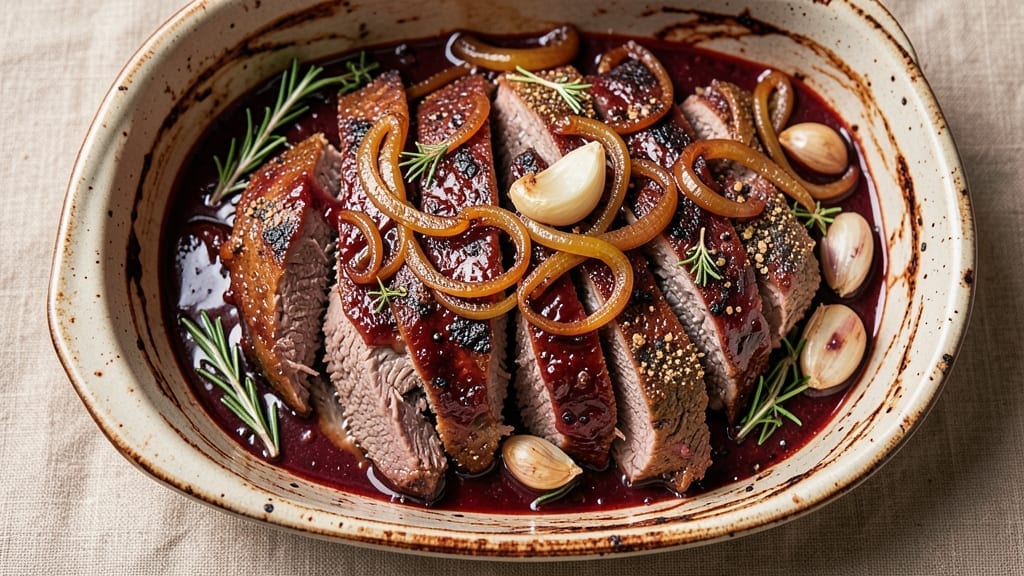
This beef brisket red wine recipe transforms tough cuts into melt-in-your-mouth perfection through slow braising and bold red wine infusion.
The day I realized French technique could elevate my rubs changed everything—now I combine that precision with the deep, umami richness of red wine to create a dish that feels like a restaurant masterpiece at home.
The secret lies in marinating the brisket overnight with red wine, garlic, and herbs, then braising it low and slow until tender. This method develops layers of flavor while keeping the meat juicy and rich.
I use a Cabernet Sauvignon for its bold tannins and acidity, but any dry red wine works—just avoid sweet varieties that can make the dish cloying.
By the time it’s done, you’ll have deeply caramelized edges, tender meat that falls apart at the touch, and a sauce so rich it coats every bite.
The aroma alone will have everyone gathering at the table, and the first taste will make this your new go-to for special occasions—or lazy Sundays when you crave something truly indulgent.
Serve with roasted root vegetables or crusty bread to soak up every last drop of that wine-infused sauce. The contrast of textures and flavors makes this a complete meal that feels like a celebration. Let’s get cooking—your brisket awaits.
Ingredients for beef brisket red wine
Four pounds of brisket, bold red wine, and aromatic herbs—this is the lineup for melt-in-your-mouth perfection.
| Ingredient | Amount | Notes |
|---|---|---|
| Beef Brisket 🥩 | 4 lb | Flat cut preferred, trimmed of excess fat |
| Dry Red Wine 🍷 | 2 cups | Cabernet Sauvignon or bold Merlot |
| Garlic Cloves 🧄 | 6 cloves | Peeled, smashed for marinade |
| Fresh Rosemary 🌿 | ¼ cup | Chopped, stems removed |
| Fresh Thyme 🌿 | ¼ cup | Leaves only, stems discarded |
| Yellow Onion 🧅 | 1 whole | Chopped, medium size |
| Carrots 🥕 | 4 whole | Whole, peeled, large |
| Beef Broth 💧 | 2 cups | Low-sodium preferred |
| Tomato Paste 🍅 | ¼ cup | Smooth, no sugar added |
| Olive Oil 🫒 | ½ cup | Extra-virgin for richness |
| Brown Sugar 🍯 | ⅛ cup | Light or dark |
| Bay Leaves 🍃 | 2 whole | Fresh if available |
| Black Peppercorns 🌶️ | 1 tbsp | Freshly cracked |
| Salt 🧂 | 2 tbsp | Kosher or sea salt |
| All-Purpose Flour 🌾 | 2 tbsp | For dusting brisket |
[recipe_ingredient_scaler]
The brisket is your star. Look for a flat cut with good marbling—it’s what gives you that juicy, tender payoff. I grab mine from Whole Foods or my local butcher shop when they have a sale, but any reputable grocery store carries it. Trim the fat to about 1/4-inch thick—this helps the seasoning stick and prevents excess grease. The red wine is non-negotiable here. Cabernet Sauvignon or Merlot work best—their bold tannins cut through the richness of the meat. Avoid anything sweet; you want dry, dry, dry. If you’re feeling fancy, grab a bottle of Bordeaux from Trader Joe’s—they often have a great selection at reasonable prices.
No Cabernet? Pinot Noir or Chianti will work in a pinch, but taste it first—some wines have funky aftertastes that can ruin the dish. Fresh herbs are ideal, but dried thyme at one-third the amount gets you close if you’re short on time. The tomato paste can be the squeeze-tube kind from Trader Joe’s—it’s perfect for this recipe because you only need a little. For the carrots, baby carrots work, but whole carrots add better texture to the braise. And if you’re using pre-minced garlic, toast it in olive oil first—it develops so much more flavor. The brown sugar might seem odd, but it helps caramelize the edges of the brisket for that perfect crust.
This braise tastes even better the next day, so make it ahead if you can. The brisket keeps well for 4-5 days in the fridge, and the sauce freezes beautifully for up to 3 months. I like to portion the meat into containers with some sauce, then freeze it—just reheat in the oven at 300°F until warmed through. The herbs? Store them in damp paper towels in a baggie for up to 5 days. And that red wine? If you don’t finish the bottle, use the rest for deglazing pans or making gravy—waste not, want not.
Why You’ll Love This Recipe
- I’ll be real: brisket tastes even better the next day, especially when shredded into sandwiches or pasta. And since it’s budget-friendly, you’re not wasting money on seconds you won’t actually want.
- One-Pan Magic: Honestly, I swear by this recipe because it’s that easy—just sear the brisket, pour in the wine and herbs, and let the oven do the work. No chopping, no fussing, no extra pots to wash.
- Wine-Infused Richness: That red wine isn’t just for flavor—it tenderizes the brisket while adding a deep, velvety depth. The rosemary and thyme? They turn it into something restaurant-worthy without trying too hard.
- Weeknight to Weekend: Between us, this is my go-to for lazy Fridays and Sunday dinners. Serve it with crusty bread for a casual meal, or plate it with roasted veggies for a fancy-ish vibe—no rules.
Step-by-step instructions for braised beef brisket with red wine
Here’s how to transform tough brisket into melt-in-your-mouth perfection using red wine’s bold flavors.
Prepare the Brisket with Dry Brine
Pat the 4 lb beef brisket completely dry with paper towels, focusing on the fat cap and any crevices. This step is crucial—it ensures maximum browning and crispiness later. In a small bowl, whisk together the 2 tbsp salt, 1 tbsp freshly cracked black peppercorns, and the 2 tbsp all-purpose flour. Rub this mixture evenly over all surfaces of the brisket, pressing firmly so it adheres.
Place the seasoned brisket on a wire rack set over a baking sheet and refrigerate uncovered for at least 4 hours, or preferably overnight. This dry brine process creates a perfect crust while keeping the meat tender. When you’re ready to cook, remove the brisket from the fridge and let it sit at room temperature for 30 minutes before searing.
Sear and Build the Flavor Base
Heat a large Dutch oven over medium-high heat until very hot. Add the 0.5 cup olive oil and let it shimmer for about 1 minute. Working in batches if needed, sear the brisket on all sides until deeply browned, about 5-7 minutes per side. You’re looking for a rich, caramelized crust that develops a deep golden color—this is where all the flavor starts.
Remove the brisket from the pot and set it aside. In the same Dutch oven, add the chopped 1 whole yellow onion, 4 whole peeled carrots, and the 6 peeled, smashed garlic cloves. Cook for 5 minutes until the vegetables begin to soften. Stir in the 0.25 cup tomato paste, 0.125 cup brown sugar, 0.25 cup chopped fresh rosemary, and 0.25 cup fresh thyme leaves, cooking for another 2 minutes to develop their aromas.
Deglaze and Simmer the Brisket
Pour in the 2 cups dry red wine, scraping up all the browned bits from the bottom of the pot with a wooden spoon. This deglazing step captures all the flavor you’ve built so far. Bring the liquid to a simmer, then add the 2 cups beef broth and the 2 whole bay leaves. Return the brisket to the pot, fat-side up, and bring everything to a gentle boil.
Once boiling, reduce the heat to low, cover the Dutch oven, and let it simmer for 2 hours. Here’s the thing—you want to maintain a very gentle simmer throughout this process. If the liquid reduces too much, add a splash of water or broth to keep the brisket submerged. After 2 hours, check the internal temperature using a meat thermometer—it should read between 190-200°F. If it’s not there yet, continue cooking for another 30-60 minutes.
Rest and Slice for Maximum Tenderness
Once the brisket reaches the proper internal temperature, remove it from the pot and transfer it to a cutting board. Tent loosely with aluminum foil and let it rest for at least 30 minutes. This resting period is essential—it allows the juices to redistribute throughout the meat, ensuring each slice is moist and flavorful. While it rests, you can skim any excess fat from the braising liquid if desired.
To serve, slice the brisket against the grain into ¼-inch thick slices. The meat should be fork-tender and pull apart easily. Ladle the rich braising liquid over the top and serve with crusty bread to soak up all that delicious sauce. The combination of red wine, herbs, and slow cooking creates a dish that’s deeply satisfying and full of umami richness.
Pro Tips For Making Beef Brisket Red Wine
- Sear the Brisket Hard: Cast iron or heavy steel pan only—get that meat screaming hot for 4-5 minutes per side until deep brown. I used to skimp here, thinking “it’s just brisket,” but that crust locks in flavor when the wine deglazes. No shortcuts, no regrets.
- Deglaze with Wine: Pour in the red wine immediately after searing while the pan is still smoking—this lifts all those caramelized bits. Let it reduce by half before adding anything else, or you’ll dilute the sauce into sadness. (Yes, even if you’re impatient like me.)
- Smash the Garlic: Peel those cloves, then crush them flat with the side of your knife before tossing them in. Whole cloves? They’ll just sit there like stubborn guests at a dinner party. Smashing releases the oils and aroma—trust me, your brisket will taste it.
- Don’t Overcrowd the Herbs: A sprig of rosemary and thyme is enough—too much turns the sauce bitter. Strip the leaves off the stems, but leave the stems intact so you can fish them out later. (And for the love of brisket, don’t skip the stems—they add texture without overpowering.)
Pro cooking tips for beef brisket red wine
Wine Selection Matters
Not all red wines are created equal for braising. I always reach for a Cabernet Sauvignon or Merlot—their bold tannins and acidity cut through the richness of the meat beautifully. The tannins help tenderize the brisket while cooking, and the acidity brightens the final dish.
Avoid sweet wines like Zinfandel or Port—they’ll make your braise cloying rather than balanced. Pro tip: Use a wine you’d drink by itself, not something you’d only use for cooking. 🍷
Deglazing Like a Pro
The deglazing step is where magic happens. After searing the brisket, pour in your 2 cups red wine immediately while the pot is still hot. Use a wooden spoon to scrape up every last browned bit from the bottom—these are packed with flavor.
Let it simmer for 3-5 minutes to reduce slightly before adding the broth. This concentrated wine base forms the foundation of your sauce. I’ve ruined many a braise by skipping this step—don’t make that mistake! 💡
Temperature Control Secrets
Your Dutch oven needs to maintain a gentle simmer at 325°F throughout cooking. Too high, and the meat will cook unevenly. Too low, and you risk undercooked brisket. I use a meat thermometer to monitor internal temperature—aim for 190-200°F in the thickest part.
If the liquid reduces too much, add ¼ cup beef broth at a time. The key is patience: 2-3 hours of steady cooking transforms tough meat into melt-in-your-mouth perfection. ⏰
Herb Freshness Hack
Fresh herbs make all the difference. I always buy rosemary and thyme from my local farmers market—they’re brighter and more aromatic than store-bought. If you must use dried, measure one-third the amount (so 1 tsp dried thyme instead of 1 tbsp fresh).
For extra depth, I toast the herbs in the Dutch oven for 1 minute before adding the wine—this releases their essential oils and intensifies their flavor. Store unused fresh herbs wrapped in damp paper towels in a sealed bag for up to 5 days. 🌿
Resting Transforms Texture
This is where many home cooks fail. After removing the brisket from the pot, let it rest for at least 30 minutes (I often rest mine for 1 hour). Tent it loosely with foil to prevent drying.
During this time, juices redistribute throughout the meat, ensuring each slice is moist. Skim excess fat from the braising liquid now—it’ll solidify as it cools. Trust me, the wait is worth it for that first fork-tender bite. 💪
Slicing Against the Grain
Brisket has two grain directions—flat and point cuts. Rotate your cutting board mid-slice to follow the muscle fibers in each section. Cut into ¼-inch thick slices perpendicular to the grain.
I use a sharp chef’s knife and slice against the grain to shorten the muscle fibers, making each bite melt in your mouth. For presentation, fan the slices slightly on the plate and drizzle with reduced braising liquid. The contrast of textures makes this dish truly special. ✨
Nutrition facts
Frequently asked questions
Can I substitute white wine for red wine in this recipe?
White wine won’t work here—the acidity and tannins in red wine are essential for tenderizing the brisket and balancing the rich flavors. If you absolutely must substitute, use dry rosé (like Provence-style) for a lighter alternative, but expect a different flavor profile. The dish will still be delicious, just with less depth.
How do I know when the brisket is done?
Use a meat thermometer to check the internal temperature—it should reach 190-200°F in the thickest part. The brisket will also pull away from the bone slightly and feel fork-tender. If it’s not quite there after 2-3 hours, add ¼ cup broth and continue cooking. Patience is key!
Can I make this recipe in a slow cooker?
Yes! Brown the brisket first in a skillet, then transfer it to your slow cooker with all the braising ingredients. Cook on low for 8 hours or high for 5-6 hours. The slow cooker’s gentle heat works wonders for tenderizing the meat. Just check the internal temperature at the end to ensure it reaches 200°F.
What if my brisket is still tough after cooking?
This usually happens if the brisket wasn’t cooked long enough or the heat wasn’t low enough. Extend cooking time by another 30-60 minutes and check the temperature again. If it’s still tough, slice it thinly against the grain—this shortens the muscle fibers and makes each bite more tender.
How far ahead can I prepare this dish?
The brisket tastes even better the next day! Store it in the fridge for 4-5 days or freeze the meat and sauce separately for up to 3 months. Reheat gently in the oven at 300°F until warmed through. The flavors deepen as they meld together over time—perfect for meal prep.

Trained in classic French technique but raised on slow-cooked ribs and spicy rubs, she blends culinary skill with smoke and soul.
- Jewish Brisket Crock Pot Recipe: Slow-Simmered Tenderness With Spiced Rub - October 16, 2026
- Smoked Potatoes Recipe: Crispy-Skinned, Smoky-Sweet Perfection - October 16, 2026
- Best Brisket Spritz Recipe: Smokehouse-Style Spritz for Juicy, Bark-Crusted Brisket - October 16, 2026