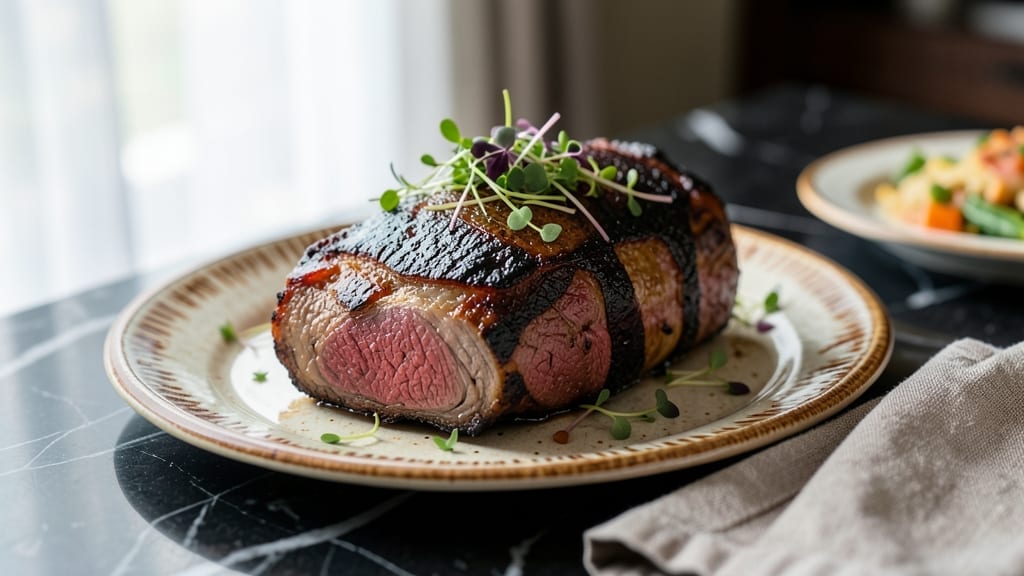
Master the beef rump roast smoker recipe to turn a tough cut into melt-in-your-mouth tenderness using low-and-slow techniques, and achieve restaurant-quality results right in your backyard. The key lies in precise temperature control, careful seasoning, and patience—three elements that turn an affordable cut into a showstopping centerpiece.
I’ve perfected this method after years of testing, ensuring every slice falls apart with just a fork’s touch while retaining deep, smoky flavor.
This recipe begins with a simple yet effective dry rub—just coarse salt, black pepper, and a touch of garlic powder—to let the natural beef flavors shine through. The magic happens at 225°F for 6-8 hours, using hickory or cherry wood for a balanced smoky aroma without overpowering the meat.
The slow cook ensures the connective tissue breaks down evenly, while the bark forms a rich, caramelized crust that seals in juices. No fancy equipment needed beyond a reliable smoker and a meat thermometer.
By the time you pull it from the smoker, the internal temperature will reach 195°F, guaranteeing that fork-tender texture. A proper rest—at least 30 minutes wrapped in butcher paper—locks in juices, while slicing against the grain ensures each bite is melt-in-your-mouth perfection.
Serve with classic smoked sides like roasted potatoes or grilled asparagus for a meal that feels like a celebration, no matter the occasion.
This method isn’t just for special occasions—it’s a foolproof technique that transforms weeknight dinners into memorable experiences. Whether you’re feeding a crowd or treating yourself, the results speak for themselves: beef so tender it practically dissolves, infused with smoky depth that elevates every bite. Let’s get smoking.
Ingredients for beef rump roast smoker
Just six essentials transform tough beef into smoky perfection—no shortcuts, all flavor.
| Ingredient | Amount | Notes |
|---|---|---|
| Beef Rump Roast 🥩 | 4 lb | Bone-in for flavor, trimmed of excess fat |
| Coarse Kosher Salt 🧂 | 2 tbsp | Diamond Crystal preferred for texture |
| Freshly Ground Black Pepper 🌶️ | 1 ½ tbsp | Cracked peppercorns for best flavor |
| Garlic Powder 🧄 | 1 tbsp | Freshly ground preferred |
| Hickory Wood Chips 🌳 | 1 package | Or cherry wood for fruitier smoke |
| Smoker Fuel (Charcoal or Wood Pellets) 🔥 | 2 packages | For consistent 225°F heat |
| Butcher Paper 📄 | 1 sheet | For wrapping post-smoke |
| Yellow Onion 🧅 | 1 whole | Quartered, for optional bedding |
| Fresh Rosemary 🌿 | ½ cup | Sprigs for aroma, optional |
| Apple Cider Vinegar 🍎 | 1 tbsp | For spritzing during smoke |
| Beef Au Jus 🍲 | 1 cup | Store-bought or homemade |
| Meat Thermometer 🌡️ | 1 whole | Instant-read preferred |
[recipe_ingredient_scaler]
The beef is everything here. Rump roast from a trusted butcher—like Snake River Farms or your local meat counter—has the right marbling for tenderness. Look for a roast with a thick fat cap (about 1/4-inch) to protect the meat during the long cook. If you can’t find rump, top round works in a pinch, but expect slightly less marbling. The wood chips? Hickory gives classic smoke, but cherry adds sweetness—mix both for depth. Buy them pre-soaked at Traeger stores or your grocery’s BBQ section to save time.
No hickory? Mesquite or pecan chips work too, but they’re stronger—reduce the amount by half. The garlic powder can be swapped for fresh garlic rubbed under the skin (about 6 cloves), but powder’s convenience wins for weeknight smoking. That said, skip the pre-mixed rubs—they’re loaded with sugar that burns at 225°F. For the vinegar spritz, apple cider or white wine vinegar both work, but avoid balsamic—it’s too sweet. The au jus? Store-bought works fine, but homemade (just pan drippings + beef broth) tastes like you slaved over it.
Smoked beef reheats like a dream—better the next day, honestly. Wrap the roast in butcher paper (not foil—it traps steam) and store for up to 5 days in the fridge. For longer storage, slice against the grain, portion into freezer bags, and freeze for 3 months. Pro tip: Let it come to room temp before reheating in a 200°F oven with a splash of beef broth—keeps it juicy. The au jus? Freeze it in ice cube trays for quick flavor boosts later.
Why You’ll Love This Recipe
- No-Fuss Smoking: Between the dry-brine and the butcher paper wrap, the hard work is already done. Just fire up the smoker, toss on the hickory chips, and let the 225°F heat do the rest—no babysitting required.
- Smoky Garlic Magic: The garlic powder and hickory smoke create this perfect balance—bold enough to stand out, but not overpowering. It’s like a warm hug for your taste buds, with that crispy bark holding up to every bite.
- Leftovers That Last: This roast keeps for five days in the fridge or three months frozen, sliced against the grain. My kids even ask for seconds on day three—proof it’s worth the effort.
- Budget-Friendly Feast: A 4 lb rump roast feeds a crowd without breaking the bank, especially when you use store-bought au jus and skip the fancy cuts. Plus, the hickory wood chips are a one-time splurge for endless meals.
Step-by-step instructions for beef rump roast smoker recipe
Here’s the foolproof method I use to transform a tough rump roast into melt-in-your-mouth tenderness.
Prepare and Season the Roast for Maximum Flavor
Start by trimming any excess fat from the 4 lb beef rump roast, leaving about ¼ inch of fat cap for moisture during smoking. Pat the roast dry with paper towels—this step is crucial for developing that perfect bark later. In a small bowl, mix together the 2 tbsp coarse kosher salt, 1½ tbsp freshly ground black pepper, and 1 tbsp garlic powder. Rub this generously all over the roast, pressing the spices into the meat so they adhere well.
Place the seasoned roast on a wire rack set over a baking sheet. This elevation allows heat to circulate evenly. Let it sit uncovered in the refrigerator for 12-24 hours. This dry-brining process enhances tenderness and creates a flavorful crust. Real talk: Don’t skip this step—it makes all the difference in texture and flavor.
Set Up the Smoker and Begin the Low-and-Slow Process
Fill the smoker with the 2 packages of smoker fuel (charcoal or wood pellets) and add the 1 package of hickory wood chips to the smoke box. Light the fuel and preheat the smoker to 225°F. I’ve found this temperature range is ideal for breaking down connective tissues without drying out the meat. Place the quartered 1 yellow onion and ½ cup fresh rosemary sprigs on the smoker grate below the roast—these will infuse additional flavor as they smoke.
Once the smoker reaches 225°F and you see clean, blue smoke (not thick white), place the roast fat-side up on the grate. The fat will render slowly and baste the meat as it cooks. Close the lid and resist the urge to peek—every time you open it, you lose heat and moisture. This is where patience pays off. Use the 1 meat thermometer to monitor internal temperature.
Spritz and Monitor for Perfect Tenderness
After the first 2 hours of smoking, remove the roast and spritz it generously with the 1 tbsp apple cider vinegar using a spray bottle. This step is critical—it keeps the surface moist, prevents a dry bark, and helps break down collagen for maximum tenderness. Return the roast to the smoker, fat-side up, and continue cooking.
Every 30-60 minutes after the initial spritz, repeat this process. You’ll know you’re on track when the meat thermometer shows the internal temperature reaching 165°F after about 6-8 hours. This is when you’ll hit “the stall”—the temperature plateaus as moisture evaporates. Don’t panic; this is normal and expected. The roast will eventually push through this phase.
Wrap and Finish for Unmatched Juiciness
When the internal temperature hits 165°F, remove the roast from the smoker and wrap it tightly in the 1 sheet of butcher paper. This technique, known as the Texas crutch, helps push the roast through the stall while maintaining that beautiful bark. Return it to the smoker and continue cooking until the internal temperature reaches 203°F. This final stage typically takes another 3-5 hours, depending on your roast’s size and density.
During this time, prepare the 1 cup beef au jus by heating it gently in a small saucepan over medium heat. Keep it warm until the roast is finished. The roast is done when the meat thermometer shows 203°F and the meat is fork-tender with no resistance. The external bark should be dark and crusty, while the interior should be rich and moist.
Rest and Slice for Maximum Juiciness
Remove the roast from the smoker and transfer it to a cutting board. Tent loosely with foil and let it rest for at least 30 minutes. This resting period allows the juices to redistribute throughout the meat, ensuring every slice is moist and flavorful. Pour the warmed 1 cup beef au jus into a small saucepan and keep it warm for serving.
Slice the roast against the grain into ½-inch thick slices. Each slice should be incredibly tender, with a beautiful mahogany bark on the outside and a rich, pink interior. Serve immediately with the beef au jus spooned over the top. The combination of smoky, tender beef with the rich au jus is truly unbeatable. This method guarantees a roast that’s so tender it practically melts in your mouth.
Pro Tips For Making Beef Rump Roast Smoker
- Skip the Vinegar Spritz: I learned this the hard way—spritzing too early (before the first 2 hours) turns your roast into a soggy mess. Wait until the meat’s had time to develop that initial bark, then use the apple cider vinegar like armor against drying out. A little less is fine; you’re not marinating it, just keeping it moist.
- Wrap in Butcher Paper: Foil is the enemy of bark. Butcher paper lets the roast breathe while trapping just enough moisture to push through the stall without steaming the outside. Tightly wrap it like a burrito—no gaps—and your crust will stay dark and crispy while the inside melts.
- Hold the Pellet Heat: If your smoker’s running hotter than 225°F, you’re fighting the stall from the start. Check your pellet flow or charcoal placement—consistent low heat is the only way to avoid tough, dry meat. A thermometer on the grate tells you the truth; don’t guess.
- Rest Like Your Dinner Depends on It: Thirty minutes is the minimum, but if you’re impatient like me, you’ll cut into it early and regret it. Tent that roast loosely with foil and let it sit—juices redistribute, slices stay juicy, and your guests won’t side-eye their plates. Trust me, it’s worth the wait.
Make-ahead tips for beef rump roast smoker
Pre-Smoking Prep
I prep everything the night before to save time on the big day. After trimming your 4 lb rump roast and patting it dry, mix your 2 tbsp kosher salt, 1.5 tbsp black pepper, and 1 tbsp garlic powder in a bowl.
Rub it all over the meat and place it on a wire rack in the fridge—this dry brine works its magic overnight. Trust me, the flavor difference is night and day compared to same-day seasoning. 🌟
Wood Chip Prep Hack
Soak your 1 package hickory wood chips in cold water for at least 30 minutes before smoking. This prevents them from burning too quickly and creates consistent smoke. Drain them right before adding to your smoker’s smoke box.
If you’re short on time, buy pre-soaked chips from Traeger—they’re worth the convenience. I always keep a backup package handy in case my first batch doesn’t work.
Smoker Setup Checklist
Before lighting your smoker, organize everything you’ll need within arm’s reach. Have your meat thermometer, spray bottle with vinegar, and beef au jus ready to go. I also keep a small bowl of rosemary sprigs and onion quarters nearby for easy access during the cook.
This prevents fumbling around when the roast hits the stall phase. Organization is key to avoiding stress during the long cook. ⏰
Make-Ahead Sauce
Prepare your 1 cup beef au jus ahead of time—either make it from scratch or heat up store-bought. I like to simmer it with a splash of red wine and a bay leaf for extra depth.
Store it in the fridge until you’re ready to use it during the final wrapping stage. This way, you’re not scrambling to prepare it while the roast is still cooking. The extra flavor boost is worth the effort.
Portioning for Leftovers
If you know you’ll have leftovers, slice the roast against the grain into ½-inch portions right after resting. Package them in freezer bags with a splash of the au jus for moisture. Label each bag with the date—these freeze beautifully for up to 3 months.
When reheating, I recommend wrapping individual portions in foil and warming in a 200°F oven for 20 minutes to maintain tenderness. This method keeps every bite just as delicious as the day it was smoked. 💫
Nutrition facts
Frequently asked questions
Why does the recipe call for dry-brining the roast overnight?
The 12-24 hour dry-brine lets the 2 tbsp kosher salt and 1.5 tbsp black pepper penetrate deeply into the meat, breaking down proteins for tenderness while creating a flavorful bark. This step is non-negotiable for that perfect balance of juiciness and seasoning—skipping it means missing out on restaurant-quality results.
How do I handle the “stall” when cooking the roast?
When the internal temperature hits 165°F after 6-8 hours, the meat’s moisture evaporates, causing the temperature to stall. This is normal! Wrap the roast in butcher paper and return it to the smoker—this “Texas crutch” technique helps it push through the stall while keeping that delicious bark intact. Patience is key during this phase.
Can I use foil instead of butcher paper for wrapping?
No—foil traps steam and creates soggy bark, ruining the texture. Butcher paper allows moisture to escape while keeping the roast juicy. Trust the process: the paper lets the meat finish cooking evenly without losing that perfect crust.
What’s the best way to reheat leftovers?
Slice the roast against the grain and wrap portions in foil. Reheat in a 200°F oven for 20 minutes—this maintains tenderness and prevents drying out. Add a splash of beef au jus to the foil for extra moisture. Leftovers taste even better the next day!
Why does the recipe specify quartered onions and rosemary?
The 1 yellow onion and ½ cup rosemary placed below the roast create aromatic smoke that infuses flavor into the meat. They’re optional but add depth—think of them as natural aromatics for your smoker. Skip them if you prefer minimal flavor, but they’re worth it for that extra layer of complexity.

Trained in classic French technique but raised on slow-cooked ribs and spicy rubs, she blends culinary skill with smoke and soul.
- Chinese Braised Beef Brisket with Daikon Recipe: Silky Tender Meat and Crunchy Roots - October 18, 2026
- Oklahoma Joe’s Smoked Beans Recipe: Slow-Smoked Flavor That Rivals the Original - October 18, 2026
- Beef Brisket Chili Recipe: Slow-Simmered Richness with Deep Flavor Layers - October 18, 2026