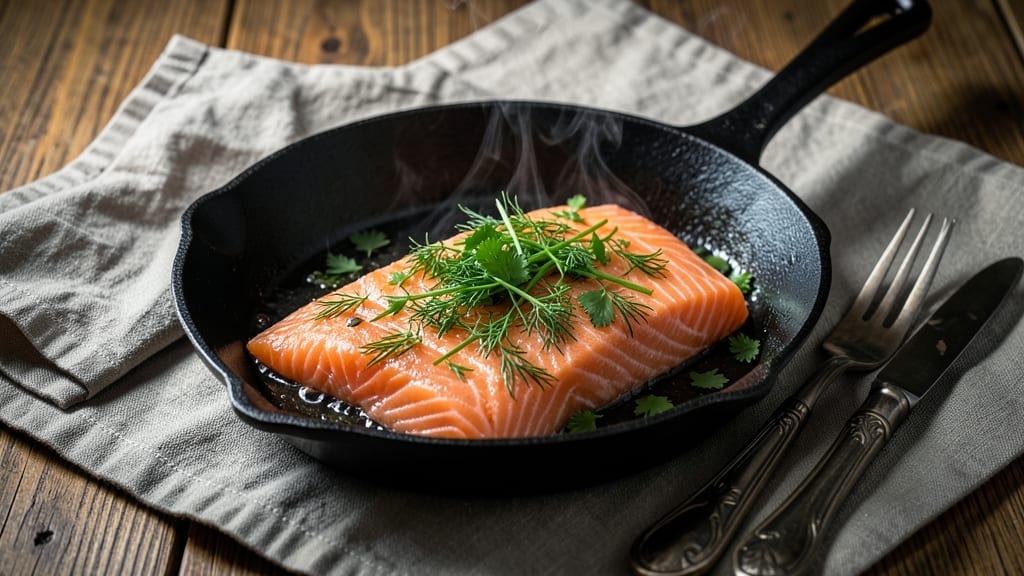
Cold smoked salmon transforms delicate fish into a luxurious centerpiece that’s rich, tender, and packed with smoky depth—perfect for elevating any meal. 💛 I’ve perfected this technique over years of experimenting with Pacific Northwest salmon, and the results are worth the effort: silky, flavorful fillets that pair beautifully with bright sides like cucumber-dill bites and creamy dill sauce.
The secret lies in the slow, low-temperature smoking process, which infuses the salmon with a subtle wood-fired aroma without overpowering its natural sweetness. Unlike hot smoking, cold smoking preserves the fish’s delicate texture while adding complexity.
This method works best with fresh, high-quality salmon, and the brining step ensures perfect seasoning every time.
By the end, you’ll have restaurant-quality smoked salmon that’s crispy when seared lightly and creamy in the center—ideal for serving with fresh baguette slices, capers, and a dollop of homemade dill sauce. The combination of textures and flavors makes this dish feel special without requiring advanced skills.
Whether you’re hosting a dinner party or treating yourself to a gourmet meal, this recipe delivers professional results at home. Let’s get started with the step-by-step guide to achieve that perfect balance of smoky richness and freshness.
Ingredients for cold smoked salmon
Pacific Northwest salmon, wood chips, and bright herbs—just the essentials for restaurant-quality smoked salmon bites.
| Ingredient | Amount | Notes |
|---|---|---|
| Fresh Atlantic Salmon Fillets 🐟 | 1 ½ lb | Skin-on, center-cut, sushi-grade preferred |
| Wood Chips for Smoking 🌲 | 1 cup | Alder or applewood, food-grade |
| Coarse Kosher Salt 🧂 | ½ cup | Diamond Crystal preferred for brining |
| Granulated White Sugar 🍚 | ¼ cup | For balanced brine sweetness |
| Fresh Dill Weeds 🌿 | ½ cup | Stems removed, loosely packed |
| Fresh Lemon Zest 🍋 | 1 tbsp | Bright, organic preferred |
| Extra-Virgin Olive Oil 🫒 | ¼ cup | High-quality, fruity variety |
| Persian Cucumbers 🥒 | 2 whole | Seedless, firm, skin-on |
| Capers 🌿 | ¼ cup | Nonpareils, drained, rinsed |
| Freshly Cracked Black Peppercorns 🌶️ | 1 tsp | Freshly ground for aroma |
| Sour Cream 🥛 | ½ cup | Full-fat, room temperature |
| Heavy Cream 🥛 | ¼ cup | Cold, for stable emulsion |
| Butter 🧈 | 2 tbsp | Unsalted, softened for sauce |
| Fresh Chives 🌱 | 2 tbsp | Finely chopped, for garnish |
| Baguette Slices 🍞 | 8 pieces | Crusty, lightly toasted |
[recipe_ingredient_scaler]
The salmon is everything here. Pacific Northwest wild-caught delivers the richest flavor—look for sushi-grade at specialty markets or well-stocked grocery stores like Whole Foods or Trader Joe’s for pre-cut fillets. If you’re buying whole, ask for center-cut pieces with the skin intact; it helps the fillets hold shape during smoking. The wood chips? Alder gives that classic Pacific Northwest vibe, but applewood works beautifully too—just make sure they’re food-grade. For the brining, Diamond Crystal kosher salt dissolves perfectly, and the sugar balances the salt without overpowering. Pro tip: Soak the wood chips overnight before smoking for maximum aroma.
No alder chips? Hickory or cherry adds depth, though the flavor profile shifts slightly. Running low on fresh dill? Dried dill at one-third the amount works in a pinch, but fresh is absolutely essential for that bright, herby punch. The cucumbers should be Persian type—seedless and crisp. If you can’t find them, regular cucumbers work if you remove the seeds. For the capers, nonpareils are the smallest and most delicate—avoid the larger berry-style ones. The dill sauce calls for full-fat sour cream (trust me on this), and if you’re feeling fancy, swap the black pepper for freshly cracked Tellicherry peppercorns for a more complex aroma. Every little detail matters when you’re aiming for that restaurant-quality finish.
Smoked salmon keeps beautifully in the fridge for 3-4 days if wrapped tightly in parchment and stored in an airtight container. For longer storage, freeze for up to 2 months—just thaw overnight in the fridge before serving. The dill sauce can be made a day ahead and stored in the fridge, but give it a quick whisk before serving to restore its silky texture. The cucumber bites hold up for 2 days if kept in an airtight container, though they’re best enjoyed fresh. Pro move: Assemble the baguette slices and sauce separately, then toast the bread just before serving to keep everything crisp. This dish shines at room temperature, so take it out of the fridge 30 minutes before serving to let the flavors meld.
Why You’ll Love This Recipe
- I’ll be real: sushi-grade salmon can feel pricey, but this recipe stretches it into three components (salmon, bites, and sauce) without waste. The ½ cup sour cream and ¼ cup heavy cream make the sauce feel indulgent, but the rest—fresh dill, capers, even the baguette—are pantry staples. For the cost of takeout, you get a dish that’s actually better.
- No-Fuss Smoking: Honestly, scoring the salmon and the 10-minute brine are the only real steps that take effort—everything else is hands-off while the smoker does its magic. That 6-8 hour cold smoke at 85°F? It’s like setting your oven to “hold” while you prep the rest, and by the time you’re toasting baguette slices, the salmon is already perfect.
- Smoky Magic Unlocked: The almond-soft texture from the ½ cup coarse kosher salt and ¼ cup sugar brine, paired with that delicate alder smoke from the 1 cup wood chips? It’s not just salmon—it’s a flavor transformation. The capers and lemon zest cut through the richness, while the creamy dill sauce (with its ¼ cup fresh dill) ties it all together in a bite that’s chef’s kiss.
- Impress Without the Stress: Between us, this is my secret weapon for last-minute dinner parties. Cold smoked salmon slices onto crispy cucumber bites with toasted baguette bases? It looks fancier than it is, and the 15-minute chill time means you can prep ahead. Plus, the leftovers? Just as good the next day—wrapped tightly in parchment, they’ll keep for days.
Step-by-step instructions for cold smoked salmon
Here’s how to transform fresh salmon into delicate, smoky bites with perfect texture and flavor.
🔥 Step 1: Prepare the Salmon for Cold Smoking
Start by scoring the skin side of the 1½ lb fresh atlantic salmon fillets in a diamond pattern using a sharp knife. This creates channels for the smoke to penetrate deeply while keeping the skin intact. Pat the fillets dry with paper towels—moisture is the enemy of proper smoking.
Create a brine by dissolving the ½ cup coarse kosher salt and ¼ cup granulated white sugar in 4 cups cold water. Submerge the salmon in the brine for 10 minutes, then remove and pat dry again. This step ensures the salmon absorbs just enough salt for flavor without becoming overly salty. Let the fillets air-dry uncovered in the refrigerator for 1 hour—this drying process is crucial for that perfect bark when smoked.
🔥 Step 2: Smoke the Salmon Low and Slow
Set up your cold smoker with the 1 cup wood chips for smoking (alder or applewood) and preheat to 85°F. Arrange the dried salmon fillets on the smoker grates, skin-side down. Smoke for 6-8 hours until the salmon reaches an internal temperature of 145°F and develops a beautiful, deep pink color.
Here’s the thing—don’t rush this process. Cold smoking should be gentle and slow. You’ll know it’s ready when the skin becomes slightly tacky and the flesh feels firm but still moist. If the smoke isn’t flowing properly, add more wood chips. The salmon should have that distinct smoky aroma without being overpowering.
👨🍳 Step 3: Prepare the Crispy Cucumber Bites
While the salmon smokes, slice the 2 persian cucumbers into ½-inch thick rounds. Arrange them on a baking sheet lined with paper towels and sprinkle with the 1 tsp freshly cracked black peppercorns. Let them sit for 15 minutes to draw out excess moisture, then pat dry with fresh paper towels—this ensures they’ll crisp up beautifully.
Lightly toast the 8 baguette slices in a dry skillet over medium heat for 1-2 minutes per side until golden and crisp. Set aside to cool slightly. Here’s where it gets fun—brush each toasted slice with 1 tablespoon of the ¼ cup extra-virgin olive oil, then sprinkle with a pinch of the ½ cup fresh dill weeds. These will serve as the crispy base for your bites.
🥘 Step 4: Assemble the Crispy Cucumber and Dill Bites
On each toasted baguette slice, arrange 2 cucumber rounds side by side. Top each cucumber with a thin slice of the cold smoked salmon (about ¼-inch thick). Sprinkle with the remaining ½ cup fresh dill weeds and a pinch of the 1 tbsp fresh lemon zest. The acidity from the zest brightens the rich, smoky salmon flavor.
For the finishing touch, scatter the ¼ cup capers evenly over the salmon slices. The briny capers cut through the richness of the salmon and add a delightful contrast. Arrange the bites on a platter and chill in the refrigerator for 15 minutes before serving—this lets the flavors meld together perfectly.
🍳 Step 5: Make the Creamy Dill Sauce
In a chilled bowl, whisk together the ½ cup sour cream, ¼ cup heavy cream, and 2 tbsp softened butter until smooth and fully combined. This cold mixture is key for a stable emulsion. Gradually fold in the remaining ½ cup fresh dill weeds, being careful not to overmix—you want visible flecks of dill for texture and color.
Transfer the sauce to a serving bowl and let it sit at room temperature for 10 minutes before serving. The sauce should be thick but still spoonable, with a vibrant green hue from the dill. Serve the creamy dill sauce alongside the crispy cucumber and dill bites for dipping—each bite of salmon will be complemented by the cool, herby sauce.
Pro Tips For Making Cold Smoked Salmon
- Score Like a Pro: That diamond pattern on the skin isn’t just decoration—it’s how the smoke gets deep into the fillet without tearing the skin. Use a sharp knife and cut just enough to let the smoke work its magic, but don’t go too deep or you’ll end up with a mushy texture. I used to rush this, and the salmon always came out unevenly smoked.
- Salt Then Chill: The 10-minute brine is non-negotiable, but the real magic happens in that 1-hour fridge dry. If you skip the drying, the skin won’t crisp, and the smoke won’t cling. Spread the fillets on a wire rack over a tray—this lets air circulate so they dry evenly. Trust me, the difference between a tacky skin and a perfect bark is just patience.
- Smoke Consistently: Cold smoking at 85°F might feel slow, but if the temperature fluctuates—even by 5°F—you’ll end up with patchy smoke or overcooked edges. Check your smoker’s thermometer every hour and add wood chips as needed. I learned this after a batch turned out smoky on one side and bland on the other—now I keep a spare cup of chips nearby.
- Whisk Cold for Sauce: The creamy dill sauce will split if you whisk it warm, no matter how much butter you add. Chill your bowl first, then mix the sour cream, heavy cream, and butter until just combined before folding in the dill. It’s a little extra effort, but the sauce stays silky instead of grainy. I’ve ruined three batches by skipping this—don’t be like me.
Troubleshooting your cold smoked salmon
Smoker Temp Troubles
Your cold smoker might not hit 85°F consistently, especially on chilly Portland mornings. I’ve learned to preheat the smoker for 30 minutes before adding salmon—this stabilizes the temperature.
If your smoker struggles, try wrapping the wood chips in aluminum foil with a few holes punched in it to slow the burn rate. Keep an eye on the internal temp of the salmon—it should stay below 145°F during smoking.
Brine Balance Issues
If your salmon tastes too salty after brining, reduce the ½ cup kosher salt to ¼ cup next time. I’ve found that 10 minutes in the brine is perfect for flavor without overpowering.
For less saltiness, rinse the fillets under cold water for 30 seconds after removing them from the brine—this helps remove excess salt while keeping the seasoning.
Drying the Salmon
Skipping the 1-hour air-dry step can lead to a soggy bark on your salmon. I’ve made this mistake before—trust me, the extra time is worth it! Place the fillets on a wire rack over a baking sheet in the fridge to ensure even drying.
If you’re short on time, pat them extra dry with paper towels before smoking—just don’t skip the drying entirely.
Wood Chip Woes
If your smoke isn’t flowing properly, your wood chips might be too dry. Soak them in water for 30 minutes before using—this ensures a steady, flavorful smoke. I keep a small bowl of water nearby to occasionally spray the chips if they start burning too quickly.
Alder chips burn faster than applewood, so adjust quantities accordingly. 1 cup is a good starting point, but you might need ½ cup more depending on your smoker’s efficiency.
Cucumber Crispiness
If your cucumber rounds aren’t crisping up, they might still be too moist. After drawing out moisture with black peppercorns, double-check they’re completely dry before toasting. I’ve found that toasting them in a single layer on a wire rack (instead of a baking sheet) helps them crisp faster.
For extra crispiness, broil them for 1-2 minutes at the end of toasting—just keep an eye on them to avoid burning!
Sauce Separation
If your creamy dill sauce separates, it’s likely because the butter wasn’t softened enough or the bowl wasn’t chilled. Whisk in the 2 tbsp softened butter slowly while the sour cream and heavy cream are still cold.
For extra stability, add 1 tsp cornstarch to the heavy cream before mixing—this helps thicken the sauce naturally. If it separates after making, blend it with an immersion blender for 10 seconds to restore the emulsion.
Nutrition facts
Frequently asked questions
Why does the salmon need to air-dry before smoking?
The 1-hour air-dry step is critical for developing that perfect smoky bark on your salmon. When the fillets dry thoroughly, the smoke adheres better, creating a flavorful crust while keeping the inside tender. Skipping this step can lead to a soggy texture instead of that elegant, crispy finish.
Can I use regular cucumbers instead of Persian?
Yes, but Persian cucumbers are ideal because they’re seedless and hold their shape better. If you use regular cucumbers, remove the seeds and pat them extra dry after the 15-minute peppercorn soak. This ensures they crisp up beautifully when toasted.
How do I know when the salmon is fully smoked?
Your salmon is ready when it reaches an internal temperature of 145°F, the skin feels slightly tacky, and the flesh is firm but still moist. The color should be a deep pink, and the aroma should be smoky yet not overpowering. If unsure, use a meat thermometer—it’s the most reliable way to check.
Can I make the dill sauce ahead of time?
The sauce keeps well in the fridge for up to 2 days if stored in an airtight container. Just give it a quick whisk before serving to restore its smooth texture. For the best flavor, let it sit at room temperature for 10 minutes before serving.
What if my smoker isn’t hitting the right temperature?
Preheat your smoker for 30 minutes before adding salmon to stabilize the 85°F temperature. If it struggles, wrap wood chips in foil with holes punched in them to slow the burn. Keep an eye on the salmon’s internal temp—it should stay below 145°F during smoking.

Trained in classic French technique but raised on slow-cooked ribs and spicy rubs, she blends culinary skill with smoke and soul.
- Chinese Braised Beef Brisket with Daikon Recipe: Silky Tender Meat and Crunchy Roots - October 18, 2026
- Oklahoma Joe’s Smoked Beans Recipe: Slow-Smoked Flavor That Rivals the Original - October 18, 2026
- Beef Brisket Chili Recipe: Slow-Simmered Richness with Deep Flavor Layers - October 18, 2026