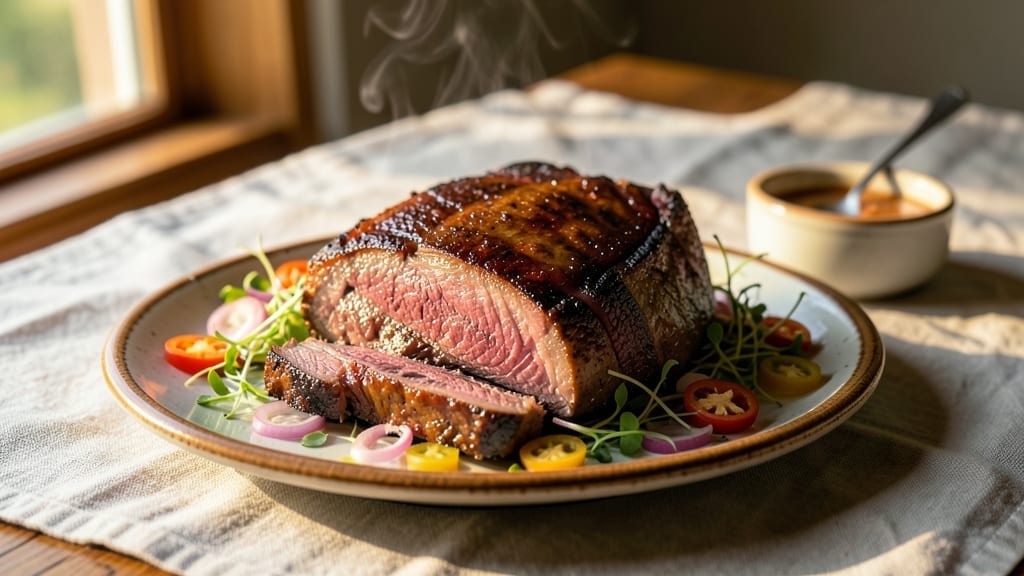
This Cooks Country Texas brisket recipe delivers the same legendary tenderness and bold bark that makes Central Texas BBQ legendary—right in your backyard. The secret lies in mastering the low-and-slow technique, where patience transforms tough beef into melt-in-your-mouth perfection.
I’ve refined this method over years of testing, ensuring every slice meets the gold standard of Texas tradition.
The process begins with a dry rub of coarse salt, black pepper, and smoked paprika, applied generously to create that iconic dark bark. Using post oak or pecan wood for smoke adds depth without overpowering the beef’s natural flavor.
The brisket spends 12-16 hours in the smoker at 225°F, where the magic happens—collagen breaking down into gelatin for unmatched tenderness.
When done, the brisket will probe to 195-203°F, yielding slices so tender they nearly fall apart. Resting for 1-2 hours before slicing against the grain ensures clean, juicy pieces. Serve with classic sides like pickled jalapeños, baked beans, and buttery cornbread to complete the Texas BBQ experience.
This isn’t just a recipe—it’s a restaurant-quality result achievable with precision and care. Whether you’re hosting a backyard gathering or treating yourself to a slow-cooked masterpiece, this method delivers perfectly tender brisket every time. Let’s get smoking.
Ingredients for cooks country texas brisket
Legendary Texas brisket begins with these premium ingredients and precise technique.
| Ingredient | Amount | Notes |
|---|---|---|
| Texas Packer Brisket 🥩 | 8 lb | Whole packer cut, fat cap intact |
| Coarse Kosher Salt 🧂 | ½ cup | Diamond Crystal preferred |
| Freshly Ground Black Pepper 🌶️ | 2 tbsp | Cracked peppercorns preferred |
| Smoked Paprika 🌶️ | 1 tbsp | High-quality Spanish smoked |
| Granulated Garlic Powder 🧄 | 1 tbsp | Freshly ground preferred |
| Onion Powder 🧅 | 1 tbsp | Non-GMO preferred |
| Yellow Mustard Seeds 🌿 | 1 tbsp | Whole seeds, toasted |
| Post Oak Wood Chips 🌳 | 4 lb | Or pecan wood alternative |
| Apple Wood Chips 🍎 | 2 lb | For complementary sweetness |
| Beef Tallow or Bacon Fat 🧈 | ½ cup | For spritzing during cook |
| Yellow Onion 🧅 | 1 whole | Quartered for spritz |
| Fresh Garlic Cloves 🧄 | 6 cloves | Minced for spritz |
| Beef Stock 🍲 | 1 cup | For final spritz |
| Butter 🧈 | ½ cup | Cultured butter preferred |
[recipe_ingredient_scaler]
The Texas Packer brisket is non-negotiable—look for the fat cap (1/4-inch minimum) at specialty butchers like Snake River Farms or US Wellness Meats. Avoid pre-trimmed briskets from standard grocery stores; the fat renders down to self-baste the meat. For wood, post oak dominates Texas BBQ for its bold, smoky profile, but pecan offers a slightly sweeter alternative. If using store-bought chips, Traeger brand delivers consistent quality. The beef tallow for spritzing should be rendered from grass-fed beef—US Wellness sells pre-rendered tallow in 16-ounce jars perfect for this purpose.
No post oak available? Hickory works in a pinch, though it leans more aggressive. For the rub, Diamond Crystal kosher salt dissolves perfectly, while Morton can leave grainy residue. Mustard seeds should be toasted in a dry skillet for 2 minutes to deepen their flavor—don’t skip this step. The apple wood adds subtle sweetness; substitute with cherry if unavailable. For spritzing, beef stock from Pacific Foods brand (no MSG) elevates the final product. The butter should be cultured (like Plugrá) for richer flavor when mixed with the bark.
Store uncooked brisket in the coldest part of your fridge for up to 5 days before smoking. Once cooked, wrap tightly in butcher paper (not foil) and refrigerate for 3-4 days or freeze for 3 months. The wood chips should be soaked for 30 minutes before use, then drained well. Pre-portion the rub in ziplock bags for easy application. Leftovers reheat best in a 275°F oven wrapped in foil for 1 hour—never microwave, as it dries out the texture.
Why You’ll Love This Recipe
- No-Fuss Prep Night: Honestly, the hardest part is waiting 12-24 hours for that Coarse Kosher Salt and Smoked Paprika to really sink into the Texas Packer Brisket. But honestly? That’s the magic. Just trim the fat cap, slather on the seasoning, and let it chill. No chopping, no fuss—just pure hands-off flavor building.
- Smoky Perfection: The combo of Post Oak and Apple Wood Chips gives you that deep, woodsy richness, while the Granulated Garlic Powder and Onion Powder add a subtle punch. That crispy bark? It’s like eating a smoky, savory hug—every bite’s got layers, and the Beef Tallow spritz keeps it juicy. Chef’s kiss.
- Leftovers That Win Hearts: Cook once, eat twice (or three times). This brisket holds up so well—sliced into sandwiches, piled onto tacos, or just piled high on a plate with Cultured Butter drizzled on top. My kids devour it cold the next day, and honestly? The flavors only get better. Budget-friendly too—8 pounds of brisket feeds a crowd without breaking the bank.
- Weekend Warrior: No need to be a pitmaster to nail this. The butcher paper wrap during the stall? Game-changer. And that 2-hour rest? Worth every second. It’s the kind of dish you can start Friday morning and enjoy all weekend—no stress, just deliciousness. Perfect for when you want to impress but don’t want to spend the day slaving over the grill.
Step-by-step instructions for smoked Texas brisket
The secret to tender brisket lies in patience and precision—here’s how to execute it flawlessly.
Prepare and Season the Brisket
Begin by trimming the fat cap of the 8 lb Texas Packer Brisket to a uniform ¼-inch thickness using a sharp boning knife. Leave the fat intact elsewhere to protect the meat during smoking. Pat the surface dry with paper towels to ensure maximum bark adhesion.
In a small bowl, combine ½ cup Coarse Kosher Salt, 2 tbsp Freshly Ground Black Pepper, 1 tbsp Smoked Paprika, 1 tbsp Granulated Garlic Powder, 1 tbsp Onion Powder, and 1 tbsp Yellow Mustard Seeds. Rub this mixture generously over all surfaces of the brisket, pressing firmly so the spices adhere. Place the seasoned brisket on a wire rack set over a baking sheet and refrigerate uncovered for 12-24 hours—this step is non-negotiable for deep flavor penetration and crisp bark formation.
Set Up the Smoker for Low and Slow Cooking
Soak the 4 lb Post Oak Wood Chips and 2 lb Apple Wood Chips in water for 30 minutes, then drain. Preheat your smoker to 225°F using a 50/50 mix of the soaked wood chips. Allow 1 hour for the smoker to stabilize and produce clean, blue smoke—thick white smoke indicates unburned wood and poor flavor development.
Position the brisket fat-side up on the smoker grate. The fat will render and baste the meat as it cooks, creating that signature bark. Insert a meat probe into the thickest part of the flat—this is where you’ll monitor internal temperature. Maintain 225°F throughout the cook, resisting the urge to adjust the heat or open the smoker unnecessarily, as each interruption can add 15-20 minutes to cook time.
Spritz and Monitor for the Stall
Every 2 hours, prepare a spritz by combining ½ cup Beef Tallow or Bacon Fat, 1 cup Beef Stock, 1 Yellow Onion (quartered), and 6 Fresh Garlic cloves (minced) in a blender until smooth. Strain through a fine-mesh sieve to remove any pulp. Use this mixture to lightly spritz the brisket every 2 hours—this prevents the surface from drying out and adds moisture back into the air.
Cook undisturbed until the internal temperature reaches 165-170°F—this is where you’ll encounter “the stall,” a period where the temperature plateaus as moisture evaporates. This phase can last 1-3 hours. When the stall occurs, wrap the brisket tightly in butcher paper (not aluminum foil) and return it to the smoker. The paper allows the bark to develop while trapping steam to tenderize the meat.
Finish and Rest for Maximum Tenderness
Continue smoking until the internal temperature reaches 200-205°F and a probe slides in like butter with no resistance. This typically takes an additional 4-6 hours after wrapping. The bark should be deep mahogany with a slight sheen, and the meat should pull apart effortlessly at the grain.
Remove the brisket from the smoker and transfer it to a cutting board. Tent loosely with aluminum foil and let it rest for 2 hours in a cooler or warm oven set to 170°F. This resting period allows juices to redistribute, ensuring each slice is moist and flavorful. During this time, melt the ½ cup Butter in a small saucepan over low heat and keep it warm for serving.
Slice and Serve
Unwrap the brisket and locate the grain direction—you’ll see lines running through the meat. Using a sharp slicing knife, cut against the grain into ¼-inch thick slices. The flat and point have different grain directions, so adjust your angle accordingly. Serve immediately with the melted butter drizzled over the top and additional Freshly Ground Black Pepper for a finishing touch.
Each slice should be tender enough to pull apart with a gentle tug, with a dark, crispy bark on the outside and a pink smoke ring just beneath. The meat should be juicy, not dry, and packed with deep, smoky flavor. This method guarantees a brisket that rivals any competition entry—perfectly tender with a bark that shatters at the first bite.
Pro Tips For Making Cooks Country Texas Brisket
- Trim the Fat Right: That fat cap’s got a job—protect the meat—but if you leave it too thick, you’ll end up with grease fires instead of flavor. A ¼-inch thickness (no more, no less) lets it render just enough to baste the brisket without turning your smoker into a fryer. And for heaven’s sake, use a sharp knife—mangled fat means uneven bark.
- Salt Like It’s a Crime: I used to skimp on the ½ cup Coarse Kosher Salt, thinking “more is too much.” Wrong. That crust—the bark—needs salt to cling like glue to the meat. Press it in hard, especially on the flat where the grain runs. And don’t rinse it off after seasoning; the salt draws out moisture, which is exactly what you want for that deep, smoky crust.
- Stall? Wrap in Paper: The stall isn’t your enemy—it’s the meat’s way of saying, “I need help.” When you hit 165-170°F, don’t panic. Tightly wrap the brisket in butcher paper (not foil—not foil), and let the steam work its magic. I’ve seen people wrap too early or use foil, and the bark turns sad and soggy. Paper keeps the crust crisp while the center tenderizes.
- Spritz the Smart Way: That beef tallow spritz isn’t just for show—it’s the difference between dry brisket and melt-in-your-mouth perfection. But here’s the catch: strain it. Pulpy onion and garlic in your spritz = gunk on your smoker grate. Blend, strain, and spritz lightly—soak the bark, don’t drown it. And do it every 2 hours, no exceptions. Your future self will thank you when the meat doesn’t turn to leather.
Pro cooking tips for this dish
Mastering the Bark
That deep mahogany bark is what makes Texas brisket legendary—and it starts with your fat cap trim. Trim it to exactly ¼-inch thickness, but leave the surrounding fat intact to create a protective layer that renders down during cooking.
I’ve found that using a sharp boning knife from Wüsthof makes all the difference in achieving an even, crisp bark. Pat the meat dry before applying the rub—moisture is your enemy here. 🔥
Wood Selection Secrets
Post oak is the gold standard for Texas BBQ, but if you can’t find it, pecan wood is a close second—it adds subtle sweetness without overpowering. Avoid hickory unless you want a stronger, more aggressive flavor.
Soak your wood chips for 30 minutes and drain thoroughly to prevent flare-ups. I always use Traeger brand chips because they burn cleanly and produce consistent smoke.
Temperature Control
Maintaining 225°F is critical, but don’t let your smoker wander. I use a Thermoworks Smoke probe thermometer to monitor both the smoker and the brisket’s internal temperature.
If your smoker fluctuates more than ±10°F, invest in a quality pellet smoker or a Weber Smokey Mountain cooker for better temperature stability. Each time you open the smoker, you lose 15-20 minutes of cook time—minimize those interruptions.
Spritzing Like a Pro
Your spritz should be a balancing act—too much moisture and you’ll steam the bark, too little and the surface dries out. I blend ½ cup beef tallow with 1 cup beef stock, 1 quartered onion, and 6 minced garlic cloves for every spritz.
Strain it well to avoid clogging your spray bottle. Apply lightly every 2 hours—just enough to keep the bark moist without turning it into a soggy mess.
Wrapping Wisdom
When you hit the stall at 165-170°F, switch to butcher paper (never foil) to trap steam while still allowing the bark to crisp. I wrap the brisket tightly but leave a small gap at the top so excess moisture can escape.
This step shaves 2-3 hours off your cook time and keeps the bark intact. After wrapping, the internal temperature will rise 1-2°F per hour until it reaches 200-205°F.
Resting Redefined
Resting isn’t just about letting the meat sit—it’s about juice redistribution. After removing the brisket from the smoker, tent it loosely with foil and place it in a cooler or a 170°F oven.
I’ve found that resting for 2 hours is ideal, but if you’re short on time, even 1 hour will make a noticeable difference. This step transforms a dry, tough piece of meat into something so tender it practically falls apart. 💫
Nutrition facts
Frequently asked questions
Why does the brisket need to rest after smoking?
The 2-hour rest is critical for redistributing juices throughout the meat. After smoking, the brisket’s internal heat causes juices to pool toward the center. Resting allows these juices to evenly spread, ensuring each slice is moist and flavorful. Skipping this step often results in dry, tough brisket. Tent loosely with foil during resting to retain warmth without trapping steam.
What’s the difference between wrapping in butcher paper vs. aluminum foil?
Butcher paper is the Texas BBQ secret—it allows steam to escape while keeping the bark intact, unlike foil which steams the meat and softens the crust. Wrap your brisket tightly in butcher paper during the stall phase, then return it to the smoker. This method preserves that coveted deep mahogany bark while finishing the meat to perfection.
Can I use a different wood besides post oak?
Yes! While post oak is traditional, pecan wood is a fantastic alternative—it adds subtle sweetness without overpowering. Avoid hickory unless you prefer a stronger, more aggressive flavor. Soak your wood chips for 30 minutes and drain well to prevent flare-ups. For consistency, stick to Traeger brand chips if possible.
How do I know when the brisket is done?
Your brisket is ready when it reaches 200-205°F internally, and a probe slides in like butter with no resistance. The bark should be deep mahogany with a slight sheen, and the meat should pull apart effortlessly at the grain. If unsure, check the probe test—it should feel silky smooth, not springy or firm. Patience here pays off!
What if my smoker temperature fluctuates?
Fluctuations of ±10°F are normal, but larger swings can ruin your cook. Use a Thermoworks Smoke probe to monitor temps, and consider upgrading to a pellet smoker or Weber Smokey Mountain cooker for stability. Minimize smoker openings—each time you peek, you lose 15-20 minutes of cook time. Consistency is key!

Trained in classic French technique but raised on slow-cooked ribs and spicy rubs, she blends culinary skill with smoke and soul.
- Chinese Braised Beef Brisket with Daikon Recipe: Silky Tender Meat and Crunchy Roots - October 18, 2026
- Oklahoma Joe’s Smoked Beans Recipe: Slow-Smoked Flavor That Rivals the Original - October 18, 2026
- Beef Brisket Chili Recipe: Slow-Simmered Richness with Deep Flavor Layers - October 18, 2026