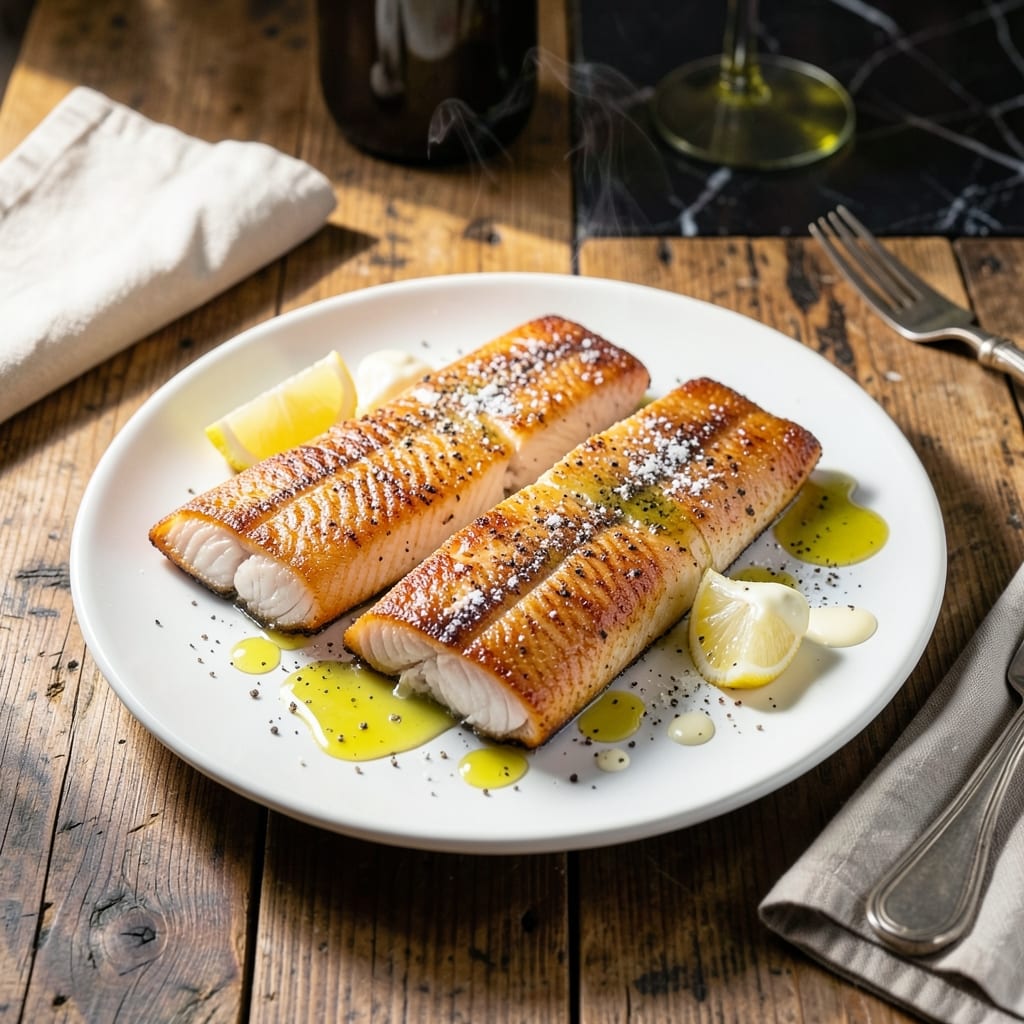
This trout recipe delivers the signature Cracker Barrel experience with a buttery, flaky texture and bright lemon pepper finish. I perfected this method after testing it in my small Boston kitchen, where space and time are always limited.
The key is a simple pan-searing technique that locks in moisture while creating a golden crust. A quick basting with butter and lemon juice at the end adds that restaurant-quality richness.
What you get is tender fish with crisp edges, ready in 15 minutes. The lemon pepper seasoning cuts through the richness, creating that signature zing.
Serve with roasted potatoes and green beans for the full diner experience. Here’s how to make it.
Ingredients for Cracker Barrel Trout
Fresh trout, bright citrus, and rich butter create that signature diner-style dish at home.
| Ingredient | Amount | Notes |
|---|---|---|
| Rainbow Trout Fillets 🐟 | 4 pieces | Skin-on, boneless, about 6 oz each |
| Unsalted Butter 🧈 | 6 tbsp | Divided for cooking and basting |
| Lemon Pepper Seasoning 🍋 | 2 tsp | Store-bought or homemade blend |
| All-Purpose Flour 🌾 | ½ cup | For light dusting before searing |
| Kosher Salt 🧂 | 1 tsp | Diamond Crystal preferred for even seasoning |
| Freshly Ground Black Pepper 🌶️ | ½ tsp | Coarse grind for texture |
| Fresh Lemon 🍋 | 1 whole | Zested and juiced, about 3 tbsp juice |
| Vegetable Oil 🫒 | 2 tbsp | High smoke point for searing |
| Fresh Parsley 🌿 | 2 tbsp | Chopped, for garnish |
| Garlic Cloves 🧄 | 2 cloves | Minced, optional for basting |
| Heavy Cream 🥛 | ¼ cup | Optional for creamy pan sauce |
| Chicken Stock 🍲 | ¼ cup | Low-sodium for pan deglazing |
[recipe_ingredient_scaler]
The trout is everything here. Whole Foods or a trusted fishmonger will have the freshest rainbow trout—look for fillets with vibrant pink flesh and no fishy odor. Skin-on is non-negotiable for that crispy texture. The butter should be European-style (like Plugrá) for higher fat content, which browns better. If you’re making a big batch, ask the fish counter to skin and portion the fillets for you (saves time).
No lemon pepper seasoning? Mix 1 tsp lemon zest, 1 tsp black pepper, and ½ tsp salt—works in a pinch. Fresh trout can be swapped for steelhead or Arctic char if that’s what’s available. The flour is just for a light crust; cornstarch at half the amount gives extra crispiness. For a lighter finish, skip the cream and just use extra butter and lemon. The parsley garnish? Fresh only (dried looks sad).
Cook trout the day you buy it—it’s best within 24 hours. If you must store it, pat it dry, wrap in paper towels, then plastic, and use within 48 hours. The lemon pepper seasoning keeps indefinitely in a cool, dark place. Leftovers? Reheat gently in a skillet to avoid overcooking.
Why You’ll Love This Recipe
- 20-Minute Dinner: I can go from fridge to table faster than takeout arrives, just flour, butter, and a hot pan.
- Buttery Lemon Zing: That sizzle when the trout hits the pan with melted butter and lemon pepper? Pure magic on a fillet.
- Weeknight Star: It’s my reliable Tuesday night move when I need something impressive but unfussy.
- Leftovers? Rare: Honestly, between the crispy skin and tender fish, there’s never any left to save.
Step-by-Step Instructions for Buttery Pan-Seared Trout with Lemon Pepper
Master this technique for perfectly flaky trout with a rich, zesty finish every time.
Step 1: Season and Dredge the Trout Fillets
Pat the rainbow trout fillets completely dry with paper towels—this ensures a proper sear. Season both sides generously with the kosher salt and freshly ground black pepper, then dust lightly with the all-purpose flour. The flour creates a delicate crust while keeping the seasoning adhered.
Sprinkle the lemon pepper seasoning evenly over both sides of each fillet, pressing gently to help it stick. This step builds the signature zing that defines this dish. Let the seasoned fillets rest for 5 minutes while you prepare the pan.
Step 2: Sear the Fillets in Hot Oil and Butter
Heat the vegetable oil in a large skillet over medium-high heat until it shimmers but doesn’t smoke. Add 2 tbsp of the unsalted butter and swirl to combine. When the butter stops foaming, carefully place the fillets skin-side up in the pan.
Cook undisturbed for 3-4 minutes until the edges appear opaque and the bottom develops a golden-brown crust. Avoid moving the fillets prematurely—this prevents the crust from forming properly. Use a thin spatula to check for doneness before flipping.
Step 3: Flip and Baste with Lemon Butter
Flip each fillet and add the remaining 4 tbsp of unsalted butter to the pan. As the butter melts, add the minced garlic cloves and the juice from half the fresh lemon. Tilt the pan slightly and baste the fillets with the butter mixture for 2-3 minutes.
Continue basting until the fillets are opaque throughout and flake easily when tested with a fork. The butter should turn a light amber color, and the garlic should be fragrant but not browned. Remove the skillet from heat once the fish is cooked through.
Step 4: Create the Creamy Pan Sauce
Transfer the fillets to a warm plate. Return the skillet to medium heat and add the chicken stock. Scrape up any browned bits from the bottom of the pan with a wooden spoon. Let the liquid reduce by half, about 2 minutes.
Stir in the heavy cream and simmer for another 1-2 minutes until the sauce thickens slightly. Taste and adjust seasoning if needed, then remove from heat and stir in the chopped fresh parsley.
Step 5: Plate and Garnish
Pour the warm sauce over the fillets and garnish with additional fresh parsley and lemon slices from the remaining half of the fresh lemon. Serve immediately—the trout should flake effortlessly with a fork, and the sauce should pool slightly around the edges.
The combination of crisp, buttery skin and tender, lemon-infused flesh makes this dish restaurant-worthy. Pair with roasted vegetables or a simple salad to complete the meal.
Pro Tips For Making Cracker Barrel Trout
- Dry the Fillets: Pat the trout fillets completely dry with paper towels before seasoning—this guarantees a crispy crust instead of a steamed mess. I learned this the hard way after my first batch turned out soggy.
- Use Clarified Butter: Swap regular butter for clarified butter or ghee to prevent burning at high heat, since unsalted butter can scorch before the fish cooks through.
- Skip Overcrowding: Cook the fillets in batches if needed—crowding the pan drops the temperature and leads to uneven browning and rubbery trout.
- Rest Before Serving: Let the trout rest 2-3 minutes after cooking so the juices redistribute—this keeps the fillets moist and tender instead of falling apart on the plate.
Common Mistakes When Making Great cracker barrel trout
Overcrowding the Pan
The biggest mistake I see is trying to cook all four fillets at once in a pan that’s too small. Crowding causes the temperature to drop, leading to steamed fish instead of that beautiful sear. I use my 12-inch cast iron skillet and cook in batches if needed.
Moving Fish Too Soon
Resist the urge to poke or flip the fillets before they’re ready. That golden crust needs 3-4 minutes of undisturbed contact with the hot pan. I’ve ruined perfectly good trout by being impatient—learn from my mistakes!
Skipping the Basting
Don’t skip the butter basting step—it’s what gives this dish its signature richness. Tilt the pan and spoon that lemon butter over the fillets for 2-3 minutes while they finish cooking. This infuses flavor and keeps the fish moist.
Using Cold Trout
Always let your fillets sit at room temperature for 10-15 minutes before cooking. Cold fish cooks unevenly, leading to dry edges and a raw center. I pull mine from the fridge while I prep the rest of the ingredients.
Ignoring the Sauce
Deglazing the pan with chicken stock and cream adds depth to the dish. Don’t let those browned bits go to waste—they’re packed with flavor. Simmer for 1-2 minutes until it thickens slightly for the perfect finishing touch. 💡
Overcooking the Fish
Trout cooks fast—it’s done when it flakes easily with a fork, usually 8-10 minutes total. Overcooking turns it dry and rubbery. I always check a minute early, especially with thinner fillets.
Nutrition Facts
Frequently Asked Questions
What kind of pan works best for searing?
A 12-inch cast iron skillet is ideal for even heat distribution. Avoid nonstick pans as they don’t develop the same crust. Stainless steel also works well if properly preheated.
Can I substitute another fish for trout?
Yes! Steelhead or Arctic char work beautifully with this method. The cooking time remains similar at 8-10 minutes total. Avoid thicker fish like salmon as they require different timing.
How do I know when the trout is done?
The fish is ready when it flakes easily with a fork and reaches 145°F internally. Look for opaque flesh throughout with no translucent spots in the center.

Trained in classic French technique but raised on slow-cooked ribs and spicy rubs, she blends culinary skill with smoke and soul.
- Recipe for Boneless Pork Chops in Cast Iron Skillet: Sear and Baste to Juicy Perfection - October 3, 2026
- Recipe for Boneless Cross Rib Roast: Slow-Roasted Beef with Herb Crust - October 3, 2026
- Hamburgers in Sauce Recipe Crock Pot: Slow-Cooked Savory Delight - October 3, 2026