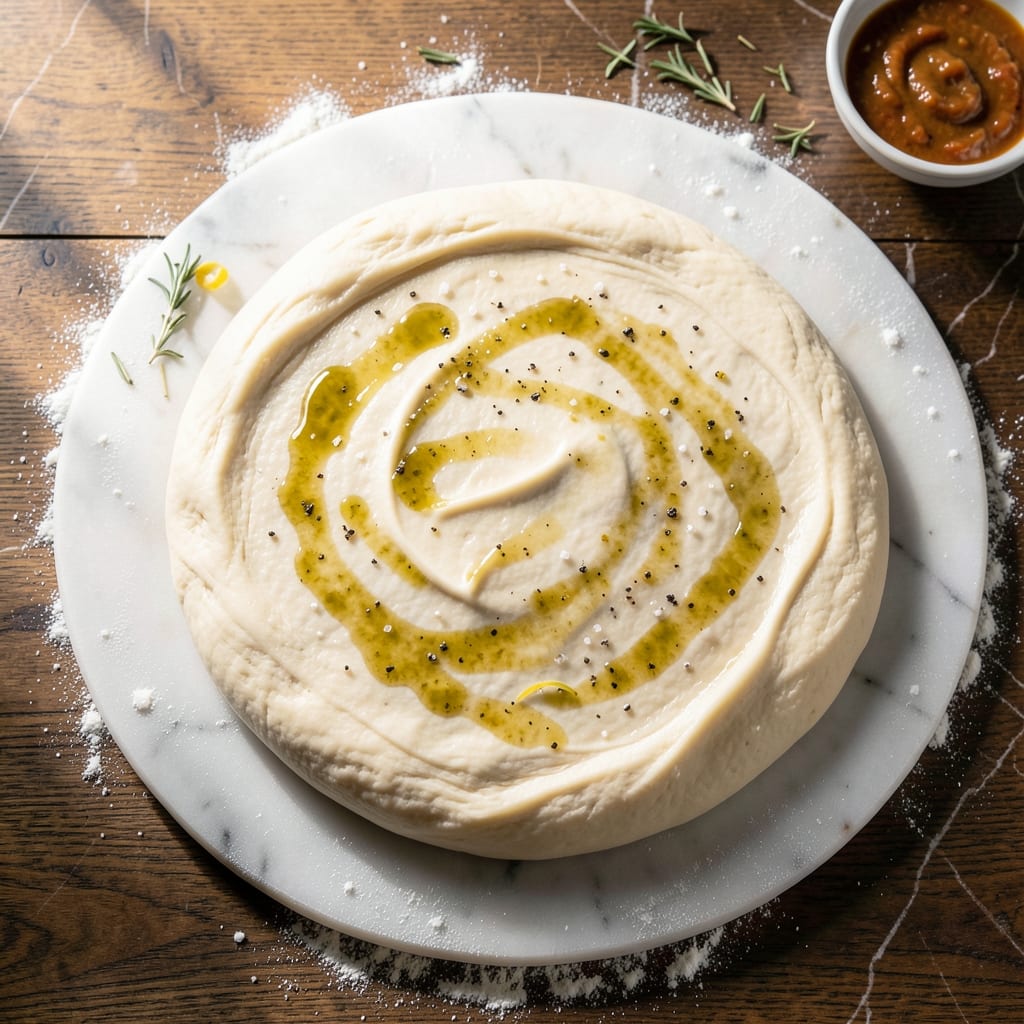
This three-ingredient dough proves you don’t need yeast for a fluffy, restaurant-worthy crust. Standing on a step stool in my grandmother’s Sicilian kitchen, I learned that simplicity often delivers the best results.
The secret lies in using self–rising flour, which eliminates the need for yeast while still creating a light, airy texture. No rising time means you can have fresh dough ready in minutes, perfect for those last-minute pizza cravings.
You’ll end up with a soft, pliable dough that bakes into a golden crust with just the right amount of chew. It’s the kind of recipe that makes homemade pizza accessible to everyone, regardless of experience.
Use it for classic Margherita, loaded veggie, or any topping combination you love. Here’s how to make it.
Ingredients for Easy Pizza Dough Recipe 3 Ingredients Without Yeast
Just four simple pantry items for a no-yeast pizza dough that feels gourmet.
| Ingredient | Amount | Notes |
|---|---|---|
| Self-Rising Flour 🌾 | 2 cups | All-purpose works with additions |
| Plain Greek Yogurt 🥛 | 1 cup | Full-fat for best texture |
| Olive Oil 🫒 | 2 tbsp | For dough softness and flavor |
| Salt 🧂 | ½ tsp | Optional for flavor enhancement |
[recipe_ingredient_scaler]
Self-rising flour is the magic here—Gold Medal or King Arthur brands are my go-to. If you can’t find it, mix 2 cups all-purpose flour with 1 tbsp baking powder and 1/2 tsp salt. The Greek yogurt needs to be full-fat (Fage or Chobani work great) for that perfect fluffy texture. Don’t skimp on the fat here—it’s what replaces the yeast’s magic.
No Greek yogurt? Sour cream at the same amount works in a pinch (stick to full-fat). For a dairy-free version, thick coconut yogurt can step in, but the texture won’t be identical. The olive oil can be any neutral oil if you’re out, but extra-virgin adds flavor worth keeping. Skip the salt if your self-rising flour already has it.
Dough keeps wrapped in the fridge for 2 days or frozen for 1 month. Let it sit at room temp for 30 minutes before rolling—cold dough cracks. Bake within a few hours of making for the fluffiest crust.
Why You’ll Love This Recipe
- No-Fuss Mixing: I just stir together self-rising flour, Greek yogurt, and a drizzle of olive oil—no rising, no yeast, no waiting.
- Crave-Worthy Crust: The yogurt makes it tender inside with a slight tang, and the olive oil gives that golden, crisp edge.
- Weeknight Rescue: Between us, this dough saves me when I need dinner fast—ready for toppings in minutes, even on a Tuesday.
- Pantry Friendly: I always have these four ingredients on hand, so pizza night never breaks the bank or my schedule.
Step-by-Step Instructions for No-Rise Pizza Dough
This method couldn’t be simpler, and it delivers perfect dough every time.
Step 1: Mix the Dry Ingredients
In a large bowl, combine the 2 cups Self-Rising Flour and 0.5 tsp Salt. I like to whisk them together for about 30 seconds to ensure the salt is evenly distributed throughout the flour.
This simple step might seem trivial, but it’s important for consistent seasoning in every bite. The self-rising flour already contains baking powder and salt, but I always add a touch more salt to enhance the flavor of the finished crust.
Step 2: Add Wet Ingredients and Combine
Make a well in the center of your flour mixture. Add the 1 cup Plain Greek Yogurt and 2 tbsp Olive Oil to the well. Using a wooden spoon or silicone spatula, begin mixing the ingredients together.
You’ll notice the dough starts to come together quickly. Once it becomes too stiff to mix with a spoon, switch to using your hands. The dough will be slightly sticky at first, but keep working it until all the flour is incorporated.
Step 3: Knead Briefly for Smooth Dough
Turn the dough out onto a lightly floured surface. Knead it gently for about 2-3 minutes until it becomes smooth and elastic. Don’t overwork it—you’re not developing gluten like in traditional dough, just bringing everything together.
If the dough sticks to your hands or the surface, add a small amount of flour, 1 tablespoon at a time. The dough should be soft but not sticky when properly kneaded. You’ll know it’s ready when it springs back lightly when pressed.
Step 4: Rest and Shape the Dough
Divide the dough into 4 equal portions for individual pizzas, or leave it whole for one large pizza. Let it rest for 5-10 minutes while you preheat your oven to 425°F.
This resting period makes the dough easier to shape. When ready, roll each portion out on a floured surface to your desired thickness. I find that a ¼-inch thickness gives the perfect balance between crispy and chewy.
Step 5: Pre-Bake for Perfect Crust
Transfer your shaped dough to a parchment-lined baking sheet. For the crispiest crust, I recommend pre-baking the dough for 5-7 minutes before adding toppings. This prevents a soggy bottom.
Look for the edges to just begin turning light golden brown—that’s your signal it’s ready for toppings. Then add your sauce, cheese, and other toppings, and bake for another 8-10 minutes until the crust is fully golden and crisp.
Pro Tips For Making Easy Pizza Dough Recipe 3 Ingredients Without Yeast
- Chill the Dough: Let the dough rest in the fridge for at least 30 minutes before rolling it out. I learned this the hard way—warm dough sticks and tears, while chilled dough holds its shape and rolls out smooth.
- Use Full-Fat Yogurt: Skip the low-fat versions; full-fat Greek yogurt gives the dough that tender, elastic texture you want. The extra fat mimics what yeast would normally provide.
- Don’t Overwork It: Mix just until the flour is incorporated—overworking makes the dough tough. Sounds weird, but it works: the less you handle it, the lighter the crust.
- Preheat Your Pan: Heat your baking sheet or skillet in the oven for 10 minutes before adding the dough. A hot surface guarantees a crispy bottom without needing yeast to puff it up.
Troubleshooting This Dish
Dough Too Sticky
If your dough feels too wet, add 1 tbsp flour at a time while kneading. I often need an extra 2-3 tbsp when using full-fat Greek yogurt. Work it in completely before adding more. Over-flouring can make your crust dense, so add sparingly. 💡
Dough Too Dry
When the dough crumbles, drizzle in 1 tsp olive oil or warm water at a time. The self-rising flour brands vary in moisture content, which affects the texture. Mix thoroughly after each addition until the dough holds together.
Not Rising Properly
Check your self-rising flour’s expiration date—old baking powder loses potency. If your dough isn’t puffing, try adding 1 tsp fresh baking powder to the dry mix. Also, ensure your yogurt is at room temperature for best chemical reaction.
Crust Too Dense
Overworking the dough develops too much gluten, making it tough. Knead just until smooth, about 2-3 minutes max. Also, don’t roll it too thin—¼-inch thickness gives that perfect fluffy texture my Nonna loved. ✨
Browning Unevenly
Rotate your baking sheet halfway through baking for even color. If the top browns too fast, move the pan to a lower rack. For extra crispiness, brush the crust with 1 tbsp olive oil before pre-baking.
Dough Tears When Rolling
Let it rest for 10 minutes after kneading—this relaxes the gluten. If it still resists, use a rolling pin dusted with flour and work from the center outward. Patching small tears with extra dough works fine and bakes seamlessly.
Nutrition Facts
Frequently Asked Questions
Can I use regular flour instead of self-rising?
Yes! Mix 2 cups all-purpose flour with 1 tbsp baking powder and ½ tsp salt to replicate self-rising. This creates the same leavening effect for a fluffy crust.
Why does the dough need Greek yogurt?
The acidity in yogurt reacts with the baking powder, creating lift without yeast. Full-fat Greek yogurt adds richness and tenderness, mimicking the texture of traditional dough.
Can I make this dough ahead of time?
Store wrapped in the fridge for up to 2 days or freeze for 1 month. Let it sit at room temperature for 30 minutes before rolling to prevent cracking.
What if my dough tears when rolling?
Let it rest for 10 minutes first to relax the gluten. If tears occur, patch them with extra dough—it bakes seamlessly. Always roll from the center outward.

Trained in classic French technique but raised on slow-cooked ribs and spicy rubs, she blends culinary skill with smoke and soul.
- Recipe for Boneless Pork Chops in Cast Iron Skillet: Sear and Baste to Juicy Perfection - October 3, 2026
- Recipe for Boneless Cross Rib Roast: Slow-Roasted Beef with Herb Crust - October 3, 2026
- Hamburgers in Sauce Recipe Crock Pot: Slow-Cooked Savory Delight - October 3, 2026