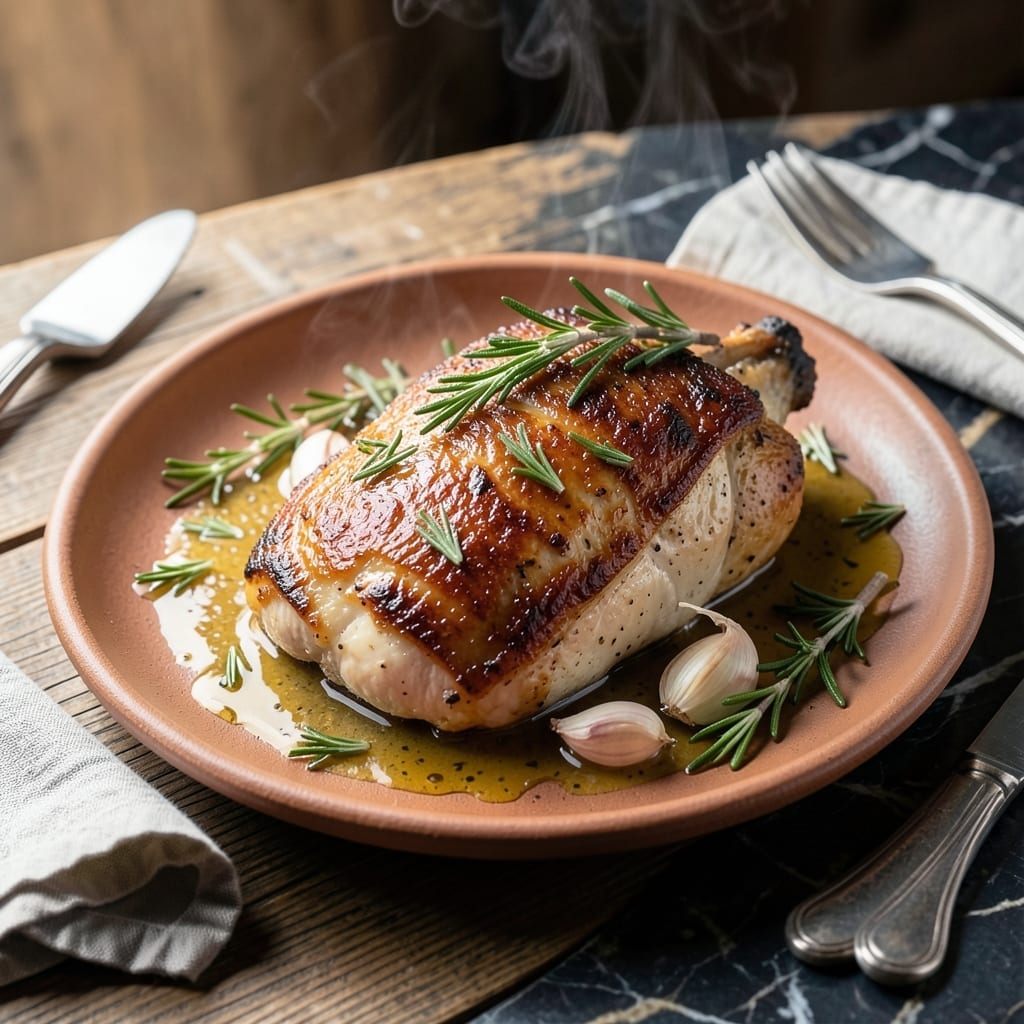
Wild game cooking can feel intimidating, but this pheasant breast recipe proves it doesn’t have to be complicated. One pan, 30 minutes, and simple ingredients transform lean pheasant into a tender main course with restaurant-quality results.
The key is a hot sear followed by a gentle finish in the oven. This method locks in juices while ensuring the meat cooks evenly without drying out. I developed this approach after several attempts that ended with tough, overcooked pheasant.
You’ll end up with juicy, flavorful pheasant that pairs beautifully with wild rice or roasted vegetables. The pan sauce, made from the cooking juices, adds a finishing touch that ties everything together.
This method works equally well with other wild game birds like quail or partridge.
Ingredients for Easy Recipe for Pheasant Breast
Lean pheasant breast, fresh herbs, and a few pantry staples create elegant wild game in one pan.
| Ingredient | Amount | Notes |
|---|---|---|
| Pheasant Breast 🍗 | 1 ½ lb | Boneless, skin-on preferred |
| Kosher Salt 🧂 | 1 ½ tsp | Diamond Crystal preferred |
| Black Pepper 🌶️ | 1 tsp | Freshly cracked for best flavor |
| Garlic Cloves 🧄 | 4 cloves | Minced finely for even distribution |
| Fresh Thyme Sprigs 🍃 | 4 whole | Leaves stripped from stems |
| Fresh Rosemary Sprig 🌿 | 1 whole | Finely chopped for sauce |
| Unsalted Butter 🧈 | 3 tbsp | Divided for cooking and sauce |
| Olive Oil 🫒 | 2 tbsp | High smoke point variety |
| Shallot 🧅 | 1 whole | Finely diced for pan sauce |
| Dry White Wine 🍷 | ½ cup | Sauvignon Blanc recommended |
| Chicken Stock 🥣 | ½ cup | Low-sodium preferred for reduction |
| Dijon Mustard 🟡 | 1 tsp | Smooth variety for sauce |
| Heavy Cream 🥛 | ¼ cup | Full-fat for richness |
[recipe_ingredient_scaler]
The pheasant breast quality is paramount. Source from reputable wild game suppliers or specialty butchers like D’Artagnan. Look for fresh, not previously frozen, with a deep reddish-brown color and no off odors. Skin-on breasts provide better flavor and moisture retention during cooking. If using frozen, thaw completely in the refrigerator overnight for even cooking.
For substitutions, chicken breast works in a pinch (reduce cooking time by one-third). No white wine? Dry vermouth or additional chicken stock with a splash of lemon juice. Fresh herbs can be replaced with dried at one-third the amount. Shallots may be swapped for yellow onion, though the flavor profile will be slightly more pungent. Heavy cream can be replaced with half-and-half for a lighter sauce.
Pheasant breast is best cooked immediately after purchase or thawing. Store raw pheasant in the coldest part of your refrigerator for no more than 2 days. The finished dish keeps well refrigerated for 3-4 days and reheats beautifully, though the meat is most tender when served fresh from the pan.
Why You’ll Love This Recipe
- I’ll be real: it’s ready before the kids finish arguing over who sets the table.
- One Pan Wonder: I sear the pheasant breast with just salt, pepper, and a few thyme sprigs—hardly any chopping, and cleanup’s a breeze.
- Rich & Savory: Honestly, the garlic cloves and fresh thyme give it this deep, earthy flavor that’s way more interesting than plain chicken.
- Weeknight Friendly: I’ll be real: it’s ready before the kids finish arguing over who sets the table.
Step-by-Step Instructions for Pheasant Breast
This method delivers tender, flavorful results with minimal effort in just one pan.
Step 1: Season and Sear the Pheasant Breast
Pat the 1.5 lb pheasant breast completely dry with paper towels. This removes excess moisture that would prevent proper browning. Season both sides aggressively with the 1.5 tsp kosher salt and 1 tsp black pepper, pressing the seasoning into the meat so it adheres well.
Heat a large oven-safe skillet over medium-high heat. Add 2 tbsp olive oil and 1 tbsp unsalted butter. When the butter stops foaming, add the pheasant breast skin-side down. Sear undisturbed for 5-6 minutes until the skin is deep golden brown and crisp. Flip and sear the other side for 3-4 minutes until equally browned.
Step 2: Aromatics and Initial Deglazing
Remove the pheasant to a plate. Reduce heat to medium and add the finely diced shallot to the same skillet. Cook for 2-3 minutes until softened and just beginning to caramelize around the edges.
Add the 4 cloves minced garlic cloves, leaves from 4 whole fresh thyme sprigs, and finely chopped fresh rosemary sprig. Stir constantly for 30 seconds until fragrant. Be careful not to let the garlic burn. Pour in the 0.5 cup dry white wine to deglaze, scraping up all the browned bits from the bottom of the pan.
Step 3: Build the Pan Sauce
Let the wine reduce by half, about 3-4 minutes. Add the 0.5 cup chicken stock and 1 tsp Dijon mustard, whisking to combine. Bring to a simmer and cook for 2-3 minutes until the liquid reduces slightly and begins to thicken.
Reduce heat to low and whisk in the remaining 2 tbsp unsalted butter, one tablespoon at a time, allowing each to melt completely before adding the next. Then slowly pour in the 0.25 cup heavy cream, whisking constantly to create a smooth, velvety sauce. Simmer for 1-2 minutes until it coats the back of a spoon.
Step 4: Finish and Rest
Return the pheasant breast to the skillet, skin-side up. Spoon the sauce over the top to coat evenly. Transfer the skillet to a preheated 375°F oven and bake for 8-10 minutes until the pheasant reaches an internal temperature of 155°F.
Remove from the oven and transfer the pheasant to a cutting board. Let it rest for 5-10 minutes before slicing. This allows the juices to redistribute, ensuring each serving is tender and moist. Serve the sliced pheasant with the pan sauce spooned over the top.
Pro Tips For Making Easy Recipe For Pheasant Breast
- Dry the Breast: Pat the pheasant breast completely dry with paper towels before seasoning—I learned this the hard way after my first few attempts came out steamed instead of seared.
- Start Hot: Use a screaming-hot pan with a little oil to get a good crust on the breast, then lower the heat to medium to cook through without burning the garlic and thyme.
- Rest It Well: Let the cooked breast rest for at least 5 minutes under foil before slicing, or all those juices will end up on the cutting board instead of in the meat.
- Crush the Garlic: Lightly crush the garlic cloves with the side of your knife before adding them to the pan—this releases more flavor without the risk of burning small pieces.
Dietary Considerations for This easy recipe for pheasant breast
Lean Protein Power
Pheasant breast is an excellent choice for those watching their fat intake, with just 2 grams of fat per 4-ounce serving. This makes it ideal for keto or low-fat diets. I love that it delivers 28 grams of protein in the same portion size. 💪
Gluten-Free Friendly
This recipe is naturally gluten-free as written. Just ensure your chicken stock and Dijon mustard are certified gluten-free brands. I use Imagine Foods stock and Annie’s mustard for peace of mind.
Dairy Modifications
For a dairy-free version, swap the butter for olive oil and use coconut cream instead of heavy cream. The sauce will be just as rich and flavorful. I’ve tested this with Native Forest coconut cream.
Low-Carb Option
To keep this dish low-carb, serve with roasted vegetables or a simple salad instead of wild rice. The pheasant itself has 0 grams of carbs, making it perfect for carb-conscious eaters.
Allergen Notes
This recipe contains dairy from the butter and cream. For those with egg allergies, there’s no concern here. Always check labels on your wine and stock for potential allergens. ❤️
Game Meat Considerations
Wild game like pheasant can be leaner than store-bought poultry. If you’re new to wild game, start with farm-raised pheasant from a trusted butcher like D’Artagnan. It tends to be more consistent in texture.
Nutrition Facts
Frequently Asked Questions
Can I use skinless pheasant breast?
Yes, but the skin helps retain moisture during cooking. If using skinless, reduce searing time to 3-4 minutes per side and add 1 tbsp extra butter to the pan to compensate for lost fat.
What if my pheasant turns out dry?
Overcooking is the most common issue. Pull it from the oven at 155°F—it will rise to 160°F while resting. Also, let it rest for the full 5-10 minutes before slicing to redistribute juices.
Can I make this without wine?
Substitute 0.5 cup chicken stock plus 1 tbsp lemon juice for the wine. The acidity helps balance the richness of the cream and butter. Simmer as directed to develop flavor.
How do I know when it’s done?
Use a meat thermometer for accuracy. The pheasant is safe to eat at 155°F internal temperature. The meat should feel firm but still slightly springy when pressed.

Trained in classic French technique but raised on slow-cooked ribs and spicy rubs, she blends culinary skill with smoke and soul.
- Recipe for Boneless Pork Chops in Cast Iron Skillet: Sear and Baste to Juicy Perfection - October 3, 2026
- Recipe for Boneless Cross Rib Roast: Slow-Roasted Beef with Herb Crust - October 3, 2026
- Hamburgers in Sauce Recipe Crock Pot: Slow-Cooked Savory Delight - October 3, 2026