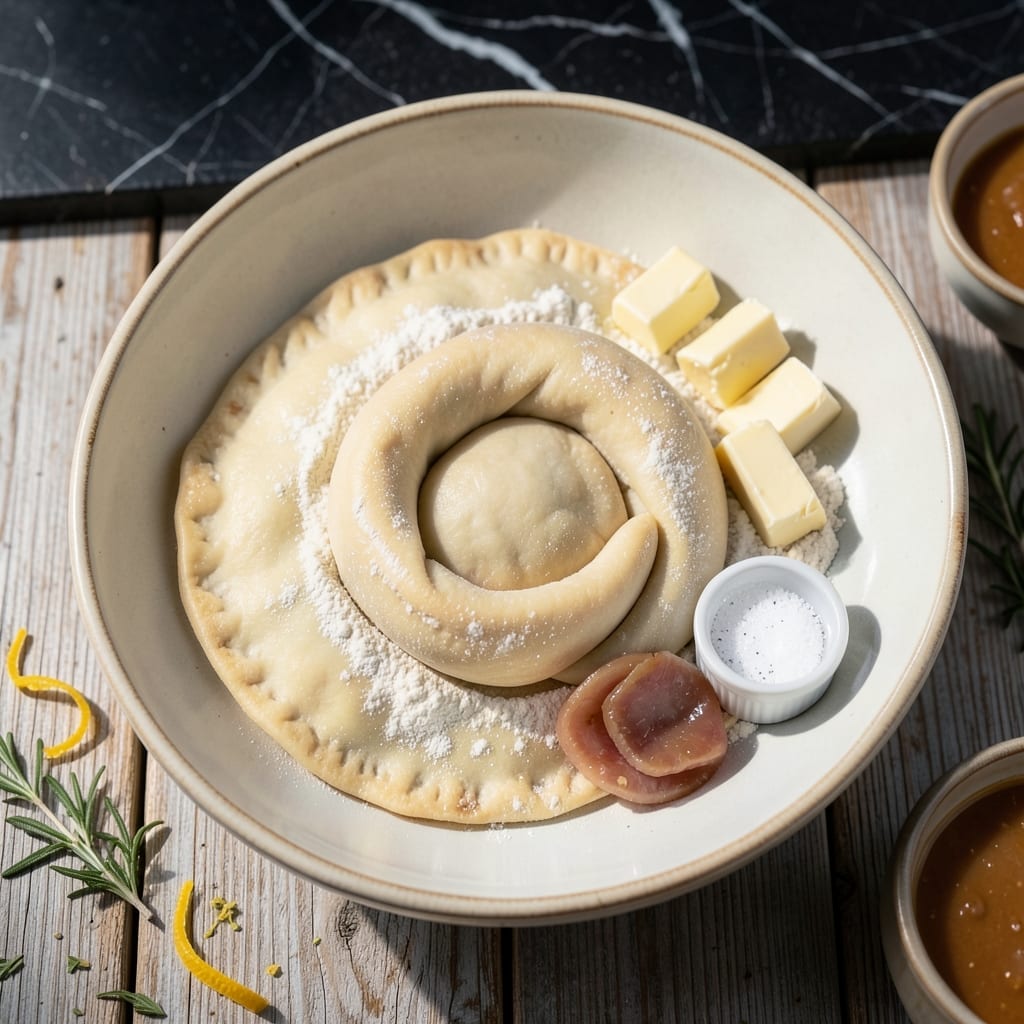
Crisp golden shells that flake apart with every bite—that’s the mark of a properly fried empanada crust. This recipe delivers flaky layers that crackle on contact, thanks to a precise blend of cold fats and minimal handling.
Working the line in Asheville taught me the value of a foolproof technique. Here, chilled butter and lard create the perfect texture, while a quick rest ensures the dough stays tender and workable.
The frying process is where the magic happens. Hot oil at the right temperature transforms the dough into a shatteringly crisp shell that holds its shape and seals in the filling.
Whether you’re filling them with spiced beef or sweet pumpkin, this crust guarantees professional results every time.
Ingredients for Empanada Crust Recipe for Frying
Cold fats and minimal handling create the flaky layers that define this crust.
| Ingredient | Amount | Notes |
|---|---|---|
| All-Purpose Flour 🌾 | 3 cups | Plus extra for dusting surface |
| Unsalted Butter 🧈 | ½ cup | Chilled and cubed |
| Lard 🥓 | ½ cup | Chilled and cubed |
| Ice Water 💧 | ½ cup | Plus more as needed |
| Fine Sea Salt 🧂 | 1 tsp | Dissolved in water |
| Granulated Sugar 🍚 | 1 tsp | Optional for sweet fillings |
| Distilled White Vinegar 💧 | 1 tbsp | Helps tenderize dough |
| Large Egg Yolk 🥚 | 1 whole | Optional for extra richness |
| Vegetable Shortening 🫒 | 2 tbsp | For frying stability |
| Neutral Oil 🫒 | 4 cups | For deep frying, like canola or vegetable |
[recipe_ingredient_scaler]
The fats are critical here. Chilled butter and lard create distinct flaky layers—don’t substitute with margarine or oil. For best results, use high-quality lard from a trusted butcher or Latin market. The flour should be all-purpose; bread flour develops too much gluten. If your kitchen is warm, chill the mixing bowl and utensils beforehand to keep everything cold.
No lard? All-butter works in a pinch but loses some crispness. For a neutral flavor, swap lard for vegetable shortening. The vinegar tenderizes the dough—apple cider vinegar can substitute if needed. Skip the sugar if making savory empanadas. The egg yolk adds richness but can be omitted for a simpler version. Always use ice water to prevent the fats from softening.
Rest the dough for 30 minutes before rolling—this relaxes the gluten. Unused dough freezes well for up to 1 month. Fried empanadas are best eaten fresh but will keep in an airtight container for 2 days. Reheat in a dry skillet to restore crispness.
Why You’ll Love This Recipe
- Five Ingredients: That’s it—flour, butter, lard, ice water, salt. No hunting for specialty items.
- Flaky Layers: The butter and lard combo gives that crispy, golden shatter with every bite.
- Freezer Friendly: I double the batch, freeze the discs, and fry fresh empanadas whenever the craving hits.
- Pocket Change: A pound of flour, a stick of butter, and a little lard feed a crowd for less than a takeout meal.
Step-by-Step Instructions for Empanada Crust for Frying
This method guarantees shatteringly crisp layers that hold up to frying while staying tender inside.
Step 1: Combine Dry Ingredients and Cut in Fats
In a large bowl, whisk together the 3 cups All-Purpose Flour, 1 tsp Fine Sea Salt, and 1 tsp Granulated Sugar until evenly distributed. The salt should be fully dissolved in the 0.5 cup Ice Water beforehand to ensure even seasoning.
Add the 0.5 cup Unsalted Butter and 0.5 cup Lard, both chilled and cubed, to the flour mixture. Use a pastry cutter or your fingers to work the fats into the flour until the mixture resembles coarse crumbs with pea-sized pieces of fat visible. This creates the flaky layers when baked.
Step 2: Incorporate Liquid Ingredients
Create a well in the center of the flour mixture. Add the 0.5 cup Ice Water, 1 tbsp Distilled White Vinegar, and 1 whole Large Egg Yolk. The vinegar helps tenderize the dough while the egg yolk adds richness for extra flakiness.
Use a fork to gradually incorporate the wet ingredients into the dry, mixing just until the dough begins to come together. It will look shaggy at this stage—that’s correct. Overworking the dough at this point would develop too much gluten, resulting in a tough crust rather than a flaky one.
Step 3: Knead and Rest the Dough
Turn the dough out onto a lightly floured surface and gather it into a rough ball. Knead gently just until it comes together, about 8-10 turns. The dough should be smooth but still show some streaks of fat—this marbling is essential for flaky layers.
Divide the dough into 4 equal portions, shape each into a disc, wrap in plastic, and refrigerate for at least 1 hour. This resting period allows the gluten to relax and the fats to firm up, making the dough easier to roll out and preventing shrinkage during frying.
Step 4: Roll and Cut the Dough
On a lightly floured surface, roll one disc of dough to about ⅛-inch thickness. Use a round cutter or bowl to cut out circles about 6 inches in diameter for standard empanadas. The exact size can vary based on your filling and preference.
Gather the scraps, re-roll once, and cut more circles. Avoid re-rolling more than once as this can make the dough tough. Keep the cut circles covered with a damp towel to prevent drying out while you work with the remaining dough.
Step 5: Fry to Golden Perfection
Heat the 4 cups Neutral Oil in a deep pot to 350-375°F. The oil is ready when a small piece of dough sizzles immediately and floats to the surface. Add the 2 tbsp Vegetable Shortening to the oil for added stability during frying.
Fry the empanadas in batches, being careful not to overcrowd the pot, for 3-4 minutes per side until they’re golden brown and puffed. The crust should be crisp and flaky with visible layers. Drain on paper towels and serve warm for the best texture.
Pro Tips For Making Empanada Crust Recipe For Frying
- Chill the Fat: Keep your butter and lard ice cold until mixing—cut it into the flour quickly so it stays in small, visible chunks. I learned this the hard way after ending up with tough, greasy crusts because the fat melted too soon.
- Rest the Dough: Give the dough at least 30 minutes in the fridge before rolling. My grandmother swore by this, and she was right: it relaxes the gluten and makes it way easier to handle without shrinking.
- Skip Warm Water: Use only ice water—about 4-6 tablespoons total—to keep the dough flaky. After burning a few batches, I finally figured out that warm water develops gluten, which is the last thing you want here.
- Fry at 350°F: Maintain steady oil temperature around 350°F to avoid soggy or overly greasy empanadas. Sounds weird, but it works: if it’s too hot, the outside burns before the inside cooks.
Pro Cooking Tips for This Dish
Chill Everything First
I learned this trick in Asheville—chill your mixing bowl and utensils for 15 minutes before starting. Cold fats mean flakier layers. David swears by this method for his famous chicken pot pie crust too. 💡
Precision Oil Temp
Use a deep-fry thermometer to maintain 350-375°F. Too cool and your empanadas will absorb oil. Too hot and they’ll brown before cooking through. I check with a Taylor Classic thermometer.
Avoid Overcrowding
Fry in batches with at least 2 inches between each empanada. This prevents temperature drops. I use my 8-quart Dutch oven for even heat distribution. Overcrowding leads to soggy crusts.
Perfect Crimp Technique
Seal edges tightly with a fork or by folding and pressing. This keeps fillings contained and creates those beautiful ridges. Dip your fork in flour to prevent sticking. Test one first—if it opens, press harder.
Rest Before Frying
Let filled empanadas rest 10 minutes before frying. This helps the dough relax and prevents shrinking. I learned this the hard way with my first batch that looked like deflated balloons. 🌡️
Drain Properly
Use a wire rack over paper towels for draining. This allows air circulation, keeping the crust crisp on all sides. Never stack them while hot—the steam will make them soggy. Serve immediately for maximum crunch.
Nutrition Facts
Frequently Asked Questions
Why use both butter and lard in the dough?
Butter adds flavor while lard creates superior flakiness. Together they make a crust that’s both tasty and shatteringly crisp.
Can I make the dough ahead of time?
Yes! The dough keeps in the fridge for 2 days or freezes well for up to 1 month. Let it thaw overnight before rolling.
How do I prevent oil from leaking during frying?
Seal edges tightly with a fork or by folding and pressing. Let filled empanadas rest for 10 minutes before frying to help the dough relax.
What’s the best oil for frying?
Use a neutral oil with a high smoke point like vegetable or canola. Heat to 350-375°F for perfect golden results.

Trained in classic French technique but raised on slow-cooked ribs and spicy rubs, she blends culinary skill with smoke and soul.
- Recipe for Boneless Pork Chops in Cast Iron Skillet: Sear and Baste to Juicy Perfection - October 3, 2026
- Recipe for Boneless Cross Rib Roast: Slow-Roasted Beef with Herb Crust - October 3, 2026
- Hamburgers in Sauce Recipe Crock Pot: Slow-Cooked Savory Delight - October 3, 2026