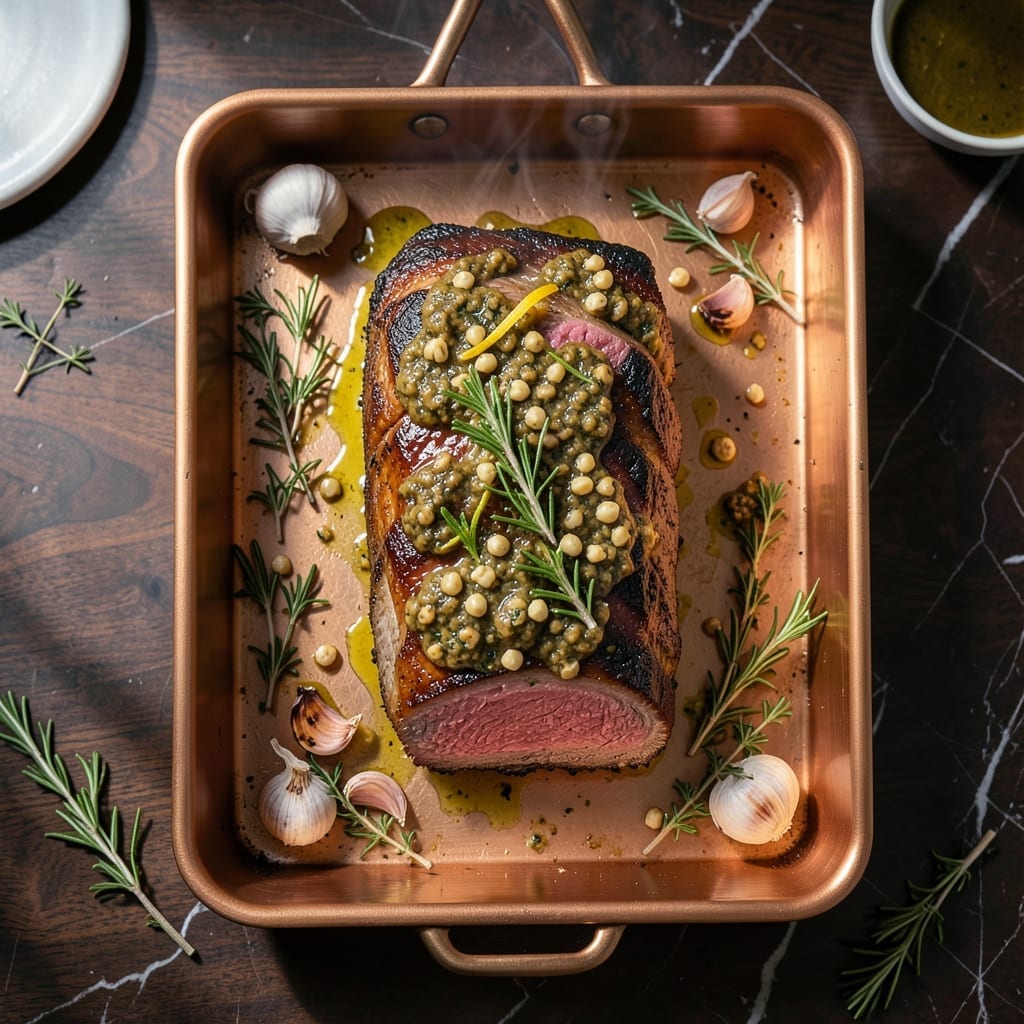
There’s a reason this herb-crusted filet roast remains a centerpiece at special dinners. The secret lies in a simple technique that transforms premium beef into a tender, flavorful masterpiece.
I’ve refined this method to ensure perfectly even cooking and a crust that forms a beautiful seal. A blend of fresh herbs, garlic, and mustard creates a coating that enhances without overpowering the natural beef flavor.
The result is a juicy, medium-rare roast with a golden, aromatic exterior. This preparation honors the quality of the cut while delivering the elegance Ina Garten is known for.
Whether for holidays or intimate gatherings, this dish promises to impress with minimal effort and maximum impact.
Ingredients for Filet Roast Recipe Ina Garten
Premium beef and fresh herbs create this elegant centerpiece with minimal effort.
| Ingredient | Amount | Notes |
|---|---|---|
| Beef Tenderloin Roast 🥩 | 2 ½ lb | Center-cut, trimmed of excess fat |
| Fresh Rosemary 🌿 | 2 tbsp | Finely chopped, stems discarded |
| Fresh Thyme 🌿 | 2 tbsp | Finely chopped, stems discarded |
| Garlic Cloves 🧄 | 4 cloves | Minced to fine paste |
| Dijon Mustard 🟡 | 3 tbsp | Whole grain preferred |
| Extra-Virgin Olive Oil 🫒 | ¼ cup | Divided for searing and crust |
| Kosher Salt 🧂 | 1 ½ tsp | Diamond Crystal brand recommended |
| Freshly Ground Black Pepper 🌶️ | 1 tsp | Coarse grind preferred |
| Unsalted Butter 🧈 | 2 tbsp | Room temperature for basting |
| Fresh Parsley 🌿 | 2 tbsp | Chopped, for garnish |
| Shallot 🧅 | 1 whole | Finely minced for depth |
| Red Wine 🍷 | ½ cup | Dry variety for deglazing |
[recipe_ingredient_scaler]
The beef is non-negotiable here. Opt for USDA Prime center-cut tenderloin from a reputable butcher or Whole Foods—look for even marbling and a deep red color. The herb blend demands freshness; wilted or browned herbs will produce a bitter crust. For the Dijon, Maille or Grey Poupon offer the right balance of sharpness without overpowering. Room-temperature butter ensures even basting, so pull it out while prepping other ingredients.
No fresh herbs? Dried at one-third the quantity, but rehydrate in warm water first to prevent burning. Shallots can be replaced with yellow onion (more pungent) or garlic powder (use half the amount). For the wine, any dry red works—Cabernet Sauvignon or Pinot Noir are excellent. If avoiding alcohol, substitute beef broth with a splash of balsamic vinegar for similar depth.
The uncooked roast keeps 2-3 days in the fridge (uncovered to dry the surface) or freezes for 6 months. Leftovers, if any, reheat gently in a 250°F oven to preserve moisture. Always bring the meat to room temperature before cooking—this ensures even cooking throughout.
Why You’ll Love This Recipe
- One Pan Magic: I just sear the beef, rub it with Dijon, garlic, and herbs, then roast—hardly any dishes to wash.
- Herb Crust Perfection: That rosemary and thyme crust with the mustard? It makes every bite ridicuously good.
- Holiday Ready: I serve this for Christmas and my birthday—feels fancy but I know it’s foolproof.
- Leftovers Luxury: Honestly, the sandwiches I make with the extras taste even better the next day.
Step-by-Step Instructions for Herb-Crusted Beef Tenderloin Roast
This refined method ensures a perfectly crusted exterior and tender, juicy interior every time.
Step 1: Prepare the Herb Crust
In a small bowl, combine the 2 tbsp Fresh Rosemary, 2 tbsp Fresh Thyme, 4 cloves Garlic Cloves (minced to a paste), 3 tbsp Dijon Mustard, 1.5 tsp Kosher Salt, and 1 tsp Freshly Ground Black Pepper. Stir in 0.25 cup Extra-Virgin Olive Oil until the mixture forms a thick, cohesive paste.
The consistency should be spreadable but not runny. This aromatic blend will create the signature crust that defines this dish. I always discard the herb stems first—this ensures the texture remains smooth and pleasant in every bite.
Step 2: Sear the Beef Tenderloin
Preheat your oven to 425°F. Heat a large oven-safe skillet over high heat until very hot. Pat the 2.5 lb Beef Tenderloin Roast completely dry with paper towels, then rub it all over with 1 tbsp Extra-Virgin Olive Oil from your divided amount.
Sear the beef on all sides for 2-3 minutes per side until deeply browned. You want a rich, dark crust—this develops the Maillard reaction, which adds complex, savory depth to the final dish. Add the 1 whole Shallot (finely minced) during the last minute of searing to soften and infuse its flavor.
Step 3: Apply the Herb Crust and Roast
Transfer the seared beef to a cutting board and brush it evenly with the prepared herb paste, coating all sides thoroughly. Return the beef to the skillet and add the 2 tbsp Unsalted Butter to the pan, allowing it to melt and pool around the roast.
Place the skillet in the preheated oven and roast for 25-35 minutes, or until an instant-read thermometer inserted into the thickest part registers 125-130°F for medium-rare. Baste the beef with the pan juices every 10 minutes to enhance flavor and moisture.
Step 4: Rest and Deglaze for Sauce
Remove the beef from the oven and transfer it to a cutting board. Tent loosely with foil and let it rest for 15 minutes—this allows the juices to redistribute, ensuring a moist and tender result. Meanwhile, place the skillet over medium heat and pour in the 0.5 cup Red Wine.
Simmer for 2-3 minutes, scraping up all the browned bits from the bottom of the pan with a wooden spoon. This creates a rich, flavorful base for your au jus. Reduce the liquid by half, then remove from heat.
Step 5: Slice and Serve
Slice the beef into 1-inch thick portions and arrange on a serving platter. Drizzle the reduced red wine pan sauce over the top and sprinkle with the 2 tbsp Fresh Parsley for a vibrant finish. Serve immediately while the beef is still warm.
The beef should be rosy pink in the center with a dark, aromatic crust. Each slice should be juicy and tender, complemented by the robust herbal and wine-infused sauce. This presentation makes for an elegant centerpiece worthy of any special occasion.
Pro Tips For Making Filet Roast Recipe Ina Garten
- Sear It Hard: I learned this the hard way—crank the heat to high and sear the tenderloin on all sides until deeply browned before roasting. That initial crust locks in flavor and makes the finished roast look as good as it tastes.
- Room Temp First: Pull the beef tenderloin out of the fridge at least 1 hour before cooking. Cold meat roasts unevenly, and I used to wonder why the center stayed raw while the edges dried out.
- Don’t Skip the Mustard: Sounds weird, but brushing the roast with Dijon mustard before adding herbs and garlic creates a sticky base that clings to the meat. It doesn’t taste like mustard in the end—just adds depth.
- Rest Under Foil: After roasting, tent it loosely with foil and let it rest for 15 minutes—no peeking. I skip this when I’m hungry, but the juices redistribute and the slices are juicier every time I wait.
Essential Equipment for This Recipe
Oven-Safe Skillet
An oven-safe skillet is non-negotiable for this recipe—I swear by my 12-inch Lodge cast iron for even heat distribution. The skillet must handle 425°F oven heat safely. Stainless steel works too, but cast iron gives that perfect sear.
Instant-Read Thermometer
Forget guessing—use a ThermoWorks Instant Read to nail 125-130°F for medium-rare. I check multiple spots since tenderloin can cook unevenly. This one tool prevents overcooking and ensures consistent results every time.
Wooden Spoon
A wooden spoon is essential for deglazing—it won’t scratch your skillet like metal. I use mine to scrape up every browned bit when making the pan sauce. The wooden surface also gently folds ingredients without breaking them down. 💡
Cutting Board
Choose a large, stable cutting board (I prefer bamboo or maple) for prepping herbs and resting meat. A board with a juice groove catches drippings when the roast rests. Always sanitize between raw meat and ready-to-eat herbs.
Pastry Brush
A silicone pastry brush helps spread the herb paste evenly over the beef. I keep one dedicated to savory dishes to avoid cross-contamination. The silicone withstands high heat better than natural bristles.
Kitchen Towels
Have clean kitchen towels ready for patting the beef dry and tenting during rest. I use lint-free towels to avoid fibers sticking to the crust. They’re also perfect for handling the hot skillet safely. 🔥
Nutrition Facts
Frequently Asked Questions
What temperature should the beef reach for medium-rare?
Use an instant-read thermometer to pull it at 125-130°F. The temperature will rise to 130-135°F while resting. This ensures a perfect rosy center with juicy tenderness.
Can I use a different cut of beef?
Stick with tenderloin for this recipe. If substituting, choose a similarly tender cut like ribeye roast, but adjust cooking time—bone-in cuts may need 10-15 minutes longer.
How long should the roast rest before slicing?
Let it rest for 15 minutes tented with foil. This allows juices to redistribute throughout the meat, preventing dryness when sliced. Skipping this step risks losing flavorful moisture.
What if I don’t have red wine for the sauce?
Substitute beef broth with 1 tbsp balsamic vinegar. The acidity mimics wine’s depth. Simmer and reduce the same way for a rich, savory pan sauce.

Trained in classic French technique but raised on slow-cooked ribs and spicy rubs, she blends culinary skill with smoke and soul.
- Recipe for Boneless Pork Chops in Cast Iron Skillet: Sear and Baste to Juicy Perfection - October 3, 2026
- Recipe for Boneless Cross Rib Roast: Slow-Roasted Beef with Herb Crust - October 3, 2026
- Hamburgers in Sauce Recipe Crock Pot: Slow-Cooked Savory Delight - October 3, 2026