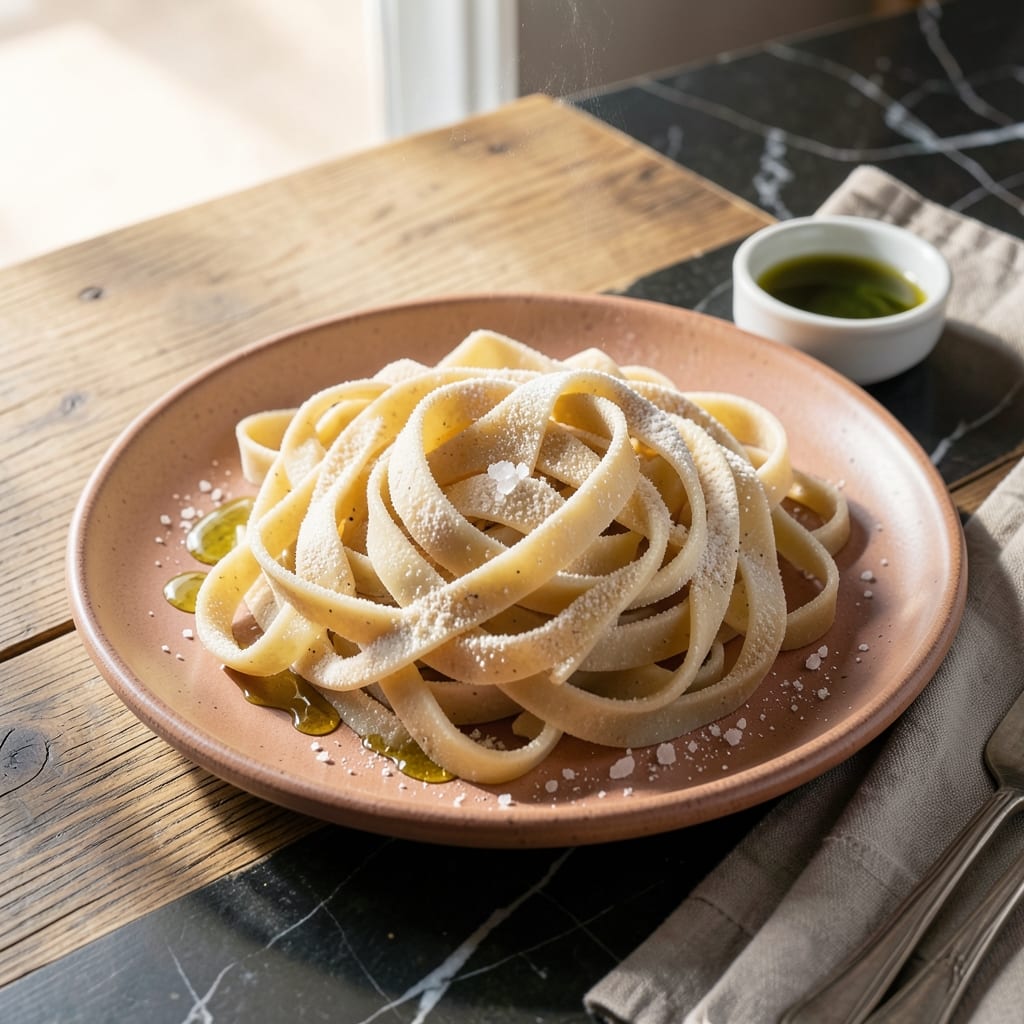
There’s nothing like the texture of homemade pasta—firm, supple, and perfectly al dente with every bite. This method stays true to Italian tradition, using just semolina flour and water to create a dough that rolls out smooth and cuts cleanly into any shape you desire.
The process is simple but precise: knead the dough until elastic, let it rest to relax the gluten, then roll it thin. The semolina gives the pasta its signature bite and golden hue, while the slow drying ensures it holds its shape during cooking.
What emerges from the pot is tender yet sturdy pasta that clings to sauces beautifully. Whether you’re making spaghetti, fettuccine, or farfalle, the result is consistently restaurant-quality with an authentic taste that store-bought can’t match.
Pair it with a rich ragù, a light aglio e olio, or a creamy Alfredo. The foundation is set—now it’s time to shape and cook.
Ingredients for Fresh Pasta Recipe Semolina
Five simple ingredients. One authentic Italian tradition. Perfect every time.
| Ingredient | Amount | Notes |
|---|---|---|
| Semolina Flour 🌾 | 3 cups | Fine grind for smooth dough |
| Water 💧 | 1 cup | Warm, about 100°F |
| Sea Salt 🧂 | 1 tsp | Fine grain for even distribution |
| Olive Oil 🫒 | 1 tbsp | For dough elasticity |
| All-Purpose Flour 🌾 | ½ cup | For dusting work surface |
[recipe_ingredient_scaler]
Semolina is non-negotiable here—it’s what gives that signature bite and golden color. Bob’s Red Mill or King Arthur are solid grocery store options. I grab mine from the bulk bins at Whole Foods when I can. The flour should feel gritty but not coarse between your fingers. Don’t skip the fine sea salt; it dissolves better into the dough than kosher.
No semolina? Durum wheat flour is the same thing—just check the label. Short on time? 00 flour works too (though the texture won’t be as firm). Warm water is key for activating the gluten properly. If your dough feels too dry, add water 1 tsp at a time. Too sticky? More semolina, not all-purpose.
Fresh pasta cooks in 2-3 minutes—way faster than dried. Dust with extra semolina to prevent sticking, then store airtight for 24 hours max in the fridge. Freeze cut shapes on a tray first (so they don’t clump), then transfer to bags for 3 months.
Why You’ll Love This Recipe
- No-Fuss Dough: I mix semolina, all-purpose flour, water, and olive oil in one bowl—no resting, no stress, just roll and cut.
- Rich, Toasty Depth: The semolina gives it this warm, nutty bite that store-bought pasta just can’t touch.
- Endless Meal Potential: Toss it with pesto, sauces, or just butter and Parmesan—works for fancy dinners or lazy weeknights.
- Pantry Staple Win: Flour, water, salt, oil. That’s it. I always have these on hand, and it’s way cheaper than buying fresh.
Step-by-Step Instructions for Fresh Pasta Semolina
Here’s the method I use for authentic, restaurant-quality results every time.
Step 1: Mix and Knead the Dough
On a clean work surface, create a well with the 3 cups Semolina Flour. Add the 1 tsp Sea Salt, 1 tbsp Olive Oil, and 1 cup Water to the center. Using a fork, gradually pull the flour into the wet ingredients until a shaggy dough forms.
Once combined, switch to kneading by hand. Push the dough away with the heel of your hand, then fold it back over itself. Continue this motion for 8-10 minutes until the dough becomes smooth and elastic. It should be firm but not sticky—if it feels too dry, wet your hands slightly.
Step 2: Rest the Dough for Optimal Texture
Shape the kneaded dough into a ball and wrap it tightly in plastic wrap. Let it rest at room temperature for 30 minutes. This resting period allows the gluten to relax, making the dough much easier to roll out later.
While the dough rests, lightly dust your work surface with some of the 0.5 cup All-Purpose Flour. This prevents sticking when you roll out the pasta. Don’t use too much—just enough to create a thin, even layer.
Step 3: Roll Out the Pasta Thinly
Divide the rested dough into 4 equal portions. Working with one portion at a time (keep the others covered to prevent drying), flatten it slightly with your hands. Set your pasta machine to its widest setting and roll the dough through once.
Fold the dough in thirds like a letter, then roll it through again. Repeat this process 2-3 times at the widest setting to create a smooth, even sheet. Now, gradually decrease the thickness setting, rolling the dough through once at each level, until you reach the second-to-thinness setting for perfect al dente texture.
Step 4: Cut and Shape Your Pasta
Once the dough is rolled to your desired thickness, you can cut it into shapes. For fettuccine or tagliatelle, run the sheet through the pasta machine’s cutter. For other shapes like farfalle or ravioli, use a sharp knife or pasta cutter to create your preferred design.
As you cut, lay the pasta on a floured surface or hang it on a drying rack. Don’t let the strands touch each other too much to prevent sticking. At this point, your pasta is ready to cook or can be stored in the refrigerator for up to 24 hours.
Step 5: Cook the Pasta to Perfection
Bring a large pot of salted water to a rolling boil. The water should be as salty as the Mediterranean Sea. Add the fresh pasta and cook for 2-3 minutes—fresh pasta cooks much faster than dried.
You’ll know it’s done when the pasta floats to the surface and has a slight bite when tested. Drain immediately and toss with your favorite sauce. The texture should be tender yet firm, with that authentic al dente bite that makes fresh pasta so special.
Pro Tips For Making Fresh Pasta Recipe Semolina
- Warm the Water: Use lukewarm water (about 100°F) instead of cold—it helps the semolina absorb evenly without overworking the dough.
- Balance the Flours: Mix 70% semolina with 30% all-purpose flour for the perfect texture; semolina alone can be too gritty, and all-purpose alone lacks bite.
- Skip the Over-Kneading: I learned this the hard way—stop kneading once the dough is smooth, usually after 8-10 minutes, or the pasta will turn tough instead of tender.
- Rest Before Rolling: Let the dough rest under a damp towel for at least 30 minutes; it relaxes the gluten so it rolls out thin without springing back.
Best Sauces and Condiments for fresh pasta recipe semolina
Classic Tomato Basil
A simple San Marzano tomato sauce lets your pasta shine. Simmer 2 cups crushed tomatoes with 3 minced garlic cloves and 5 fresh basil leaves for 15 minutes. The bright acidity pairs perfectly with semolina’s nutty flavor. 🌿
Creamy Alfredo
For a rich option, melt ½ cup heavy cream and ¼ cup Parmesan over low heat. Add 2 tbsp butter and a pinch of nutmeg for depth. This sauce clings beautifully to fresh pasta’s textured surface.
Garlic and Oil
Aglio e olio is my go-to for quick meals. Sauté 4 sliced garlic cloves in ½ cup olive oil until golden. Finish with red pepper flakes and fresh parsley. The simplicity highlights your pasta’s authentic bite. 💛
Pesto Perfection
Blend 2 cups basil, ¼ cup pine nuts, ½ cup Parmesan, and ½ cup olive oil for a vibrant pesto. The herbal notes complement semolina’s earthy base. I prefer Pecorino Romano for extra tang.
Meat Ragù
A slow-cooked ragù with ground beef and pancetta in tomato sauce adds hearty depth. Simmer for at least 2 hours to let flavors meld. This robust sauce stands up to fresh pasta’s sturdy texture.
Nutrition Facts
Frequently Asked Questions
Can I use all-purpose flour instead of semolina?
You can, but the texture won’t be the same. Semolina gives that signature firm bite, while all-purpose makes softer pasta. For best results, use at least 50% semolina in your blend.
How thin should I roll the pasta?
Roll it to the second-thinnest setting on your machine, about 1-2mm thick. This ensures even cooking and that perfect al dente texture. Too thick and it’ll be doughy; too thin and it’ll overcook.
Why does my dough crack when rolling?
Cracking usually means the dough is too dry. Let it rest longer, or knead in 1 tsp warm water at a time until smooth. Always cover unused portions to prevent drying.
Can I make this without a pasta machine?
Use a rolling pin to roll the dough as thin as possible. It takes more effort, but the result is just as delicious. Cut shapes with a sharp knife or pizza cutter.

Trained in classic French technique but raised on slow-cooked ribs and spicy rubs, she blends culinary skill with smoke and soul.
- Recipe for Boneless Pork Chops in Cast Iron Skillet: Sear and Baste to Juicy Perfection - October 3, 2026
- Recipe for Boneless Cross Rib Roast: Slow-Roasted Beef with Herb Crust - October 3, 2026
- Hamburgers in Sauce Recipe Crock Pot: Slow-Cooked Savory Delight - October 3, 2026