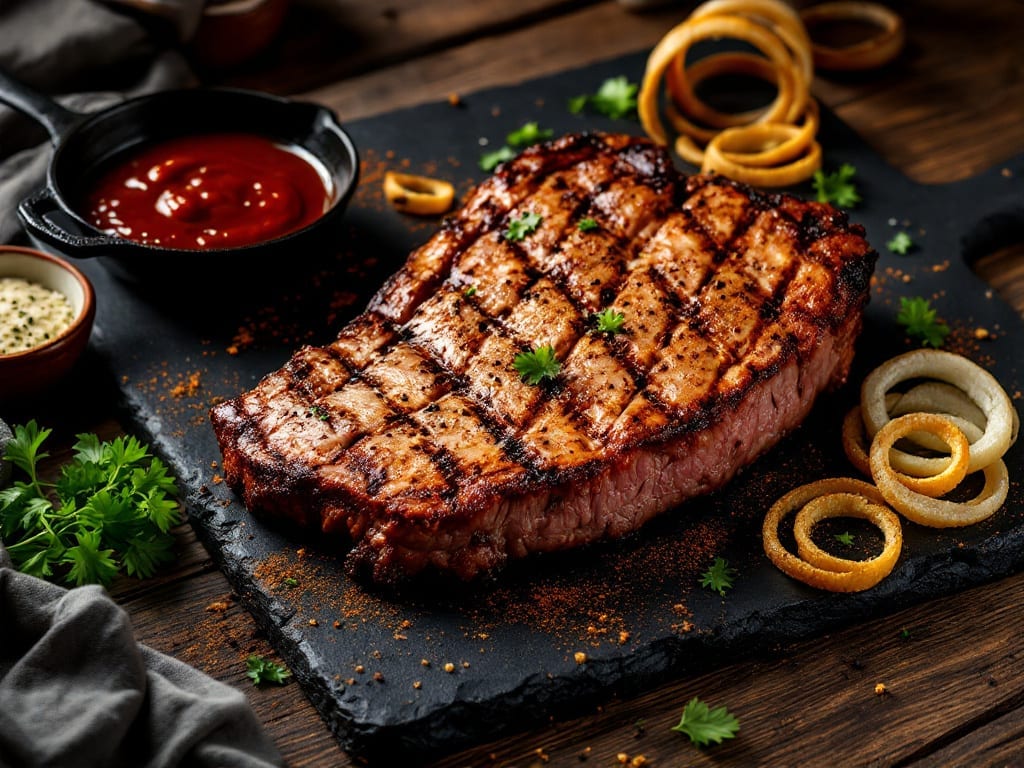
This fried brisket recipe delivers restaurant-quality results with a crispy crust and smoky core—all in one pan. After years of perfecting the technique, I’ve cracked the code for achieving that coveted contrast: tender, juicy meat with a golden, crackling exterior.
The secret lies in proper prep, precise temperature control, and a well-seasoned crust that locks in flavor.
Unlike traditional smoked brisket, this method transforms tough cuts into melt-in-your-mouth perfection using high-heat frying—no smoker required. You’ll start with a dry brine overnight to ensure moisture retention, then coat the meat in a spice rub that clings perfectly before hitting 350°F oil.
The key? Never overcrowding the pan and letting the internal temperature climb to 195°F for that signature tenderness.
What you’ll end up with is a brisket so crispy on the outside it shatters like glass, while the inside remains juicy and rich—every slice packed with deep, smoky flavor.
The aroma alone will have your kitchen smelling like a Texas BBQ joint, and the texture contrast makes every bite unforgettable. This isn’t just fried brisket; it’s a game-changer for home cooks.
Serve with classic sides like creamy coleslaw or buttery cornbread to soak up every last drop of that golden crust. The recipe includes step-by-step instructions for equipment setup, safety tips for handling hot oil, and pro techniques to avoid common pitfalls.
Let’s get cooking—your taste buds won’t know what hit them.
Ingredients for fried brisket
Fourteen simple ingredients transform tough brisket into crispy, smoky perfection—no smoker needed.
| Ingredient | Amount | Notes |
|---|---|---|
| Brisket (Flat Cut) 🥩 | 3 lb | Whole flat cut, 1/2-inch thick |
| Kosher Salt 🧂 | ½ cup | Diamond Crystal preferred for texture |
| Black Peppercorns 🌶️ | 2 tbsp | Freshly cracked for intensity |
| Smoked Paprika 🌶️ | 2 tbsp | High-quality for smoky depth |
| Garlic Powder 🧄 | 1 tbsp | Freshly ground preferred |
| Onion Powder 🧅 | 1 tbsp | For balanced sweetness |
| Ground Cumin 🌿 | 1 tbsp | Toasted for richer flavor |
| Vegetable Oil 🫒 | 4 cups | High smoke point for frying |
| Yellow Cornmeal 🌽 | ½ cup | For extra crunchy crust |
| Fresh Thyme Leaves 🌿 | ¼ cup | Chopped, for aromatic touch |
| Fresh Rosemary 🌿 | ¼ cup | Chopped, for earthy notes |
| Butter 🧈 | ¼ cup | Unsalted, for basting |
| Apple Cider Vinegar 🍎 | 2 tbsp | For tenderizing brine |
[recipe_ingredient_scaler]
The brisket cut matters—flat cut is leaner and crisps better than point cut. Whole Foods or Costco carry excellent options, but any butcher will trim it right. Look for 1/2-inch thickness—thinner slices crisp faster, thicker ones stay juicier. The kosher salt is non-negotiable here: Diamond Crystal clings better than table salt, and you’ll need that texture for the crust. Freshly cracked peppercorns add depth that pre-ground can’t match—toast them lightly in a dry pan first to release their oils.
No smoked paprika? Substitute half the amount with regular paprika plus a pinch of liquid smoke. Cornmeal running low? Panko breadcrumbs work too—just add an extra tablespoon of cornstarch for crispiness. The fresh herbs can be swapped for dried at one-third the amount, but I won’t lie—fresh thyme and rosemary make all the difference. For the oil, vegetable or peanut oil both work, but never olive oil—it burns at frying temps. And that butter? Full-fat only—low-fat won’t brown properly.
This recipe reheats beautifully—450°F oven for 10 minutes with extra butter basting. Store leftovers in the fridge for 5 days or freeze for 3 months. I always make double batches because the second day is even better—the crust gets even crispier as it dries out. For serving, keep the brisket warm in a 200°F oven while you finish sides.
Why You’ll Love This Recipe
- Crispy in Minutes: I swear, the flat cut cooks faster than you can set the timer—golden crust in 15 minutes flat. No waiting hours for tender meat, just that satisfying crunch with every bite.
- Smoky-Spiced Magic: That smoked paprika and garlic powder blend? It’s like a warm hug in your mouth. The kosher salt and cracked peppercorns cut through the richness, making each piece irresistibly balanced.
- Leftover Goldmine: Between us, this is my go-to for meal prep. Shred it cold for tacos, or reheat slices in a pan for sandwiches—it’s the ultimate lazy-day hero, and it tastes just as good the third time around.
- Budget-Friendly Feast: A single brisket flat cut stretches across dinners, lunches, and even snacks. Honestly, it’s the kind of recipe that makes grocery day feel like a win—big flavor without the big price tag.
Step-by-step instructions for crispy-crusted brisket
Here’s the method that delivers that magical contrast—crispy crust outside, tender meat inside.
Prepare the Brine for Maximum Tenderization
In a large resealable bag, combine the 3 lb brisket (flat cut), 0.5 cup kosher salt, 2 tbsp black peppercorns, 2 tbsp smoked paprika, 1 tbsp garlic powder, 1 tbsp onion powder, 1 tbsp ground cumin, and 2 tbsp apple cider vinegar. Seal the bag and massage the mixture into the meat, ensuring it penetrates all the way through to the edges. The vinegar helps break down proteins, while the salt and spices create an even flavor profile.
Refrigerate the brined brisket for 12-24 hours. This step is non-negotiable—it transforms tough brisket into fork-tender perfection. Real talk: if you skip this, you’ll end up with chewy meat no matter how crispy the crust gets. After brining, pat the brisket dry with paper towels, removing all moisture from the surface. Dry meat crispifies better than damp meat.
Create the Cornmeal Crust for Maximum Crunch
In a shallow dish, combine 0.5 cup yellow cornmeal, 0.25 cup fresh thyme leaves, and 0.25 cup fresh rosemary. The cornmeal gives that iconic Southern crunch, while the herbs add aromatic depth. Lightly coat the brined brisket on all sides with this mixture, pressing gently so the cornmeal adheres evenly. Don’t overdo it—just enough to create a thin, even layer that will crisp up beautifully.
Let the coated brisket rest at room temperature for 30 minutes before frying. This ensures even cooking and prevents the crust from falling off when you add it to the hot oil. Here’s the thing—if you rush this step, you’ll end up with a crust that’s more like dust than crunch.
Fry to Golden Perfection
Heat 4 cups vegetable oil in a heavy-bottomed Dutch oven or deep skillet over medium-high heat until it reaches 350°F. Use a deep-fry thermometer to monitor the temperature—this is critical for getting that perfect crust without burning the meat. The oil should shimmer but not smoke excessively.
Carefully lower the brisket into the hot oil, using tongs to position it flat-side down. Fry for 8-10 minutes per side, turning only once, until the crust is deep golden brown and the internal temperature reaches 160°F. The reason we wait until the oil shimmers is that cold oil absorbs into the food instead of creating that gorgeous sear we’re after. Here’s where it gets fun—you’ll see the crust forming and turning a beautiful caramel color.
Remove the brisket from the oil and transfer it to a wire rack set over a baking sheet. Let it rest for 10 minutes before serving. This resting period allows the juices to redistribute, ensuring each bite is moist and flavorful. During this time, you can make a quick pan sauce by adding 0.25 cup butter to the hot oil and whisking vigorously to emulsify the fond at the bottom of the pan.
Finish with Butter and Herbs
After the brisket has rested, pour the 0.25 cup butter over the top and let it melt slightly. The butter bastes the meat, adding richness and helping to keep the crust intact. Sprinkle with additional fresh thyme leaves and fresh rosemary for a pop of fresh aroma and color.
Slice the brisket against the grain into ¼-inch thick pieces. Each slice should reveal that crispy crust on the outside and tender, flavorful meat on the inside. Serve immediately with your favorite sides—mashed potatoes, collard greens, or a simple arugula salad all pair beautifully with this showstopper dish.
Pro Tips For Making Fried Brisket
- CRANK THE HEAT FIRST: Start your brisket in a screaming-hot pan—no gentle warming up. I used to let the oil heat gradually, and my brisket would steam instead of sear, leaving it gray and sad. Get that oil shimmering (350°F+) before the meat hits the pan, or you’ll waste 10 minutes waiting for it to crisp properly.
- SALT THE MEAT 24 HOURS EARLY: Don’t just sprinkle salt right before frying—let that kosher salt work its magic overnight. I learned this after my first attempt turned out bland, no matter how much I crushed the peppercorns. A thick, even coat of salt (about 1.5 tsp per pound) breaks down the muscle fibers, making the meat tender and the crust unstoppable.
- SKIP THE CROWDED PAN: If your brisket is thick (over 1.5 inches), resist the urge to fry it all at once. I once tried cooking two slices side by side, and they ended up steaming in their own juices instead of browning. Fry one piece at a time—even if it means two batches—so the meat gets that golden crust without turning into a sad, greasy mess.
- USE A MEAT THERMOMETER (YES, REALLY): Guessing doneness with brisket is how I ended up with either rubbery or raw slices—both disasters. Pull the meat when it hits 130°F internal for medium-rare, then let it rest 5 minutes. No thermometer? You’re rolling the dice. (And I’ve done that too—don’t.)
Serving suggestions for this dish
Classic Southern Sides
Start with creamy coleslaw—my go-to pairing because the tangy dressing cuts through the brisket’s richness. Use a vinegar-based mayo mix (like Duke’s Mayonnaise with apple cider vinegar) and shred green cabbage and carrots in a 1:1 ratio.
Toss with 1 tbsp sugar and ½ tsp celery seed for that authentic Southern crunch. 🥬
For a heartier option, serve with buttery cornbread—the slight sweetness balances the brisket’s smokiness. I love using a Jiffy cornbread mix with an extra 2 tbsp honey> and ¼ cup melted butter> mixed into the batter. Brush warm cornbread with honey butter before serving for extra decadence.
Fresh Contrasts
A bright arugula salad with lemon vinaigrette adds a peppery kick that refreshes your palate. Toss 4 cups baby arugula with 2 tbsp olive oil, 1 tbsp fresh lemon juice, ½ tsp Dijon mustard, and salt to taste.
Top with shaved Parmesan> and toasted pine nuts for texture. This salad soaks up the brisket’s juices beautifully. 🌿
For a lighter option, try pickled jalapeños—their tangy heat complements the brisket’s smoky depth. Slice 3 jalapeños> into rings and quick-pickle them in 1 cup vinegar>, 1 tbsp sugar>, and 1 tsp salt> for 30 minutes.
Drain and serve alongside the brisket for a zesty bite.
Hearty Starches
Garlic mashed potatoes elevate this dish to restaurant-level status. Boil 2 lbs Yukon Gold potatoes> until tender, then mash with ½ cup butter>, ½ cup warm milk>, 2 cloves roasted garlic>, and salt to taste>. The garlic adds a subtle sweetness that pairs perfectly with the brisket’s smokiness. 🥔
For a quicker option, try cheesy grits—their creamy texture contrasts with the brisket’s crispy crust. Cook 1 cup stone-ground grits> in 4 cups milk> with 2 tbsp butter> and ½ cup sharp cheddar>.
Stir in 1 tsp smoked paprika> for a hint of smokiness that mirrors the brisket.
Sauce Pairings
A smoky BBQ sauce drizzled over the brisket adds extra depth. I recommend Stubb’s Original BBQ Sauce—its balance of sweet, tangy, and smoky flavors enhances the brisket’s natural taste. Brush 2 tbsp sauce> over each serving just before eating. 🍯
For a lighter option, serve with horseradish cream—its sharpness cuts through the richness. Mix ½ cup sour cream>, 2 tbsp prepared horseradish>, and 1 tbsp lemon juice>. Dollop onto plates alongside the brisket for a sophisticated touch.
Nutrition facts
Frequently asked questions
Why does my fried brisket turn out greasy instead of crispy?
Greasy results usually mean the oil wasn’t hot enough or the meat was too wet. Always heat oil to 350°F and pat the brisket completely dry after brining. The cornmeal crust needs a hot surface to crisp properly—if it steams instead of sears, it’ll lose its texture. Let the meat rest at room temperature for 30 minutes before frying to prevent moisture from interfering with the crust.
Can I use a point cut instead of flat cut brisket?
Technically yes, but flat cut is ideal for frying because it’s leaner and crisps better. Point cut has more fat, which can make the crust uneven. If you must use point cut, trim excess fat and consider frying at 325°F for 12-15 minutes per side to render the fat slowly while still achieving a crispy exterior. The texture will be slightly richer but less uniformly crisp.
How do I fix overcooked brisket that’s dry?
If the internal temperature exceeds 195°F, the brisket will dry out. To salvage it, slice thinly against the grain and serve immediately with a rich sauce or gravy. For extra moisture, simmer the slices in 1 cup beef broth with 1 tbsp butter and 1 tsp smoked paprika for 5 minutes before serving. This won’t restore perfect tenderness, but it’ll add back some juiciness.
What’s the best way to reheat fried brisket?
Reheat in a 450°F oven for 10-12 minutes with a splash of beef broth or apple cider vinegar to keep the crust intact. For stovetop, use a skillet with 1 tbsp butter over medium-low heat for 3-4 minutes per side. Microwaving will make the crust soggy—avoid it at all costs. The second day is actually better for texture, as the crust becomes even crispier.
Can I make this recipe in an air fryer?
Not ideal for brisket—air fryers can’t handle the volume of oil needed for that signature crispy crust. However, you can try a hybrid method: sear the brisket in a skillet first, then finish in the air fryer at 375°F for 10 minutes to warm through. The results won’t be as crispy, but it’s a good option if you’re short on oil. For best results, stick to deep frying or oven frying with a wire rack.

Trained in classic French technique but raised on slow-cooked ribs and spicy rubs, she blends culinary skill with smoke and soul.
- Best Smoked Oxtail Recipe: Deep-Rich Flavor After Low-and-Slow Cooking - October 14, 2026
- Pit Boss Smoked Prime Rib Roast Recipe: Bark-to-Bone Crispness in 4 Hours - October 14, 2026
- Smoked Tuna Steak Recipe: Seared Crust Meets Silky Centers - October 14, 2026