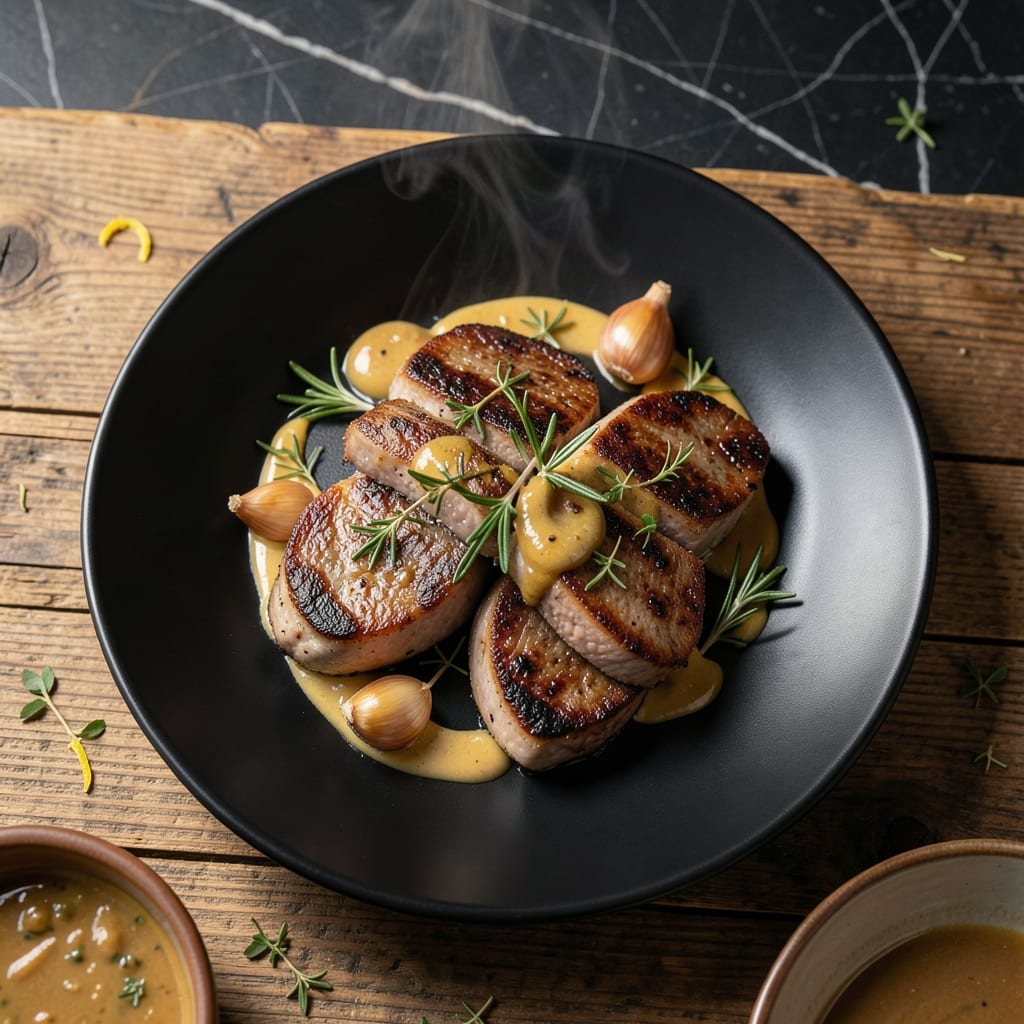
Cast iron searing transforms goat tenderloin into a tender, restaurant-worthy main course with minimal effort. This method locks in juices while creating a flavorful crust that elevates the meat’s natural richness.
The herb crust adds aromatic depth without overwhelming the goat’s distinct flavor. I’ve tested this technique repeatedly to ensure consistent results, even for home cooks new to goat meat.
You’ll achieve perfectly cooked tenderloin with a golden, herb-crusted exterior and juicy interior. The cast iron provides even heat distribution for professional-quality searing at home.
Serve sliced with pan juices for a dish that impresses without complicated preparation. The process respects the meat’s quality while delivering bold flavor.
Ingredients for Goat Tenderloin
Quality goat tenderloin plus aromatic herbs create this impressive cast iron seared dish.
| Ingredient | Amount | Notes |
|---|---|---|
| Goat Tenderloin 🐐 | 2 lb | Trimmed of excess fat |
| Kosher Salt 🧂 | 2 tsp | Diamond Crystal preferred |
| Black Pepper 🌶️ | 1 tsp | Freshly ground coarse |
| Fresh Rosemary 🌿 | 2 tbsp | Finely chopped leaves |
| Fresh Thyme 🍃 | 2 tbsp | Leaves stripped from stems |
| Garlic Cloves 🧄 | 4 cloves | Minced to fine paste |
| Dijon Mustard 🟡 | 2 tbsp | Whole grain preferred |
| Olive Oil 🫒 | 3 tbsp | High smoke point variety |
| Unsalted Butter 🧈 | 2 tbsp | For basting finish |
| Shallot 🧅 | 1 whole | Finely minced |
| Red Wine 🍷 | ½ cup | Dry variety for deglazing |
| Beef Stock 🥣 | ½ cup | Low sodium preferred |
[recipe_ingredient_scaler]
The goat tenderloin must be fresh and bright red. Specialty butchers or Whole Foods often carry it—call ahead to confirm availability. Look for pieces with even marbling and minimal connective tissue. The herbs should be organic when possible; their oils are more potent. I source my rosemary and thyme from local farmers markets during peak season for superior fragrance.
No fresh herbs? Dried at one-third the quantity works in a pinch, though the crust won’t adhere as well. Short on Dijon? Whole grain mustard adds pleasant texture. For the wine, any dry red like Cabernet Sauvignon or Merlot is ideal. The beef stock can be swapped for vegetable stock, but reduce sodium content by 25% to avoid over-seasoning.
Tenderloin keeps 2-3 days refrigerated, vacuum-sealed. Herb crust mixture can be prepped 1 day ahead and stored airtight. Cooked dish holds 20 minutes tented before serving—resting improves tenderness and redistributes juices.
Why You’ll Love This Recipe
- Ready in 20: I can have this on the table faster than ordering takeout. Just sear, season, and let the herbs work their magic.
- Herb Crust Perfection: The rosemary and thyme create this insane aroma that makes the whole house smell like a fancy restaurant.
- Date Night Star: Honestly, it feels gourmet but is simple enough for a weeknight. My partner thinks I slaved over it for hours.
- Leftovers Luxury: The tenderloin reheats beautifully—toss slices into salads or wraps the next day. Zero waste, all flavor.
Step-by-Step Instructions for Cast Iron Seared Goat Tenderloin With Herb Crust
Master the technique for perfectly tender meat with a fragrant, crispy herb exterior.
Step 1: Prepare the Herb Marinade and Season the Goat Tenderloin
In a small bowl, combine the 2 tbsp Fresh Rosemary, 2 tbsp Fresh Thyme, 4 cloves Garlic Cloves, 2 tbsp Dijon Mustard, 2 tbsp Olive Oil, 2 tsp Kosher Salt, and 1 tsp Black Pepper. The mustard acts as a binder, helping the herbs adhere to the meat while adding depth of flavor.
Pat the 2 lb Goat Tenderloin dry with paper towels to ensure a good sear. Rub the herb marinade over the entire surface of the meat, pressing firmly to create an even coating. Let it sit at room temperature for 30 minutes to allow the flavors to penetrate.
Step 2: Sear the Tenderloin in Cast Iron
Heat a cast iron skillet over medium-high heat until hot. Add the remaining 1 tbsp Olive Oil and swirl to coat the pan. Once the oil shimmers, place the goat tenderloin in the pan. Sear undisturbed for 4-5 minutes until a deep, golden crust forms on the first side.
Flip the tenderloin and sear the remaining sides for 3-4 minutes each, turning as needed to ensure even browning. The meat should release easily from the pan when it’s ready to turn. Use tongs to rotate it—avoid piercing the meat to retain its juices.
Step 3: Baste with Butter and Aromatics
Reduce the heat to medium and add the 2 tbsp Unsalted Butter and 1 whole Shallot to the skillet. Tilt the pan slightly and use a spoon to baste the tenderloin with the melted butter and shallots for 2-3 minutes. This infuses the meat with rich, aromatic flavor.
The butter will foam and turn a light golden brown. This visual cue indicates it’s infused with the shallot’s sweetness. Continue basting until the tenderloin reaches an internal temperature of 135°F for medium-rare.
Step 4: Deglaze and Create the Pan Sauce
Transfer the goat tenderloin to a cutting board and tent loosely with foil. Return the skillet to medium heat and add the 0.5 cup Red Wine. Use a wooden spoon to scrape up the browned bits from the bottom of the pan—this is where the depth of flavor develops.
Simmer the wine for 2-3 minutes until it reduces by half. Add the 0.5 cup Beef Stock and simmer for another 3-4 minutes until the sauce thickens enough to coat the back of a spoon. Taste and adjust seasoning if needed.
Step 5: Rest, Slice, and Serve
Let the goat tenderloin rest for 10 minutes before slicing. This allows the juices to redistribute, ensuring every bite is tender and moist. Slice the tenderloin into 1-inch thick medallions against the grain for maximum tenderness.
Arrange the slices on a platter and spoon the pan sauce over the top. The sauce should be glossy and rich, complementing the herb-crusted exterior. Serve immediately while warm.
Pro Tips For Making Goat Tenderloin
- Sear Hot, Rest Long: Get your pan screaming hot before adding the tenderloin—this is what gives you that deep brown crust. Then let it rest for at least 8 minutes under foil before slicing, or all the juices will end up on your cutting board.
- Dry the Meat First: Pat the goat tenderloin bone-dry with paper towels before seasoning. I learned this the hard way—wet meat steams instead of sears, and you’ll lose that crisp exterior.
- Skip the Cold Herb Sprigs: Room-temperature rosemary and thyme release way more flavor. Pull them out of the fridge 30 minutes before cooking, or their oils won’t infuse the meat properly.
- Use a Meat Thermometer: Goat tenderloin overcooks fast. Pull it at 130°F for medium-rare—it’ll climb to 135°F while resting. After ruining two cuts by guessing, I finally broke down and bought one.
Best Sauces and Condiments for This Recipe
Red Wine Reduction
Simmer 1 cup dry red wine with 1 sprig fresh rosemary and 1 crushed garlic clove until reduced by half. The acidity cuts through the richness while enhancing the meat’s depth. I always use the same wine for cooking that I’d drink—Cabernet Sauvignon works beautifully. 🍷
Herb-Infused Butter
Melt 4 tbsp unsalted butter with 1 tbsp chopped thyme and 1 tsp lemon zest. Drizzle over sliced tenderloin just before serving. The butter adds luxury while the herbs echo the crust. Use European-style butter for extra richness.
Mint Yogurt Sauce
Combine 1 cup Greek yogurt, 3 tbsp chopped fresh mint, 1 minced garlic clove, and 1 tsp lemon juice. The cool, creamy contrast balances the warm spices. I prefer Fage 2% for the perfect tangy thickness.
Balsamic Glaze
Reduce ½ cup balsamic vinegar with 1 tbsp honey until syrupy. The sweet-tart glaze adds a glossy finish that pairs wonderfully with the herb crust. Look for aged balsamic from Modena for depth.
Drizzle just before serving to maintain the vibrant color and texture. ✨
Chimichurri
Blend 1 cup parsley, ¼ cup olive oil, 2 tbsp red wine vinegar, and 1 tsp red pepper flakes. This Argentine classic adds bright, herby freshness that complements the goat’s earthy notes perfectly.
Nutrition Facts
Frequently Asked Questions
What’s the best way to store leftover goat tenderloin?
Store cooled leftovers in an airtight container for up to 3 days. Reheat gently in a skillet with a splash of broth to maintain moisture.
Can I use a different pan instead of cast iron?
A heavy stainless steel skillet works well, but avoid nonstick—it won’t develop the same flavorful crust. Preheat thoroughly for best results.
How do I know when it’s done cooking?
Use a meat thermometer: 135°F for medium-rare, 145°F for medium. Let it rest 10 minutes before slicing.
Can I substitute lamb tenderloin?
Yes, lamb works similarly but may cook slightly faster. Adjust searing time by 1-2 minutes per side and check temperature early.

Trained in classic French technique but raised on slow-cooked ribs and spicy rubs, she blends culinary skill with smoke and soul.
- Recipe for Boneless Pork Chops in Cast Iron Skillet: Sear and Baste to Juicy Perfection - October 3, 2026
- Recipe for Boneless Cross Rib Roast: Slow-Roasted Beef with Herb Crust - October 3, 2026
- Hamburgers in Sauce Recipe Crock Pot: Slow-Cooked Savory Delight - October 3, 2026