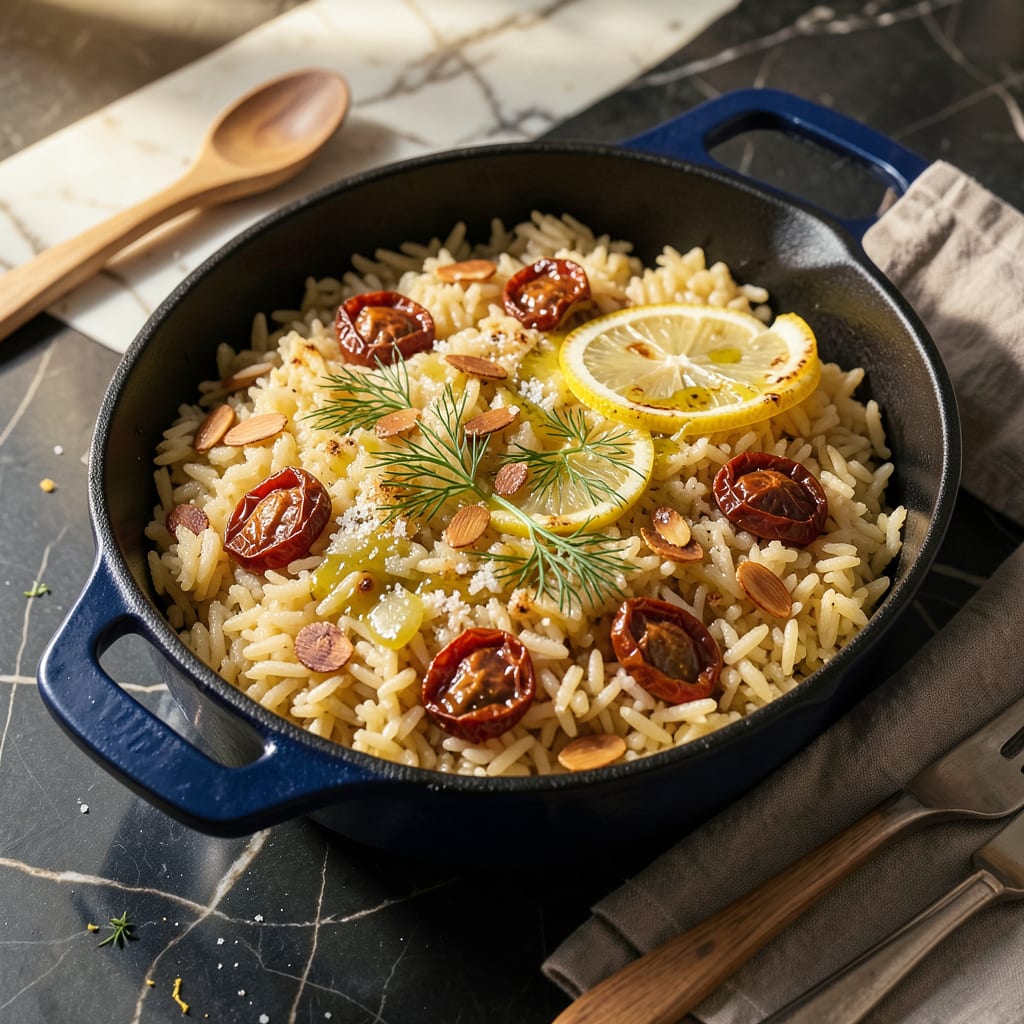
Baked rice typically takes 30–40 minutes at 375°F (190°C) when cooked covered with liquid. White rice finishes faster (25–30 minutes), while brown rice may need 45–50 minutes for full tenderness.
I’ve found oven-baking rice transforms it into something special—the gentle, even heat coaxes out deeper flavors than stovetop methods. 🔥 The key is maintaining that perfect steam environment, which is why a tight-fitting lid or foil seal makes all the difference. Brown rice demands extra patience because its fibrous bran layer resists softening, while white rice practically melts into fluffy perfection when given just enough time to absorb the cooking liquid completely.
What most people don’t realize is that oven temperature plays a crucial role in texture. That 375°F sweet spot ensures the rice cooks through without drying out or developing a crust. I always recommend checking at the 25-minute mark for white rice—you’re looking for those telltale steam holes on the surface before giving it those final minutes to perfect.
💡 In This Article
- Why Oven-Baked Rice Cooking Times Vary by Type
- Pro Tips for Flawless Oven-Baked Rice Every Time
Why Oven-Baked Rice Cooking Times Vary by Type
The secret lies in the rice’s anatomy. White rice has had its bran and germ removed, leaving just the starchy endosperm that absorbs liquid quickly. This is why it cooks in 25-30 minutes at 375°F—the starch granules swell rapidly when exposed to heat and moisture.
Brown rice retains its fibrous bran layer, which acts like a protective barrier that slows water absorption, requiring 45-50 minutes to fully tenderize.
Wild rice isn’t actually rice at all—it’s a grass seed with an entirely different structure. Its elongated grains have a tough outer sheath that needs prolonged exposure to moisture and heat. I’ve found wild rice blends typically need 50-60 minutes in the oven, with the grains gradually splitting open when perfectly done.
The oven’s dry heat actually works to our advantage here, as it helps break down these resistant outer layers more effectively than stovetop methods.
Oven temperature plays a crucial role in this process. At 375°F, we create the ideal environment where the liquid reaches a gentle simmer (about 212°F) while the ambient heat penetrates evenly. This is different from stovetop cooking where direct heat can create hot spots.
The even oven heat allows all grains to absorb moisture uniformly, which is why we get that perfect fluffy texture without stirring.
Here’s what’s fascinating about the science: rice absorbs water through capillary action, with the starch granules expanding as they hydrate. White rice has more damaged starch on its surface from milling, which makes it absorb water faster.
Brown rice’s intact bran layer means water must penetrate through this barrier first, which is why it needs that extra time. I always recommend adding an extra 1/4 cup liquid for brown rice to account for this slower absorption.
The protein content also affects cooking time. Brown rice contains about 2.5% more protein than white rice, and these proteins form stronger bonds that take longer to break down. This is why you’ll notice brown rice maintains more structure even when fully cooked, while white rice becomes softer and stickier.
Wild rice has even higher protein content (about 15%), contributing to its chewier texture even after extended cooking.
What most people don’t realize is that oven humidity matters. A tightly sealed dish creates a steam environment that softens the grains, while a loose cover can lead to uneven cooking.
I’ve found that using a heavy oven-safe pot with a tight lid reduces cooking time by about 5 minutes compared to foil-covered dishes, as it maintains higher internal humidity. This is particularly noticeable with brown rice, where that extra moisture can shave precious minutes off the total time.
The final texture difference comes from how the starch behaves. White rice releases more starch into the cooking liquid, creating that creamy texture we love. Brown rice keeps more of its starch contained within the grain, resulting in a firmer bite.
This is why the liquid ratios differ—white rice needs 2:1 liquid-to-rice, while brown does best with 2.25:1 to account for the bran’s absorption resistance. ✨

Trained in classic French technique but raised on slow-cooked ribs and spicy rubs, she blends culinary skill with smoke and soul.
- Recipe for Boneless Pork Chops in Cast Iron Skillet: Sear and Baste to Juicy Perfection - October 3, 2026
- Recipe for Boneless Cross Rib Roast: Slow-Roasted Beef with Herb Crust - October 3, 2026
- Hamburgers in Sauce Recipe Crock Pot: Slow-Cooked Savory Delight - October 3, 2026