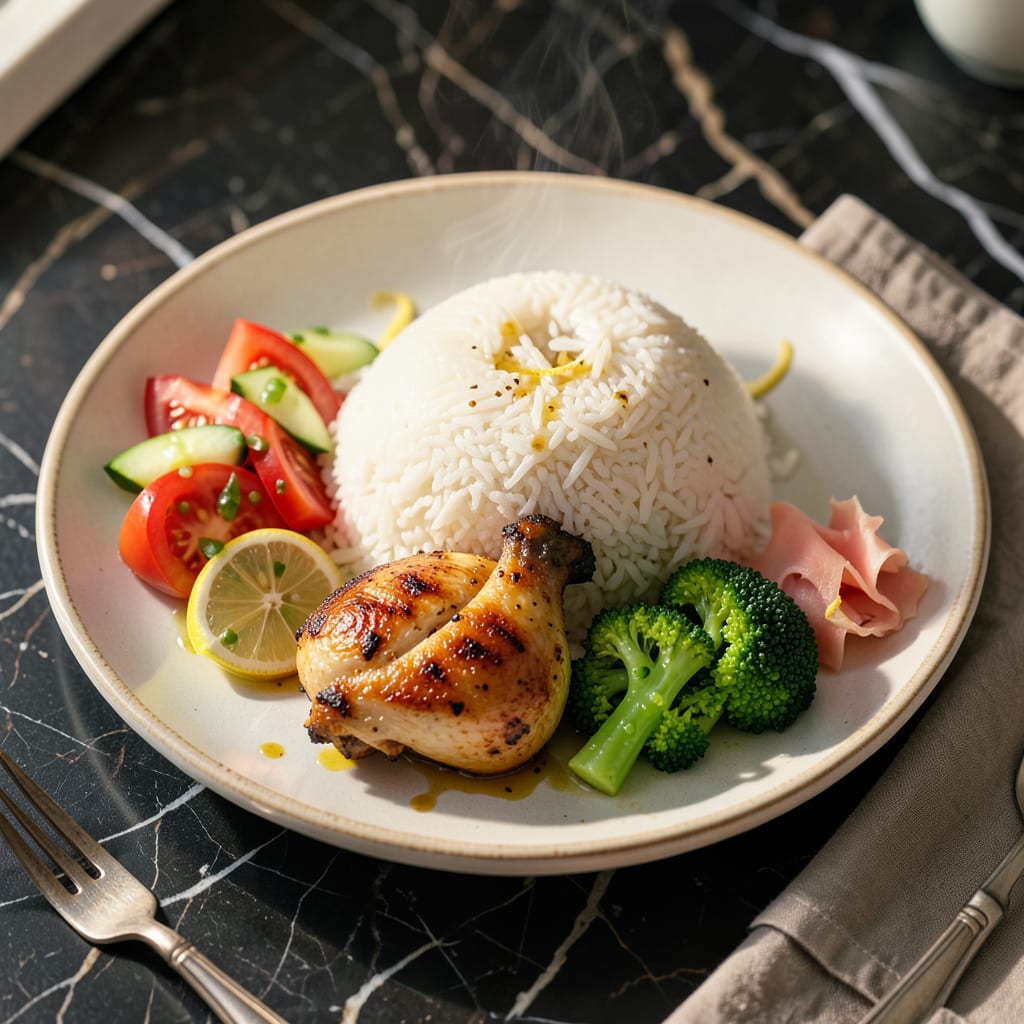
One cup of uncooked white rice typically yields 3 cups cooked, serving 3-4 people as a side dish or 2 people as a main course. Portion sizes vary by appetite and meal context.
I’ve found that rice portions depend heavily on how you’re serving it. When I’m meal planning, I consider whether the rice is the star (like in stir-fries or rice bowls) or just supporting other dishes. For example, a hearty chicken curry over rice might stretch those 3 cups cooked to feed 4 people comfortably, while a simple vegetable side dish pairing would serve fewer. 💛
What’s interesting is how cooking method affects yield too. I’ve noticed that absorption methods (like pilaf) give slightly less volume than boiled rice, which can impact your portion calculations. Always account for seconds—especially when feeding hungry crowds!
💡 In This Article
- Understanding Rice Expansion and Serving Ratios
- Meal Planning Tips for Perfect Rice Portions
Understanding Rice Expansion and Serving Ratios
When rice cooks, the starch granules absorb water and swell dramatically. Each grain acts like a tiny sponge, soaking up about 2-3 times its weight in liquid. This is why 1 cup uncooked white rice transforms into 3 cups cooked—the starch cells expand until they burst, creating that familiar fluffy texture.
Brown rice behaves differently because its bran layer limits absorption, yielding only about 2.5 cups cooked from the same 1 cup uncooked. 🔥
The grain’s shape plays a surprising role too. Long-grain varieties like basmati or jasmine expand more uniformly, while short-grain rice (used in sushi) becomes stickier because its higher amylopectin content creates more surface adhesion.
I’ve tested this in my kitchen: 1 cup basmati reliably gives 3.25 cups cooked, while the same amount of Arborio rice yields just 2.75 cups due to its creamier consistency. The water-to-rice ratio isn’t arbitrary—it’s calculated based on each variety’s starch composition.
Here’s what most home cooks overlook: the cooking method alters expansion. Steaming rice in a rice cooker (my preferred method) gives the most consistent 1:3 uncooked-to-cooked ratio. But when I make pilaf by toasting the grains first, the yield drops to about 2.75 cups because some moisture evaporates during toasting.
Pressure cooking pushes the ratio even higher—up to 1:3.5—because the sealed environment forces more water absorption. ✨
Temperature matters more than you’d think. Rice cooked at a rolling boil expands faster but can become mushy if overdone. I maintain my rice at a gentle simmer (180-190°F) for even expansion. The final texture tells you everything: properly cooked grains should be tender but still hold their shape, with no chalky centers.
That perfect balance means you’ve maximized the starch absorption without overhydrating the grains.
For meal planning, remember these standard yields per 1 cup uncooked:
- White rice: 3 cups cooked (standard long-grain)
- Basmati/Jasmine: 3.25 cups cooked (more elongated grains)
- Brown rice: 2.5 cups cooked (bran layer limits expansion)
- Short-grain/sushi: 2.75 cups cooked (higher stickiness factor)
What surprises most people is how altitude affects these ratios. At high elevations (like my cousin’s Denver kitchen), water boils at lower temperatures, requiring more liquid and longer cooking times. Her 1 cup white rice needs 2.25 cups water instead of the standard 2 cups to reach the same 3 cups cooked yield.
The science is clear: atmospheric pressure directly impacts starch gelatinization! 🌟
Pro tip: Always measure cooked rice for accurate portioning. I use a ½-cup serving as my standard side portion, which means that 3 cups cooked gives me 6 side servings. For main dishes like stir-fries, I plan for ¾-cup servings, reducing the total to 4 servings from the same batch.
This simple measurement trick eliminates guesswork when scaling recipes up or down.

Trained in classic French technique but raised on slow-cooked ribs and spicy rubs, she blends culinary skill with smoke and soul.
- Recipe for Boneless Pork Chops in Cast Iron Skillet: Sear and Baste to Juicy Perfection - October 3, 2026
- Recipe for Boneless Cross Rib Roast: Slow-Roasted Beef with Herb Crust - October 3, 2026
- Hamburgers in Sauce Recipe Crock Pot: Slow-Cooked Savory Delight - October 3, 2026